Ayesha, Author at AACS Counseling - Page 9 of 9

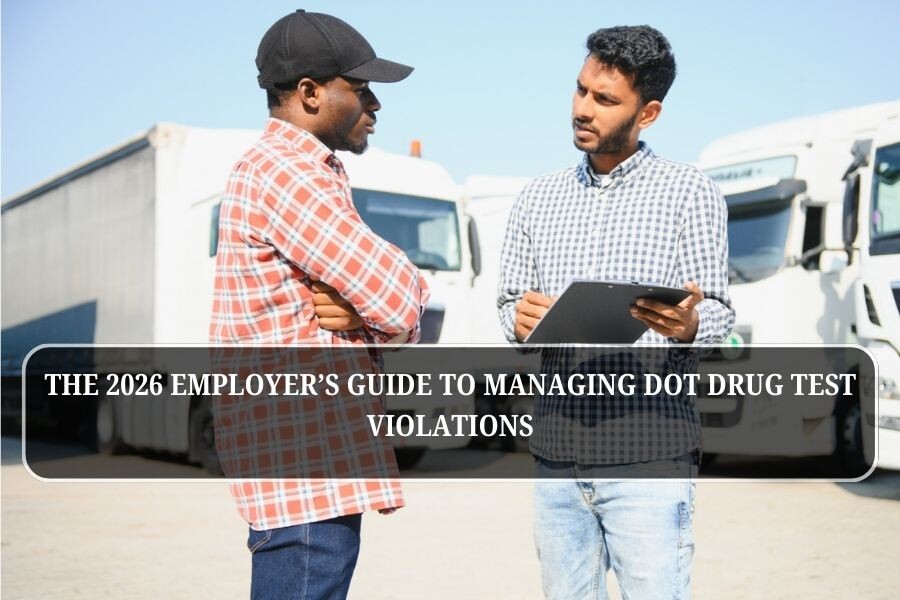
The 2026 Employer’s Guide to Managing DOT Drug Test Violations

If a driver tests positive on a drug test, employers must act fast. Legal requirements start right away. These obligations are strict and come with serious penalties. For fleet managers and safety officers, any mistake after a DOT drug test violation can be costly. With the 2026 FMCSA Clearinghouse updates, employers must follow the rules without error.

This guide gives you a clear path for handling DOT drug test violations. You will see exactly what you must do—from removing the driver at once to giving them the Substance Abuse Professional (SAP) referral list. By learning these steps, you can protect your business and keep up with DOT compliance for employers in 2026.

The Compliance Checklist for a Positive DOT Drug Test

Every time you receive a positive test result from your Medical Review Officer (MRO), you need to respond right away. Below is a quick checklist, based on 49 CFR Part 40, to help you stay compliant:

Each step is important. Missing even one can lead to fines or audit problems. Let’s break these down so you know exactly what to do.

Step 1: Immediate Removal (Zero-Grace Period)

As soon as you receive a verified positive or alcohol test result from the MRO, remove the employee from every safety-sensitive job. The law is clear under 49 CFR Part 40.23—act immediately. There is no grace period for this rule.

Safety-sensitive work includes more than just driving. It covers waiting to be dispatched, inspecting equipment, and loading or unloading. If a driver stays on these tasks after a violation, your company risks steep penalties. Therefore, never wait to act.

Step 2: The 24-Hour Clearinghouse Rule

The FMCSA Clearinghouse is now the central system for tracking DOT drug and alcohol violations. One major 2026 update is the new 24-hour reporting rule. Previously, you had up to three business days. Now, you only get 24 hours to report positive tests or refusals.

You must update your process to avoid missing this short window. Quick action prevents fines, which can start at $15,000 for each missed report. To avoid these costly mistakes, have a set reporting routine. The FMCSA Clearinghouse reporting requirements demand speed and accuracy.

Step 3: The Mandatory SAP Referral (49 CFR Part 40.287)

Many employers think they are done once they fire the driver. However, federal rules say otherwise. Even if you end a driver’s job, 49 CFR Part 40.287 requires you to give them a list of qualified Substance Abuse Professionals (SAPs).

This list must have names, addresses, and numbers for local SAPs. Just telling a driver to “find a SAP” is not enough. You must provide the official list. Auditors often check for this part of compliance. By giving the SAP list, you help drivers start the return-to-duty process—even if they don’t work for you anymore.

Understanding Liability and “Actual Knowledge”

Employer liability for a positive drug test does not stop with paperwork. The law includes the concept of “Actual Knowledge.” If you see a driver using drugs or alcohol on the job, you must act.

In 2026, any “Actual Knowledge” incidents must be treated as violations. You need to report them to the Clearinghouse quickly. Some common examples include:

  • An employee admits to substance abuse.
  • A supervisor directly sees an employee use drugs or alcohol.
  • You receive credible third-party information about substance use.

If you become aware of one of these situations, immediately remove the driver from safety-sensitive tasks. Next, document what happened. Report this to the Clearinghouse just like you would after a positive test. Because ignoring actual knowledge brings big risks, always take these reports seriously.

The Return-to-Duty (RTD) Workflow

Drivers can only return to safety-sensitive work after they complete the Return-to-Duty (RTD) process. While you may not keep every driver, knowing the steps is vital for DOT compliance. This process is guided by a qualified SAP.

Follow these steps to stay compliant:

  1. Initial SAP Evaluation: The driver meets face-to-face with a SAP for an assessment.
  2. Treatment or Education: After the evaluation, the SAP assigns a treatment or education plan. The driver must finish this program.
  3. Follow-Up SAP Evaluation: Once the program is complete, the driver visits the SAP, who decides if they are ready for return-to-duty testing.
  4. Observed RTD Test: If cleared, the employer arranges an observed drug test. Only a negative result allows the driver to move forward.
  5. Follow-Up Testing Plan: The SAP provides the employer with a testing plan. This plan involves at least six unannounced, directly observed tests within 12 months. The plan may extend up to 60 months.

Record every step in the FMCSA Clearinghouse. Both the SAP and employer must ensure the driver’s status is correct and up-to-date.

Protect Your Operation Through Diligent Compliance

In the end, managing a DOT drug test violation is not only about HR. It is also about safety and your legal responsibility. The 2026 rules require you to act quickly, report every detail, and follow strict steps. But, with a detailed policy and by following this checklist, you can reduce risk, avoid penalties, and stay committed to safety for everyone on the road.

What to Expect During a Court-Ordered Anger Management Evaluation

Receiving a court order for an anger management evaluation can feel daunting. You might be worried about the process, what the evaluator will ask, and how the results will affect your legal situation. Understanding what the evaluation entails can help reduce this anxiety and prepare you for a straightforward and professional assessment. This guide will walk you through the process, from the initial interview to the final report, so you know exactly what to expect.

The primary purpose of a court-ordered anger management evaluation is not to judge you. Instead, it is a clinical process designed to assess how you experience and express anger. An evaluator, typically a licensed mental health professional, uses standardized tools and interview techniques to determine if your anger patterns pose a risk to yourself or others. The goal is to provide the court with a clear, objective recommendation about whether anger management treatment is necessary.

The Assessment Process: A Step-by-Step Overview

While the specifics can vary slightly depending on the provider and state, most court-ordered anger management evaluations follow a structured format. The process is confidential between you and the evaluator, though the final report will be shared with the court and other authorized parties.

The Clinical Interview

The cornerstone of the evaluation is the clinical interview. This is a one-on-one conversation between you and the evaluator. The atmosphere is professional and non-judgmental. The goal is for the clinician to gather comprehensive information about your history, behaviors, and current circumstances.

You can expect questions covering several areas of your life, including:

  • The Incident: The evaluator will ask about the specific event that led to the court order. Be prepared to discuss what happened from your perspective.
  • Personal History: This includes your family background, upbringing, education, and employment history.
  • Relationship History: Questions may cover your past and present romantic relationships, friendships, and family dynamics.
  • Substance Use: The clinician will ask about your history with alcohol and drugs, as substance use can often be linked to anger-related issues.
  • Mental and Physical Health: You will discuss your overall health, including any past or present diagnoses or treatments.
  • History of Anger: The evaluator will explore your patterns of anger, asking how you typically feel and react when you get upset.

This interview usually lasts between 60 and 90 minutes. It is a crucial component that provides the context for any standardized tests you may take.

Standardized Assessment Tools

In addition to the interview, evaluators use scientifically validated assessment tools to measure anger objectively. These are typically self-report questionnaires that you complete on your own. They provide a standardized way to compare your responses to a general population, helping the clinician identify specific patterns of anger.

One of the most common and respected tools is the State-Trait Anger Expression Inventory-2 (STAXI-2). This test measures several dimensions of anger:

  • State Anger: How angry you feel at a particular moment.
  • Trait Anger: How often you get angry over time.
  • Anger Expression-In: The tendency to suppress your anger.
  • Anger Expression-Out: The tendency to express anger verbally or physically toward others.
  • Anger Control-In: Your ability to manage suppressed anger.
  • Anger Control-Out: Your ability to control outward expressions of anger.

The STAXI-2 helps the evaluator understand not just if you get angry, but how you experience and manage it. Other tools may also be used to screen for related issues like domestic violence risk or substance abuse, depending on the specifics of your case.

How to Prepare for Your Evaluation

Preparation can help you feel more confident and ensure the process goes smoothly. The key is not to rehearse answers but to be ready to engage honestly and openly.

Gather Your Documents

Before your appointment, collect any relevant paperwork. This includes the court order, police reports related to the incident, and contact information for your attorney or probation officer. Having this information on hand saves time and helps the evaluator understand the legal context of your assessment.

Be Open and Honest

The most important way to prepare is to commit to being honest. Evaluators are trained to detect inconsistencies, and attempts to minimize or hide information can negatively impact your report. Remember, the evaluator’s role is to assess, not to blame. Providing truthful and complete information allows them to make an accurate and fair recommendation. Acknowledging your struggles with anger is often seen as a sign of insight and a willingness to change.

Get a Good Night’s Sleep

Ensure you are well-rested before your appointment. The evaluation requires focus and clear thinking. Being tired or stressed can affect your ability to communicate effectively and complete the questionnaires accurately. Arrive on time to avoid feeling rushed.

The Final Report and Its Impact on Your Case

After you complete the interview and any questionnaires, the evaluator will analyze all the information. They will synthesize their findings into a comprehensive written report. This document is typically 3-7 pages long and provides a detailed summary of the assessment.

What’s Included in the Report?

The final report will include:

  • Background Information: A summary of your personal, social, and legal history.
  • Clinical Observations: The evaluator’s impressions of your mood, behavior, and attitude during the session.
  • Assessment Results: The scores from any standardized tools, like the STAXI-2, and an interpretation of what they mean.
  • Clinical Summary: An overall assessment of your anger patterns and any identified risk factors.
  • Recommendations: This is the most critical section for the court. The evaluator will state their professional opinion on whether you would benefit from anger management classes or other interventions.

How the Report Influences Legal Outcomes

The court relies heavily on the evaluator’s professional judgment. The recommendations in the report directly influence the judge’s orders.

If the report concludes that you have no significant issues with anger, the court may decide that no further action is needed. If it identifies problematic anger patterns, the judge will likely order you to complete a specific number of anger management sessions. The recommendation could range from a short 8-week program to a more intensive 26- or 52-week course.

A favorable report—one that shows you are insightful and willing to take responsibility—can be a positive factor in your case. It demonstrates to the court that you are proactive about addressing the issue. Conversely, a report that suggests a lack of honesty or an unwillingness to address anger can have negative consequences.

Next Steps

Facing a court-ordered anger management evaluation can be stressful, but it is also an opportunity. It provides a chance to gain insight into your emotional responses and demonstrate to the court that you are committed to positive change. By understanding the process, preparing properly, and participating honestly, you can navigate the evaluation with confidence and work toward a constructive outcome. If treatment is recommended, view it as a tool to build healthier coping skills for the future.

DOT SAP Program Emergency Consultation: Get Back on the Road Fast

The moment you see that positive result, your stomach drops. You know exactly what it means: your wheels stop turning, and your paycheck stops coming.

For a commercial driver, a failed DOT drug or alcohol test feels like a career-ending disaster. Suddenly, your status in the FMCSA Clearinghouse reads “Prohibited,” and you are legally barred from performing safety-sensitive functions. The silence of the phone not ringing with dispatch orders is deafening.

But here is the truth you need to hear right now: This is not the end of your career.

Thousands of drivers face this hurdle and successfully return to the driver’s seat. However, the longer you wait to start the Return-to-Duty (RTD) process, the more income you lose. Every hour you sit idle is money out of your pocket.

We specialize in emergency Substance Abuse Professional (SAP) evaluations designed to navigate the Department of Transportation regulations quickly, legally, and without judgment.

The Crisis: Understanding “Prohibited” Status

When you fail a test or refuse to take one, the violation is immediately recorded in the FMCSA Drug and Alcohol Clearinghouse. This is a federal database that all employers must check.

Until you successfully complete the SAP process, you are essentially grounded. You cannot switch companies to hide it; the violation follows your CDL. This “prohibited” status creates immense stress. You are likely worrying about:

  • How to pay your bills without your driving income.
  • Whether you will ever be hired again.
  • The embarrassment of facing your employer or peers.

We understand this stress. Our role isn’t to judge you for the violation; our role is to provide the federally mandated pathway to fix it. The only way out is through, and the fastest way through is with an expert who knows the system inside and out.

The Solution: Your Roadmap to Recovery

The Department of Transportation (DOT) has a rigid, non-negotiable process for getting back to work. You cannot skip steps, but you can choose a SAP who moves with urgency.

We have streamlined our intake and evaluation procedures to minimize downtime. Here is the specific checklist you will need to complete.

Roadmap to Recovery Checklist

  • Step 1: Initial Evaluation: A face-to-face (or DOT-approved video) assessment with a qualified SAP.
  • Step 2: Recommendation: We prescribe a specific education or treatment plan tailored to your situation.
  • Step 3: Education & Treatment: You complete the assigned course or counseling.
  • Step 4: Follow-Up Evaluation: A second meeting to confirm you have complied with the recommendations.
  • Step 5: RTD Testing: Once the SAP clears you, your employer sends you for a Return-to-Duty drug test (must be negative).
  • Step 6: Follow-Up Testing Plan: We provide your employer with a schedule for unannounced follow-up tests to ensure long-term compliance.

The “Emergency” Factor: Why Wait Weeks?

In the standard medical world, booking an appointment with a specialist can take weeks. You do not have weeks. You have bills due now.

We treat your situation as an emergency because, for your livelihood, it is one. We offer Same-Day or Next-Day Initial Consultations.

By prioritizing your case, we ensure that your status in the Clearinghouse is updated from “Prohibited” to “Return-to-Duty Process Started” as fast as humanly possible. This signals to current and future employers that you are taking immediate action to rectify the situation.

DOT SAP Process Timeline: Standard vs. Expedited

See the difference our emergency focus makes in your timeline to return to work:

Step

Standard Process

Our Emergency Consultation

Initial Contact

3–7 Days

Same Day / Next Day

Initial Evaluation

Scheduling out weeks

Priority Booking

Clearinghouse Update

Manual/Slow

Immediate Digital Reporting

Plan Development

Generic

Tailored for Speed & Compliance

Breaking Down the 6-Step SAP Process

To help you understand exactly what lies ahead, here is a detailed look at the six steps required by 49 CFR Part 40 regulations.

1. The Initial Evaluation

This is our starting point. During this clinical interview, we assess your history and the circumstances of the violation. This isn’t an interrogation; it’s a necessary step to determine the level of help you need. Our goal is to make you feel comfortable and respected, not criticized.

2. The Recommendation

Based on the evaluation, we refer you to an education program or treatment provider. Because we want you back on the road, we maintain a network of accessible, high-quality providers who understand the urgency of DOT requirements. We won’t send you to a program with a six-month waiting list.

3. Education and Treatment

You must complete the prescribed plan. This could range from an educational course on substance abuse to outpatient counseling. It is crucial you take this seriously. Speed is important, but compliance is mandatory. If you cut corners here, the DOT requires us to restart the process.

4. The Follow-Up Evaluation

Once you finish your education or treatment, you return to us for a second evaluation. This is where we determine if you have successfully demonstrated compliance. If you have done the work, we issue a report stating you are eligible for the Return-to-Duty test.

5. The Return-to-Duty (RTD) Test

With our approval, your employer (or a future employer) can order the RTD test. This must be a directly observed collection. Once this test comes back negative, you are legally allowed to drive again.

6. Follow-Up Testing

To ensure safety, we establish a follow-up testing schedule. This will include at least six unannounced tests in the first 12 months, but it can extend up to five years. This schedule follows you even if you change employers.

Why Drivers Choose Our “Fast Track” Program

You need more than just a rubber stamp; you need a partner who understands the trucking industry.

1. A Judgment-Free Zone
We work with professionals, not criminals. Good drivers make mistakes. We treat you with the dignity and respect you deserve throughout the entire process.

2. Clearinghouse Expertise
The FMCSA Clearinghouse can be confusing. We handle the technical side, ensuring your assessments are uploaded immediately so there is no administrative lag keeping you off the road.

3. Tailored for Speed
We look for the most efficient, compliant path for your specific situation. We don’t use a “one size fits all” approach that keeps you in treatment longer than necessary.

Don’t Let a Failed Test Park You Permanently

Every day you wait to book your evaluation is another day of lost wages. The violation happened, and you cannot change the past. But you have total control over what happens next.

The road is waiting. You have the skills and the experience—you just need the clearance. Let’s get this handled so you can get back in the cab where you belong.

EMERGENCY CONTACT & BOOKING

If you are currently prohibited from driving, do not wait.
Call our Emergency SAP Line immediately: 800-683-7745

Book Your Consultation Now

Call Now