The term “safety-sensitive” can be misleading. Many people believe it only applies to specific job titles, like “pilot” or “truck driver.” However, the U.S. Department of Transportation (DOT) defines it much more broadly. A safety-sensitive position is determined by the functions you perform, not what your business card says. If your role involves tasks that could impact public safety, you are likely subject to DOT drug and alcohol testing regulations.
Understanding whether your duties fall under this classification is critical. A drug or alcohol violation in a safety-sensitive role has serious consequences, including the mandatory requirement to complete the return-to-duty process with a DOT-qualified Substance Abuse Professional (SAP). This guide provides a comprehensive DOT safety sensitive functions list for 2026, helping you determine if your position is regulated and what happens if a violation occurs.
The Core Principle: Function, Not Title
Before we dive into the specific agencies, let’s reinforce the main idea. The DOT’s primary concern is public safety. It has identified specific tasks across transportation industries that, if performed while under the influence of drugs or alcohol, could lead to catastrophic accidents.
Therefore, you could be an aircraft mechanic, a pipeline controller, or a train dispatcher and still be considered a safety-sensitive employee. If you perform even one of the designated safety-sensitive functions—even infrequently—you are covered by DOT testing rules. This is why knowing who needs an SAP evaluation after a violation is essential for both employees and employers.
DOT Drug Testing by Agency
The DOT delegates oversight to six key agencies, each with its own set of rules defining safety-sensitive work. A positive test result or refusal to test under any of these agencies will trigger the need for an SAP evaluation.
Federal Motor Carrier Safety Administration (FMCSA)
The FMCSA regulates commercial motor vehicles (CMVs), primarily focusing on the trucking and bus industries. You are performing FMCSA safety sensitive duties if you operate a CMV that requires a Commercial Driver’s License (CDL).
This includes anyone who is on duty and responsible for:
- Driving: Operating a CMV on public roads. This includes vehicles with a gross weight of 26,001 pounds or more, vehicles designed to transport 16 or more passengers (including the driver), or vehicles of any size used to transport hazardous materials.
- Waiting to be Dispatched: A driver waiting for a load is considered on duty.
- Inspecting Equipment: Performing pre-trip or post-trip vehicle inspections.
- Loading and Unloading: Supervising or assisting in the loading or unloading of the vehicle, and ensuring the cargo is properly secured.
- Repairing: Performing or supervising maintenance and repairs on a vehicle while on the road.
Federal Aviation Administration (FAA)
The FAA oversees civil aviation, and its rules cover a wide range of personnel beyond just pilots. A common search, “FAA drug test violation,” highlights the severe consequences for anyone in these roles.
Safety-sensitive functions under the FAA include:
- Flight Crew Members: Pilots, flight engineers, and flight navigators.
- Flight Attendants: Responsible for cabin safety and passenger security.
- Aircraft Dispatchers: Individuals who exercise operational control over a flight.
- Aircraft Maintenance and Preventive Maintenance: Anyone who performs, supervises, or inspects maintenance or overhaul of an aircraft. This includes technicians and inspectors.
- Ground Security Coordinators: Personnel responsible for security screening and procedures on the ground.
- Air Traffic Controllers: Employees at FAA facilities or contract towers who control the movement of air traffic.
- Operations Control Specialists: Individuals who initiate, conduct, or terminate flights.
Federal Railroad Administration (FRA)
The FRA governs the safety of the nation’s railway systems. Its regulations apply to employees whose actions could endanger train operations or public safety.
Regulated service positions include:
- Engine and Train Service: Conductors, brakemen, switchmen, and locomotive engineers who are involved in the movement of a train.
- Dispatching: Employees who dispatch train movements (dispatchers and operators).
- Signal Service: Workers who install, repair, or maintain signal systems.
- Train and Engine Crew for Tourist Railroads: Even scenic or tourist railroad operations fall under these rules if they are part of the general railroad system of transportation.
Federal Transit Administration (FTA)
The FTA oversees public transportation systems, including buses, subways, light rail, and ferries. Safety-sensitive employees are those who operate, dispatch, or maintain revenue service vehicles.
These functions include:
- Operating a Revenue Service Vehicle: This applies whether the vehicle is in service or not.
- Controlling Dispatch or Movement: Employees who control the movement of revenue service vehicles, such as transit police or dispatchers.
- Maintaining Vehicles: Mechanics and other personnel who perform maintenance or repairs on revenue service vehicles or equipment.
- Armed Security Personnel: Any employee who carries a firearm for security purposes.
Pipeline and Hazardous Materials Safety Administration (PHMSA)
PHMSA regulates the safe transport of gas and hazardous liquids through pipelines. Given the potential for disaster, its definition of safety-sensitive is very specific.
Safety-sensitive functions include:
- Operations, Maintenance, and Emergency Response: Anyone who performs an operation, maintenance, or emergency-response function on a pipeline or at a liquefied natural gas (LNG) facility.
- Patrolling: Inspecting pipelines to prevent and detect leaks or damage.
- Controlling and Monitoring: Working in a control room to monitor pipeline pressure, flow, and temperature.
U.S. Coast Guard (USCG)
The USCG oversees maritime safety and requires drug and alcohol testing for any “crewmember” on a U.S.-flagged commercial vessel. This is a broad definition that goes beyond the vessel’s captain.
A crewmember is defined as any individual engaged or employed in any capacity on board a vessel, whose duties are vital to the safe operation of the vessel. This includes:
- Navigating and Operating the Vessel: Captains, mates, pilots, and operators.
- Engineering Functions: Chief engineers and other engineering officers responsible for the vessel’s propulsion and systems.
- Deckhands and Able Seamen: Individuals involved in mooring, docking, and other vessel operations.
- **All other individuals whose failure to perform their duties could jeopardize the vessel’s safety or the marine environment.
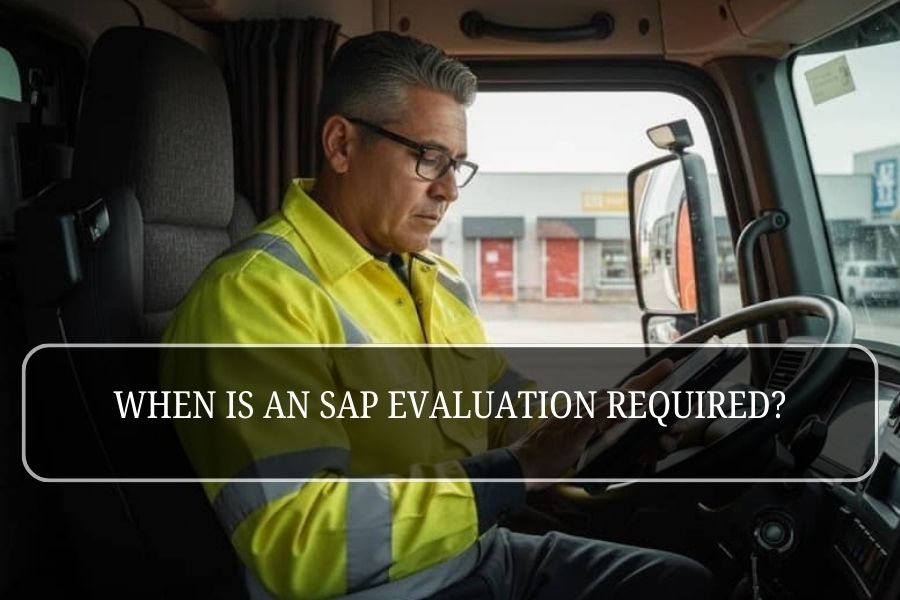
When Is an SAP Evaluation Required?
If you perform any of the functions listed above and have a DOT drug or alcohol rule violation, you will be immediately removed from your safety-sensitive duties. You cannot return to any DOT-regulated safety-sensitive role, for any employer in any transportation industry, until you have successfully completed the return-to-duty process with a qualified SAP. This process involves an initial evaluation, a prescribed plan of education and/or treatment, and a follow-up evaluation.
Navigating these regulations can be complex. The definitions are specific, and the consequences of a violation are significant. Ensuring compliance is not just about following rules—it’s about protecting lives.
Unsure if your role is DOT-regulated? Contact our compliance experts for a consultation.