May 2025 - Page 2 of 7 - AACS Counseling

Mental Health Assessment vs. Psychological Testing: What’s Required for Legal Cases?

Introduction

When preparing for a court case involving mental health, clients and attorneys often wonder: What’s the difference between a mental health assessment vs psychological testing for legal cases? Understanding these terms is essential, especially when courts mandate evaluations for criminal defense, family disputes, or immigration cases.

In this guide, we’ll explain the differences, outline the types of court mental health reports, and help you determine which option your legal situation requires.

What is a Mental Health Assessment?

A mental health assessment is a broad clinical evaluation conducted by a licensed professional (usually an LPC, LMHC, or LCSW). It covers:

  • Mental health history

  • Current emotional state

  • Social and behavioral functioning

  • Risk factors (like self-harm or violence)

In legal cases, this type of assessment helps courts understand the defendant’s capacity, competence, or risk related to the case.

Mental health assessment for court cases explained in 2025
What is Psychological Testing?

In contrast, psychological testing involves structured, scientifically validated tools to measure cognitive, emotional, and behavioral patterns. These may include:

  • Personality inventories (like MMPI-2)

  • IQ tests

  • Risk assessment tools

  • Neuropsychological batteries

For legal cases, psychological testing is required when objective, standardized data is needed — such as in child custody disputes, competency evaluations, or insanity defenses.


Mental Health Assessment vs. Psychological Testing: Key Differences for Legal Cases

CriteriaMental Health AssessmentPsychological Testing
PurposeGeneral clinical evaluationStandardized measurement
Duration1-2 hoursSeveral hours to multiple sessions
Conducted byLicensed therapistsLicensed psychologists (PhD, PsyD)
Court UsageFitness to stand trial, mental status reportsCompetency, criminal responsibility, child custody disputes

Important: Not all legal cases require full psychological testing. Often, a mental health assessment suffices, unless the court order specifies in-depth psychological testing.

When Do Legal Cases Require Psychological Testing?

  • Criminal Defense Cases: Competency to stand trial, insanity pleas

  • Child Custody Battles: Parental capacity evaluations

  • Immigration Hardship Waivers: Emotional hardship verification

  • Out-of-State DUI: Alcohol dependency risk assessment

If you need these services, visit our Court-Ordered Psychological Testing page for details.

When is a Mental Health Assessment Enough?

  • Probation reports

  • Pre-sentencing evaluations

  • General fitness-for-duty reports

For these, an in-depth psychological battery may not be necessary.

Types of Court Mental Health Reports

  1. Competency to Stand Trial Evaluations

  2. Insanity Defense Reports

  3. Risk Assessments for Violence or Substance Abuse

  4. Parental Fitness Assessments

  5. Immigration Psychological Evaluations

Learn more about these on our Legal Mental Health Assessment Services page.

FAQs: Mental Assessment vs Psychological Testing in Legal Cases

Q1: Can I choose between mental health assessment vs psychological testing for my case?
Courts usually specify which type is required, but attorneys may recommend one based on case strategy.

Q2: Is psychological testing more reliable in court?
Psychological testing is seen as more objective but is not always necessary — especially in less complex cases.

Q3: Are these evaluations confidential?
Yes, but court-ordered evaluations may require disclosure to legal parties.

Conclusion

Deciding between a mental health assessment vs psychological testing for legal cases depends entirely on the court’s requirements and your attorney’s advice. Each serves a unique purpose in legal contexts, and choosing the right one can affect case outcomes.

Need expert evaluation for your court case? Explore our full range of Court-Ordered Assessments today.

References:

Will an Out-of-State DUI Show on Your Home State Record? Interstate Laws Explained

Introduction

If you’ve been charged with driving under the influence (DUI) in another state, you may be wondering: Will an out-of-state DUI show on your home state record? The answer can impact your driving privileges, insurance rates, and legal status. This guide explains interstate DUI reporting rules, how state DMVs handle these offenses, and what you need to know about DMV DUI reporting across the United States.

Understanding Out-of-State DUIs

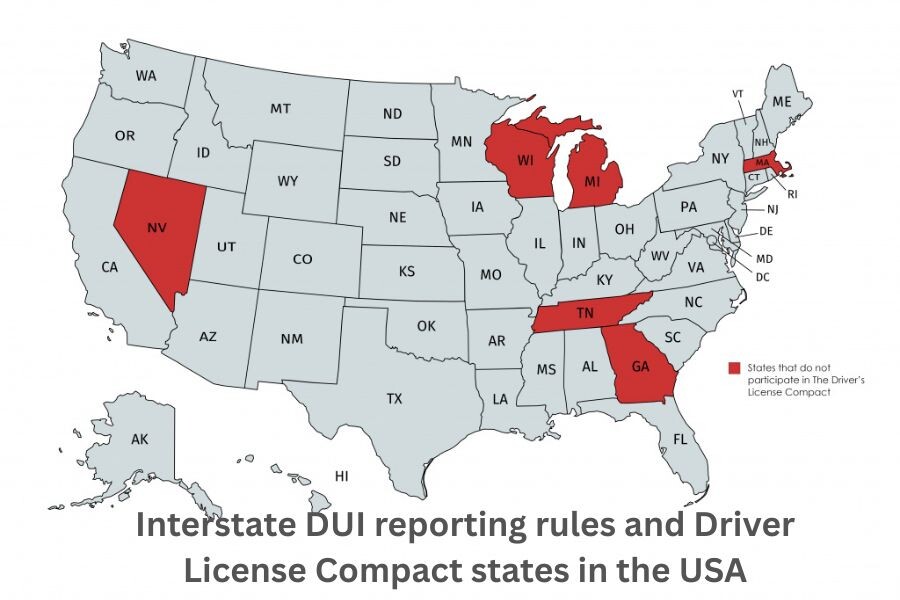
An out-of-state DUI occurs when you’re arrested for drunk driving in a state where you do not hold a driver’s license. Most states are part of the Driver License Compact (DLC) or the Non-Resident Violator Compact (NRVC) — agreements designed to share DUI offenses between states.

Interstate DUI reporting rules and Driver License Compact states in the USA

Will an Out-of-State DUI Show on Your Record?

In most cases, yes — an out-of-state DUI will show on your home state driving record. Here’s why:

  1. DMV DUI Reporting Systems Are Connected:
    States report serious violations such as DUIs to each other under federal agreements.

  2. The Driver License Compact (DLC):
    This compact ensures that a DUI committed in one member state is treated as if it happened in your home state.

  3. Non-Compact States:
    Only a few states (like Michigan, Wisconsin) are not part of the DLC — but they may still share DUI data voluntarily.

  4. Insurance Impact:
    Your car insurance company will likely find out about the DUI even if it happened out of state, affecting your premiums.

How DMV DUI Reporting Works Across States

  • Immediate Notification: Arrest and conviction details are sent to your home state’s DMV.

  • License Suspension: Your state may suspend your license based on another state’s action.

  • Reinstatement Requirements: You may need to complete DUI education programs, mental health assessments, or substance abuse evaluations.

✔ For court-ordered evaluations, visit our Out-of-State DUI Assessment Services page.

What Happens If You Ignore an Out-of-State DUI?

Ignoring or failing to address an out-of-state DUI charge can result in:

  • License Suspension in Your Home State

  • Bench Warrants Issued Across States

  • Additional Fines and Penalties

Consequences of ignoring out-of-state DUI charges for your DMV record

Interstate DUI Reporting Rules You Must Know

RuleImpact on Driver
Driver License Compact (DLC)Ensures all member states share DUI records.
National Driver Register (NDR)Tracks problem drivers nationwide, including DUIs.
Non-Resident Violator Compact (NRVC)Requires compliance with out-of-state traffic violations.

Q1: Will an out-of-state DUI always affect my license at home?
Yes, if your home state is part of the DLC or NRVC, the offense will be recorded and can lead to suspension.

Q2: Can I get a new license in another state to avoid a DUI record?
No — interstate databases like the NDR prevent drivers from bypassing DUI records by moving.

Q3: Will my insurance go up because of an out-of-state DUI?
Most likely — insurance companies check national driving records and can adjust rates accordingly.

Conclusion

So, will an out-of-state DUI show on your home state record? Almost always — thanks to interstate agreements and DMV DUI reporting rules. If you’re facing this situation, consult with a DUI attorney and complete any required evaluations or programs promptly.

Need an Out-of-State DUI Assessment? Contact our team today for fast, court-approved evaluations: Out-of-State DUI Assessment Services.


References:

Upcoming SAP Qualification and Requalification Training – July 2025

Staying compliant with DOT regulations requires more than just experience—it requires ongoing education. For professionals working as or aspiring to be Substance Abuse Professionals (SAPs), the upcoming SAP Qualification and Requalification Training offered by the Employee Assistance Professionals Association (EAPA) is an essential opportunity.

📅 Next Training Dates:

July 8, 10, 15, and 17, 2025
🕛 Time: 12 PM – 4 PM ET (Live Online Sessions)

🎯 Who Needs This Training?

This training is designed for:

  • New professionals seeking DOT SAP Qualification

  • Existing SAPs who need to meet Requalification requirements under 49 CFR Part 40

  • Employee Assistance Professionals, therapists, counselors, and addiction specialists who want to specialize in DOT-regulated SAP work

The DOT mandates that all SAPs must complete an initial qualification training and pass an SAP exam, and requalification must occur every three years to remain in good standing.

💡 What the Training Covers

EAPA’s live-facilitated, online courses provide more than textbook instruction. These sessions include:

  • Interactive case studies and real-world scenarios

  • Updated DOT regulations and compliance guidelines

  • Step-by-step breakdown of the Return-to-Duty process

  • New trends such as remote evaluations and documentation protocols

This is a must-attend training for any SAP professional who wants to stay current and compliant.

🧾 Why Requalification Matters

Failing to requalify on time may:

  • Disqualify you from conducting SAP evaluations

  • Put your organization’s DOT compliance at risk

  • Disrupt services for employees needing Return-to-Duty clearance

Keeping your credentials updated ensures you can continue to legally evaluate employees under DOT jurisdiction.

📞 Partner With a Trusted SAP Network

At AACS Counseling, we not only provide DOT-compliant SAP evaluations but also collaborate with SAP professionals nationwide. If you’re looking to get certified or requalify, we recommend registering for this EAPA-led training to stay sharp and serve your clients better.

📞 Call for Info: 800-683-7745
🌐 AACS SAP Services
🌐 SAP Evaluations Nationwide

Updated SAP Guidelines Emphasizing Remote Evaluations: What You Need to Know in 2025

In a significant step toward modernizing drug and alcohol testing compliance, the Department of Transportation (DOT), through its Office of Drug and Alcohol Policy and Compliance (ODAPC), released updated guidelines in June 2023 to address the growing demand for remote SAP evaluations.

These updates are designed to improve efficiency, uphold public safety, and reflect current telehealth advancements—particularly for DOT-regulated employees returning to duty after a drug or alcohol violation.

📌 Key Highlights of the Updated DOT SAP Guidelines

1️⃣ Remote Assessments Are Now Standardized

DOT has expanded provisions allowing virtual SAP evaluations under specific compliance conditions. Now, employees can undergo their initial and follow-up assessments via secure video conferencing platforms—without compromising the integrity of the Return-to-Duty (RTD) process.

This development is especially beneficial for:

  • CDL drivers in rural areas

  • Employees with limited access to in-person providers

  • Companies needing faster turnaround for workforce reinstatement

2️⃣ Personalized Return-to-Duty Plans

The updated guidelines now require SAPs to customize each return-to-duty process based on the individual’s history, job role, and level of substance misuse. This means no more one-size-fits-all protocols—each employee receives a tailored treatment and testing plan, ensuring more effective rehabilitation.

3️⃣ Enhanced Documentation Requirements

SAPs are now expected to provide more thorough and standardized reports, particularly for remote assessments. This includes:

  • Verified identity checks

  • HIPAA-compliant video session logs

  • Clear records of treatment completion

  • Follow-up testing schedules with justification

This move ensures greater accountability and documentation transparency, helping employers and the DOT track compliance more reliably.

🚛 Why These Changes Matter for DOT-Regulated Employees

Whether you’re a commercial truck driver, a railroad operator, or an FAA-regulated pilot, these changes give you faster, more flexible access to DOT-qualified SAP professionals—without sacrificing compliance.

For employers, these updates help reduce downtime, maintain workplace safety, and improve the overall management of DOT drug and alcohol violations.

✅ Get Help Navigating the Updated SAP Rules

At AACS Counseling, we offer fully compliant virtual SAP evaluations, designed to meet the latest DOT and ODAPC standards. Our certified SAPs are trained in both the 2023 guidelines and the latest telehealth procedures to help you or your employee return to work quickly and legally.

📞 Call Now: 800-683-7745
🌐 DOT SAP Program
🌐 SAP Evaluations Nationwide

Immigration Hardship Waiver for Violations and Crimes

Navigating U.S. immigration laws can be complex and overwhelming, especially for individuals facing barriers due to violations or inadmissibility. Immigration hardship waivers, specifically extreme hardship waivers, are essential tools that help applicants overcome legal obstacles by proving that their absence would cause extreme hardship to a qualifying U.S. relative, particularly when obtaining an immigrant visa. , as well as their qualifying relative plans. At AACS Counseling, we aim to provide clarity, support, and expertise in understanding these waivers. This guide breaks down the requirements, processes, and supporting evidence you need to succeed while pointing you to credible government resources.

Immigration Hardship Waiver

An immigration hardship waiver is a legal remedy that allows individuals deemed inadmissible to request permission to enter or stay in the United States. Applicants must demonstrate that the waiver’s approval is in the best interest of their qualifying relatives, such as family members who rely on them, including a citizen spouse, and that they share a bona fide relationship. At AACS Counseling, our immigration attorney can guide you through the intricate details of this process, including the nuances of immigration appeals, whether the grounds for inadmissibility involve prior immigration violations, health issues, or criminal grounds, such as criminal records. For additional details about waiver policies, visit USCIS Waivers for Grounds of Inadmissibility, which is managed by the immigration and citizenship services.

Extreme Hardship

Understanding Extreme Hardship Under U.S. Immigration Law

“Extreme hardship” refers to the significant suffering or adverse conditions a qualifying relative would face if an applicant is denied entry or deported. Factors contributing to extreme hardship include several significant factors that could result in extreme hardship for the applicant’s family. :

  • Lack of access to medical care.
  • Financial instability and loss of support.
  • Emotional distress due to family separation.

To better understand how “extreme hardship” is evaluated according to the extreme hardship standard, check the USCIS policy manual. At AACS Counseling, we help you present strong, compelling evidence tailored to your case, including the role of the primary caretaker, particularly how they might experience extreme hardship if separated from their loved ones.

Demonstrating extreme hardship for nonimmigrant status adjustment.

Proving Extreme Hardship to a Qualifying Relative

A qualifying family member can include a U.S. citizen or lawful permanent resident (LPR) spouse, parent, or child. Demonstrating their hardship, including the qualifying relative’s age, is crucial to the waiver’s success. This evidence often includes medical records, personal affidavits, financial documents, and reports about conditions in your home country. We at AACS Counseling specialize in identifying and organizing the materials needed to strengthen your application.

Applicant’s Children and Extreme Hardship

Suppose the applicant’s children are considered in the waiver. In that case, their well-being may play a central role, and it is important to demonstrate how they would suffer extreme hardship. Factors like educational disruptions, lack of safety in the applicant’s home country, challenges with caregiving, and the loss of educational opportunities abroad weigh heavily in waiver determinations, ultimately impacting family unity. Our team at AACS Counseling ensures that this critical evidence is highlighted in your application.

Qualifying Relative and Waiver Processes

Standard I-601 Waiver Process

The Form I-601 waiver is designed for individuals outside the U.S. facing inadmissibility. This process requires applicants to provide evidence demonstrating a substantial shift in the extreme hardship determination to a qualifying relative. To a qualifying relative, particularly addressing the grounds of inadmissibility with the applicant’s assistance. Step-by-step guidance on the I-601 process is available here, and expert help from AACS Counseling can make navigating this process straightforward.

I-601A Provisional Waiver

The I-601A waiver allows individuals within the U.S. to proactively secure admissibility clearance before leaving the country for visa interviews. This minimizes family separation. Learn more about this waiver and whether it applies to you on the USCIS page. AACS Counseling can evaluate your case to determine if this waiver suits you.

Nonimmigrant Status and Permission to Reapply

For individuals with prior removal orders, Form I-212 offers a pathway to seek permission to reapply for entry. People applying for nonimmigrant status may also need additional waivers to address past immigration violations, including any related to alien smuggling. And any negative factors and any negative aspects. Trust AACS Counseling to help streamline these complicated filings and secure a path forward.

Grounds of Inadmissibility

Applicants must address the specific grounds of inadmissibility that prompted the need for a waiver, particularly those related to the criminal justice system. These grounds include:

  • Unlawful Presence: Addressed under INA § 212(a)(9)(B)(v).
  • Criminal Convictions: Waivers for crimes involving moral turpitude (INA § 212(h)(1)(B)).
  • Fraud or Misrepresentation: Covered under INA § 212(i).

Our team at AACS Counseling can help you identify the applicable grounds and build a compelling response to overcome them, taking into account other relevant factors.

Appeals and Additional Considerations

Extremely Unusual Circumstances

Cancellation of removal under INA § 240A(b)(1)(D) requires proving extremely unusual hardship. Medical crises, caregiving responsibilities, or other hardship factors often qualify for this stringent relief. AACS Counseling offers expert legal insight for these intricate cases.

Appeal of a Denied Waiver

If your waiver application is denied, you can appeal the decision or file a motion to reopen or reconsider. You can find information about appeals on the USCIS Administrative Appeals page, particularly for cases where applicants have been refused admission, particularly about ongoing family law proceedings. Additionally, AACS Counseling can assist you in crafting a thoughtful and strategic appeal.

Afghan Special Immigrant Status and Refugee Status

Those seeking Afghan special immigrant status or under refugee status may face unique inadmissibility challenges. Waivers in these cases often account for humanitarian concerns, particularly about temporary protected status, and can provide expedited processing without economic detriment. Contact AACS Counseling for personalized advice on these critical categories.

Country reports on political conditions and medical services

Hypothetical Case Examples

Examining hypothetical case examples often provides clarity. Imagine a U.S.-based spouse dependent on their partner’s caregiving due to a chronic illness. Denial of their immigration hardship waiver could disrupt medical support and household resources. Such cases benefit from expert documentation, which AACS Counseling can help assemble.

Immigration Services | Overview & Legal Precedents

Whether filing independently or seeking professional guidance, leveraging immigration services like those offered by USCIS or a trusted agency like AACS Counseling is crucial for success. Explore official resources on USCIS’s website.

Legal Precedents and Case Studies

Cases like Matter of Hranka and Matter of Cervantes underpin waiver adjudication decisions. By understanding these legal precedents, AACS Counseling can help refine your application to reflect court-approved factors.

Additional Waivers

  • Waivers for Vaccination Requirements: These address medical grounds of inadmissibility.
  • U Visa Waivers: Designed for individuals aiding law enforcement.

Whether your situation involves humanitarian or criminal waivers, AACS Counseling provides a clear path forward.

Seeking Expert Guidance

Immigration law is complicated, but you don’t have to traverse it alone. AACS Counseling offers professional support tailored to your needs. From documentation to appeals, we ensure your case is treated with the care and expertise you deserve. Visit USCIS Legal Services for additional resources, as each situation is often evaluated on a case-by-case basis.

Summary

Immigration hardship waivers are vital for addressing inadmissibility challenges. While the process may seem intimidating, support from experienced professionals like AACS Counseling can make all the difference. Through thorough preparation, strategic evidence-gathering, and an understanding of U.S. immigration policies, particularly emphasizing family ties, especially the qualifying relative spouse, and the importance of family members, you can improve your chances of securing an immigration benefit. Contact AACS Counseling today to start your immigration waiver application with confidence.

This tailored guide includes your business name and seamlessly integrates it into an authoritative and professional tone.

Common Reasons for DOT Violations (Beyond Just Drugs)

The moment you learn you have a DOT violation, a sense of panic can set in. Your mind races with questions about your career, your license, and what comes next. While many people associate these violations with illegal drug use, the reality is more complex. A violation can happen for reasons you might not expect, from a prescribed medication to an inability to provide a sample.

Understanding what constitutes a violation is the first step toward resolving it. This guide will clarify some of the most common but often misunderstood reasons for a DOT violation. We will explore what a “refusal to test” really means, discuss the issue of failing a DOT drug test for prescription meds, and explain the specific rules around a “shy bladder” scenario. Knowing these details can help demystify your situation and prepare you for the required next steps.

It’s Not Just About a Positive Test

The Department of Transportation (DOT) has strict regulations to ensure public safety. A violation is any event that goes against these rules, and not all violations involve a lab report showing a prohibited substance. Many drivers are surprised to find themselves facing the same consequences as a positive test for entirely different reasons. This can include alcohol use, which also leads to a mandatory return-to-duty process through a SAP program for alcohol violations.

Let’s break down three key areas that often lead to confusion and violations.

1. Refusal to Test: An Automatic Failure

One of the most critical rules to understand is that a refusal to test is treated exactly the same as a positive test. You cannot avoid a violation by simply not participating. The refusal to test DOT consequences are identical to failing a test: immediate removal from all safety-sensitive duties and the requirement to complete the full Return-to-Duty (RTD) process with a Substance Abuse Professional (SAP).

What exactly counts as a refusal? It’s more than just saying “no.” According to DOT regulations, a refusal can include:

  • Failing to appear for a drug or alcohol test within a reasonable time after being directed to do so.
  • Leaving the collection site before the testing process is complete.
  • Failing to provide a sufficient sample (urine, breath, or saliva) without a valid medical explanation.
  • Tampering with or attempting to adulterate the specimen.
  • Not cooperating with the testing process in any way that prevents the completion of the test.

Receiving a violation for a refusal can be frustrating, especially if it felt unintentional. However, the rules are strict. If a collector documents any of these behaviors, it triggers the start of the RTD process.

2. Failing a DOT Drug Test for Prescription Meds

A common point of anxiety for drivers is the use of legally prescribed medications. Can a legitimate prescription cause you to fail a drug test? The answer is yes, it can, but it’s a situation with specific protocols.

Here’s how it works: after you provide a urine sample, it is sent to a lab for screening. If the initial screen is positive for a substance, it undergoes a confirmation test. If that is also positive, the result is sent to a Medical Review Officer (MRO), who is a licensed physician.

The MRO will contact you directly to determine if there is a legitimate medical explanation for the positive result. This is your opportunity to provide proof of a valid prescription.

When a Prescription Becomes a Violation

Even with a valid prescription, you can still receive a violation. This happens if the MRO determines that the medication you are taking could impair your ability to perform safety-sensitive duties safely. For example, some painkillers, anxiety medications, or sleep aids have side effects like drowsiness or delayed reaction times that are incompatible with operating a commercial vehicle.

If the MRO reports the result to your employer as a “safety concern,” your employer may be required to remove you from duty. This situation underscores the importance of discussing any and all medications with your prescribing doctor and the MRO. Always be transparent during the verification process. Failing a DOT drug test for prescription meds often comes down to whether the medication itself poses a public safety risk, regardless of its legality.

3. The “Shy Bladder” Rule and Its Consequences

One of the most stressful scenarios at a collection site is being unable to provide a sufficient urine sample. This is commonly known as having a “shy bladder.” The DOT has a specific procedure for this situation to ensure it is handled fairly.

If you are unable to provide at least 45 mL of urine on your first attempt, the collector will instruct you to drink up to 40 ounces of fluid, distributed over a period of up to three hours. You must remain at the collection site during this time.

If you are still unable to provide a sufficient sample after three hours, the process stops. The collector will document the event as an “insufficient sample.” This is not immediately classified as a refusal. Instead, it triggers a mandatory medical evaluation.

The Required Medical Evaluation

You will have five business days to see a licensed physician to determine if there is a medical reason for your inability to provide a sample.

  • If a medical reason is found: The physician will provide a written report, and the test will be canceled. Your employer may decide to send you for another test.
  • If no medical reason is found: The physician will report this, and the event will be officially declared a refusal to test. The consequences are immediate, and you will be required to start the SAP process.

This rule highlights why you should never leave a collection site early, even out of frustration. Following the shy bladder protocol is your only protection against an automatic refusal.

What to Do After Any Violation

Whether your violation is from a positive test, a refusal, or an alcohol-related incident like a SAP program for alcohol violations, the path forward is the same. The DOT requires you to successfully complete the RTD process with a qualified SAP. This process involves an initial evaluation, a prescribed education or treatment plan, a follow-up evaluation, and a series of follow-up drug tests after you return to work.

Facing a DOT violation is a serious challenge, but it does not have to be the end of your career. By understanding the rules and taking the required steps seriously, you can navigate the process and work toward getting back behind the wheel safely and legally.

Will I Lose My CDL License After Failing a DOT Drug Test?

Failing a DOT drug test can be one of the most frightening moments in a commercial driver’s career. The fear of losing your Commercial Driver’s License (CDL), your job, and your future livelihood is overwhelming—but it’s not the end of the road.

🚫 What Happens Immediately After a Failed DOT Drug Test?

Once you fail a DOT drug or alcohol test:

  • You’re immediately removed from all safety-sensitive duties.

  • Your status in the FMCSA Clearinghouse is updated to “Prohibited”.

  • Your employer must not allow you to operate a commercial vehicle until you complete the Return-to-Duty (RTD) process.

⚠️ Will You Lose Your CDL License?

Not immediately. But you will lose driving privileges associated with your CDL until:

  1. You complete a Substance Abuse Professional (SAP) Evaluation.

  2. You follow through with the recommended treatment or education plan.

  3. You pass a Return-to-Duty drug test.

  4. Your Clearinghouse status is updated to “Not Prohibited.”

If you ignore the SAP process, your CDL may be downgraded or revoked in accordance with FMCSA’s 2024 Clearinghouse II rules.

How to Prevent Permanent Loss of Your CDL

To protect your CDL and career:

  • Contact a DOT-qualified SAP immediately.

  • Enroll in a SAP evaluation and complete all recommendations.

  • Track your Clearinghouse status regularly.

  • Pass the Return-to-Duty test and follow-up testing to stay compliant.

Delaying action can cause serious long-term consequences including license suspension and unemployment.

🛠️ We’re Here to Help You Get Back on the Road

At AACS Counseling and SAP Evaluation Nationwide, we specialize in confidential, same-day SAP evaluations to help you regain your CDL status legally and quickly.dot-qualified-sap-program/


📞 Need Help Today?

DOT SAP Returning to Work after a Failed DOT Drug Test

The Role of a Substance Abuse Professional (SAP)

The U.S. Department of Transportation (DOT) holds safety-sensitive employees—such as truck drivers, pilots, and railroad workers—to strict drug and alcohol testing regulations under 49 CFR Part 40. When an employee in a safety-sensitive position fails or refuses a drug or alcohol test, they cannot return to duty until they have completed a structured return-to-duty process. At the center of this process is a critical figure: the Substance Abuse Professional (SAP).

Who Is a DOT Substance Abuse Professional (SAP)?

A Substance Abuse Professional (SAP) is a trained and qualified clinician, such as a licensed counselor, psychologist, social worker, or physician, who is certified to evaluate employees who have violated DOT drug and alcohol regulations. The SAP plays a neutral but essential role—not as an advocate for the employer or employee—but as a gatekeeper for public safety.

The SAP’s responsibility is to assess the employee, recommend a treatment or education plan, and ultimately determine when, or if, that employee is ready to return to safety-sensitive work.

Failed Drug Test

The SAP Return-to-Duty Process

The DOT has outlined a clear and multi-step return-to-duty process for employees who fail or refuse a drug or alcohol test:

  1. Initial Evaluation

The process begins with a face-to-face clinical assessment conducted by the SAP. During this session, the SAP evaluates the nature and extent of the substance use problem and determines an appropriate course of treatment or education. This could range from outpatient counseling to more intensive inpatient care, depending on the circumstances.

  1. Treatment and/or Education

Based on the evaluation, the employee must follow through with the SAP’s recommendations, which may include:

  • Substance abuse education classes
  • Counseling sessions
  • Rehabilitation or detox programs
  • Follow-up sessions with a therapist

The employee is responsible for all associated costs and must document full compliance.

  1. Follow-Up Evaluation

After completing the recommended program, the employee meets with the SAP again for a follow-up evaluation. The SAP reviews treatment records, speaks with program providers, and determines if the employee has made sufficient progress and demonstrated behavioral changes.

If the SAP is satisfied, they will issue a written report stating the employee has successfully complied with the treatment plan.

  1. Return-to-Duty Test

With the SAP’s approval, the employee may take a DOT return-to-duty drug and/or alcohol test. This test must be observed and must be negative for the employee to be eligible to return to a safety-sensitive position.

  1. Follow-Up Testing Plan

The SAP also develops a follow-up testing schedule that the employer must enforce. This includes at least six unannounced tests over the first 12 months after the employee returns to duty. Follow-up testing can continue for up to five years and is conducted in addition to other DOT-required testing.


Employer and Employee Responsibilities

  • Employers are required to remove employees from safety-sensitive functions immediately after a failed test and must not allow them to return without completing the SAP process.
  • Employees must comply fully with the SAP’s recommendations and all follow-up testing.

Note that refusing to comply with the SAP process or a follow-up test is treated the same as failing a test and may result in further disciplinary action or job loss.

Conclusion

The SAP return-to-duty process is designed not only to support the rehabilitation of employees but to safeguard the public and workplace safety. For employees, the process may feel rigorous, but it provides a structured path back to work—one that prioritizes recovery, accountability, and readiness.

Failing a DOT drug test is not the end of a career. With commitment, professional support, and adherence to the SAP process, employees can return to duty and continue contributing to a safe and responsible workforce.

If you need assistance finding a qualified DOT SAP near you, visit the www.aacscounseling.com or contact your employer’s designated employee representative (DER).

DOT Drivers and the Use of Stimulants to Stay Awake: The Hidden Danger

In the world of commercial transportation, long hours on the road are often seen as a badge of honor. For many Departments of Transportation (DOT)-regulated drivers particularly truck drivers staying awake and alert during extended shifts is a job requirement. Unfortunately, this intense pressure to remain vigilant has led some drivers to turn to stimulant drugs to push through fatigue and stay on the road. While it may seem like a quick fix, the use of stimulants in this context can have dangerous, even deadly consequences.

What Are Stimulants?

Stimulants are substances that increase alertness, attention, and energy by raising levels of certain chemicals in the brain. Some stimulants are legal and commonly used, like caffeine. Others, including amphetamines (such as Adderall), methamphetamine, cocaine, and certain over-the-counter pills, are used illicitly or without a prescription.

In the trucking industry, the most misused stimulants include:

  • Amphetamines and methamphetamines
  • Cocaine
  • Prescription stimulants taken without a prescription
  • Energy pills or drinks with excessive caffeine or herbal stimulants

Why Do Drivers Use Stimulants?

The root causes are often linked to the demanding nature of the job:

  • Long driving shifts: Despite Hours of Service (HOS) rules, some drivers are still pushed—by themselves, their companies, or shippers—to drive longer than is safe.
  • Tight delivery schedules: Logistics timelines can be unforgiving, especially in industries like retail, food distribution, and long-haul freight.
  • Financial pressure: Many drivers are paid by the mile or load, which can incentivize longer hours and fewer breaks.
  • Fatigue and sleep deprivation: Lack of proper rest makes it harder to remain alert, creating temptation to use stimulants as a substitute for sleep.

The Risks of Stimulant Use

While stimulants can temporarily improve alertness, they come with significant safety and health risks, particularly for commercial drivers:

  1. Impaired Judgment and Aggression
    • High doses of stimulants can cause overconfidence, risk-taking behavior, and irritability—dangerous traits for someone operating a multi-ton vehicle.
  2. Crash Risk
    • As the drug wears off, users may experience a “crash” that leads to severe drowsiness, reduced coordination, and slower reaction times—ironically increasing the chance of a fatigue-related accident.
  3. Health Complications
    • Chronic use of stimulants can lead to heart problems, high blood pressure, and anxiety, and addiction conditions incompatible with safe commercial driving.
  4. Legal and Career Consequences
    • The DOT mandates random and post-accident drug testing. A failed drug test for any controlled stimulant (including non-prescribed Adderall or methamphetamine) can lead to immediate suspension from duty, mandatory evaluation by a Substance Abuse Professional (SAP), and even job loss.

DOT Regulations on Stimulants

Under 49 CFR Part 40, the DOT prohibits the use of any controlled substance unless it is prescribed by a licensed medical practitioner and does not impair the driver’s ability to safely operate a commercial motor vehicle. This includes:

  • Amphetamines (Schedule II)
  • Methamphetamines
  • Cocaine
  • Certain ADHD medications if not properly prescribed and reported

Drivers found in violation face:

  • Immediate removal from safety-sensitive duties
  • Mandatory evaluation and treatment through the DOT SAP program
  • Possible termination or loss of commercial driving privileges
Addressing the Problem: Prevention and Support

Reducing stimulant use among DOT drivers requires a multi-pronged approach:

  • Enforcement of Hours of Service (HOS) rules: Ensuring drivers are not pressured into violating legal drive-time limits helps reduce fatigue.
  • Education and training: Employers should inform drivers about the risks of stimulant use and the importance of sleep hygiene and proper rest.
  • Access to resources: Providing support for drivers dealing with substance abuse, stress, or sleep disorders is critical.
  • Healthier scheduling and incentives: Encouraging safe driving habits and rest breaks over unrealistic deadlines and productivity bonuses can shift the culture.

DOT Return to Duty

Expedited DOT Return to Duty

Stimulants might offer a temporary fix for tired DOT drivers, but they pose serious risks to safety on the road. The long hours and pressure that lead to drug misuse need to be addressed through policy, education, and support—not just punishment. For the safety of drivers and everyone they share the road with, the solution lies not in more energy pills or amphetamines, but in a culture that values rest, responsibility, and real safety.

If you or someone you know is struggling with stimulant use, reach out to your employer’s employee assistance program (EAP). A certified DOT Substance Abuse Professional, or contact www.aacscounseling.com


Expansion of Telehealth SAP Evaluations: A Game-Changer for DOT Compliance

In recent years, the Department of Transportation (DOT) has taken a progressive step forward by officially embracing telehealth SAP evaluations for employees who have violated DOT drug and alcohol testing regulations. This shift toward virtual SAP assessments has not only improved accessibility but has also made the entire Return-to-Duty (RTD) process more efficient, affordable, and stress-free.

💻 What Are Telehealth SAP Evaluations?

A telehealth SAP evaluation is a virtual assessment conducted by a DOT-qualified Substance Abuse Professional (SAP) using secure video conferencing platforms. This evaluation fulfills the same requirements as an in-person session under 49 CFR Part 40—but from the comfort and convenience of your home or office.

🚀 Key Benefits of Telehealth SAP Evaluations

⏱️ 1. Shorter Duration

Traditional in-person SAP evaluations often took 3 to 4 hours due to travel time, clinic wait times, and extended interviews. With telehealth, the process is now streamlined into 60–90 minutes, saving both time and energy.

💸 2. Cost Savings

By eliminating the need for travel, lodging, or time off work, virtual SAP services offer significant cost reductions. Many providers now offer competitive pricing with no compromise on DOT compliance.

🌍 3. Nationwide Access

Perhaps the most impactful benefit is the nationwide availability. Whether you’re in a major city or a rural area, you can now access a certified SAP professional in all 50 states—without location being a barrier.

🧑‍⚕️ Why the DOT Supports Telehealth

According to trusted sources like DrugEval.com and ASAP Professionals, the DOT’s move to endorse virtual SAP evaluations is part of a larger effort to:

  • Modernize the Return-to-Duty process

  • Expand access to regulated employees across industries

  • Maintain regulatory compliance while offering flexibility

This initiative aligns with post-pandemic workplace trends where remote healthcare solutions are now a proven, practical standard.

✅ Is a Telehealth SAP Evaluation Right for You?

If you’ve tested positive on a DOT drug or alcohol test or refused testing, you’re legally required to complete a SAP evaluation to return to work. A telehealth SAP evaluation offers:

  • Same-day or next-day scheduling

  • 100% DOT-compliant services

  • Quick turnaround for Return-to-Duty clearance

📞 Get Started Today with a Virtual SAP Evaluation

AACS Counseling offers fast, confidential, and compliant telehealth SAP evaluations nationwide.

📞 Call Now: 800-683-7745
🌐 DOT Qualified SAP Program
🌐 SAP Evaluations Nationwide

Whether you’re a CDL driver, aviation worker, or public transit employee, we’re here to help you take the next right step—quickly, safely, and affordably.

Call Now