DOT SAP Program Archives - Page 27 of 35 - AACS Counseling

DOT SAP Evaluations Without Leaving Home: Is It Legal & Reliable?

DOT SAP evaluations from home are no longer a future concept—they’re today’s legal and reliable solution. As the Department of Transportation adapts to modern needs, drivers facing Return-to-Duty (RTD) processes can now complete their SAP evaluations remotely. But is this method as valid as traditional in-person sessions? Let’s break it down.

Is a Remote SAP Evaluation Legal?

Yes.
As of recent updates from the DOT, telehealth SAP evaluations are legally recognized — but with specific guidelines. According to the U.S. Department of Transportation’s official policy, SAPs (Substance Abuse Professionals) can conduct evaluations via secure video conferencing platforms as long as the process meets the same clinical standards as in-person visits.

This shift was partly a response to the COVID-19 pandemic, but its success and accessibility have made telehealth a permanent fixture in the SAP landscape.

Is It Reliable?

Absolutely — if you’re working with a DOT-qualified SAP who is trained in conducting remote assessments. A proper telehealth SAP evaluation includes:

  • A secure, HIPAA-compliant video call

  • Identity verification

  • Clinical interview and behavioral assessments

  • A customized treatment or education plan

  • A structured Return-to-Duty (RTD) process

The reliability depends on the professional you choose. Working with a reputable SAP provider ensures that your records are properly submitted to the FMCSA Clearinghouse and that your RTD process stays on track.

Benefits of At-Home DOT SAP Evaluations

1. Accessibility: Drivers in rural or remote areas can access certified SAPs nationwide.
2. Speed: Virtual appointments are often scheduled faster than in-person sessions.
3. Convenience: No travel, less disruption to your schedule.
4. Cost-Effective: Save money on travel and time off work.
5. Faster RTD Clearance: Remote SAPs can help expedite treatment and testing follow-ups.

Warning: Not All Online SAPs Are Legitimate

Scammers and unqualified providers do exist. Always verify credentials, make sure your SAP is DOT-qualified, and confirm that they report to the FMCSA Clearinghouse.

Look for:

  • A DOT-issued SAP Qualification Certificate

  • EAPA or NAADAC affiliation

  • FMCSA compliance and reporting

How the Process Works

  1. Initial Telehealth SAP Evaluation

  2. Receive a Treatment or Education Plan

  3. Complete the Required Steps

  4. Undergo a Follow-Up Evaluation

  5. Clearinghouse Status Updated to “Eligible”

After successful completion, your employer can initiate a return to safety-sensitive duties.

Start Your Virtual SAP Evaluation Today

If you’re facing a violation and need to complete a SAP evaluation legally and efficiently, we’re here to help.

🔗 Visit our DOT SAP Program Page
📞 Call us now: 800-683-7745

Final Thoughts

Yes, DOT SAP evaluations can be done from home. And yes — they’re 100% legal and reliable when done right. With telehealth, your path to returning to duty just got simpler, faster, and more accessible.

Trust the process. Trust the professionals. Start your SAP evaluation today — from anywhere.

Clearinghouse II Update: CDL Downgrades for Prohibited Drivers – What You Must Know in 2025

The Federal Motor Carrier Safety Administration (FMCSA) has raised the bar in its ongoing effort to promote safety and compliance in the transportation industry. With the implementation of Clearinghouse II, effective November 18, 2024, a new wave of enforcement is transforming how violations impact Commercial Driver’s License (CDL) holders—especially those flagged with a “prohibited” status.

Whether you’re a commercial driver, fleet manager, or employer, this update could significantly alter your responsibilities and rights. Here’s everything you need to know about the CDL downgrade mandate and what it means for Return-to-Duty (RTD) compliance in 2025.

What Is Clearinghouse II?

Clearinghouse II is the latest enhancement to the original FMCSA Drug & Alcohol Clearinghouse, a national database that tracks drivers who test positive for controlled substances or alcohol, refuse testing, or violate DOT drug and alcohol regulations.

Under this update, state driver licensing agencies (SDLAs) are now required to downgrade or revoke CDLs for drivers listed as “prohibited” in the Clearinghouse database until they complete the DOT Return-to-Duty process.

What Triggers a “Prohibited” Status?

A driver is placed in “prohibited” status for violations such as:

  • Testing positive for drugs or alcohol in a DOT-mandated test

  • Refusing a drug or alcohol test

  • Failing to complete the Return-to-Duty process

  • Not following treatment or follow-up testing recommendations

How CDL Downgrades Work in 2025

If you hold a CDL and are listed as prohibited:

  • Your state licensing agency will receive a notification via the Clearinghouse.

  • Your CDL will be downgraded—often within 60 days of notification.

  • You cannot legally operate a commercial motor vehicle (CMV) during this time.

  • You must complete a SAP Evaluation and Return-to-Duty testing to regain your status.

⚠️ Important: A CDL downgrade is not just a pause—it can lead to job loss, insurance complications, and longer delays if ignored.


How to Regain Your CDL After a Downgrade

  1. Schedule a Substance Abuse Professional (SAP) Evaluation
    Work with a DOT-qualified SAP who will assess your condition and recommend a treatment or education plan.

  2. Complete the Treatment Plan
    This may include counseling, rehab, or educational sessions, based on the SAP’s recommendations.

  3. Pass the Return-to-Duty Drug Test
    A clean RTD test is required to be considered for reinstatement.

  4. Follow-Up Testing Plan
    Your SAP will outline a plan for unannounced testing over the next 12–60 months. Employers must ensure compliance.

Why This Update Matters for Drivers and Employers

The Clearinghouse II update closes previous loopholes that allowed prohibited drivers to hold valid CDLs without completing RTD steps. The change is intended to:

  • Improve road safety

  • Enhance accountability

  • Ensure nationwide compliance

For employers, this means immediate action is required once a driver is flagged. Hiring or retaining a prohibited driver can now result in civil penalties or loss of contracts.

How AACS Counseling Can Help

At AACS Counseling, we specialize in DOT SAP Evaluations and Return-to-Duty compliance for CDL holders. Our team is here to help you:

  • Avoid unnecessary delays in reinstating your CDL

  • Navigate the FMCSA Clearinghouse process

  • Stay compliant with updated federal laws

Fast DOT SAP Program
Virtual & In-Person Appointments
Nationwide Support for CDL Holders

Conclusion

The Clearinghouse II update is not just a regulatory formality—it’s a career-defining factor for thousands of commercial drivers across the U.S. If you’re flagged as “prohibited,” take action immediately to protect your license, income, and future.

Don’t wait for your CDL to be downgraded. Start your SAP Evaluation today.

Need Help? Contact AACS Counseling Today

📞 Call Us: 800-683-7745
🌐 Schedule Your SAP Evaluation
📍 Serving CDL drivers across all 50 states

How to Remove ‘Prohibited’ Status from the FMCSA Clearinghouse in 2025: A Step-by-Step Guide

Struggling with a “Prohibited” status in the FMCSA Clearinghouse?

You’re not alone. Many commercial drivers find themselves locked out of safety-sensitive duties due to DOT drug and alcohol violations. But the good news is: you can remove that status—legally, clearly, and quickly. This guide will show you how to do exactly that in 2025.

🔍 What Does “Prohibited” Status Mean in the FMCSA Clearinghouse?

When you test positive for drugs or alcohol under DOT regulations—or refuse a test—your record in the FMCSA Clearinghouse is updated to show a “Prohibited” status. This means:

  • You cannot perform any safety-sensitive functions (like driving a commercial vehicle).

  • Your CDL may be downgraded or suspended (per FMCSA Clearinghouse II enforcement from Nov 2024).

  • You must complete the DOT Return-to-Duty (RTD) process to regain your eligibility.

✅ How to Remove “Prohibited” Status from the FMCSA Clearinghouse in 2025

Follow this clear, actionable roadmap to return to duty and get your status lifted.

Step 1: Undergo a DOT SAP Evaluation

You must be evaluated by a DOT-qualified Substance Abuse Professional (SAP). The SAP will:

  • Review your case

  • Recommend education or treatment

  • Begin your Return-to-Duty process

Pro Tip: Choose a SAP who offers telehealth evaluations to get started faster.

👉 Schedule a Same-Day SAP Evaluation Nationwide


Step 2: Complete SAP’s Recommended Program

Depending on your case, the SAP may recommend:

  • Counseling sessions

  • Education courses

  • Inpatient or outpatient treatment

After completion, your SAP will re-evaluate you and determine if you’re eligible to move forward.

Step 3: Pass a DOT Return-to-Duty Drug or Alcohol Test

Once the SAP approves your compliance, you’ll be required to:

  • Take a DOT-observed drug or alcohol test

  • Submit the test result to the Clearinghouse

🧪 You must test negative to proceed.

Step 4: Employer Updates Your Status

Once you pass the RTD test, your current or prospective employer must:

  • Report the test result to the Clearinghouse

  • Mark you as “Eligible for Return-to-Duty”

This officially removes the “Prohibited” label.

Step 5: Complete Follow-Up Testing Plan

Your SAP will also provide a Follow-Up Testing Schedule, which includes:

  • Random testing (6 tests minimum in the first 12 months)

  • Continued monitoring for up to 5 years

💡 Skipping this step can result in a return to “Prohibited” status.

⚠️ Common Mistakes That Delay Status Removal

  • Delaying SAP evaluation after violation

  • Choosing an unqualified SAP

  • Not reporting test results correctly to the Clearinghouse

  • Incomplete follow-up testing

Stay proactive and work with experienced professionals.

🕒 How Long Does It Take to Remove “Prohibited” Status?

  • SAP Evaluation: 1–2 days (with telehealth)

  • Treatment/Education: 1–8 weeks (varies)

  • Return-to-Duty Test & Reporting: 1–3 business days

On average, drivers can complete the process in 30 to 60 days if they act promptly.

📞 Need Help Removing “Prohibited” Status Fast?

At AACS Counseling, we provide nationwide DOT-qualified SAP evaluations via telehealth—so you can start today, no matter where you are.

👉 Call Us Now: 800-683-7745

🌐 Start Your DOT SAP Program Today


🔑 Final Thoughts

Removing your “Prohibited” status from the FMCSA Clearinghouse in 2025 is absolutely possible—but it takes action, documentation, and compliance. The sooner you start, the sooner you get back on the road.

Restorative and Accountability Court Programs: A Second Chance Starts with Us

The justice system is evolving—and restorative and accountability court programs are at the heart of that transformation. These alternative justice pathways aim not only to reduce incarceration but also to heal communities, restore individuals, and prevent repeat offenses.

At AACS Counseling, we specialize in providing court-approved counseling and support services that meet the needs of restorative and accountability court participants. Whether you’ve been referred by a judge, a probation officer, or are taking proactive steps to get your life back on track—we’re here to help.

✅ What Are Restorative and Accountability Court Programs?

These programs are rehabilitative justice alternatives designed for individuals facing criminal charges—often involving substance abuse, mental health issues, or first-time offenses. Instead of jail time, participants are given the opportunity to undergo counseling, community service, restitution, and structured treatment.

The goal? To restore relationships, promote healing, and prevent future involvement with the justice system.

🔍 Why Courts Choose AACS Counseling

At AACS Counseling, we provide a comprehensive suite of services designed to meet court requirements across the U.S.:

Our certified professionals ensure every participant receives a personalized plan that is both therapeutic and compliant with legal mandates.

🧠 Real Change Starts with the Right Support

Unlike traditional sentencing, restorative court programs focus on helping individuals understand the impact of their actions, repair harm, and make amends. Our evidence-based programs are designed to:

  • Reduce recidivism

  • Support mental and emotional wellness

  • Promote personal accountability

  • Rebuild trust with families and communities

🌎 Nationwide Access – In-Person & Virtual Services

Whether you’re in Georgia or anywhere in the U.S., our services are available both in-person and via secure telehealth platforms, giving you the flexibility to complete your program on your schedule while staying in full compliance.

📞 Take the First Step – Contact Us Today

If you’ve been ordered or advised to complete a restorative or accountability court program, don’t wait. Our team at AACS Counseling is ready to guide you every step of the way with confidential, compassionate, and compliant care.

👉 Call Us Today: 800-683-7745
🌐 Visit Our Website to book your evaluation or learn more about our court-approved programs.

AI-Powered Treatment: The Role of Artificial Intelligence in SAP Evaluation and Recovery Planning

The landscape of substance use disorder (SUD) treatment is changing—artificial intelligence (AI) is leading that change. As the demand for faster, more accurate, and personalized care increases in DOT SAP evaluations and recovery programs, AI is emerging as a powerful tool to improve outcomes, streamline planning, and support long-term sobriety.

🤖 What Is AI’s Role in SAP and SUD Treatment?

Artificial Intelligence in SAP treatment planning involves using machine learning algorithms to analyze large volumes of behavioral, medical, and historical data. These systems can identify patterns, predict outcomes, and suggest tailored treatment pathways—faster and more precisely than traditional methods.

💡 Key Benefits of AI in SAP Evaluations and Treatment Planning

✅ 1. Precision in Personalized Care

AI can analyze a person’s drug test history, behavioral health records, and demographic data to suggest a highly tailored treatment plan. This leads to better engagement and improved success rates in recovery.

✅ 2. Real-Time Decision Support for SAPs

DOT-qualified SAPs can use AI tools to assess risk levels and recommend intervention strategies—speeding up the evaluation process without compromising clinical integrity.

✅ 3. Outcome Prediction Models

AI helps forecast which individuals are likely to relapse or respond poorly to certain treatments. This allows for early intervention and more focused support throughout the RTD process.

✅ 4. Streamlining the RTD Process

By automating administrative tasks and identifying optimal treatment durations, AI can reduce delays in the Return-to-Duty (RTD) process, helping CDL drivers get back on the road safely and sooner.

🛠️ Real-World Applications in DOT SAP Programs

  • Automated Treatment Matching: AI platforms match individuals with the most effective SAP programs based on thousands of case histories.

  • Virtual Coaching & Monitoring: Some AI tools offer real-time check-ins or reminders for follow-up testing and therapy sessions.

  • Compliance Tracking: AI assists SAPs in documenting and tracking compliance metrics to meet DOT regulatory standards.

🚧 Addressing Concerns

While AI adds incredible value, it’s important to note that human oversight remains essential. These tools assist but do not replace licensed professionals. SAPs still hold the responsibility for making final evaluations and ensuring DOT compliance.

📞 Need a Smart Path Back to Duty?

At AACS Counseling, we use modern tools—including AI-supported systems—to provide fast, effective, and confidential SAP evaluations that follow DOT guidelines.

👉 Call Now or Visit:
📞 800-683-7745
🌐 DOT SAP Program
🌐 SAP Evaluation

Telehealth Expansion in SAP Evaluations: A Game-Changer for Compliance and Accessibility

In the evolving landscape of Department of Transportation (DOT) regulations, the adoption of telehealth in SAP (Substance Abuse Professional) evaluations has emerged as a transformative solution. What was once a time-consuming and geographically limited process is now more efficient, cost-effective, and widely accessible.

🚀 What is Telehealth SAP Evaluation?

A telehealth SAP evaluation is a virtual meeting between an individual who violated DOT drug and alcohol regulations and a DOT-qualified SAP. Traditionally, these assessments were conducted in person and could take up to 3–4 hours. Now, with secure video conferencing platforms, SAPs can conduct these evaluations online—typically in 60 to 90 minutes, depending on the case.

📈 How Telehealth is Transforming the SAP Process

✅ 1. Increased Completion Rates

Since the expansion of telehealth, completion rates of SAP evaluations have increased by 25%. This is primarily due to the elimination of logistical barriers like travel time, scheduling conflicts, and availability of nearby SAPs.

✅ 2. Improved Adherence to Follow-Up Testing

Participants are also more likely to follow through with post-evaluation requirements. Reports show a 40% improvement in follow-up testing compliance, which is a critical component of the Return-to-Duty (RTD) process.

✅ 3. Nationwide Access

Telehealth removes geographical restrictions. Drivers and employees in remote or underserved areas can now access DOT-qualified SAPs across all 50 states without having to travel long distances.

✅ 4. Faster Return to Duty

The quicker the evaluation and compliance steps are completed, the sooner the employee can return to their safety-sensitive duties. Telehealth greatly accelerates this timeline, benefiting both employees and employers.

💼 Who Can Benefit?

  • Commercial drivers (CDL holders) needing RTD clearance

  • Employers managing DOT compliance

  • SAP professionals looking to expand services and reach more clients

  • Third-party administrators (TPAs) facilitating the RTD process

🔐 Is It Secure?

Yes. Telehealth platforms used for SAP evaluations must comply with HIPAA and DOT confidentiality standards. The evaluations remain confidential and follow all federally mandated protocols.

📞 Get Help Today with AACS Counseling

At AACS Counseling, we provide same-day SAP evaluations via secure telehealth platforms. Our goal is to make the RTD process as fast, confidential, and stress-free as possible.

👉 Call us now or visit our website:
📞 Office: 800-683-7745
🌐 DOT SAP Program
🌐 SAP Evaluation

🎓 Mastering Compliance: Upcoming SAP Qualification & Requalification Training – July 2025

In an era of evolving Department of Transportation (DOT) regulations and digital adaptation, staying current as a Substance Abuse Professional (SAP Evaluation) is not optional—it’s a professional imperative. With the DOT reinforcing its expectations for SAPs to remain compliant and informed, the Employee Assistance Professionals Association (EAPA) has stepped forward once again to deliver live-facilitated SAP Qualification and Requalification training this July.

📅 Training Schedule & Format

🗓 Dates: July 8, 10, 15, and 17, 2025
🕛 Time: 12 PM to 4 PM Eastern Time
📍 Format: Live, Virtual (Zoom or Equivalent)

Whether you’re qualifying for the first time or requalifying to maintain your active SAP status, these sessions are designed to offer interactive, regulatory-compliant instruction—all from the convenience of your own workspace.

🚛 Why This Training Matters Now More Than Ever

The role of SAPs in the DOT Return-to-Duty (RTD) process has expanded significantly in recent years, especially as telehealth becomes more widespread and documentation standards become more rigorous.

This training is vital for:

  • New SAPs seeking to meet federal standards under 49 CFR Part 40

  • Seasoned professionals due for their 3-year requalification

  • EAP counselors, addiction specialists, and therapists working with DOT-regulated employees

Failing to requalify on time can result in removal from DOT SAP registries, limiting your ability to legally evaluate and support safety-sensitive employees.

📘 What You’ll Learn

This four-day course dives deep into:

  • DOT regulations & procedural updates (Post-2023 revisions)

  • Best practices for conducting remote SAP evaluations

  • Navigating complex RTD scenarios and compliance errors

  • Creating legally defensible SAP reports and documentation

  • New ethical considerations in telehealth assessments

You’ll walk away with not just a certificate—but real-world strategies and legal clarity you can use immediately.

🧩 Additional Perks

✅ Real-time Q&A with DOT experts
✅ Access to SAP case templates & evaluation tools
✅ Certificate of Completion to meet DOT audit requirements
✅ Networking with fellow SAP professionals across the U.S.

🔗 How to Register

If you’re looking to advance your SAP career, meet DOT requalification deadlines, or transition to a remote SAP practice, this training is your launchpad.

📞 Call: 800-683-7745
🌐 Register via: AACS Counseling – DOT SAP Program
🌐 Or visit: SAP Evaluation Services

Mental Health Assessment vs. Psychological Testing: What’s Required for Legal Cases?

Introduction

When preparing for a court case involving mental health, clients and attorneys often wonder: What’s the difference between a mental health assessment vs psychological testing for legal cases? Understanding these terms is essential, especially when courts mandate evaluations for criminal defense, family disputes, or immigration cases.

In this guide, we’ll explain the differences, outline the types of court mental health reports, and help you determine which option your legal situation requires.

What is a Mental Health Assessment?

A mental health assessment is a broad clinical evaluation conducted by a licensed professional (usually an LPC, LMHC, or LCSW). It covers:

  • Mental health history

  • Current emotional state

  • Social and behavioral functioning

  • Risk factors (like self-harm or violence)

In legal cases, this type of assessment helps courts understand the defendant’s capacity, competence, or risk related to the case.

Mental health assessment for court cases explained in 2025
What is Psychological Testing?

In contrast, psychological testing involves structured, scientifically validated tools to measure cognitive, emotional, and behavioral patterns. These may include:

  • Personality inventories (like MMPI-2)

  • IQ tests

  • Risk assessment tools

  • Neuropsychological batteries

For legal cases, psychological testing is required when objective, standardized data is needed — such as in child custody disputes, competency evaluations, or insanity defenses.


Mental Health Assessment vs. Psychological Testing: Key Differences for Legal Cases

CriteriaMental Health AssessmentPsychological Testing
PurposeGeneral clinical evaluationStandardized measurement
Duration1-2 hoursSeveral hours to multiple sessions
Conducted byLicensed therapistsLicensed psychologists (PhD, PsyD)
Court UsageFitness to stand trial, mental status reportsCompetency, criminal responsibility, child custody disputes

Important: Not all legal cases require full psychological testing. Often, a mental health assessment suffices, unless the court order specifies in-depth psychological testing.

When Do Legal Cases Require Psychological Testing?

  • Criminal Defense Cases: Competency to stand trial, insanity pleas

  • Child Custody Battles: Parental capacity evaluations

  • Immigration Hardship Waivers: Emotional hardship verification

  • Out-of-State DUI: Alcohol dependency risk assessment

If you need these services, visit our Court-Ordered Psychological Testing page for details.

When is a Mental Health Assessment Enough?

  • Probation reports

  • Pre-sentencing evaluations

  • General fitness-for-duty reports

For these, an in-depth psychological battery may not be necessary.

Types of Court Mental Health Reports

  1. Competency to Stand Trial Evaluations

  2. Insanity Defense Reports

  3. Risk Assessments for Violence or Substance Abuse

  4. Parental Fitness Assessments

  5. Immigration Psychological Evaluations

Learn more about these on our Legal Mental Health Assessment Services page.

FAQs: Mental Assessment vs Psychological Testing in Legal Cases

Q1: Can I choose between mental health assessment vs psychological testing for my case?
Courts usually specify which type is required, but attorneys may recommend one based on case strategy.

Q2: Is psychological testing more reliable in court?
Psychological testing is seen as more objective but is not always necessary — especially in less complex cases.

Q3: Are these evaluations confidential?
Yes, but court-ordered evaluations may require disclosure to legal parties.

Conclusion

Deciding between a mental health assessment vs psychological testing for legal cases depends entirely on the court’s requirements and your attorney’s advice. Each serves a unique purpose in legal contexts, and choosing the right one can affect case outcomes.

Need expert evaluation for your court case? Explore our full range of Court-Ordered Assessments today.

References:

Will an Out-of-State DUI Show on Your Home State Record? Interstate Laws Explained

Introduction

If you’ve been charged with driving under the influence (DUI) in another state, you may be wondering: Will an out-of-state DUI show on your home state record? The answer can impact your driving privileges, insurance rates, and legal status. This guide explains interstate DUI reporting rules, how state DMVs handle these offenses, and what you need to know about DMV DUI reporting across the United States.

Understanding Out-of-State DUIs

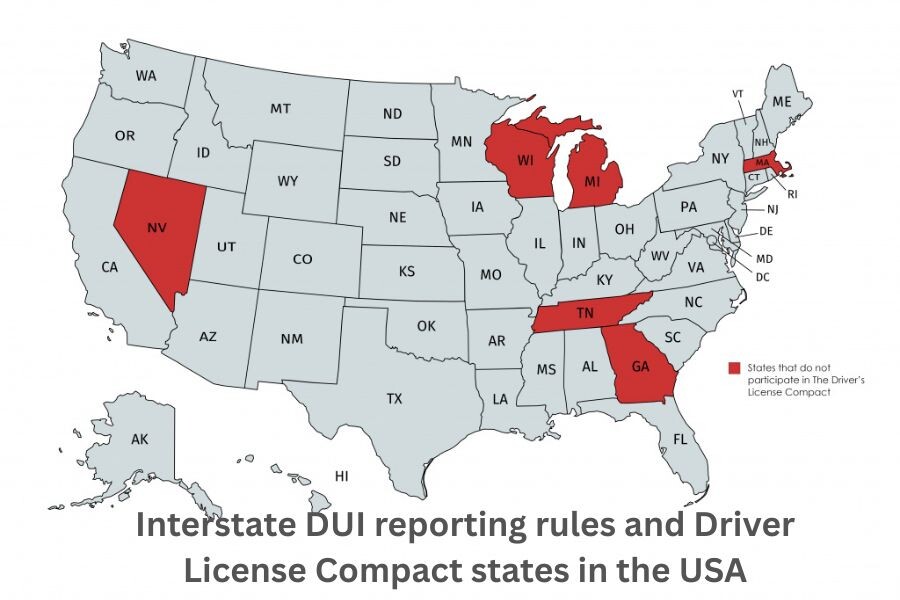
An out-of-state DUI occurs when you’re arrested for drunk driving in a state where you do not hold a driver’s license. Most states are part of the Driver License Compact (DLC) or the Non-Resident Violator Compact (NRVC) — agreements designed to share DUI offenses between states.

Interstate DUI reporting rules and Driver License Compact states in the USA

Will an Out-of-State DUI Show on Your Record?

In most cases, yes — an out-of-state DUI will show on your home state driving record. Here’s why:

  1. DMV DUI Reporting Systems Are Connected:
    States report serious violations such as DUIs to each other under federal agreements.

  2. The Driver License Compact (DLC):
    This compact ensures that a DUI committed in one member state is treated as if it happened in your home state.

  3. Non-Compact States:
    Only a few states (like Michigan, Wisconsin) are not part of the DLC — but they may still share DUI data voluntarily.

  4. Insurance Impact:
    Your car insurance company will likely find out about the DUI even if it happened out of state, affecting your premiums.

How DMV DUI Reporting Works Across States

  • Immediate Notification: Arrest and conviction details are sent to your home state’s DMV.

  • License Suspension: Your state may suspend your license based on another state’s action.

  • Reinstatement Requirements: You may need to complete DUI education programs, mental health assessments, or substance abuse evaluations.

✔ For court-ordered evaluations, visit our Out-of-State DUI Assessment Services page.

What Happens If You Ignore an Out-of-State DUI?

Ignoring or failing to address an out-of-state DUI charge can result in:

  • License Suspension in Your Home State

  • Bench Warrants Issued Across States

  • Additional Fines and Penalties

Consequences of ignoring out-of-state DUI charges for your DMV record

Interstate DUI Reporting Rules You Must Know

RuleImpact on Driver
Driver License Compact (DLC)Ensures all member states share DUI records.
National Driver Register (NDR)Tracks problem drivers nationwide, including DUIs.
Non-Resident Violator Compact (NRVC)Requires compliance with out-of-state traffic violations.

Q1: Will an out-of-state DUI always affect my license at home?
Yes, if your home state is part of the DLC or NRVC, the offense will be recorded and can lead to suspension.

Q2: Can I get a new license in another state to avoid a DUI record?
No — interstate databases like the NDR prevent drivers from bypassing DUI records by moving.

Q3: Will my insurance go up because of an out-of-state DUI?
Most likely — insurance companies check national driving records and can adjust rates accordingly.

Conclusion

So, will an out-of-state DUI show on your home state record? Almost always — thanks to interstate agreements and DMV DUI reporting rules. If you’re facing this situation, consult with a DUI attorney and complete any required evaluations or programs promptly.

Need an Out-of-State DUI Assessment? Contact our team today for fast, court-approved evaluations: Out-of-State DUI Assessment Services.


References:

Updated SAP Guidelines Emphasizing Remote Evaluations: What You Need to Know in 2025

In a significant step toward modernizing drug and alcohol testing compliance, the Department of Transportation (DOT), through its Office of Drug and Alcohol Policy and Compliance (ODAPC), released updated guidelines in June 2023 to address the growing demand for remote SAP evaluations.

These updates are designed to improve efficiency, uphold public safety, and reflect current telehealth advancements—particularly for DOT-regulated employees returning to duty after a drug or alcohol violation.

📌 Key Highlights of the Updated DOT SAP Guidelines

1️⃣ Remote Assessments Are Now Standardized

DOT has expanded provisions allowing virtual SAP evaluations under specific compliance conditions. Now, employees can undergo their initial and follow-up assessments via secure video conferencing platforms—without compromising the integrity of the Return-to-Duty (RTD) process.

This development is especially beneficial for:

  • CDL drivers in rural areas

  • Employees with limited access to in-person providers

  • Companies needing faster turnaround for workforce reinstatement

2️⃣ Personalized Return-to-Duty Plans

The updated guidelines now require SAPs to customize each return-to-duty process based on the individual’s history, job role, and level of substance misuse. This means no more one-size-fits-all protocols—each employee receives a tailored treatment and testing plan, ensuring more effective rehabilitation.

3️⃣ Enhanced Documentation Requirements

SAPs are now expected to provide more thorough and standardized reports, particularly for remote assessments. This includes:

  • Verified identity checks

  • HIPAA-compliant video session logs

  • Clear records of treatment completion

  • Follow-up testing schedules with justification

This move ensures greater accountability and documentation transparency, helping employers and the DOT track compliance more reliably.

🚛 Why These Changes Matter for DOT-Regulated Employees

Whether you’re a commercial truck driver, a railroad operator, or an FAA-regulated pilot, these changes give you faster, more flexible access to DOT-qualified SAP professionals—without sacrificing compliance.

For employers, these updates help reduce downtime, maintain workplace safety, and improve the overall management of DOT drug and alcohol violations.

✅ Get Help Navigating the Updated SAP Rules

At AACS Counseling, we offer fully compliant virtual SAP evaluations, designed to meet the latest DOT and ODAPC standards. Our certified SAPs are trained in both the 2023 guidelines and the latest telehealth procedures to help you or your employee return to work quickly and legally.

📞 Call Now: 800-683-7745
🌐 DOT SAP Program
🌐 SAP Evaluations Nationwide

Call Now