DOT SAP Program Archives - Page 29 of 34 - AACS Counseling

What Every Fleet Manager Needs to Know About Follow-Up Testing Plans

A driver who has completed the Substance Abuse Professional (SAP) program and passed their Return-to-Duty (RTD) test can now return to safety-sensitive work. Their FMCSA Clearinghouse status shows “Not Prohibited.” For many fleet managers, this milestone seems like the end of a long process. In reality, it marks the beginning of a critical new phase: the follow-up testing plan.

This period creates a lot of confusion in DOT compliance. If you manage it incorrectly, you risk severe penalties. Missed tests or paperwork mistakes can immediately reset a driver’s status to “Prohibited” and create unnecessary challenges for your operation. Therefore, understanding the rules and your role is essential.

This guide covers exactly what fleet managers must know about follow-up testing plans. You’ll learn about the minimum testing rules, the SAP’s role, and your key responsibilities. To make the content easier to follow, we’ve added clear subheadings and used simple language throughout.

What Is a Follow-Up Testing Plan?

A follow-up testing plan requires a driver to take a series of unannounced drug or alcohol tests after returning to duty. The DOT makes this step mandatory. Without a follow-up testing plan, a driver cannot stay in a safety-sensitive job after a violation.

This process ensures the driver remains drug- and alcohol-free. It helps verify that the education or treatment worked. The plan also provides clear accountability for both the driver and the employer, helping to keep everyone safe.

Who Decides the Plan? The SAP Sets the Rules

Only the Substance Abuse Professional (SAP) designs the follow-up testing plan. During their final evaluation, the SAP reviews each driver’s case and creates a custom plan. Neither the fleet manager nor the company owner can change the SAP’s requirements.

The SAP gives you a written report. This document tells you:

  • How long the testing plan must last
  • How many tests the driver must take
  • If the tests must check for drugs, alcohol, or both

You must follow the SAP’s plan exactly as they describe.

Understanding the “6 in 12” Rule

The DOT has a strict rule for follow-up testing: every driver must complete at least six unannounced follow-up tests in the first 12 months after getting back to work.

Let’s break down what that means and why you must stay compliant.

  • Six Tests Minimum: This is the lowest number. The SAP may require more based on their professional judgment and evaluation.
  • Twelve Months: This period starts on the day the driver first returns to a safety-sensitive job after a negative RTD test.
  • Unannounced: You must not tell the driver when you will test them. These surprise tests make it more difficult for someone to hide drug or alcohol use.

How Long Can a Plan Last?

While the first year involves the most testing, a SAP can order follow-up testing for up to five years. For example, one plan could look like this:

  • Year 1: 6 tests
  • Year 2: 4 tests
  • Year 3: 2 tests
  • Year 4: 2 tests
  • Year 5: 1 test

You are responsible for tracking and organizing every test over the entire plan.

Your Responsibilities as a Fleet Manager

As the fleet manager, you play a central role in keeping your company compliant. Once you receive the SAP’s report, you must act right away. For best results, you should organize the process, document each step, and ensure your entire team understands what is required.

Scheduling Follow-Up Tests

You must create a random schedule for each test. Never develop a predictable pattern, such as always scheduling on Mondays. Instead, pick different days and surprise times. This approach keeps drivers honest and protects your company.

Ensuring Direct Observation at Every Test

Every follow-up test requires direct observation, with no exceptions. The collector or observer must watch the urine enter the collection cup. This critical step helps prevent tampering. When scheduling, remind the collection site that the test requires direct observation and check that the Chain of Custody Form reflects this.

Documenting Every Follow-Up Test

Create a confidential record for each driver in a follow-up testing plan. Keep the original SAP report and copies of all test results. Good documentation not only helps you track your responsibilities, but it also proves that your company follows DOT regulations in the event of an audit.

Distinguishing Follow-Up Tests from Random Tests

Remember, a follow-up test does not replace a random test, and vice versa. A driver who has a follow-up plan must stay in the random testing pool as well. It is possible for someone to be selected for both kinds of tests in a short period.

What Happens if You Don’t Comply?

Failing to manage a follow-up plan can create big problems for both your driver and your company. Let’s review why it’s so vital to take this phase seriously.

Consequences for Drivers

If a driver misses a scheduled follow-up test, the company must remove them from duty immediately. The Clearinghouse status switches to “Prohibited.” The driver will need to repeat the entire DOT SAP process to regain eligibility.

Consequences for Employers

If a DOT audit finds that you missed a required test, your company faces large fines and potential legal action. The FMCSA considers this a serious violation because it threatens public safety.

Frequently Asked Questions

  • Q: Can a driver refuse a follow-up test?
    A: If a driver refuses, they face a new violation. This is handled as a positive test or “Refusal to Test,” and the RTD process must start from the very beginning.
  • Q: Who pays for follow-up testing?
    A: DOT regulations do not specify responsibility for payment. Most companies require the driver to pay, but check your company’s written policy. Some companies may cover the cost.
  • Q: What happens if a driver fails a follow-up test?
    A: A failed test starts the entire process over. The driver is removed from safety-sensitive duty, and the positive result is reported in the Clearinghouse.
  • Q: Can I use our regular random testing provider for follow-up tests?
    A: Yes, you can, but you must clearly state the test is a “Follow-Up” and must be directly observed. Double-check that the Chain of Custody Form is correct.
  • Q: What if the driver quits before finishing the plan?
    A: The incomplete follow-up plan remains attached to the driver’s Clearinghouse record. Any new employer will see it and must continue the plan as required.

Conclusion: Start Strong, Stay Compliant

A follow-up testing plan is much more than paperwork. It is an active part of your company’s safety efforts. By building strong processes, using careful scheduling, keeping excellent records, and understanding DOT expectations, you protect your drivers, your company, and the public.

The end of the RTD process should not be your finish line—it should signal the start of ongoing safety and compliance.
DOT Drug Test Violation Help

Navigating a DOT (Department of Transportation) drug test violation can feel overwhelming, but you’re not alone. Whether you’re a driver, an employer, or anyone subject to DOT drug and alcohol testing regulations, understanding the violation process and how to resolve it is crucial. This guide will walk you through everything you need to know, from what constitutes a violation to how professional services can be your strongest ally.

What Is a DOT Drug Test Violation?

A DOT drug test violation occurs when an employee fails to meet the drug and alcohol testing requirements outlined in DOT regulations. These violations apply to all safety-sensitive employees—including CDL drivers, airline personnel, transit workers, and others working in regulated industries.

Common DOT Drug Test Violations

Here are the most frequently reported DOT violations:

  • Positive Drug or Alcohol Test Results: Failing a test for prohibited substances or having a blood alcohol content (BAC) of 0.02 or higher while on duty.
  • Refusing to Take a Test: Refusal can include anything from outright saying “no” to failing to appear for the test without a valid reason or tampering with a sample.
  • Using Drugs or Alcohol on Duty: Consuming prohibited substances before or during work hours is a direct violation.
  • Adulterated or Substituted Samples: If the lab finds that you’ve tried to tamper with the test result, it’s considered a violation.

Understanding the type of violation is the first step in resolving the situation.

Consequences of a DOT Drug Test Violation

DOT drug test violations have serious consequences—not just for employees but also for the companies they work for. Here’s what you can expect if there’s a violation:

For Employees

  • Immediate Removal from Safety-Sensitive Work: Any safety-sensitive employee who violates DOT regulations will be immediately disqualified from their duties.
  • Mandatory Return-to-Duty Process: To regain eligibility, you must complete this extensive process under the guidance of a DOT-qualified Substance Abuse Professional (SAP).
  • Impact on Your Record: A DOT violation goes on your permanent record in the Federal Motor Carrier Safety Administration’s (FMCSA) Clearinghouse, affecting future job prospects.

For Employers

  • Compliance Issues: Employers are required to take immediate action when an employee violates drug and alcohol testing regulations. Failure to comply can result in penalties or loss of DOT certification.
  • Operational Disruptions: Losing a safety-sensitive employee can create staffing shortages and operational challenges.

The takeaway? Addressing a violation quickly and correctly is vital to minimizing disruptions and protecting your career or business.

Steps to Take After a Violation

After a DOT drug test violation, it’s essential to act immediately. Follow these steps to get back on track:

1. Understand the Violation

First, ensure you’re fully aware of the type of violation and its implications. This information will help you determine the next steps in resolving the issue.

2. Work With a Substance Abuse Professional (SAP)

A qualified SAP is your key to returning to safety-sensitive duties. They’ll guide you through the mandatory Return-to-Duty process, which includes substance abuse education, treatment recommendations, and follow-up testing requirements.

3. Complete the Return-to-Duty Process

After compliance with SAP recommendations, you’ll need to successfully pass a Return-to-Duty drug or alcohol test before resuming safety-sensitive work. Be prepared for ongoing follow-up testing over the next 12-60 months, as mandated by your SAP.

4. Clear Your Record in the FMCSA Clearinghouse

Your violation will be documented in the Clearinghouse. Once you’ve completed the Return-to-Duty process and follow-ups, your SAP will update your status, showing you’re eligible for employment.

5. Seek Professional Guidance

Navigating DOT drug test violations involves a lot of moving parts. Expert services can help ensure you comply with all steps while minimizing stress and delays.

Why Seek Professional Help?

Dealing with a DOT drug test violation can feel daunting, especially if you’re unsure where to start. This is where professional services come in. Here’s how expert assistance can benefit you or your company:

  • Step-by-Step Support: Professionals understand DOT regulations inside and out, guiding you through every aspect of the process.
  • Compliance Assurance: Avoid costly mistakes or additional penalties by ensuring all steps are completed correctly.
  • Time Savings: Resolving violations quickly prevents undue disruptions to your career or business operations.
  • Personalized Care: If you’re an individual, experts will help create a tailored plan to address your specific circumstances.

Employers can also benefit greatly from professional support. From maintaining compliance to managing employee violations, outside assistance ensures your company continues to operate efficiently.

How We Can Help

At our service, we specialize in providing assistance for DOT drug test violations. Whether you’re an employee trying to return to work or an employer seeking compliance solutions, we’re here to help.

  • SAP Referrals: We’ll connect you with a certified SAP to get started on the mandatory Return-to-Duty process.
  • Clearinghouse Guidance: Need help managing the FMCSA Clearinghouse? We’ll ensure your violation cases are properly documented and resolved.
  • Ongoing Support: From follow-up testing to compliance consultations, we’ll be with you every step of the way.

It’s Time to Act

A DOT drug test violation doesn’t have to define your future. With the right help and guidance, you can resolve the issue and move forward confidently. If you or your company needs assistance, don’t wait. Take action today and reclaim control of your compliance and career.

Contact us now to learn how we can assist you with your DOT drug test violation. Together, we’ll make the process straightforward and stress-free.

Affordable SAP Evaluations for Your Return to Duty

If you’ve encountered a DOT violation due to a failed drug or alcohol test, it can feel like the end of the road for your career in a safety-sensitive role. But don’t worry—getting back on track is possible. The Department of Transportation (DOT) has a structured process to help individuals safely and effectively return to work. A vital step in this process is undergoing an SAP (Substance Abuse Professional) evaluation.

Understanding the importance of SAP evaluations and choosing affordable and efficient services can make your return-to-duty (RTD) process stress-free. This blog will explore what SAP evaluations entail, why affordability matters, and how you can get back to work quickly without spending a fortune.

What Is a DOT SAP Evaluation?

A DOT SAP evaluation is a mandatory step for employees who have violated drug and alcohol regulations in federally regulated safety-sensitive roles. This applies to positions including CDL drivers, pipeline workers, and airline staff.

Here’s how it works:

  1. Initial Evaluation: The SAP will meet with the employee (often virtually) to assess their situation and substance use history.
  2. Treatment or Education Plan: Based on the evaluation, the SAP recommends a treatment or education program that aligns with DOT guidelines.
  3. Follow-Up Evaluation: After completing the program, the employee undergoes a follow-up evaluation to confirm compliance and readiness to return to safety-sensitive duties.
  4. Clearinghouse Update: The SAP files the compliance report with the FMCSA Clearinghouse, clearing the individual to take a return-to-duty drug test.
  5. Return-to-Duty Drug Test: Once cleared, the employee takes a DOT drug test, and passing this allows them to resume work.

This process ensures that employees address substance-related issues effectively while adhering to DOT regulations.

Why Are SAP Evaluations Important for DOT Compliance?

DOT regulations aim to ensure the safety of employees and the public. Substance abuse issues in safety-sensitive roles can lead to severe accidents, injuries, and fines. SAP evaluations are designed to rehabilitate employees while maintaining regulatory compliance.

Key reasons SAP evaluations are vital include:

  • Promoting Workplace Safety: They help identify and address substance use issues, reducing risks in high-stakes roles.
  • Ensuring Legal Compliance: SAP services help businesses and employees meet the requirements set by the DOT and FMCSA.
  • Restoring Careers: The process guides employees back to work, safeguarding their livelihood.

The Benefits of Choosing Affordable SAP Evaluations

For many individuals and employers, the cost of SAP evaluations can be a concern. Choosing an affordable service can make a significant difference without compromising quality. Here’s why affordability matters and how it benefits you:

1. Access for All Employees

Affordable SAP services ensure that everyone, regardless of their financial situation, can meet DOT requirements. This is especially crucial for small businesses and employees on tight budgets.

2. Cost-Effective Compliance

By opting for budget-friendly options, you can complete the return-to-duty process without unnecessary financial stress. Many services, including installment payment plans, allow you to spread out costs.

3. High-Quality Support at Low Costs

Choosing an affordable provider doesn’t mean sacrificing quality. Reputable providers ensure their team consists of DOT-certified professionals who deliver effective evaluations and personalized recommendations.

4. Quick Turnaround Times

Many affordable services focus on efficient processing, with an emphasis on quick evaluations and follow-ups. This minimizes delays in getting back to work.

5. Reduced Financial Risks for Employers

Businesses benefit from reduced legal and operational risks by ensuring their teams comply with DOT requirements without exceeding budgetary constraints.

Steps to a Successful Return-to-Duty with SAP Evaluations

Getting back to work after a DOT violation might feel overwhelming, but understanding each step of the return-to-duty process (RTD) can simplify it. Here’s how you can successfully complete the SAP process:

  1. Find a DOT-Certified SAP Provider
    Start by locating a certified SAP professional. Many providers offer virtual evaluations, making the process convenient, nationwide.

  2. Complete the Initial Evaluation
    Attend the scheduled evaluation with the SAP. This is your chance to showcase your readiness to comply with DOT regulations and receive a tailored plan for recovery or education.

  3. Follow the Recommended Treatment or Education Plan
    Complete the program as recommended by the SAP. Whether it involves counseling, treatment, or education sessions, fulfilling this requirement is essential to move forward.

  4. Submit to a Follow-Up Evaluation
    After program completion, the SAP will reassess your readiness to return to safety-sensitive work.

  5. Take the Return-to-Duty Drug Test
    Once you’ve passed the follow-up evaluation, you’ll need to complete and pass a return-to-duty drug test.

  6. Resume Work with Confidence
    Congratulations! With everything cleared, you’re officially ready to rejoin your job and continue your career.

How to Choose the Right SAP Evaluation Service

Not all SAP services are created equal. Finding the right provider can significantly impact your return-to-duty experience. Here’s what to look for when choosing a service:

Certified Professionals

Verify that the provider works with DOT-certified SAP professionals. Certification ensures that the service aligns with federal guidelines.

Affordability

Look for a provider offering transparent pricing, with no hidden fees. Options like installment plans can make the process more budget-friendly.

Fast Response Times

A provider that offers same-day scheduling, quick follow-ups, and fast reporting is ideal for minimizing delays in your RTD process.

Comprehensive Support

The best SAP services go beyond evaluations, offering guidance, updates for the FMCSA Clearinghouse, and support throughout the return-to-duty steps.

Why People Are Turning to Affordable and Virtual SAP Services

Modern advancements have made SAP evaluations more accessible than ever. Virtual services are becoming increasingly popular for their convenience and efficiency. Key benefits of virtual evaluations include:

  • Convenience: Employees can complete evaluations from their homes, saving travel time and costs.
  • Nationwide Reach: Virtual services connect individuals with DOT-qualified professionals anywhere in the United States.
  • Quick Turnaround: Online evaluations often mean faster appointments and results.

Affordable and virtual SAP services remove many of the barriers that previously made the process challenging, empowering more individuals to comply with DOT requirements and get back to work quickly.

Final Thoughts

Affordable SAP evaluations are an essential resource for anyone navigating the return-to-duty process. By choosing a cost-effective and reliable SAP service, you’ll not only meet DOT compliance standards but also take a key step toward rebuilding your career.

Whether you’re an employer ensuring compliance for your team or an individual looking to restore your career, leveraging affordable SAP services is a smart, stress-free solution. Don’t wait to take the first step. Get started today, and find a certified, affordable provider that suits your needs. With the right guidance, you’ll be back on the road to success in no time.

Where to Get a SAP Evaluation for DOT & Other Court-Ordered Programs

If you’re searching for a “SAP Evaluation near me”, it’s likely you’re dealing with a DOT violation, DUI, or other legal issue requiring a certified assessment or treatment program. Whether you’re a CDL driver needing a Return-to-Duty SAP Program or someone facing immigration, custody, or DUI-related assessments, finding the right provider can be overwhelming—especially when time and compliance are critical.

Below is your all-in-one guide to certified programs available in USA and nationwide, designed to help you meet legal and DOT requirements and get back on track quickly.

SAP Evaluation for DOT & Return to Duty Program Near You

A Substance Abuse Professional (SAP) Evaluation is mandatory if you’ve failed or refused a DOT-mandated drug or alcohol test. This includes:

  • CDL truck drivers
  • Bus operators
  • Airline employees
  • Pipeline and railroad workers
  • Safety-sensitive transportation professionals

The SAP Return to Duty Program involves a comprehensive process:

  1. Initial SAP Evaluation
  2. Education or Treatment Plan
  3. Follow-up SAP Assessment
  4. DOT Return-to-Duty Test
  5. Follow-up Testing Program (minimum 6 tests in 12 months)

Looking to “enroll in DOT SAP program near me”? Make sure your provider is DOT-qualified and certified to report your progress directly to your Designated Employer Representative (DER).

🚚 SAP Program for CDL Drivers

If you’re a truck driver with a failed drug or alcohol test, your livelihood depends on getting a certified SAP Assessment for CDL drivers. At AACSCounseling.com, we offer evaluations recognized by:

  • FMCSA (Federal Motor Carrier Safety Administration)
  • DOT Compliance Networks
  • State and Federal courts

Don’t trust your future to non-compliant providers—we’re certified and USA-based for local accessibility and nationwide recognition.

🧾 DOT Drug and Alcohol Program Evaluation & Providers

Looking for DOT SAP Program Providers? We offer flexible, confidential appointments (in-person or virtual) to help you:

  • Fulfill court or employer requirements
  • Pass the Return-to-Duty process
  • Avoid job loss or long-term disqualification
  • Restore your CDL and employability

Additional Legal and Court-Ordered Services Available:

🛂 Immigration Hardship Waiver Evaluation

Need to prove psychological hardship for a visa or green card case? We offer professional mental health assessments for immigration waiver applications, accepted by immigration attorneys and USCIS.

🚔 Out of State DUI Evaluations

If you’ve been charged with DUI in another state, we can conduct a DUI assessment remotely that satisfies court or DMV requirements.

👨‍👩‍👧 Child Custody Mental Health Assessment

Courts often require a mental health evaluation during custody disputes. We provide objective assessments that support parental stability and child welfare.

💬 Anger Management Classes

Whether court-ordered or voluntary, our Anger Management Programs help individuals gain emotional control through evidence-based therapy.

🧠 IOP (Intensive Outpatient Program)

For individuals needing structured treatment without full-time residential care, our IOP offers daytime or evening flexibility to maintain work-life balance while getting support.

📚 ASAM Classes (Level I & II)

Our ASAM-based education and treatment meets state court standards and helps participants understand substance use patterns and recovery tools.

🌎 Spanish DUI Evaluation

Sí, hablamos español. We offer DUI Evaluations in Spanish, recognized by USA courts, ensuring language doesn’t become a barrier to compliance.

📍Where Can I Attend a SAP Program?

You can attend in-person or virtually, depending on your location and DOT regulations. Our SAP programs are open to clients from Atlanta, Augusta, Columbus, Macon, Savannah, and all over USA.

🔄 How to Get Back to Duty After Failing a DOT Test

  1. Book a Certified SAP Evaluation
  2. Complete Recommended Treatment or Education
  3. Pass Your Follow-Up SAP Evaluation
  4. Submit to Return-to-Duty Testing
  5. Resume Work in Safety-Sensitive Role

Every minute you delay, your CDL and employment prospects are at risk. Let us help you start today.

📞 Get Started Now

Don’t risk non-compliance. Whether you’re looking for a certified SAP near you, or need help with a mental health evaluation for immigration or family court, we have licensed professionals ready to assist.

👉 Book your evaluation today at: https://www.aacscounseling.com
📍 USA-based. Nationwide services available. Virtual options supported.

The Real Cost of a DOT SAP Program: Fees, Tests, and Hidden Expenses

If you have failed a DOT drug test or received a refusal, your career has been put on pause. The immediate priority is getting through the Return-to-Duty (RTD) process so you can get back to earning a paycheck. But as you start making calls, a new worry emerges: How much is this going to cost?

The financial burden of a DOT violation can be significant, and it is often more than just the fee you pay the Substance Abuse Professional (SAP). The total cost is a combination of SAP fees, education or treatment expenses, multiple drug tests, and potential hidden costs that can add up quickly.

Understanding these expenses upfront helps you budget effectively and avoid surprises. This guide breaks down every potential cost you will face, from the initial evaluation to the final follow-up test.

Breaking Down the Costs: A Three-Part Financial Journey

The DOT Return-to-Duty process has distinct phases, each with its own price tag. Federal regulations require you, the employee, to bear the costs, though some company policies may offer assistance. Let’s look at what you can expect to pay at each stage.

Part 1: The Substance Abuse Professional (SAP) Fees

The SAP is the quarterback of your return-to-duty process. Their services are mandatory and specialized. Most SAPs bundle their services into a single package fee, but it’s crucial to confirm what is included.

  • What it is: This fee typically covers the initial face-to-face clinical evaluation, the referral to an education or treatment provider, the follow-up evaluation after you complete your program, and the required reporting to the FMCSA Clearinghouse.
  • Typical Cost: $400 – $600. This can vary significantly based on your location. SAPs in major metropolitan areas may charge more than those in rural regions.
  • Hidden Expenses to Watch For:
    • Separate Evaluation Fees: Some SAPs charge separately for the initial and follow-up evaluations. This can end up costing more than a bundled package.
    • Clearinghouse Reporting Fees: A reputable SAP includes Clearinghouse reporting in their fee. Be wary of anyone who tries to add an “administrative fee” later for uploading your reports.
    • Missed Appointment Fees: SAPs have busy schedules. If you miss your appointment without proper notice, you will likely be charged a fee.

When you hire an SAP, get the total cost in writing and ask for a clear breakdown of what is included.

Part 2: Education or Treatment Program Costs

This is the most variable and potentially expensive part of the process. Based on your initial evaluation, the SAP will prescribe a specific course of action. This is not negotiable; you must complete the program recommended by the SAP.

  • What it is: The SAP will determine the appropriate level of care. This could range from a short educational class to a more intensive treatment program.
  • Typical Costs:
    • Educational Program: If the SAP determines you do not have a substance abuse disorder, you may only be required to complete an educational course. These are often online and can range from $100 to $500.
    • Outpatient Treatment: If more intervention is needed, you might be referred to an outpatient program (IOP), which involves regular counseling sessions. The cost can range from $1,500 to $10,000 or more, depending on the duration and intensity.
    • Inpatient Treatment: For serious substance abuse issues, the SAP may require inpatient or residential treatment. This is the most expensive option, often costing $10,000 to $25,000+ for a 30-day program.

Your health insurance may cover some or all of the costs for clinical treatment, but it rarely covers SAP-mandated educational programs. Check your insurance policy carefully.

Part 3: The Cost of Drug Testing

Getting back to work requires passing multiple drug tests, and you will likely pay for most of them out of pocket.

  • What it is: These are urine drug tests conducted at a certified laboratory. All tests in the return-to-duty process must be directly observed.
  • Typical Costs:
    • Return-to-Duty (RTD) Test: After the SAP clears you, you must pass one negative RTD test. The cost is usually $50 to $100. An employer is not required to pay for this test.
    • Follow-Up Testing: This is a long-term expense. The SAP will create a follow-up testing plan that includes a minimum of six tests in the first 12 months, but the plan can last up to five years. You could be looking at $300 to $600+ in testing fees in the first year alone.

The employer is responsible for ensuring these follow-up tests are conducted, but they are not required to pay for them. Check your company’s policy to see if they cover this expense.

The Biggest Hidden Cost: Lost Wages

While not a direct fee, the biggest financial hit you will take is lost income. From the moment you fail the test, you are prohibited from performing safety-sensitive duties. The return-to-duty process can take anywhere from a few weeks to several months.

If the process takes two months and you typically earn $5,000 a month, you have lost $10,000 in wages on top of all the other fees. This is why choosing an efficient and organized SAP is so critical—every day of delay costs you money.

Budgeting for the Process and Avoiding Unnecessary Costs

  • Shop Around for an SAP: Your employer must give you a list of SAPs, but you can choose any qualified SAP. Call a few to compare package prices and find one that fits your budget.
  • Ask About Payment Plans: Some SAPs and treatment centers offer payment plans to help spread out the cost.
  • Check Your Insurance: Before you meet the SAP, call your insurance provider and ask specifically about coverage for “substance abuse treatment” and “outpatient counseling.”
  • Don’t Pay for “Guarantees”: Avoid any SAP who promises a quick, cheap outcome. This is a red flag that could lead to an invalid process, forcing you to start over and pay again.

Frequently Asked Questions

Who pays for the SAP program?

According to DOT regulations, the employer is not required to pay for the employee’s SAP evaluation, treatment, or testing. The financial responsibility generally falls on the driver. However, some companies may choose to cover some or all of the costs as part of their company policy or a union agreement. Always check with your employer.

Are there free SAP services?

No. The SAP process is a professional service requiring specialized training and credentials. You will not find a qualified DOT SAP who offers their services for free. While some community health centers offer low-cost counseling, it will not meet the specific requirements of the DOT Return-to-Duty process.

Can I negotiate costs with the SAP?

You can compare prices between different SAPs, but the fee for a specific SAP is generally not negotiable. They offer a professional service with a set fee structure. However, you may be able to negotiate payment schedules with the education or treatment provider that the SAP refers you to.

Conclusion

The total cost of a DOT violation is a tough pill to swallow. Between SAP fees, treatment programs, drug testing, and lost wages, the financial impact can easily reach thousands of dollars. By understanding the breakdown of these expenses, you can create a realistic budget and make informed decisions.

Treat this process as an investment in your career. By choosing a professional SAP and focusing on completing the steps efficiently, you can minimize your time off the road and get back to earning an income as quickly as possible.

The Top Guide to the DOT SAP Program Substance Abuse Process

The DOT SAP program substance abuse is crucial for employees in safety-sensitive positions who violate substance abuse policies. This program involves thorough evaluations, mandatory treatments, and strict follow-up testing to ensure these employees are fit to return to duty. Understanding each step of this program helps maintain compliance and safety.

Key Takeaways

  • The DOT SAP Program ensures employees in safety-sensitive roles are fit after substance abuse violations, emphasizing compliance and a culture of safety.
  • Substance Abuse Professionals (SAPs) assess, treat, and monitor employees’ compliance with DOT regulations throughout the return-to-duty process.
  • Employers enforce compliance with the SAP Program, provide access to qualified SAPs, and ensure employees do not perform safety-sensitive duties until they complete the required evaluations and treatments.

Understanding the DOT SAP Program

An overview of the DOT SAP program and its significance in substance abuse evaluation.

The DOT Substance Abuse Professional (SAP) program guarantees that employees performing safety-sensitive duties meet their responsibilities after a substance abuse violation. This initiative upholds safety standards in the transportation sector by enforcing drug and alcohol regulations, preventing mishaps, and protecting society’s wellbeing. Beyond being a statutory requirement, complying with these norms nurtures a secure and accountable work environment.

Employers play a pivotal role by tracking adherence to SAP guidelines and providing ongoing education on substance misuse prevention. These practices offer significant reinforcement. Failure to comply can have severe consequences for both employees and employers.

Understanding how SAPs under DOT jurisdiction operate highlights the profound importance of this protocol.

What is a Substance Abuse Professional (SAP Evaluation)?

A Substance Abuse Professional (SAP) holds a license or certification and specializes in substance-related disorders aligned with DOT regulations. To qualify, individuals must hold recognized credentials and complete specialized training. This training equips them to diagnose substance-related disorders and meet Department of Transportation drug testing requirements.

SAPs evaluate employees who breach DOT drug and alcohol standards, identify their treatment needs, and prescribe follow-up measures. Their face-to-face assessments create individualized treatment plans essential for employees aiming to return to duty.

For example, AACS Counseling offers comprehensive assessments for those who fail to comply with DOT’s drug and alcohol policies. These professionals provide thorough support using programs designed to guide individuals through recovery steps before returning to work.

The Role of the Department of Transportation (DOT)

The Department of Transportation (DOT) enforces drug and alcohol regulations as part of the SAP Program to uphold public safety in transportation. Employers oversee employees’ compliance with SAP recommendations and implement follow-up testing once employees resume their positions to ensure ongoing adherence to DOT standards.

The DOT’s enforcement safeguards the transportation industry’s integrity. It confirms that employees who meet all criteria and prove fitness for duty can safely perform safety-sensitive tasks, preventing hazards that might endanger the public. This regulatory process underscores the DOT’s central role in the SAP Program.

The Return-To-Duty Process

The return-to-duty process for substance abuse professionals and its importance.

The return-to-duty process reintegrates employees into safety-sensitive positions after substance abuse violations. This procedure maintains public safety and industry standards in transportation. Employees must undergo assessments, participate in treatment programs, and submit to follow-up testing to resume their duties.

Providers like AACS Counseling support individuals by conducting evaluations and offering treatment plans tailored to DOT mandates. These services confirm employees’ readiness for operational duties and foster a safer work environment.

Initial Substance Abuse Evaluation

The return-to-duty process begins with a comprehensive substance abuse evaluation. A Substance Abuse Professional (SAP) assesses the employee who violated DOT regulations and recommends education, treatment options, and follow-up testing schedules. This assessment addresses all aspects of the employee’s substance misuse issues.

After the evaluation, the SAP outlines treatment plans and determines if the employee is ready to return to duty. This process provides support and interventions designed to help employees overcome substance abuse and safely resume work.

Treatment and Education Requirements

Employees must complete specific treatment and continuing education programs after the initial evaluation. These programs address individual needs and prepare employees to resume their roles. Completing these programs is mandatory for reinstatement.

The SAP conducts a final evaluation to assess the employee’s readiness to return to duty. This evaluation reviews treatment progress and includes a mandatory return-to-duty test, which the employee must pass. These steps ensure the employee is fit for duty and maintain public safety.

Follow-Up Testing Plan

A follow-up testing plan maintains continuous compliance with DOT regulations. This plan requires at least six surprise tests over one year to monitor adherence to treatment recommendations.

Depending on circumstances, employees may undergo follow-up testing for up to five years. This extended monitoring ensures ongoing compliance with DOT regulations and suitability for their duties.

Implementing a follow-up testing plan protects the integrity of the return-to-duty process.

Completing the SAP Program

Completing the SAP program and the steps involved in the process.

Successfully completing the SAP Program marks a critical step for employees preparing to return to safety-sensitive roles. This achievement shows strict compliance with treatment and SAP guidelines, proving that employees have addressed substance abuse issues and are ready to resume their responsibilities.

AACS Counseling offers personalized programs tailored to each client’s needs, providing essential support for program completion. Following the SAP’s treatment plan prepares employees to return safely to their duties.

Compliance and Monitoring

Compliance and monitoring remain vital throughout the SAP Program. The SAP evaluates adherence to treatment recommendations during follow-up assessments to ensure compliance with DOT regulations. This includes specifying the frequency and duration of follow-up testing.

The SAP’s final review assesses the employee’s compliance and readiness to return to duty. Ongoing monitoring and adherence to guidelines remain essential.

Final Assessment and Return to Duty Test

The SAP conducts a final evaluation to determine if the employee can resume safety-sensitive duties. This includes reviewing treatment adherence and requiring the employee to pass a return-to-duty test.

DOT SAP Program FAQ’s- Frequently Asked Questions

What is the purpose of the DOT SAP Program?

The purpose of the DOT SAP Program is to evaluate and manage employees in safety-sensitive positions who have substance abuse violations, thereby promoting safety and compliance in the transportation industry.

This ensures a safer environment for both workers and the public.

Who is a Substance Abuse Professional (SAP)?

A Substance Abuse Professional (SAP) is a licensed or certified expert tasked with evaluating employees who breach drug and alcohol regulations, recommending treatment options, and ensuring adherence to Department of Transportation guidelines.

Their role is vital for maintaining workplace safety and compliance.

What steps are involved in the return-to-duty process?

The return-to-duty process involves an initial substance abuse evaluation, fulfilling treatment and education requirements, and implementing a follow-up testing plan to ensure ongoing compliance.

This structured approach emphasizes accountability and support for a successful reintegration.

What are employers’ responsibilities in the SAP Program?

Employers are responsible for providing a list of qualified SAPs, monitoring employees’ adherence to SAP recommendations, and ensuring safety-sensitive duties are maintained without compromise.

This proactive approach is essential for maintaining workplace safety and compliance.

How does AACS Counseling support employees in the SAP Program?

AACS Counseling effectively supports employees in the SAP Program by providing specialized evaluations and treatment plans, ensuring they have the necessary resources to successfully reintegrate into their roles.

Crack the Code to DOT SAP Evaluation and Program Success

Are you stuck in the maze of DOT regulations after a substance abuse violation? If the phrase “return-to-duty process” fills you with dread, fear not. The DOT SAP Evaluation and DOT SAP Program are your golden tickets back to compliance and, ultimately, your job. Whether you’re a commercial driver, pilot, or in another safety-sensitive role, understanding this process is your first step toward turning things around.

This guide breaks down exactly what you need to know about these programs, how they work, and why they’re critical for getting you back in the driver’s seat (literally).

What is a DOT SAP Evaluation?

A DOT SAP Evaluation is a mandatory step for anyone in a safety-sensitive role who has violated the Department of Transportation’s drug and alcohol policy. The Substance Abuse Professional (SAP) acts as your navigator, assessing your situation and guiding you on the path to rehabilitation.

This evaluation is no mere formality. It’s a structured process designed to ensure public safety while giving you the tools you need to address substance abuse issues. It’s not about punishment; it’s about preparing you to safely resume your work.

Who Needs a DOT SAP Evaluation?

If you’ve tested positive for drugs or alcohol during any DOT-mandated screening or refused a test (final warning, that’s a violation too!), you’re required to undergo a SAP evaluation. This applies to transportation employees across industries, including commercial truck drivers, bus operators, airline pilots, pipeline workers, and more.

Failing to comply will leave you permanently excluded from performing safety-sensitive duties. This could mean losing your job and, in many cases, your livelihood.

What Does the DOT SAP Program Entail?

The DOT SAP Program isn’t just about ticking a box. It’s a comprehensive, step-by-step roadmap focused on rehabilitation and compliance.

  1. Initial Assessment: Your SAP conducts an evaluation to understand the severity of your situation. This involves discussing your history, substance use patterns, and other relevant factors. It’s a judgment-free zone, so honesty is critical.

  2. Recommendation for Education or Treatment: Based on the assessment, the SAP will recommend next steps. These could range from short-term education sessions to intensive treatment programs. This is tailored to ensure you get the support you specifically need.

  3. Complete the Program: Your job is to follow through on the SAP’s recommendations. If they prescribe treatment, ensure you actively participate and complete the program. If it’s education, attend every session. Half-measures won’t cut it.

  4. Follow-Up Evaluation: Once you finish the prescribed program, the SAP conducts a follow-up evaluation to verify that you’re ready to move forward. Only then can you transition to the next stage.

  5. DOT Return-to-Duty Process: Here’s the moment you’ve been waiting for. After successfully completing the SAP program and follow-up evaluation, you’re cleared to take a return-to-duty drug and/or alcohol test. Pass this test, and you’re finally eligible to step back into your role.

And that’s not all. Just because you’re back at work doesn’t mean you’re entirely off the radar. Expect to undergo a minimum of six random follow-up tests within the next 12 months to ensure ongoing compliance.

Why is the DOT SAP Evaluation Important?

Why is the DOT SAP Evaluation Important?

Beyond the obvious fact that it’s required, the DOT SAP Evaluation is a lifeline if you’ve fallen off course. It emphasizes personal responsibility by steering you toward a healthier, more reliable path.

Here’s why it matters:

  • Regaining Employment: Until you complete the SAP program, you’re sidelined. Airlines, trucking companies, and other DOT-regulated employers won’t allow you to work until you comply.

  • Public Safety: Look, the DOT isn’t trying to make your life harder. It’s protecting lives on the road, in the air, and across other critical areas. Completing this program proves you’re safe to perform safety-sensitive duties.

  • Professional Growth: Believe it or not, this isn’t just about keeping your job. The education and treatment pathways often empower individuals to tackle broader issues that may have been holding them back.

The Benefits of Completing the DOT SAP Program

Still debating whether it’s worth it? Completing the DOT SAP Program doesn’t just get the Department of Transportation off your back. It has tangible benefits that make it worth every moment of effort.

  1. Back On the Job: Without completing this process, you’re legally barred from safety-sensitive work. Don’t wait for your career to slip out of reach.

  2. Compliance Equals Confidence: Employers value reliability. By fulfilling every step of this process, you show them you’re committed to doing things the right way.

  3. Personal Growth: The SAP program isn’t just about passing tests. It’s about taking control of your professional and personal life. For many, it’s a wake-up call that ignites long-term change.

  4. Proving Accountability: Whether to your employer, family, or yourself, completing the DOT SAP Program demonstrates responsibility and dedication.

How to Get Started

The first step is finding a qualified DOT SAP near you. Make sure they are certified and well-versed in DOT regulations. You don’t want to risk wasting time or money with someone who doesn’t meet the department’s standards.

Next, commit to the process. It can feel overwhelming, but each step brings you closer to getting your life back in order. Remember, millions of people have faced similar challenges and come out stronger.

Final Thoughts

The DOT SAP Evaluation and Program may seem like hoops to jump through, but they serve an essential purpose. They protect public safety while giving individuals like you a second chance to prove your readiness to work.

If you’ve found yourself faced with this process after a substance abuse violation, don’t despair. The DOT SAP Program isn’t an obstacle; it’s an opportunity to regain control, compliance, and confidence. By following through, you’re paving the way to a brighter, more stable career—not just for today, but for every mile ahead.

Why Is My Clearinghouse Record Still Prohibited?

You have done everything right. You met with a Substance Abuse Professional (SAP), you completed your education or treatment program, and you walked into a collection site and passed your observed Return-to-Duty drug test. You are ready to get back in the truck and start earning a paycheck again.

There is just one problem: You logged into the FMCSA Drug and Alcohol Clearinghouse, and big red letters still say “PROHIBITED.”

Panic sets in. Did you fail the test? Did the lab lose your sample? Is your career over?

Take a deep breath. In most cases, if you know you passed the test, the issue is not with your sample—it is a data entry error. The Clearinghouse is a rigid database that relies on specific inputs from three different parties. If one person forgets to click a button, your status freezes.

This guide will help you troubleshoot why your record hasn’t updated and give you the specific steps to fix it.

The “Invisible Wall” of Data Entry

The Clearinghouse system is automated, but it isn’t magic. It doesn’t “know” you passed a test until someone tells it. Your status will only flip to “Not Prohibited” when the system successfully links two specific documents to your CDL number:

  1. The SAP Follow-Up Eligibility Report (Uploaded by your SAP)
  2. The Negative Return-to-Duty Test Result (Uploaded by your Employer)

If either of these is missing, or if the information doesn’t match perfectly, you stay grounded. Let’s look at the four most common reasons for this delay.

Reason 1: Your Employer Has Not Reported the Result

This is, without a doubt, the most common reason for a delay.

There is a widespread misconception among employers—especially smaller trucking companies—that the Medical Review Officer (MRO) uploads the negative result. This is false.

  • The MRO’s Job: They verify the lab result and send it to the employer.
  • The Employer’s Job: They must take that verified negative result, log into their Clearinghouse portal, and manually report the result to the FMCSA.

If your employer (or their Consortium/Third-Party Administrator) hasn’t logged in and entered the data, the Clearinghouse has no idea you took a test. The result is sitting in a file on someone’s desk while you sit at home.

The Fix: Call your employer’s Designated Employer Representative (DER). Ask them specifically: “Have you reported my negative Return-to-Duty result to the Clearinghouse yet?” Remind them that for an RTD test, the regulation places the reporting responsibility on them, not the MRO.

Reason 2: The SAP Report is Missing

Before you can even take a Return-to-Duty test, your SAP must upload a report stating that you have successfully complied with their recommendations.

Sometimes, a driver rushes to take the test before the SAP has had a chance to upload this report. Other times, the SAP is waiting on you.

Did you designate your SAP?
Your SAP cannot upload anything to your profile until you log in and send them a “designation request.” If you forgot to do this, their hands are tied.

The Fix: Log into your driver dashboard.

  1. Check if you have designated your SAP.
  2. If you have, look for the section titled “SAP Report – Follow-Up Eligibility.”
  3. If it is missing, call your SAP immediately to ensure they have processed your paperwork.

Reason 3: The Wrong Test Type Was Selected

This is a clerical error that causes major headaches. When you went to the collection site, the collector had to check a box on the Federal Chain of Custody Form (CCF) indicating the “Reason for Test.”

It must be marked as Return-to-Duty.

If the employer sent you for a “Pre-Employment” test because you are a new hire, or if the collector accidentally checked “Random,” the Clearinghouse will not count it toward clearing your violation.

  • A “Pre-Employment” test—even if negative—does not satisfy the federal requirement to clear a violation.
  • The system filters specifically for “Return-to-Duty” results to lift the prohibition.

The Fix: Ask to see a copy of the Chain of Custody Form (CCF). Look at Step 1, “Reason for Test.” If the wrong box is checked, your employer may need to submit a “memo for record” to the laboratory or MRO to correct the form, or you may be forced to take the test again with the correct classification.

Reason 4: CDL Mismatch or Typo

The Clearinghouse links data based on your Commercial Driver’s License (CDL) number and the state of issuance.

If your employer makes a typo when entering your negative result—even one wrong digit—the result enters the system but floats in the digital void. It never attaches to your specific profile.

This also happens if you recently moved or renewed your license. If your Clearinghouse profile has your old license number, but the employer reports the result using your new license number, the system may not recognize you as the same person.

The Fix: Verify exactly what CDL number your employer has on file. Compare it to the profile information in your Clearinghouse account. They must match 100%.

Action Plan: How to Unstick Your Status

If you are tired of waiting, stop guessing and start investigating. Follow this checklist to resolve the issue:

Step 1: Check Your Dashboard

Log in to the Clearinghouse. Look at your violation timeline. The system is visual—it will show you exactly what is complete and what is pending.

  • Is there a checkmark next to the SAP Eligibility Report?
  • Is the Return-to-Duty test section blank?

Step 2: Contact the Missing Party

  • If the SAP report is missing: Call your SAP. Confirm they accepted your designation and ask when they will upload the report.
  • If the Test Result is missing: Call your employer. Politely explain that the MRO does not upload negative RTD results and that you need them to manually enter it so you can legally drive.

Step 3: Verify the Paperwork

If both parties swear they did their part, ask for proof. Ask the employer for a screenshot of the upload confirmation. Check the CCF form for the correct test category.

Frequently Asked Questions

How do I know which step is missing?

Your Clearinghouse Driver Dashboard is your roadmap. It lists the steps of the Return-to-Duty process in order. If a step is completed, it will be grayed out or checked off. The step that is highlighted or unchecked is the one holding up your status.

Can I contact the Clearinghouse for help?

Yes, but their power is limited. You can contact the FMCSA Clearinghouse support team for technical issues (like login problems). However, they cannot upload a test result for you, and they cannot force your employer to do it. They can only explain what data is missing from your file.

What if my employer refuses to report the test?

This is a serious regulatory violation. Employers are required by federal law (49 CFR Part 382.705) to report negative Return-to-Duty results. If an employer refuses, remind them of this regulation. If they still refuse, you may need to speak with the company’s Safety Director. In extreme cases, you can submit a grievance or report the carrier to the FMCSA, though this should be a last resort as it may damage your relationship with the company.

Conclusion

Seeing “Prohibited” when you know you are clean is incredibly frustrating. However, the Clearinghouse is strictly a data-in, data-out system. It doesn’t hold grudges; it just holds data. By identifying which piece of the puzzle is missing—usually the employer’s report—and making the right phone call, you can often resolve the issue in minutes.

Stay proactive. Don’t just wait for the screen to change. Verify the data, make the calls, and clear your path back to the road.

Understanding What the DOT SAP Program Stands For?

The DOT SAP Program plays a critical role in ensuring public safety and regulatory compliance. This program is designed to address substance abuse issues among safety-sensitive employees regulated by the DOT, such as truck drivers, pilots, and train operators. A Substance Abuse Professional is a qualified individual, certified to evaluate employees who have violated DOT drug and alcohol regulations. They not only assess the extent of an employee’s substance abuse problem but also guide them toward treatment and eventual recovery.

The SAP program is not just about compliance; it emphasizes rehabilitation and providing a structured path for employees to regain employment without compromising safety standards. By focusing on accountability and support, the program aims to maintain a balance between individual well-being and public safety.

When Is the DOT SAP Program Necessary?

The DOT SAP program becomes mandatory when a safety-sensitive employee violates drug or alcohol regulations set forth by the DOT. These violations can include testing positive for drugs or alcohol during a random drug test, refusing to take a test, or engaging in prohibited drug use at any time.

Once an employee tests positive or engages in any violation, they are immediately removed from safety-sensitive functions. Participation in the DOT SAP program is required if they wish to regain eligibility to perform such duties. The program ensures that individuals are assessed and receive proper treatment, offering them a chance to address the underlying issues that led to the violation. Without completion of this program, the employee remains ineligible to return to safety-sensitive work.

For employers, the program is crucial to maintain compliance with DOT regulations and ensure they are not endangering public safety by allowing unfit employees to resume their duties.

How to Transition from Prohibited Status to Employment

Being placed on prohibited status can be overwhelming for an employee, but the DOT SAP program provides a clear roadmap for transitioning back to employment. Here are the key steps to achieve this:

Evaluation by a SAP

The first step is undergoing an in-depth evaluation by a qualified Substance Abuse Professional. During this session, the SAP will assess the nature and severity of the substance use issue and determine the necessary steps for recovery.

Comply with Treatment Recommendations

Based on the assessment, the SAP will outline a treatment or education plan. This may include counseling sessions, participation in rehabilitation programs, or enrolling in education courses about substance use.

Follow-Up Evaluation

Once the treatment plan is completed, the employee must undergo a follow-up assessment with the SAP. The purpose of this meeting is to verify whether the individual has successfully adhered to the prescribed plan and is fit to return to work.

Return-to-Duty Test

After receiving an approval from the SAP, the employee must take and pass a return-to-duty drug and/or alcohol test. This test must show a negative result to proceed.

Follow-Up Testing Plan

Even after being reinstated, the employee is often subject to a follow-up testing schedule. These unannounced tests serve as additional accountability measures to ensure the individual remains compliant with the regulations.

This structured approach not only offers a second chance for the employee but also reassures employers and the public of their commitment to sobriety and safety.

The Importance of the SAP Requirement

The Importance of the SAP Requirement

The SAP requirement is a critical component of the DOT’s efforts to enhance safety in transportation industries. By mandating that employees who violate drug or alcohol rules participate in the program, the DOT addresses both immediate safety concerns and long-term behavioral change.

Rehabilitation and accountability are central to the SAP program. The assessment and treatment aspects ensure employees confront potential addiction issues while taking responsibility for their violations. The program also provides employers with a system to help employees without risking compliance penalties or public safety.

Furthermore, the SAP requirement establishes consistent standards across safety-sensitive industries. All employees, whether they work for a small logistics company or a large airline, are held to the same regulatory and ethical standards related to substance use. This creates a level playing field and reinforces trust between employers, employees, and the communities they serve.

Benefits of Partnering with AACS Counseling for Employers and DERs

Employers and Designated Employer Representatives (DERs) often bear the responsibility of implementing the DOT SAP requirements within their organizations. Partnering with a provider like AACS Counseling can simplify these responsibilities while delivering several key advantages:

Streamlined Compliance Management

AACS Counseling specializes in the complexities of DOT regulations. They provide employers with peace of mind by ensuring all steps align with federal standards, from SAP Evaluation to treatment plans and follow-up testing.

Nationwide Network of SAP Professionals

Finding a certified SAP can be a challenge, but AACS Counseling’s expansive network ensures access to qualified professionals across the country. This is especially beneficial for companies with employees situated in different states or regions.

Detailed Reporting

Employers and DERs can rely on AACS Counseling for thorough documentation and timely updates. These reports help demonstrate compliance during audits or inquiries from regulatory authorities.

Employee Support

By partnering with AACS Counseling, employers can offer workers comprehensive support that prioritizes wellbeing while satisfying regulatory obligations. This fosters a culture of care, which often leads to better employee retention and morale.

Collaborating with AACS Counseling lets employers focus on their business operations, knowing that a trusted partner is managing a critical aspect of compliance and safety.

Your First Step Toward Compliance

If you’ve tested positive for drugs or alcohol while performing a safety-sensitive job, the first step toward compliance is finding a qualified SAP. Taking this step can feel daunting, but it’s also a chance to reclaim your career and start building a healthier future.

Search for accredited SAP professionals who understand the DOT’s regulations and can guide you through the entire process. A trusted provider like AACS Counseling may simplify the experience, offering specialized services tailored to your needs. They’ll help facilitate the evaluation and connect you with the right resources for treatment or education.

Remember, reaching out to a SAP doesn’t just set you on the path to returning to work; it also demonstrates a commitment to personal growth and responsibility. Taking that first step shows employers and regulators that you’re serious about compliance and rehabilitation.

Completing the DOT SAP program takes effort, but with the right approach, you can successfully transition back to work and uphold the high standards of the transportation industry.

Final Thoughts for DOT SAP Program

The DOT SAP Program is not just a bureaucratic requirement. It’s a structured process that prioritizes safety, accountability, and recovery for employees in safety-sensitive roles. Understanding the program’s purpose, the conditions requiring its implementation, and the steps involved in regaining employment can make a significant difference for employees and employers alike.

Employers who partner with organizations like AACS Counseling benefit from expert guidance throughout the compliance process. While employees receive the tools they need to return to the workforce confidently.

Whether you’re an employee ready to take the first step or an employer looking to remain compliant, the DOT SAP program is an invaluable resource for ensuring safety and professionalism in transportation.

SAP Program Compliance Guide for Trucking Companies [Avoid DOT Fines]

Introduction

Running a trucking company comes with strict safety and compliance responsibilities. One of the most crucial is ensuring your drivers complete the Substance Abuse Professional (SAP) Program if they violate DOT drug and alcohol regulations. This SAP Program compliance guide for trucking companies will help you understand your legal obligations, avoid fines, and keep your fleet in line with FMCSA standards.

What is the SAP Program?

The SAP Program is a federally mandated process designed to rehabilitate drivers who have failed DOT drug or alcohol tests. Drivers must:

  • Complete an evaluation with a qualified SAP

  • Follow prescribed treatment or education plans

  • Pass a return-to-duty (RTD) test

  • Undergo follow-up testing for up to 5 years

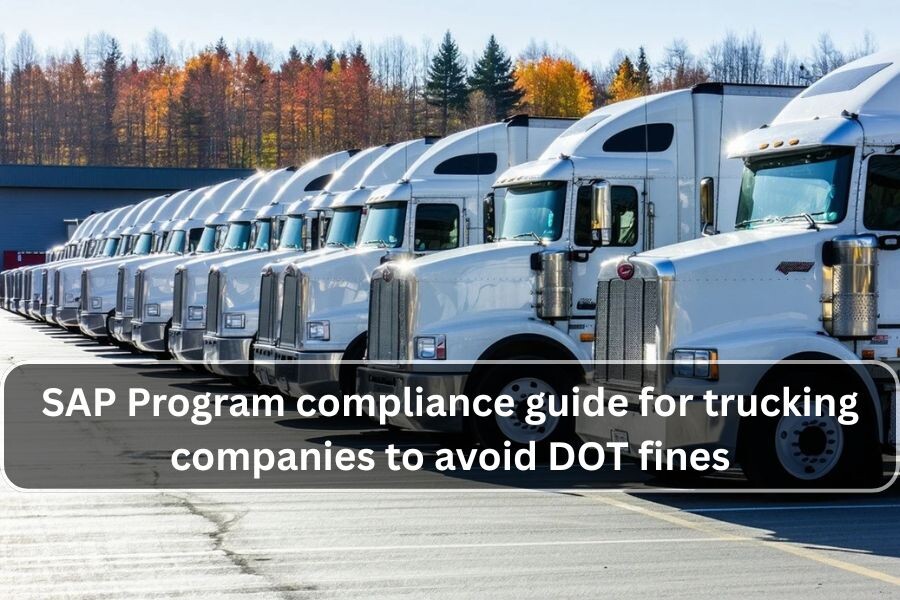
SAP Program compliance guide for trucking companies to avoid DOT fines
Why SAP Program Compliance Matters for Trucking Companies

Failing to enforce SAP Program participation can lead to severe consequences, including:

  • DOT Fines: Up to $10,000 per violation

  • Out-of-Service Orders: Disqualified drivers cannot operate

  • Reputational Damage: Non-compliance flagged in FMCSA audits

✔ For driver SAP evaluations, check our DOT SAP Evaluation Program page.

Key SAP Program Compliance Steps for Employers

1. Identify Violations Immediately

Remove the driver from safety-sensitive functions as soon as a violation occurs.

2. Refer to a Qualified SAP

Employers must refer the driver to a DOT-qualified SAP to begin the evaluation process.

✔ Need help finding one? Visit our SAP Evaluation Services.

3. Ensure Program Completion

Confirm the driver has fully completed treatment and testing before returning to duty.


4. Conduct Return-to-Duty and Follow-Up Testing

Schedule RTD and unannounced follow-up tests as per the SAP’s written plan — failure to do so risks DOT penalties.

5. Maintain Accurate Records

Keep records of violations, SAP referrals, RTD tests, and follow-ups for at least 5 years as required by FMCSA.

Common SAP Program Mistakes by Trucking Companies

MistakeImpact
Failing to remove drivers from dutyRisk of DOT fine or accident liability
Using unqualified SAPsNon-compliance citation from FMCSA
Incomplete documentationFailed DOT audit
Not following RTD testing planDriver disqualification

✔ Protect your company by reviewing our Employer Compliance Resources.

FAQs: SAP Program Compliance Guide for Trucking Companies

Q1: How soon must I refer a driver to an SAP after a violation?
Immediately upon confirmation of a DOT violation.

Q2: Can a driver return to work before completing SAP requirements?
No — all SAP recommendations must be completed, and a negative RTD test is required.

Q3: What happens if an employer ignores SAP Program rules?
Your company may face severe DOT fines, out-of-service orders, or federal audits.

Conclusion

Following this SAP Program compliance guide for trucking companies is critical to maintaining DOT compliance and avoiding costly penalties. Partner with qualified SAP providers, follow FMCSA rules strictly, and document every step of the process.

Need certified SAP services for your drivers? Explore our DOT SAP Program to ensure compliance.


References:

Call Now