DOT SAP Program Archives - Page 23 of 32 - AACS Counseling

How Long Does the Return-to-Duty Process Actually Take?

The moment the Medical Review Officer (MRO) informs you of a positive drug test, time seems to stop. But immediately after the shock wears off, the clock starts ticking on your unemployment.

Every driver in this situation has one burning question: “When can I get back on the road?”

If you search online, you might see vague answers ranging from “a few weeks” to “several months.” The truth is, there is no single expiration date for a DOT violation. The Return-to-Duty (RTD) process is a series of federally regulated steps, and the speed at which you move through them depends on clinical evaluations, your own compliance, and administrative efficiency.

This guide provides an honest, transparent timeline of the entire process, breaking down exactly where the time goes and what factors might slow you down.

The Short Answer vs. The Real Answer

If you are looking for a best-case scenario, a driver with a minor issue who requires only education might be back to “Not Prohibited” status in the Clearinghouse in as little as 3 to 4 weeks.

However, the “real” answer is often longer. For many drivers, the process from the initial suspension to sitting back in the driver’s seat takes 4 to 8 weeks, sometimes longer if treatment is required. Furthermore, the “process” technically continues for up to five years after you return to work due to mandatory follow-up testing.

Let’s break down the timeline phase by phase.

Phase 1: The Initial Evaluation

Estimated Time: 1 to 2 Weeks

Your timeline starts the moment you decide to fix the problem. You cannot return to work until you see a Substance Abuse Professional (SAP).

Finding an SAP

Your employer is required to provide a list of SAPs, but they don’t have to schedule the appointment for you. You must make the calls.

  • The Delay Factor: Many SAPs operate private practices and may not have immediate openings. It might take a few days just to get someone on the phone and another week to get an appointment slot.

The Assessment

The evaluation itself takes about an hour. However, the SAP cannot give you a “pass” immediately. They must conduct a clinical assessment to determine if you need education or treatment.

  • The Regulatory Rule: An SAP must recommend some level of education or treatment. There is no option for them to say, “You’re fine, go back to work tomorrow.” This mandatory requirement ensures that there is at least a minimum time commitment involved.

Phase 2: Education or Treatment

Estimated Time: 2 Weeks to 3+ Months

This is the biggest variable in your timeline. The SAP will prescribe a plan based on the severity of your usage and history. You cannot negotiate this plan, and you cannot switch SAPs to get a “easier” one.

Scenario A: Education Only (The “Fast” Track)

If the SAP determines you do not have a substance abuse disorder—perhaps it was a one-time mistake or a misunderstanding of medication—they may prescribe a drug and alcohol education course.

  • Timeline: These courses can often be completed in a weekend or over a series of evenings. However, you must factor in the time it takes to sign up and the class availability.

Scenario B: Treatment (The “Extended” Track)

If the assessment indicates a pattern of abuse or addiction, the SAP will refer you to treatment.

  • Outpatient Treatment: This might involve meeting with a counselor several times a week for 6 to 12 weeks. You generally cannot return to work until this program is marked complete.
  • Inpatient Treatment: In severe cases, a 30-day residential rehab stay may be required.

Crucial Note: You cannot rush clinical progress. If a provider feels you are not participating honestly or making progress, they can extend the timeline.

Phase 3: The Follow-Up Evaluation

Estimated Time: 1 Week

Once you have a certificate of completion from your education or treatment provider, you aren’t done. You must go back to the SAP for a second face-to-face meeting.

The SAP needs to verify that:

  1. You attended the sessions.
  2. You participated actively.
  3. You have demonstrated compliance and are safe to return to duty.

The Administrative Gap: After this meeting, the SAP has to type up a “Follow-Up Eligibility Report” and upload it to the FMCSA Clearinghouse. While this only takes minutes to do, busy SAPs might take a day or two to get the paperwork filed. Until that report is in the system, you are still stuck.

Phase 4: The Return-to-Duty Test

Estimated Time: 3 to 7 Days

This is the final hurdle before you can legally drive again. Once the SAP uploads the report, you are eligible for testing.

However, you cannot order this test yourself. An employer must order it.

  • If you have a job: Your current employer must schedule the test.
  • If you are unemployed: You must find a new employer who is willing to hire you contingent on a negative result. They will order the test as a “Pre-Employment/Return-to-Duty” test.

The Lab Waiting Game:
This test is directly observed. Once the sample is sent to the lab, results typically take 24 to 72 hours. If there are any questions about the sample (like temperature issues or prescription interactions), the Medical Review Officer (MRO) interview process can add another few days.

Once the negative result is reported to the Clearinghouse by the employer, your status changes to “Not Prohibited.” You are now back in business.

Phase 5: The “Probationary” Period (Follow-Up Testing)

Estimated Time: 12 to 60 Months

While you are back at work, the process isn’t truly over. The SAP will have prescribed a follow-up testing schedule.

  • Minimum: 6 unannounced tests in the first 12 months.
  • Maximum: Testing can continue for up to 5 years (60 months).

These tests are in addition to random fleet testing. You don’t “lose time” here because you are working, but missing a single one of these tests acts as a Refusal to Test, which pulls you off the road and restarts the entire process from Phase 1.

Factors That Create Delays

Why does it take some drivers two months while others take two weeks? Watch out for these common bottlenecks:

  1. Administrative Lag: The biggest non-clinical delay is paperwork. If you don’t designate your SAP in the Clearinghouse immediately, they can’t upload your reports. If your employer forgets to report your negative RTD test, your status won’t update.
  2. “Doctor Shopping”: Some drivers waste weeks trying to find an SAP who will give them a break. This doesn’t exist. Spend that time starting the process with the first qualified SAP you find.
  3. Financial Constraints: The driver pays for the SAP and the treatment. If you can’t afford the $500 for the SAP or the cost of the classes immediately, your timeline pauses until you can pay.
  4. Toxic Dilute Results: If you drink too much water before your Return-to-Duty test and get a “Negative Dilute” result, most employers will require you to retest. This adds days to the timeline.

Frequently Asked Questions

Q: Can I speed up the process?
A: You cannot speed up the clinical requirements (education/treatment). However, you can speed up the administrative side. Register in the Clearinghouse early, designate your SAP immediately, and ensure your employer is ready to order the test the moment you are cleared.

Q: What happens if I miss a follow-up test?
A: Missing a follow-up test is considered a “Refusal to Test.” This is a major violation. You will be immediately removed from safety-sensitive functions and must start the entire Return-to-Duty process over from the beginning with a new evaluation.

Q: Does the timeline vary by SAP?
A: While all SAPs follow the same DOT regulations (49 CFR Part 40), their availability and clinical recommendations vary. One SAP might recommend a 12-hour course, while another might recommend 20 hours for a similar situation based on their professional judgment. However, no SAP can waive the education/treatment requirement entirely.

Q: Can I work a non-driving job while going through the process?
A: Yes. The DOT regulations only prohibit you from performing “safety-sensitive functions” (like driving, loading, or repairing a truck). You can work in the warehouse, in the office, or for a non-DOT employer while you complete your SAP process.

Q: Why is my status still “Prohibited” even though I finished my classes?
A: Completion of classes is only step one. You must have the follow-up evaluation with the SAP, the SAP must upload the eligibility report, and you must pass the Return-to-Duty test. If you haven’t done the follow-up evaluation or taken the drug test yet, you will remain Prohibited.

Conclusion

The Return-to-Duty process is designed to be rigorous because public safety is at stake. While the timeline can be frustrating—especially when bills are piling up—trying to cut corners will only lead to more delays.

Plan for a minimum of 30 days to get back behind the wheel, but communicate openly with your SAP and employer to keep things moving as efficiently as possible. The road back is open, provided you follow the map exactly.

What to Expect in Your First SAP Session: Questions, Duration & Next Steps

Introduction

What to expect in your first SAP session is a question that many individuals facing DOT violations often ask. If you’ve been referred for a SAP (Substance Abuse Professional) evaluation, knowing what to expect can reduce anxiety and help you prepare better. In this guide, we’ll cover the typical questions asked, the session’s duration, and the crucial next steps in the DOT Return-to-Duty process.

Why Is the First SAP Session Important?

The first SAP session sets the foundation for your Return-to-Duty (RTD) process. This initial evaluation determines the severity of your violation and outlines the treatment or education program you must complete to resume safety-sensitive duties.

What to Expect in Your First SAP Session?

1. Questions You Will Be Asked

During your first SAP session, expect personal and professional questions such as:

  • Have you ever used substances (alcohol or drugs) before?

  • What were the circumstances surrounding the DOT violation?

  • Do you have a history of substance abuse in your family?

  • How do you handle stress at work?

  • Are you willing to participate in recommended treatment or education programs?

These questions help the SAP assess your risk and determine the proper corrective action plan.

2. Duration of the SAP Session

Typically, the first SAP evaluation lasts between 60 to 90 minutes. The duration can vary based on:

  • The complexity of your case

  • Your previous history with substance use

  • The DOT regulations relevant to your violation

Be prepared to answer honestly and bring any documentation, such as your violation report or medical history, if required.

3. Next Steps After the First SAP Session

After the initial SAP session, here’s what generally happens:

  • The SAP provides a written evaluation with their recommendations.

  • You may need to attend counseling, education programs, or treatment sessions.

  • Once you complete the assigned program, a follow-up SAP session will be scheduled.

  • If cleared, the SAP will send a notice to your employer that you are eligible for Return-to-Duty testing.

For a detailed overview of the full Return-to-Duty process, check out our guide to the DOT Return-to-Duty process.

Helpful Tips for Your First SAP Session

  • Arrive on time and bring all required documents.

  • Be honest in your responses; SAP professionals are trained to guide you, not judge you.

  • Ask questions if you are unsure about any part of the process.

Conclusion

Now that you know what to expect in your first SAP session, you can approach your evaluation with confidence. Understanding the process, the types of questions asked, and the expected duration can make your journey smoother and stress-free. Remember, this session is the first step toward resuming your safety-sensitive duties.

Need more details? Read about how the DOT Return-to-Duty process has changed since 2020 to stay updated.

Is the SAP Program the Same in Every State? DOT Compliance Explained

Introduction

If you’ve been wondering, “Is the SAP Program the same in every state?”, you’re not alone. Many CDL drivers and employers are curious about the consistency of DOT Substance Abuse Professional (SAP) programs across the U.S. This guide breaks down the facts and clarifies DOT compliance regardless of location.

What is the DOT SAP Program?

The DOT SAP Program is a federally regulated process under 49 CFR Part 40, designed to evaluate and monitor employees in safety-sensitive positions after a drug or alcohol violation. It ensures they meet all requirements before returning to duty.

Is the SAP Program the Same in Every State?

Yes, the core SAP Program requirements are the same in every state, as they are governed by federal law through the Department of Transportation (DOT). No state can modify the federal rules.

However, variations may include:

  • Availability of SAPs in rural vs. urban areas.
  • State-level licensing requirements for SAP providers.
  • Cost differences depending on region and provider rates.

Regardless of your state, all SAP evaluations, treatment recommendations, and return-to-duty decisions must comply with DOT guidelines.

Key Elements That Remain Consistent Nationwide

  1. Initial Evaluation by a Qualified SAP
  2. Development of a Treatment or Education Plan
  3. Follow-Up Evaluation to Determine Compliance
  4. Required Testing Schedule (Follow-up testing as per SAP instructions)

State-Specific Differences to Watch For

Conclusion

So, is the SAP Program the same in every state? From a compliance perspective—yes, absolutely. The DOT’s requirements apply uniformly across all states, but practical differences such as cost, SAP availability, and scheduling may exist. To stay fully compliant and ensure a smooth return to duty, always choose a DOT qualified SAP, no matter the state.

Need help finding a certified SAP near you? Visit AACSCounseling.com for guidance.

What Employers Must Do When a Driver Fails a DOT Drug Test – Legal Checklist

Introduction

What employers must do when a driver fails a DOT drug test is a crucial concern for companies in safety-sensitive industries. When such a situation arises, employers must act promptly and in full compliance with DOT regulations to avoid legal risks and ensure workplace safety. In this guide, we’ll walk you through a legal checklist every employer must follow after a DOT drug test failure.

Why Is This Process Important for Employers?

A failed DOT drug test is not just a personal issue for the driver—it directly impacts company safety, liability, and compliance. Employers are legally responsible for taking specific steps to handle such situations according to 49 CFR Part 40 of the Department of Transportation (DOT) regulations.

What Employers Must Do When a Driver Fails a DOT Drug Test: The Legal Checklist

1. Immediately Remove the Employee from Safety-Sensitive Duties

As soon as a verified positive test result is received:

  • The driver must be immediately removed from operating commercial vehicles or any safety-sensitive function.

  • Do not allow the driver to return to such duties until the Return-to-Duty process is completed.

2. Notify the Employee

  • Inform the driver of the positive result.

  • Provide details about the next steps, including SAP (Substance Abuse Professional) evaluation.

3. Provide Information About a Qualified SAP

Under DOT rules, employers are required to:

  • Give the employee a list of DOT SAP providers.

  • Inform the driver about the need to complete a SAP evaluation and any recommended treatment or education program.

For detailed information on SAP evaluations, visit our SAP Evaluation page.

4. Document All Actions

  • Keep accurate records of every step taken, including communications with the driver and SAP referrals.

  • DOT auditors can request this documentation at any time.

5. Do Not Perform Your Own Evaluation

Employers are prohibited from determining the driver’s fitness themselves. Only a certified SAP can make Return-to-Duty recommendations.

6. Wait for SAP Clearance Before Return-to-Duty Testing

  • The driver can only return to work after successfully completing the SAP process and passing a Return-to-Duty test.

  • Until this happens, the driver must not resume any safety-sensitive tasks.

7. Conduct Follow-Up Testing as Recommended

After the Return-to-Duty test, employers must conduct unannounced follow-up tests as directed by the SAP. These can span 12 to 60 months.

8. Maintain Confidentiality

Employers must keep all testing and evaluation details confidential, sharing information only on a strict need-to-know basis.

Consequences of Non-Compliance

Failure to follow these steps can result in:

  • DOT penalties or audits

  • Increased liability in case of accidents

  • Damage to company reputation

To avoid legal risks, employers must strictly adhere to the process. Learn more about the legal risks of skipping a SAP program after a DOT violation.

Conclusion

Now you know exactly what employers must do when a driver fails a DOT drug test. Following this legal checklist protects your company and ensures DOT compliance. Always remember—the Return-to-Duty process is mandatory, and skipping steps can bring severe legal and financial consequences.

If you need assistance with the SAP process, contact our team at AACSCounseling.com to connect with a qualified SAP professional.

Where to Find a DOT Qualified SAP in US: Verified 2025 Listings

Introduction

Are you looking for a DOT-qualified SAP in the US? Whether you’ve recently faced a DOT violation or are helping a commercial driver, this guide offers verified 2025 listings and essential tips to find certified Substance Abuse Professionals across the country.

What is a DOT Qualified SAP?

A DOT qualified SAP is a Substance Abuse Professional approved by the Department of Transportation to evaluate and guide drivers through the Return-to-Duty process following a drug or alcohol violation. Choosing the right SAP ensures compliance with 49 CFR Part 40 regulations.

Why You Need a Verified DOT SAP

Using an unverified or non-DOT qualified SAP can result in:

  • Extended suspension from safety-sensitive duties
  • Legal complications
  • Employer penalties

Always check the SAP’s DOT credentials before scheduling an evaluation.

Where to Find a DOT Qualified SAP in US

1. SAP Referral Services

Websites like SAP Referral Services offer directories of certified SAPs across all states.

2. Substance Abuse Professional Directory

Consult the NAADAC SAP Directory for verified professionals listed by state.

3. Local SAP Providers

Many local counseling centers and occupational health clinics provide DOT qualified SAP services. Visit SAP Evaluation to book your session.

4. Employer Referrals

Your employer may maintain a list of DOT approved SAPs for quick reference.

Tips for Choosing the Right SAP

  • Verify DOT Certification: Ask for the SAP’s credentials.
  • Check Availability: Ensure they can accommodate you promptly.
  • Understand the Fees: Costs can vary by location and provider.
  • Confirm State Licensing: SAPs must have appropriate state-level licenses.

What to Expect During SAP Evaluation

Conclusion

Finding a DOT-qualified SAP in the US doesn’t have to be difficult. Use verified listings and follow the tips above to get proper guidance and resume your CDL duties legally and efficiently.

For affordable and reliable SAP evaluations, visit AACSCounseling.com

Should You Hire a SAP-Cleared Driver? What Employers Need to Know in 2025

Introduction

Should you hire a SAP-cleared driver? This is a common question among employers in the transportation industry, especially as DOT compliance standards tighten in 2025. With the rise in DOT violations related to drug and alcohol misuse, understanding what it means to hire a driver who has completed the SAP Return-to-Duty (RTD) process is critical for safety, liability, and legal compliance.

In this guide, we’ll answer every important question employers face when considering hiring SAP-cleared drivers, explore legal and insurance considerations, and help you make informed hiring decisions.

What is a SAP-Cleared Driver?

A SAP-cleared driver is an individual who violated DOT drug and alcohol regulations but has successfully completed a Substance Abuse Professional (SAP) Evaluation and the mandated Return-to-Duty process. This means they are legally eligible to operate commercial motor vehicles again under FMCSA and DOT guidelines.

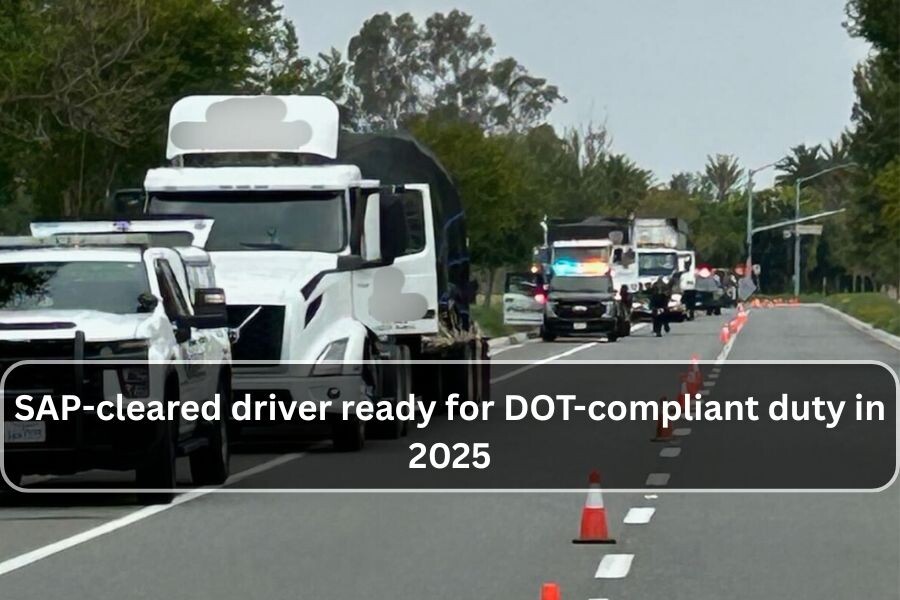
SAP-cleared driver ready for DOT-compliant duty in 2025
Benefits of Hiring SAP-Cleared Drivers
  1. A Second Chance Workforce
    Many SAP-cleared drivers are motivated to keep their CDL active and safe because they’ve invested time and money into regaining compliance.

  2. Cost Savings on Recruitment
    The driver shortage continues across the U.S. transportation industry. Hiring SAP-cleared drivers can fill vacancies faster than starting new candidate searches.

  3. Compliance Assurance
    Once cleared, these drivers have met strict FMCSA Return-to-Duty guidelines, which often makes them more aware of ongoing DOT testing and compliance requirements than new hires.

Risks and Legal Considerations for Employers

While hiring SAP-cleared drivers has advantages, there are risks to consider:

  • Increased Insurance Premiums
    Some insurers flag SAP-cleared drivers as higher risk, potentially affecting your fleet insurance costs.

  • Reputational Impact
    Depending on your company’s public stance on safety and compliance, hiring SAP-returned drivers may raise concerns with clients or partners.

  • Legal Compliance
    Employers must verify SAP completion status using the FMCSA Clearinghouse before hiring to avoid fines or legal liability. (Learn how to use the FMCSA Clearinghouse here).

FMCSA Clearinghouse and SAP-Cleared Drivers

Every employer must run a pre-employment Clearinghouse query to confirm the SAP-cleared status. This process ensures:

  • The driver completed the SAP evaluation.

  • All required negative Return-to-Duty tests are on record.

  • No unresolved violations remain.

Neglecting this process can result in DOT penalties and disqualification from certain contracts.

What Questions Should Employers Ask Before Hiring a SAP-Cleared Driver?

  1. Did the driver complete all follow-up testing requirements?
    Follow-up testing plans may extend up to 5 years.

  2. Has their license been fully reinstated in all states?
    Out-of-state DUIs or violations may affect clearance.

  3. Are there any pending compliance or legal issues?

These questions reduce risk and ensure you meet DOT SAP Program expectations.

Is It Safe to Hire SAP-Cleared Drivers?

According to recent FMCSA data, SAP-cleared drivers are required to undergo random follow-up drug and alcohol testing as part of their reinstatement, making them statistically less likely to re-offend immediately after RTD clearance compared to unmonitored drivers.

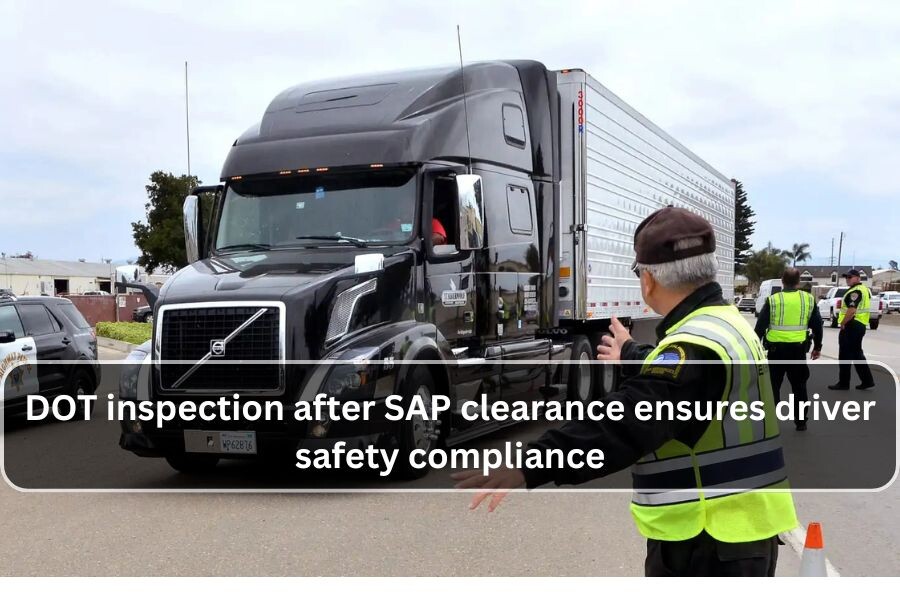
DOT inspection after SAP clearance ensures driver safety compliance
SAP-Cleared Drivers and the CDL Driver Shortage

The ongoing U.S. CDL driver shortage has made SAP-cleared drivers an attractive hiring pool for many employers. Companies willing to follow compliance checks and maintain strong safety programs are filling fleet gaps without compromising safety.

Legal Risks of Ignoring SAP Requirements

Failing to verify a SAP-cleared driver’s status through the FMCSA Clearinghouse can result in:

  • Hefty DOT fines (up to $5,833 per violation)

  • Increased insurance claims risk

  • Civil liability in the event of a post-incident investigation

Always perform a Clearinghouse pre-employment query.

Best Practices When Hiring SAP-Cleared Drivers in 2025

✔ Verify SAP completion via the FMCSA Clearinghouse.
✔ Confirm follow-up testing compliance.
✔ Communicate company drug/alcohol policies clearly.
✔ Consult legal counsel on DOT hiring risks.
✔ Use a certified SAP evaluation provider. (See our guide on How to Choose a DOT SAP Provider.)

FAQs: Hiring SAP-Cleared Drivers

Q1: Is it legal to refuse a SAP-cleared driver applicant?
Yes, but decisions must comply with FMCSA and EEOC guidelines.

Q2: Will hiring SAP-cleared drivers increase liability insurance?
Possibly — always consult your insurer before hiring.

Q3: How often must SAP-cleared drivers be tested after RTD clearance?
Up to 6 times in the first 12 months per DOT regulations.

Conclusion

So, should you hire a SAP-cleared driver? If your company follows FMCSA and DOT compliance requirements, performs thorough pre-employment checks, and manages risk proactively — hiring SAP-cleared drivers can be a safe, smart decision in 2025.

For SAP Evaluation services and DOT compliance assistance, visit our DOT SAP Program page.

How to Change Your Status to ‘Ready for Duty’ in the Clearinghouse

You have completed the hard part. You met with the Substance Abuse Professional (SAP), you finished the prescribed education or treatment plan, and you passed the return-to-duty drug test. In the real world, you are ready to drive.

But in the digital world—specifically within the FMCSA Drug and Alcohol Clearinghouse—you might still be flagged as “Prohibited.”

Until that digital status changes, your Commercial Driver’s License (CDL) is effectively frozen for safety-sensitive functions. No carrier can legally hire you or dispatch you. This disconnect between completing the steps and updating the database is a common source of frustration for drivers.

This guide provides a technical walk-through of how to navigate the Clearinghouse to ensure your status flips to “Not Prohibited” so you can get back on the road.

Understanding the “Three-Legged Stool” of Data

You cannot simply log in and click a button that says “I’m Ready.” The Clearinghouse is designed to prevent drivers from clearing their own violations.

Your status changes automatically, but only when three specific parties input data correctly. Think of it as a three-legged stool; if one leg is missing, the status won’t update.

  1. The SAP: Must upload the initial assessment and the follow-up eligibility report.
  2. The Employer (Current or Potential): Must report the negative Return-to-Duty (RTD) test result.
  3. The Driver (You): Must designate the SAP so they can upload the reports.

If your status is still “Prohibited,” one of these three steps is incomplete.

Step-by-Step Technical Walk-Through

Here is exactly what you need to do inside the Clearinghouse portal to facilitate this process.

Step 1: Log In to Your Clearinghouse Account

Go to the FMCSA Clearinghouse website and log in using your Login.gov credentials.

  • Note: If you haven’t logged in since your violation, you may need to update your password or two-factor authentication.

Step 2: Designate Your Substance Abuse Professional (SAP)

This is the most common step drivers forget. Your SAP cannot upload your “eligibility for testing” report until you formally designate them in the system.

  1. On your driver dashboard, look for the section regarding your violation.
  2. Click the button that says Designate Substance Abuse Professional.”
  3. Search for your SAP by name. Tip: Be precise with the spelling. If you can’t find them, ask them exactly how their name is listed in the database.
  4. Select your SAP and send the request.

Once you send this request, the SAP must accept it on their end. Only after they accept it can they upload your reports.

Step 3: Verify the SAP Reports Are Uploaded

Once you have finished your treatment and follow-up evaluation, the SAP enters data confirming you are eligible for RTD testing.

  1. Log back into your dashboard.
  2. Look at your violation status. You should see a timeline of steps.
  3. Check for a green checkmark or confirmation next to “SAP Report – Follow-Up Eligibility.”

If this is missing, call your SAP immediately. Without this specific digital report, no employer can order the Return-to-Duty test.

Step 4: The Employer Reports the Negative RTD Test

This is the final trigger. You cannot take the RTD test on your own; a DOT-regulated employer must sponsor it.

  • If you stayed with your old employer: They will send you for the test.
  • If you are finding a new job: The new prospective employer must send you for the test as a “pre-employment/return-to-duty” test.

Once the lab processes the negative result and the Medical Review Officer (MRO) verifies it, the employer (or their consortium/TPA) must upload that negative result to the Clearinghouse.

Step 5: The Status Change

Once the system detects the SAP Follow-Up Eligibility Report AND the Negative RTD Test Result, your status on the dashboard will automatically change from “Prohibited” to “Not Prohibited.”

At this point, you are legally clear to drive.

Troubleshooting: Why Am I Still “Prohibited”?

If you have done everything right but the screen still says “Prohibited,” check these common technical errors:

The MRO vs. The Employer

Drivers often confuse who reports what. The MRO reports positive tests. However, the employer is responsible for reporting the negative Return-to-Duty test. If your employer forgets to log into the portal and type in the negative result information, your status will not change.

The Wrong Test Type

When you go for your urine collection, the Chain of Custody Form (CCF) must specifically be marked as Return-to-Duty.”

  • If the employer marked it as “Pre-Employment,” it will not count toward clearing your violation.
  • If they marked it as “Random,” it will not count.

It must be an observed Return-to-Duty test. If the wrong box was checked, the Clearinghouse will not recognize it as the final step in your process, and you may have to test again.

Driver’s License Mismatch

Ensure your Commercial Driver’s License (CDL) number in your Clearinghouse profile matches exactly what your employer has on file. If there is a typo in the license number on the employer’s upload side, the data won’t link to your account.

Frequently Asked Questions

What if my SAP hasn’t uploaded my report?

You must contact them directly. The Clearinghouse support team cannot force an SAP to upload a report. Remember, the SAP cannot upload anything until you have sent the designation request and they have accepted it. Check your dashboard to see if the request is still “Pending.”

How long does it take to update my status?

The system update is nearly instantaneous once the data is entered. The moment the employer hits “submit” on the negative test result (assuming the SAP report is already there), your status should flip to “Not Prohibited.” There is no 24-hour waiting period for the software itself, though data entry delays by humans are common.

Can I check my status online?

Yes. You can—and should—check your status anytime by logging into the FMCSA Clearinghouse driver portal. It is free for drivers to view their own records. We recommend taking a screenshot of your “Not Prohibited” status for your own records once it updates.

What happens after my status changes?

Once you are “Not Prohibited,” you are in the “Follow-Up Testing” phase. You can drive, but you must adhere to the follow-up testing schedule created by your SAP. Your employer is responsible for ensuring these unannounced tests happen. If you miss one, you will fall back into “Prohibited” status immediately.

Conclusion

The FMCSA Clearinghouse is a rigid digital system that requires precise inputs. It doesn’t know you are a good driver; it only knows data. By understanding the specific order of operations—Designate SAP > SAP Report > Employer RTD Result—you can ensure that your digital record reflects your hard work and gets you back to earning a paycheck without unnecessary technical delays.

The Legal Risks of Skipping a SAP Program After a DOT Violation

Introduction

If you’re a CDL driver or a safety-sensitive employee, the legal risks of skipping a SAP program after a DOT violation can be far greater than many realize. The Department of Transportation (DOT) mandates participation in a SAP (Substance Abuse Professional) program for anyone who fails or refuses a drug or alcohol test. Choosing to skip this requirement can put your career, commercial license, and even legal standing at risk.

What Happens If You Skip the SAP Program?

DOT regulations under 49 CFR Part 40 clearly state that anyone who violates DOT drug and alcohol policies must complete the SAP return-to-duty process before resuming safety-sensitive duties.

Skipping the SAP program can result in:

  • Suspension or revocation of your CDL license

  • Ineligibility for employment with DOT-regulated companies

  • Permanent record in the FMCSA Clearinghouse

  • Fines and legal actions against your employer

  • Possible lawsuits in the case of future incidents

👉 Skipping the SAP process doesn’t make the violation disappear—it only increases your vulnerability to legal consequences.

DOT Non-Compliance = Federal Risk

The DOT takes SAP violations seriously. Employers are legally prohibited from allowing you to return to duty without SAP clearance. If they do, both you and your employer can face legal action, including:

  • Civil penalties

  • Business liability claims

  • Lawsuits if incidents occur while you’re unqualified

🔗 Read about the DOT’s official SAP policy here

Why the SAP Program Exists

The SAP process is designed to support recovery—not punishment. It ensures you’re evaluated by a certified professional, receive the necessary treatment or education, and complete follow-up testing. It protects:

  • Public safety

  • Workplace integrity

  • Your long-term career stability

If skipped, you forfeit your legal pathway back to driving under DOT authority.

What CDL Employers See in the FMCSA Clearinghouse

When you skip the SAP program, your violation remains flagged in the FMCSA Clearinghouse, visible to all current and future employers. This status means:

  • You’re marked as “Not Cleared for Return-to-Duty”

  • No employer can legally hire you for DOT-regulated positions

  • You lose opportunities—even if you’re otherwise qualified

🔗 Check your Clearinghouse status here

Real-World Risks of Skipping the SAP Process

1. Loss of Current Job

Employers are legally bound to remove you from duty and cannot reinstate you without SAP clearance.

2. Inability to Get Hired

Skipping SAP flags your record, and most employers won’t consider applications with unresolved violations.

3. Legal Liability

In the event of an accident while operating without SAP clearance, you could face criminal or civil prosecution.

4. Extended Time Off-Road

The longer you delay the process, the more time you’re out of work—and the harder it becomes to re-enter the workforce.

How to Avoid These Legal Risks

Instead of skipping the SAP program, take proactive steps:

  • Start your SAP evaluation immediately

  • Choose a DOT-qualified SAP who can guide you properly

  • Follow through with treatment or education

  • Complete follow-up testing and receive clearance

Why Choose AACS Counseling?

At AACS Counseling, we help CDL drivers across the U.S. safely and legally return to work after a DOT violation. We offer:

  • Certified DOT-qualified SAPs

  • 100% online evaluations and follow-ups

  • Fast scheduling and supportive guidance

  • Nationwide service for Georgia, Florida, Texas, and beyond

🔗 View our DOT SAP Program
📧 info@aacscounseling.com
📞 800-683-7745

References:

Conclusion

Skipping a SAP program after a DOT violation might seem like a shortcut—but in reality, it leads to deeper legal trouble and longer career delays. The safest, smartest path is to complete your SAP evaluation and return-to-duty process legally with a trusted provider.

Can I Change My SAP Provider Once I’ve Started? Here’s the Process

Introduction

Starting the DOT return-to-duty process can be overwhelming for CDL drivers. But what if the Substance Abuse Professional (SAP) you’re working with isn’t the right fit? Whether it’s due to scheduling issues, communication concerns, or simply a lack of progress—you’re not stuck.

Yes, you can change your SAP provider even after starting. However, the process must follow DOT regulations to ensure compliance with 49 CFR Part 40.

Here’s a clear, step-by-step guide to help you make the switch the right way.

Why Might You Want to Change Your SAP Provider?

There are several valid reasons drivers want to switch SAP professionals, including:

  • Delayed or inconsistent communication

  • Limited appointment availability

  • Lack of clarity on the return-to-duty steps

  • Mismatch in communication style or trust

  • A preference for online evaluations

Can You Legally Change SAP Providers?

Yes, but with conditions.
DOT guidelines do not prohibit changing SAPs, but they emphasize that the decision must not be made to avoid compliance or to shop for an easier recommendation. This means:

  • You must start over with the new SAP (they will conduct a full new assessment).

  • Your previous SAP’s records cannot be transferred to influence the new provider’s SAP Evaluation.

Steps to Change Your SAP Provider:

1. Stop Working with the Current SAP

Let your current provider know you’re discontinuing the process. No need to give long explanations—just notify them formally (preferably via email).

2. Find a Qualified DOT SAP

Choose a provider who is DOT-qualified and listed in the FMCSA Clearinghouse. At AACS Counseling, we offer licensed, certified SAPs with flexible online evaluations nationwide.

3. Complete a New Initial Evaluation

The new SAP will treat you as a fresh case. A full assessment is required—even if you were halfway through with your previous provider.

4. Follow the New Treatment/Education Plan

Even if it’s similar to the previous plan, you must complete the program recommended by the new SAP to move forward.

5. Complete the Follow-Up Evaluation

After finishing the treatment or education plan, your new SAP will conduct a follow-up session and (if compliant) issue a Return-to-Duty eligibility report to your employer and the Clearinghouse.

Important Considerations:

  • No transfer of notes or reports from the previous SAP is allowed.

  • Your new SAP must be DOT-qualified—not just any counselor or therapist.

  • You must fully restart the process with the new SAP.

  • Attempting to switch SAPs for a “lighter” plan may raise red flags with employers.

Why Choose AACS Counseling?

At AACS Counseling, we understand how crucial a smooth, respectful, and legally sound SAP process is. We offer:

  • DOT-compliant online evaluations

  • Fast appointment scheduling

  • Full support from assessment to follow-up

  • Nationwide availability for CDL drivers and other DOT-covered employees

Ready to Switch Your SAP Provider?

We’re here to help you start fresh—with professionalism, compliance, and care.

👉 Contact us today:
🌐Change SAP provider DOT
📧 info@aacscounseling.com
📞 800-683-7745

Can You Drive During the SAP Return-to-Duty Process? Legal and Practical Answers

If you’re a CDL driver who has recently tested positive on a DOT drug or alcohol test, your career may feel like it’s come to a sudden halt. One of the most common and urgent questions we hear at AACS Counseling is: Can I drive during the SAP Return-to-Duty (RTD) process? The answer is critical—not just for your livelihood, but also for remaining compliant with DOT regulations under 49 CFR Part 40.

In this article, we break down the legal restrictions, FMCSA regulations, and real-world implications of driving while you’re undergoing the SAP Return-to-Duty process.

Can You Legally Drive During the SAP Return-to-Duty Process?

No, you are not legally allowed to operate a commercial motor vehicle (CMV) that requires a CDL while you’re still in the SAP process and have not been cleared for return-to-duty testing.

Here’s Why:

  • Under 49 CFR §40.305, after a DOT violation, you are immediately removed from safety-sensitive functions—which includes driving.

  • You can only resume driving once a qualified DOT SAP (Substance Abuse Professional) has determined you successfully complied with the recommended treatment/education plan and passed a Return-to-Duty drug and/or alcohol test.

What Is the SAP Return-to-Duty Process?

The SAP RTD process is a multi-step program designed to ensure that drivers who violate drug or alcohol testing rules are fit to return to duty.

Steps Include:

  1. SAP Evaluation – A face-to-face assessment by a DOT-qualified SAP.

  2. Treatment or Education – As recommended by the SAP.

  3. Follow-Up Evaluation – The SAP determines compliance.

  4. Return-to-Duty Test – A directly observed test (drug/alcohol) with a negative result.

  5. Follow-Up Testing Plan – Post-return testing may extend for up to five years.

👉 Until you complete Steps 1–4, you are prohibited from driving any CMV that falls under FMCSA jurisdiction.

Can You Drive Non-CDL Vehicles?

This is a gray area and depends on employer policies and state laws. While DOT regulations apply specifically to CDL-required roles:

  • Some employers may restrict you from driving any company vehicle.

  • You may be permitted to drive non-regulated vehicles, but this does not reset your DOT violation status.

  • Insurance limitations may also apply, as many carriers require SAP clearance for any driving position.

What Happens If You Drive Illegally During the SAP Process?

Driving a CMV without SAP clearance and a negative RTD test can result in:

  • Federal penalties or fines

  • Ineligibility for future CDL jobs

  • Employer termination

  • Permanent disqualification from safety-sensitive functions (in extreme cases)

Worse, if an accident occurs during unauthorized driving, you and your employer could face serious legal and financial liability.

When Can You Start Driving Again?

You can legally drive again only when:

  • A DOT-qualified SAP has completed your follow-up evaluation.

  • You pass a Return-to-Duty test (directly observed).

  • Your employer receives written confirmation from the SAP that you are eligible to return to safety-sensitive duties.

Important: Employers are not required to rehire you—even after completing the SAP process. However, many do, and others may consider hiring you once you provide proof of SAP compliance and a clean RTD test result.

Why Choose AACS Counseling for Your SAP Return-to-Duty Process?

At AACS Counseling, we provide:

  • DOT SAP Evaluation nationwide

  • Personalized guidance to navigate the RTD process quickly and compliantly

  • Fast scheduling, virtual and in-person evaluations

  • Clear communication with employers and MROs

  • Ongoing support throughout your follow-up testing period

Thousands of drivers across the U.S. have successfully returned to duty with our help.

Final Thoughts

The answer to “Can you drive during the SAP Return-to-Duty process?” is straightforward: No, not until you complete all SAP steps and pass your RTD test.

Trying to shortcut the process could cost you your career.

If you’re ready to begin the SAP process and get back on the road safely and legally, we’re here to help.

 Get Started Today

Contact AACS Counseling now to schedule your SAP Evaluation or learn more about how we can help you return to work quickly.

📍 Schedule Your SAP Evaluation
📧 info@aacscounseling.com
📞 Call Us: 800-683-7745

Call Now