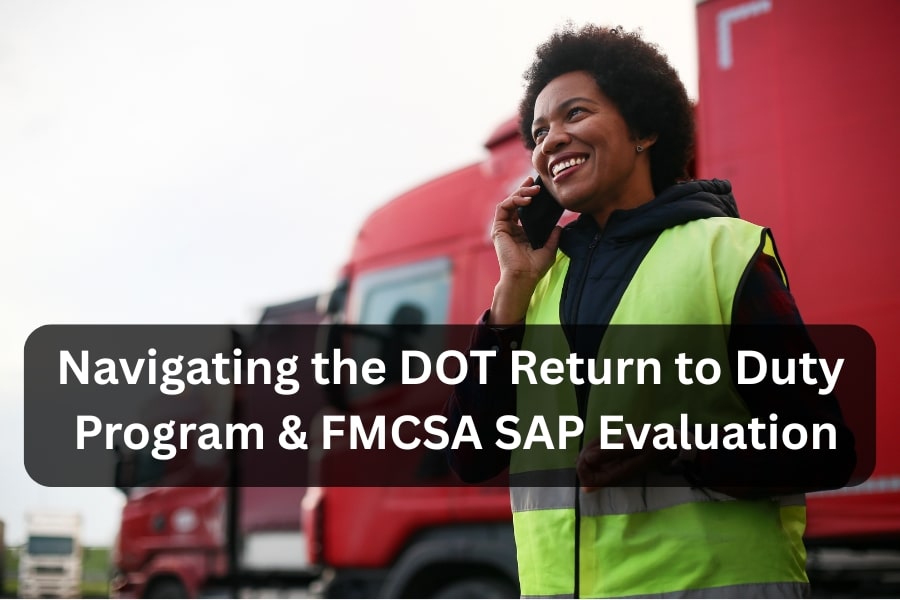
The Department of Transportation (DOT) has strict protocols for employees working in safety-sensitive positions. A drug or alcohol violation doesn’t just compromise safety; it also sets in motion a mandatory process for reinstatement. For anyone navigating these steps, understanding the DOT Return to Duty Program, the Return to Duty Process, and the FMCSA SAP Evaluation is vital. This guide will break down each aspect to help you get back on track with compliance and your career.
What is the DOT Return to Duty Program?
The DOT Return to Duty Program is a structured process designed for employees who have violated DOT drug and alcohol regulations. This program focuses on ensuring public safety while giving employees a chance to prove their readiness to resume their duties responsibly.
The process begins once a violation is reported. At this point, you are immediately removed from safety-sensitive duties. To get back to work, you must follow the steps outlined in the return-to-duty protocol under the supervision of a qualified Substance Abuse Professional (SAP).
Learn more about the process in detail by visiting DOT Return to Duty Program.
Steps in the Return to Duty Process
The Return to Duty Process comprises several key stages designed to ensure an individual’s compliance and preparedness. Below is an outline of the steps you’ll need to complete to get reinstated to your job.
1. Initial Evaluation by a SAP
The first step involves meeting with a Substance Abuse Professional (SAP) who is qualified under the DOT guidelines. The SAP conducts a comprehensive evaluation to determine the extent of the violation and recommends the necessary steps, such as education, treatment, or both.
2. Completing the SAP’s Recommendations
After your initial evaluation, you’ll need to follow the SAP’s recommendations. This could involve attending counseling sessions, completing a rehabilitation program, or undergoing education on the risks of drug or alcohol misuse.
3. Follow-Up Evaluation
Once you’ve completed the recommended steps, the SAP will conduct another evaluation. This follow-up ensures that you’ve fulfilled all the responsibilities outlined in the treatment plan.
4. Return-to-Duty Test
Before resuming safety-sensitive work, you’ll be required to pass a return-to-duty drug and/or alcohol test. The test must show negative results for you to continue the process.
5. Follow-Up Testing
Even after you’ve returned to duty, you may be subjected to unannounced follow-up testing. These tests, ordered by the SAP, can extend for up to five years and serve as an accountability measure.
Discover more about the complete Return to Duty Process today.
FMCSA SAP Evaluation
The FMCSA SAP Evaluation is specifically for drivers operating under the Federal Motor Carrier Safety Administration (FMCSA) regulations. If you’re a commercial driver, any drug or alcohol violation puts you in violation of FMCSA regulations. Here’s how the SAP evaluation works for FMCSA employees:
What Happens During an FMCSA SAP Evaluation?
-
Initial Assessment
The Substance Abuse Professional will evaluate your situation, including your personal and employment history, to assess substance use issues. -
Recommendations and Requirements
Based on the assessment, the SAP will outline a tailored plan, which could involve sessions with addiction specialists or group therapy. -
Clearing with FMCSA Clearinghouse
FMCSA operates a dedicated Clearinghouse that tracks compliance for drivers with violations. Before you can return to duty, your progress must be logged and updated in the Clearinghouse by your SAP.
Handling an FMCSA SAP Evaluation might feel overwhelming, but it is one of the most important steps toward regaining your position. Working with an experienced SAP can make this process smoother and ensure compliance.
For more insight, visit FMCSA SAP Evaluation.
The Importance of 
One of the critical takeaways from the DOT Return to Duty Program is the emphasis on accountability. Returning to work after a violation isn’t just about completing steps; it’s about committing to long-term changes. Employers and employees alike need to understand the significance of these regulations in maintaining safety on our roads and in our skies.
Why Choose a Credentialed SAP?
Ensuring that you work with a Qualified and experienced SAP is vital. Whether you’re looking for assistance with your initial evaluation or guidance through follow-up testing, having the right support can ease the process and keep you on track.
Take the First Step
Completing a DOT Return to Duty Program, going through the Return to Duty Process, or undergoing an FMCSA SAP Evaluation might feel intimidating, but it’s an opportunity for growth and change. With the right guidance and determination, you can meet these requirements and move forward in your career.
If you’re ready to start your recovery and compliance process, connect with professionals who can assist you every step of the way. Visit SAP Evaluation or AACS Counseling and explore resources to start your path toward a successful return to duty.