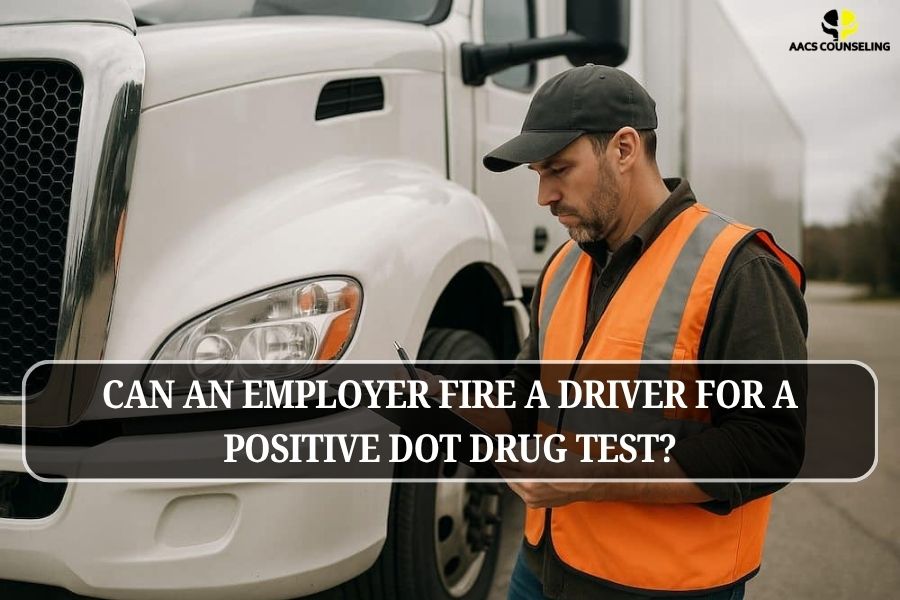
Failing a Department of Transportation (DOT) drug test is a massive blow to any commercial driving career. You might wonder if a single mistake means the permanent end of your job. The short answer is yes, an employer can fire you, but federal law dictates specific steps they must follow first.
This guide breaks down the legal landscape for 2025 regarding DOT drug testing, employer rights, and your path to recovery. We will explore how federal regulations intersect with company policies and what actions you must take to protect your Commercial Driver’s License (CDL).
If you or someone you know is struggling with substance use, immediate help is available. You can contact the SAMHSA National Helpline for free, confidential treatment referral services. Taking this first step is vital for your health, your family, and your professional future.
Immediate Actions Following a Positive Result
When a driver tests positive for drugs or alcohol, federal regulations trigger immediate actions. The DOT requires employers to remove the driver from all safety-sensitive functions instantly. You cannot operate a commercial motor vehicle, handle hazardous materials, or perform maintenance tasks. This rule is absolute and non-negotiable for all transportation companies.
Employers face severe penalties if they allow an impaired driver to stay on the road. The safety of the public always takes priority over staffing needs. Therefore, your removal from duty happens immediately, long before any internal company discussions about your employment status take place.
It is important to understand that removing you from safety-sensitive duties is not the same as officially terminating your employment. Removal from duty is a federal safety mandate. Termination is an administrative human resources decision that happens separately.
The Legal Right to Terminate Employment
Many drivers mistakenly believe that the DOT mandates their termination after a failed drug test. The DOT actually does not dictate hiring or firing practices. Instead, the decision to fire a driver rests entirely on the employer’s internal policies and state labor laws.
Most states operate under “at-will” employment laws. This means an employer can terminate a worker for almost any reason, provided it is not legally discriminatory. A positive drug test is a legally valid and highly common reason for immediate termination. Many trucking and logistics companies enforce strict zero-tolerance policies to minimize their insurance liabilities and protect their corporate reputation.
However, union contracts can alter this dynamic significantly. If you belong to a labor union, your collective bargaining agreement might offer specific protections. These contracts sometimes require employers to offer rehabilitation options before resorting to permanent termination. You should always review your specific employment contract to understand your unique standing.
Employer Policies vs. Federal Regulations
Understanding the difference between federal rules and company policy is crucial for navigating your career options. Federal law focuses strictly on public safety and the structured return-to-duty process. Company policy dictates the professional and financial consequences of your violation.
Some employers recognize the incredibly high cost of recruiting, hiring, and training new CDL drivers. Instead of firing experienced staff, they choose to retain drivers who successfully complete a rehabilitation program. These companies view substance abuse as a treatable health condition rather than an automatic firing offense. They understand that supporting an employee through recovery often builds deep loyalty and creates a safer workplace culture.
To understand the specific evaluation and treatment requirements that both drivers and employers must follow, you can review detailed SAP Evaluation resources. These educational resources clarify the mandatory steps required to regain commercial driving privileges, regardless of whether you keep your current job or need to find a new one.
Employee Rights and the Return-to-Duty Process
Even if your employer decides to fire you, you still maintain specific rights under DOT regulations. Your employer cannot simply fire you and ignore their federal reporting and administrative duties. By law, they must provide you with a written list of qualified Substance Abuse Professionals (SAPs) available in your local area.
Providing this list is a strict federal requirement that ensures you have a clear, immediate path to rehabilitation. You must complete the return-to-duty process to ever work in a safety-sensitive role again, even for a completely different company. Working with a licensed professional is the only legal way to clear your DOT record.
Enrolling in a reputable DOT Qualified SAP Program guarantees that your evaluation meets all federal standards. Your SAP will assess your situation, recommend a specific treatment or education plan, and monitor your progress. You must follow their recommendations perfectly to eventually qualify for a return-to-duty drug test.
Navigating the FMCSA Clearinghouse in 2025
The Federal Motor Carrier Safety Administration (FMCSA) Drug and Alcohol Clearinghouse has permanently changed the transportation industry. Every positive test, refusal to test, and actual knowledge violation goes directly into this secure federal database. Your employer must report your positive test result immediately.
Getting fired does not erase this digital record. The violation stays securely attached to your CDL profile. Every prospective employer across the country must query the Clearinghouse before offering you any safety-sensitive position. You cannot hide a previous violation by simply applying to a new trucking company.
Your record will clearly show that you have an unresolved drug violation until you complete the entire SAP program. Once you finish the required treatment and pass a return-to-duty test, your status updates to show you are eligible to drive. However, the violation history remains visible to potential employers for five full years.
Mental Health and Medical Privacy Protections
Failing a drug test and losing your job creates immense psychological stress. The sudden financial worry and the heavy professional stigma can easily lead to depression or severe anxiety. Ignoring your mental health makes the complex recovery process much more difficult to manage.
Taking care of your psychological well-being is vital for regaining your career and rebuilding your life. The National Institute of Mental Health (NIMH) offers free, evidence-based resources for understanding and managing stress, anxiety, and mental health disorders. Addressing the root causes of your substance use prevents future violations and makes you a much safer commercial driver.
You also have strong medical privacy rights during this highly sensitive time. Your employer and your evaluating SAP must handle your personal medical records with strict confidentiality. They must comply carefully with the HIPAA Guidelines when discussing your treatment plans. Your employer will receive only basic administrative updates regarding your compliance status, while completely protecting the private details of your counseling sessions.
The Follow-Up Testing Phase
If you successfully complete your SAP program and secure a new driving position, your obligations do not end. Passing the initial return-to-duty test is only the gateway back to the driver’s seat. You must also navigate a rigorous follow-up testing schedule designed to ensure long-term sobriety and public safety.
Federal law mandates a minimum of six unannounced follow-up drug tests over your first 12 months back on the job. However, your evaluating SAP has the authority to require ongoing follow-up testing for up to five years. Your new employer will manage this testing schedule, and you will never know when a test is coming.
Failing a follow-up test carries disastrous consequences. It counts as a brand-new DOT violation, which resets your Clearinghouse record and requires you to start the entire SAP process over. Most employers will immediately terminate a driver who fails a follow-up test, making strict adherence to a substance-free lifestyle absolutely essential.
Steps for Drivers After Termination
If your employer fires you after a positive test, you must take immediate, proactive action to protect your future. Do not wait for a new job offer to start the return-to-duty process. No transportation company can legally hire you until you complete the required SAP evaluation and treatment protocols.
First, contact a qualified SAP using the list your former employer provided, or find an accredited provider independently. Schedule your initial face-to-face evaluation right away. Be completely honest with your evaluator so they can design an effective, personalized treatment plan for you.
Second, dedicate yourself entirely to the recommended education or treatment program. Keep detailed, organized records of your attendance and compliance. Once you finish the program, your SAP will conduct a follow-up evaluation to officially verify your success and issue a compliance report.
Finally, you will need a prospective employer to sponsor your actual return-to-duty drug test. Many logistics companies are willing to hire drivers who have successfully completed the SAP process, as it demonstrates dedication and personal accountability. You must pass this directly observed drug test to legally resume driving commercial vehicles.
Conclusion and Next Steps
A positive DOT drug test is a highly serious event, and employers absolutely have the legal right to fire drivers who violate corporate safety policies. However, losing your job does not mean you will lose your CDL forever. The DOT provides a clearly defined, structured pathway for rehabilitation and career restoration.
Understanding your legal rights, prioritizing your mental health, and strictly following federal compliance rules will help you navigate this challenging situation. By taking accountability and completing the required steps, you can rebuild your professional reputation and safely return to the highways.
If you need expert guidance to start your recovery and clear your Clearinghouse record, professional help is ready and waiting. Visit the AACS Service Center to connect with licensed compliance experts who will guide you through the entire return-to-duty process efficiently, professionally, and confidentially.