Ayesha, Author at AACS Counseling - Page 2 of 16

SAP Evaluation Georgia: Complete Guide to DOT SAP Program & Return-to-Duty Process

Introduction

If you are a CDL driver or a safety-sensitive employee in Georgia who has violated DOT drug and alcohol regulations, completing a SAP Evaluation in Georgia is the first and most critical step toward getting back to work legally.

The DOT SAP Program in Georgia is a federally mandated process designed to ensure that employees return to duty safely and responsibly after a violation. Whether the violation involves a positive drug test, alcohol misuse, or refusal to test, compliance is mandatory through a qualified SAP provider.

To understand the full process in detail, visit:
https://www.aacscounseling.com/dot-sap-program/

What is a DOT SAP Evaluation?

A SAP Evaluation is a professional assessment conducted by a DOT-qualified Substance Abuse Professional. This evaluation determines the level of education, treatment, or counseling required before you can return to duty.

It includes:

  • Review of your violation
  • Substance use assessment
  • Risk level evaluation
  • Treatment recommendations

Learn more about the SAP evaluation process here…

Who Needs a SAP Evaluation in Georgia?

You must complete a SAP evaluation if you have:

  • Tested positive for drugs or alcohol
  • Refused a DOT test
  • Tampered with a test

These rules apply to CDL drivers and all DOT safety-sensitive employees.

If you’re unsure about eligibility, check:
https://www.aacscounseling.com/who-needs-a-sap-evaluation/

DOT SAP Program Georgia: Step-by-Step Process

The SAP program follows a strict structure:

1. Initial Evaluation

Your case is assessed by a certified SAP.

2. Treatment or Education

Programs may include counseling or substance education.

Explore treatment requirements:
https://www.aacscounseling.com/sap-program-requirements/

3. Program Completion

You must fully complete all recommendations.

4. Follow-Up Evaluation

SAP verifies readiness to return.

5. Return-to-Duty Test

You must pass a DOT drug/alcohol test.

Full return-to-duty guide:
https://www.aacscounseling.com/return-to-duty-process/

DISA Return to Duty in Georgia

For employees under DISA compliance:

  • SAP evaluation determines eligibility
  • Progress is reported to employers
  • Return-to-duty is approved after completion

Learn how compliance works:
https://www.aacscounseling.com/disa-return-to-duty/

SAP Evaluation Services Across Georgia

SAP services are available across:

  • Atlanta
  • Savannah
  • Augusta
  • Macon
  • Columbus

Start your evaluation from anywhere in Georgia:
https://www.aacscounseling.com/get-started/

Why Choose a Qualified SAP in Georgia?

Working with a certified SAP ensures:

  • Accurate evaluation
  • Faster completion
  • Full DOT compliance

Meet qualified professionals:
https://www.aacscounseling.com/about-us/

FMCSA Clearinghouse and SAP Process

The Clearinghouse tracks violations and SAP progress.

  • Employers verify your status
  • SAP updates your compliance
  • Return-to-duty eligibility is recorded

Learn how Clearinghouse affects your case:
https://www.aacscounseling.com/fmcsa-clearinghouse/

How Long Does the SAP Program Take in Georgia?

Timelines vary:

  • Evaluation: 1–3 days
  • Education: 1–2 weeks
  • Treatment: Several weeks

Detailed timeline here:
https://www.aacscounseling.com/how-long-does-sap-program-take/

Common Mistakes to Avoid

Avoid delays by:

  • Starting late
  • Skipping sessions
  • Choosing unqualified providers

Read common mistakes:
https://www.aacscounseling.com/sap-program-mistakes/

Benefits of Completing SAP Evaluation

  • Legal return to duty
  • Career recovery
  • Employer trust

See how SAP helps your career:
https://www.aacscounseling.com/benefits-of-sap-program/

Virtual SAP Evaluations in Georgia

Telehealth options offer:

  • Fast scheduling
  • No travel
  • Full compliance

Book online evaluation:
https://www.aacscounseling.com/virtual-sap-evaluation/

How to Get Started

  1. Book evaluation
  2. Complete program
  3. Pass return-to-duty test

Start now:
https://www.aacscounseling.com/contact-us/

Conclusion

Completing a SAP Evaluation in Georgia is essential for returning to work after a DOT violation. By following the proper steps and working with a qualified provider, you can regain compliance and rebuild your career.


Protect Your CDL Legally After a SAP Evaluation

Failing a Department of Transportation (DOT) drug or alcohol test instantly halts your commercial driving career. You lose your ability to drive, and your income stops. To get back behind the wheel, federal law requires you to complete the return-to-duty process with a Substance Abuse Professional (SAP). However, completing your evaluation is only the first step.

You must take specific, proactive measures to legally protect your Commercial Driver’s License (CDL) moving forward. A single misstep during the follow-up process can result in permanent career damage. This guide outlines the exact legal and practical steps you must take after your evaluation to keep your license secure.

If you or a loved one needs immediate help with substance use, professional support is always available. You can contact the SAMHSA National Helpline for free, confidential treatment referral services. Addressing these issues early is vital for your health and your livelihood. Additionally, enrolling in a certified DOT Qualified SAP Program ensures you meet all federal compliance guidelines from day one.

Understand the FMCSA Clearinghouse Rules

The Federal Motor Carrier Safety Administration (FMCSA) closely monitors commercial drivers. Every drug and alcohol violation goes directly into the FMCSA Drug and Alcohol Clearinghouse. This secure online database tracks your compliance status. Employers must check this database before hiring you and at least once a year during your employment.

When you complete your initial SAP evaluation, your status in the Clearinghouse changes. It shows that you have started the return-to-duty process. However, your record will not show that you are cleared to drive until you finish your recommended education or treatment plan and pass a return-to-duty drug test.

You must actively monitor your Clearinghouse account. Check your profile regularly to ensure your SAP accurately reports your progress. If you spot an error, you must dispute it immediately through the FMCSA portal. Incorrect data can legally block you from driving, even if you followed all the rules.

Follow Your Treatment Plan Exactly

During your initial evaluation, your SAP will recommend a specific course of education or treatment. This is not a suggestion. It is a strict federal requirement. To protect your CDL, you must complete every aspect of this recommended plan.

Do not miss classes. Do not skip counseling sessions. Keep detailed records of your attendance and participation. If you fail to complete the program exactly as prescribed, the SAP will not issue a compliance report. Without that report, you cannot take your return-to-duty test.

Some drivers try to find shortcuts or seek a second opinion to get a lighter treatment plan. The DOT explicitly prohibits this practice. Once you begin the process with an evaluator, you must stick with them. You can find comprehensive breakdowns of these strict federal rules through dedicated SAP Evaluation resources, which help drivers understand their exact legal obligations.

Prepare for the Return-to-Duty Test

After you successfully complete your education or treatment, you will have a follow-up evaluation. If the SAP determines you have complied with their recommendations, they will authorize a return-to-duty test.

Your employer, or a prospective employer, must schedule this test. You cannot schedule it yourself. Furthermore, the DOT requires this specific test to be conducted under direct observation. This means a same-gender observer will watch you provide the urine sample to prevent any tampering.

You must test negative to resume driving. A positive return-to-duty test counts as a brand-new violation. This triggers a completely new SAP process, adds another violation to your Clearinghouse record, and pushes many employers to terminate you immediately. Protect your license by staying entirely substance-free.

Navigate the Follow-Up Testing Schedule

Passing your return-to-duty test allows you to drive again, but your obligations do not end there. Your SAP will establish a follow-up testing schedule. Federal law requires a minimum of six unannounced tests over the first 12 months you are back on the job.

However, the SAP can mandate follow-up testing for up to five years. Your employer administers these tests, but they do not know the schedule in advance. The tests must be completely unannounced and unpredictable.

Missing a follow-up test or refusing to take one carries the exact same penalty as a positive drug test. You must be available and ready to test whenever your employer notifies you. If you change jobs, your new employer must continue your follow-up testing schedule. Never try to hide your testing requirements from a new employer, as this constitutes a serious federal violation.

Manage Your Mental Health and Stress

Commercial driving is a highly demanding profession. Long hours, tight deadlines, and weeks away from home create immense psychological strain. This chronic stress often pushes drivers toward substance use as a coping mechanism.

Protecting your CDL requires you to manage your mental health proactively. Ignoring anxiety, depression, or burnout severely increases your risk of a relapse. A relapse leads directly to another failed DOT test, which could end your driving career permanently.

You must develop healthy coping strategies to handle life on the road. The National Institute of Mental Health (NIMH) provides excellent, free resources for understanding and managing stress, anxiety, and depression. Make mental health support a regular part of your routine. Talk to counselors, lean on your family, and utilize employer assistance programs when you feel overwhelmed.

Safeguard Your Medical Privacy

Many drivers worry about who has access to their private medical history during the SAP process. You might fear that future employers will know the intimate details of your substance use treatment. Understanding your legal privacy rights is a key part of protecting your career.

Federal law heavily protects your sensitive health information. Health care providers and counselors must adhere to strict confidentiality protocols. You can review how your medical data is legally protected by reading the official HIPAA Guidelines.

Your SAP will only communicate necessary compliance details to your employer. They will report whether you attended your appointments and whether you successfully completed the treatment plan. They will never share your private therapy notes or underlying medical diagnoses. Knowing your privacy is secure allows you to be completely honest during your treatment, ensuring you get the actual help you need.

Keep Impeccable Personal Records

Do not rely entirely on your employer or the FMCSA to track your compliance. You must act as your own best advocate. Keep a dedicated file containing every document related to your DOT violation and SAP process.

Save your initial evaluation paperwork. Keep receipts and attendance logs from your education or treatment programs. Maintain copies of your return-to-duty test results and all follow-up testing notifications.

If a clerical error occurs in the Clearinghouse, or if an employer misplaces your files, you need proof of your compliance. Having a meticulously organized paper trail allows you to quickly resolve disputes and prove your legal right to operate a commercial vehicle.

Secure Your Driving Future Today

Protecting your CDL after a SAP evaluation requires discipline, organization, and a total commitment to safety. You must understand the Clearinghouse rules, strictly follow your treatment plan, and prepare for years of unannounced testing. By taking your mental health seriously and knowing your legal rights, you can overcome a DOT violation and enjoy a long, successful career on the road.

Do not leave your professional future to chance. Partner with experienced professionals who understand exactly how to navigate these complex federal regulations. For expert guidance, resources, and comprehensive compliance support, visit the AACS Service Center. Take the necessary steps today to secure your license and drive with confidence.

Can SAP Program Compliance Lower Employer Insurance Costs?

Managing a transportation or logistics company involves balancing safety, regulations, and tight budgets. One of the largest overhead expenses for any business is insurance. Commercial auto liability, workers’ compensation, and general liability premiums take a massive bite out of your annual revenue. Business owners constantly look for effective ways to reduce these financial burdens without cutting corners.

Many employers view Department of Transportation (DOT) drug and alcohol regulations purely as mandatory administrative hurdles. However, viewing these rules only as a legal obligation misses a massive financial opportunity. Strict adherence to substance abuse regulations actually serves as a powerful risk management tool. By prioritizing proper evaluations and rehabilitation, you can actively reduce workplace accidents and positively influence your insurance rates.

This guide explores exactly how strict adherence to federal safety protocols impacts your bottom line. You will learn the connection between workplace safety programs and insurance premiums, the hidden costs of non-compliance, and actionable steps to optimize your safety culture.

If you or an employee needs immediate, confidential help regarding substance use, resources are readily available. You can contact the SAMHSA National Helpline for free treatment referral services. Addressing these challenges early protects both your workforce and your business.

Understanding SAP Program Compliance

To grasp how compliance affects insurance, we first need to understand the framework. When a safety-sensitive employee fails a DOT drug or alcohol test, you must remove them from duty immediately. To ever return to safety-sensitive functions, the employee must complete a specific, federally mandated rehabilitation process.

The individual who manages this process is the Substance Abuse Professional (SAP). The SAP evaluates the employee, recommends a treatment or education plan, and determines if the employee has successfully complied with that plan. You, as the employer, rely on this professional to verify that the individual is safe to return to the road.

Enrolling employees in a certified DOT Qualified SAP Program ensures you meet all federal guidelines. By using credentialed experts, you guarantee that the evaluation process is thorough, accurate, and legally sound. This exactness forms the foundation of your risk management strategy.

The Direct Link Between Safety and Insurance Premiums

Insurance companies base their premiums on risk. They analyze your company’s history of accidents, claims, and safety violations to determine how much of a financial liability you present. The higher your risk profile, the higher your monthly premiums.

Workers’ Compensation and Workplace Accidents

Workers’ compensation insurance protects your business when an employee gets injured on the job. The cost of this insurance ties directly to your Experience Modification Rate (EMR). Your EMR compares your actual workers’ compensation claims against the expected claims for your specific industry.

If your company experiences frequent accidents, your EMR goes up, and your insurance costs skyrocket. Employees operating heavy machinery or commercial vehicles while impaired are significantly more likely to cause severe accidents. By strictly enforcing SAP compliance, you keep impaired drivers off the road. This direct intervention prevents catastrophic accidents, lowers your claim frequency, and ultimately decreases your EMR.

Commercial Auto Liability

Commercial auto insurance functions similarly. A single accident involving a commercial truck can result in millions of dollars in damages, medical bills, and legal settlements. Insurance providers look closely at your driver vetting processes and your drug and alcohol testing protocols.

When you maintain a rigid compliance program, you prove to your insurance carrier that you actively manage driver risk. Some insurance providers even offer specific premium discounts to companies with documented, top-tier safety and substance abuse programs. Proving your commitment to these federal standards makes your business a much more attractive, lower-risk client.

How Compliance Mitigates Costly Risks

Beyond direct premium reductions, proper compliance saves your company from a multitude of hidden financial disasters. The cost of a single compliance failure often dwarfs the annual cost of your entire safety department.

Legal Liabilities and Fines

If you allow an employee with an unresolved drug violation to operate a commercial vehicle, you violate federal law. If that driver then causes an accident, your company faces astronomical legal liability. Juries routinely award massive “nuclear verdicts” against transportation companies that ignore safety regulations.

Your insurance policy might even have clauses that deny coverage if an accident occurs due to gross negligence or illegal activities. Managing compliance through proper channels protects your coverage. You can find detailed breakdowns of these exact evaluation requirements through dedicated SAP Evaluation resources, which help employers understand their specific legal obligations.

Employee Retention vs. Turnover Costs

Recruiting, hiring, and training a new CDL driver costs thousands of dollars. When a driver fails a drug test, many companies immediately terminate them. While this seems like the safest route, it forces you to spend heavy capital on recruitment and onboarding.

Investing in the return-to-duty process allows you to retain experienced talent. Guiding an otherwise reliable driver through an SAP program is often much cheaper than finding a replacement. Retaining experienced drivers also reduces your insurance risk, as veteran drivers statistically have fewer accidents than brand-new hires.

Mental Health, Substance Abuse, and Healthcare Costs

Substance use issues rarely exist in a vacuum. They frequently stem from underlying mental health struggles, chronic stress, or personal trauma. The transportation industry is notoriously high-stress, featuring long hours, tight deadlines, and extended periods away from home.

Supporting the Workforce

When you support your employees through the SAP process, you help them address these root causes. A healthier workforce directly impacts your corporate health insurance utilization and absenteeism rates. Employees who receive proper mental health and substance use support take fewer sick days and remain more productive.

Employers must recognize the deep connection between mental well-being and physical safety. The National Institute of Mental Health (NIMH) offers extensive data showing how untreated mental health conditions impact workplace performance. By fostering a supportive environment that encourages recovery rather than immediate punishment, you build a more resilient, reliable, and insurable workforce.

Protecting Privacy While Managing Compliance

Handling employee medical and substance use records requires absolute precision. You must verify compliance without violating your employees’ privacy rights. Mishandling this sensitive information can lead to severe legal penalties and costly lawsuits, which drive up your employment practices liability insurance.

Navigating Confidentiality

Federal laws heavily protect employee health information. Your human resources and safety teams must understand exactly what information they can store, who can view it, and how to communicate with medical professionals.

You must ensure your internal policies strictly align with the HIPAA Guidelines. The SAP will only provide you with the necessary documentation regarding the employee’s compliance with the return-to-duty process. They will not share the intimate medical details discussed during private counseling sessions. Maintaining this strict boundary protects your company from privacy violation claims while keeping your safety records perfectly intact.

Conclusion: Investing in Compliance for Long-Term Savings

Viewing SAP compliance merely as a federal mandate limits your company’s potential. Proper management of the return-to-duty process is a highly effective financial strategy. By prioritizing evaluation and rehabilitation, you actively prevent accidents, reduce your workers’ compensation claims, and lower your commercial auto liabilities.

Do not wait for an accident or a DOT audit to review your drug and alcohol protocols. Take proactive steps today to ensure your programs exceed federal standards.

  • Audit your current substance abuse policies.
  • Discuss safety-based premium discounts with your commercial insurance broker.
  • Partner with credentialed professionals who guarantee compliance.

For expert guidance and comprehensive support managing your company’s compliance needs, visit the AACS Service Center. We provide the resources and professional expertise you need to protect your workforce, satisfy federal regulations, and secure a stronger financial future for your business.

Fastest Top-Rated SAP Providers for CDL Drivers in California

Failing a Department of Transportation (DOT) drug or alcohol test instantly halts your career as a Commercial Driver’s License (CDL) holder. You lose your ability to drive, and your income stops immediately. To get back behind the wheel, federal law requires you to complete the return-to-duty process with a Substance Abuse Professional (SAP). Finding the right provider makes a massive difference in how quickly and smoothly you can resume your livelihood.

This guide reviews the top-rated SAP providers for CDL drivers in California for 2026. We will cover how to choose a reliable evaluator, what criteria matter most, and the exact steps you need to take to clear your record in the FMCSA Clearinghouse.

If you or a loved one needs immediate help with substance use, professional support is always available. You can contact the SAMHSA National Helpline for free, confidential treatment referral services. Taking that first step is vital for your health and your career.

Why CDL Drivers Need a DOT-Qualified SAP

The Federal Motor Carrier Safety Administration (FMCSA) strictly regulates commercial driving to protect public safety. When a driver tests positive for drugs or alcohol, or refuses to take a test, employers must remove them from all safety-sensitive duties. You cannot legally operate a commercial vehicle again until you successfully complete a specific rehabilitation and testing protocol.

The person who guides you through this mandatory protocol is the Substance Abuse Professional. However, you cannot use just any counselor or therapist. The DOT requires you to work with a specifically credentialed expert who has completed specialized training and testing on federal transportation regulations.

Enrolling in a certified DOT Qualified SAP Program ensures you meet these strict federal guidelines. If you accidentally hire an evaluator who lacks the proper DOT credentials, the FMCSA will reject your entire return-to-duty process. You will lose your money, waste your time, and have to start the process all over again with a qualified provider.

How We Evaluated California’s Top SAP Providers

California has hundreds of counseling services, but only a fraction hold the required DOT qualifications. To compile our 2026 reviews, we looked at several critical factors that directly impact CDL drivers. We focused on criteria that save drivers time, reduce financial stress, and guarantee federal compliance.

Verified DOT Credentials

We first verified that every provider holds current, active DOT qualifications. This is the non-negotiable baseline for our reviews. We checked credentials to ensure drivers will not face rejected paperwork or compliance delays.

Scheduling Speed and Availability

When you cannot drive, you cannot earn money. The best providers offer immediate or next-day appointments. We prioritized SAPs who offer fast scheduling, allowing you to start the evaluation process within 24 to 48 hours of your initial call.

Telehealth and Virtual Options

California is a massive state, and driving hours to see a counselor is not practical—especially when your license is suspended. The DOT currently allows specific virtual evaluations. We gave high ratings to providers who offer secure, compliant telehealth appointments.

Transparent Pricing

Hidden fees cause unnecessary stress. Top-rated providers offer clear, flat-fee pricing structures for the entire evaluation process. You should know exactly what the service costs before you begin.

Top-Rated SAP Providers for CDL Drivers in 2026

Based on the criteria above, we reviewed the landscape of California SAP services. Here are the insights into the best options available for commercial drivers this year.

AACS Counseling: The Premier Choice for California Drivers

AACS Counseling consistently ranks at the top for CDL drivers navigating the DOT return-to-duty process. They stand out due to their deep understanding of FMCSA regulations and their commitment to fast, accessible service.

Drivers praise AACS Counseling for their transparent, flat-fee pricing model. When you are out of work, avoiding hidden costs is crucial. Their team provides clear communication from the very first phone call, outlining exactly what the process entails and what you will pay.

Furthermore, AACS Counseling utilizes compliant virtual evaluations, making them accessible to drivers in Los Angeles, the Bay Area, the Central Valley, and everywhere in between. Their streamlined approach minimizes downtime. For comprehensive support and to schedule an immediate evaluation, drivers should visit the AACS Service Center. Their proven track record makes them the most reliable choice for California transportation professionals in 2026.

Specialized Regional SAP Networks

Several regional networks also provide excellent service for drivers who prefer in-person evaluations. These localized providers often maintain strong relationships with local treatment centers and education programs.

When evaluating these localized options, drivers must independently verify the evaluator’s DOT credentials. You can find additional directories and guidance on selecting these professionals through dedicated SAP Evaluation resources, which help drivers confirm they are booking a legitimate, compliant service.

Understanding the Return-to-Duty Steps

Knowing what to expect during the evaluation reduces anxiety and helps you prepare. When you select a top-rated SAP, they will guide you through a very specific sequence of events.

First, you will complete an initial face-to-face evaluation. The SAP will assess your substance use history and the circumstances of your failed DOT test. Based on this thorough assessment, they will recommend a course of education or treatment.

You must complete this recommendation exactly as prescribed. This might involve a short educational course or a more intensive outpatient treatment program. The SAP does not provide this treatment; they only recommend it and monitor your progress.

Once you finish the required program, you return to the SAP for a follow-up evaluation. If they determine you have successfully complied with their recommendations, they will issue a report of compliance. This report allows your employer to schedule your return-to-duty drug test. You must pass this directly observed test to resume driving.

Mental Health and the CDL Driver

Failing a drug test and losing your driving privileges creates immense psychological strain. The financial worry, coupled with the stigma of a DOT violation, often leads to severe anxiety and depression. Ignoring these feelings can hinder your recovery and jeopardize your career.

Substance use and mental health are deeply connected. The stress of long hours on the road, isolation from family, and tight delivery schedules take a heavy toll on commercial drivers. Addressing your mental health is a vital part of the return-to-duty process.

You do not have to carry this burden alone. Taking care of your psychological well-being ensures you remain focused and compliant. The National Institute of Mental Health (NIMH) provides excellent, free resources for understanding and managing stress, anxiety, and depression. Incorporating mental health support into your daily routine makes you a safer, more resilient driver.

Protecting Your Privacy During SAP Evaluations

Many drivers hesitate to start the return-to-duty process because they worry about their privacy. You might fear that your personal medical history will become public knowledge or that future employers will access your private counseling records.

Fortunately, federal law strictly protects your health information. Top-rated SAP providers adhere strictly to the HIPAA Guidelines. These regulations ensure that the intimate details discussed during your evaluation and treatment remain entirely confidential.

Your SAP will only communicate necessary compliance information to your employer. They will report whether you attended your appointments and whether you successfully completed the recommended education or treatment. They will not share the private, underlying medical details of your substance use history. Knowing your privacy is secure allows you to be honest during your evaluation, which is the only way to successfully complete the program.

Take Action to Restore Your CDL

Failing a DOT test disrupts your life, but it does not have to end your driving career. By choosing a top-rated SAP provider in California, you can navigate the strict federal regulations quickly and affordably. Prioritize providers who offer verified credentials, fast scheduling, and transparent pricing. Start the evaluation process immediately, follow the recommended treatment plan, and take the necessary steps to get safely back on the road.

What Happens If I Fail a DOT Drug Test Twice?

Failing a Department of Transportation (DOT) drug test is a serious event that instantly disrupts your career. However, failing a DOT drug test for a second time brings even more severe complications. You might feel overwhelmed, confused, and worried about your future in the transportation industry.

This guide explains exactly what happens when you face a second DOT drug test failure. We will walk you through the immediate consequences, the long-term professional impacts, and the necessary steps you must take to get your career back on track.

If you or someone you know is struggling with substance use right now, immediate help is available. You can reach out confidentially to the SAMHSA National Helpline for free treatment referral and information services. Taking the first step toward recovery is crucial for your personal well-being and professional future.

The Immediate Consequences of a Second Failure

When you fail a DOT drug test, the immediate result is always the same, regardless of whether it is your first or second time. Your employer must remove you from all safety-sensitive duties right away. This is a strict federal requirement designed to protect public safety on the roads, skies, and railways.

You cannot operate a commercial motor vehicle, perform maintenance on aircraft, or engage in any other safety-sensitive tasks. Your employer has no flexibility regarding this rule. Allowing you to continue working after a positive test result violates federal law and puts the public at severe risk.

For a second failure, the sudden loss of income and daily routine hits hard. Many employers have a zero-tolerance policy for drug and alcohol violations. A second failed test often leads to immediate termination of employment, depending on your company’s specific internal policies and union agreements.

The FMCSA Drug and Alcohol Clearinghouse

If you work under the Federal Motor Carrier Safety Administration (FMCSA), your second failed test goes straight into a federal database. The FMCSA Drug and Alcohol Clearinghouse records all DOT drug and alcohol violations. Employers are legally required to report positive drug tests, alcohol tests with a concentration of 0.04 or higher, and test refusals.

Every time you apply for a new safety-sensitive job, your prospective employer must check this database. A second failure on your record acts as a massive red flag for hiring managers. It shows a pattern of non-compliance that makes securing future employment in the transportation sector incredibly difficult.

Your record stays in the Clearinghouse until you successfully complete the return-to-duty process and five years have passed since the date of the violation. A second violation resets this timeline, meaning your record will show both violations and mandate a longer period of strict compliance before your record clears.

Professional and Legal Implications

The professional implications of failing a DOT drug test twice are profound. While the DOT does not permanently ban you from the industry for a second failure, individual employers might. Many large transportation companies refuse to hire drivers or operators with multiple violations on their record due to insurance liabilities and safety concerns.

You also face potential issues with your Commercial Driver’s License (CDL). Some states automatically downgrade or suspend your CDL upon receiving notice of a DOT drug test failure. You will need to check with your state’s Department of Motor Vehicles to understand the specific legal actions they take following multiple violations.

Rebuilding trust with employers takes time and documented effort. You must prove that you have addressed the underlying issues that led to the failed tests. This requires full compliance with DOT regulations and a commitment to maintaining a substance-free lifestyle.

The Return-to-Duty Process After a Second Failure

To ever work in a safety-sensitive position again, you must complete the DOT return-to-duty process. This process is not optional. After a second failure, the evaluation and recommended treatment plan will likely be much more intensive than your first experience.

The first required step is to consult with a qualified professional. You must find a DOT-qualified expert to evaluate your situation. Enrolling in a certified DOT Qualified SAP Program ensures you meet all federal guidelines. During your initial evaluation, the professional will assess your substance use history and determine the appropriate level of education or treatment you need.

Because this is a second violation, the recommended treatment will probably be extensive. It may include inpatient rehabilitation, intensive outpatient programs, or prolonged counseling. You can find additional information and guidance on navigating these requirements through dedicated SAP Evaluation resources, which explain the specific protocols you must follow.

Completing Your Treatment Plan

You must follow the recommended treatment plan exactly as prescribed. Your evaluator will monitor your progress and verify your compliance. Once you complete the required education or treatment, you must undergo a follow-up evaluation.

If the professional determines you have successfully complied with the plan, they will authorize a return-to-duty drug test. This test is always conducted under direct observation to prevent any tampering. You must test negative to resume safety-sensitive duties.

Even after you return to work, you are subject to an unannounced follow-up testing schedule. The DOT requires a minimum of six unannounced tests over the first 12 months. However, the professional can mandate follow-up testing for up to five years. After a second violation, expect a highly rigorous and lengthy follow-up testing schedule.

Personal Impact and Mental Health Considerations

Failing a DOT drug test twice takes a heavy toll on your mental health. The stress of losing your job, facing financial instability, and dealing with the stigma of substance use can feel overwhelming. It is completely normal to experience anxiety and depression during this challenging time.

Taking care of your mental well-being is just as important as meeting your DOT requirements. Substance use issues are often linked to underlying mental health conditions, chronic stress, or trauma. Addressing these root causes is vital for your long-term recovery and career stability.

You do not have to navigate this emotional burden alone. The National Institute of Mental Health (NIMH) offers extensive resources and information on coping with stress, anxiety, and substance use disorders. Seeking professional mental health counseling can provide you with the coping strategies you need to stay on track.

Privacy and Your Medical Information

As you go through treatment and evaluations, you might worry about who has access to your medical history. Fortunately, strict privacy laws protect your health information. The professionals evaluating and treating you must adhere to federal confidentiality standards.

You can learn more about how your medical data is protected by reviewing the HIPAA Guidelines. These regulations ensure that your sensitive health information remains secure. While your employer will receive reports regarding your compliance with the return-to-duty process, the intimate details of your counseling sessions remain strictly confidential.

Knowing your privacy is protected allows you to be completely honest during your evaluations. Honesty is the most critical component of a successful rehabilitation process. Only by addressing the real issues can you overcome them and secure your professional future.

Taking the Next Steps Toward Compliance

Failing a DOT drug test twice is a major setback, but it does not have to be the end of your career. The DOT provides a clear, albeit challenging, pathway back to safety-sensitive work. Success requires total commitment, transparency, and a willingness to follow the rules exactly as written.

Start by finding an accredited professional who understands DOT regulations and can guide you through the return-to-duty process. Do not delay this step. The sooner you begin your evaluation and treatment, the sooner you can start rebuilding your professional reputation.

For comprehensive support and access to qualified experts, visit the AACS Service Center. We provide the resources and professional guidance you need to achieve compliance, overcome substance use challenges, and safely return to the transportation industry. Take control of your career today and make the commitment to a safer,

How Evaluation Reports Influence Sentencing

Standing before a judge is one of the most stressful experiences a person can face. The uncertainty of a legal outcome weighs heavily on your mind. However, judges do not hand down sentences based on guesswork or personal feelings. When cases involve substance use or mental health concerns, the court relies on objective clinical data to make fair decisions.

This guide explains exactly how evaluation reports and sentencing connect. We will explore how judges use these clinical documents to determine appropriate penalties, mandate treatment plans, or order rehabilitation programs in place of standard jail time.

You will learn the mechanics behind these reports and the vital role of honesty during your assessment. Understanding what is a court-ordered evaluation gives you a clear advantage and can significantly improve your overall legal outcome.

The Role of Court-Ordered Evaluations in Law

Judges are highly trained legal experts, but they are not medical professionals. They understand the intricacies of the law, but they do not have the clinical training to diagnose a substance use disorder or a mental health condition. When a defendant’s behavior suggests an underlying issue, the court needs outside expertise.

Court-ordered evaluations bridge this critical gap between the legal system and the medical field. A licensed clinical evaluator conducts a thorough assessment of the individual facing charges. They review the person’s medical history, conduct a face-to-face interview, and administer standardized psychological tests.

The evaluator then compiles all this data into a comprehensive written document. This report gives the judge a clear, unbiased look at the individual’s mental and behavioral health. Without this objective insight, a judge might assign a standard prison sentence to someone who actually needs intensive therapeutic support.

Shifting from Punishment to Rehabilitation

Modern courts increasingly recognize that simply locking people up does not solve the root causes of crime. Many non-violent offenses, such as a first-time DUI or minor drug possession, stem from untreated addiction or mental health struggles.

The legal assessment impact on sentencing is profound because it shifts the judicial focus from pure punishment to proactive rehabilitation. When an evaluator identifies a specific trigger or psychological disorder, they give the court a functional roadmap for long-term correction. Understanding the deep connection between behavior and mental wellness is crucial for fair sentencing. The National Institute of Mental Health offers extensive research showing exactly how mental health disorders impact decision-making and impulse control.

By utilizing this clinical data, courts can divert eligible individuals away from the traditional prison system. Instead, they place them into structured programs designed to treat the underlying condition, improve their quality of life, and prevent future offenses.

How Judges Use Evaluation Reports to Shape Sentences

When the evaluation report lands on the judge’s desk, it carries significant weight. The document does not dictate the final legal sentence, but it heavily influences the judge’s thought process. The judge looks closely at the evaluator’s clinical diagnosis and specific treatment recommendations.

If the report highlights a severe alcohol use disorder, the judge might mandate a 12-week outpatient rehabilitation program instead of standard jail time. If the evaluation shows that the individual poses a low risk to the community, the judge might opt for basic probation and educational classes.

Alternatively, if the report indicates that the person refuses to acknowledge their substance use or displays uncooperative tendencies, the judge will take a harsher stance. A negative evaluation report often leads to maximum penalties, strict parole conditions, or the extended denial of driving privileges.

Tailoring the Penalty to the Person

Every legal case involves unique human factors. Two people might face the exact same charge but receive entirely different sentences based on the contents of their evaluation reports. The judge uses the report to tailor the penalty to the specific needs of the individual.

For example, a working parent who made a one-time mistake might receive weekend community service and a brief substance abuse class. A repeat offender with a documented history of severe, chronic addiction might receive a mandatory inpatient hospital stay. The report ensures that the sentence actually fits the person, not just the crime.

The Importance of Transparency During Your Assessment

Many people walk into a clinical evaluation feeling defensive and guarded. They worry that sharing too much information will give the judge ammunition to use against them. As a result, they try to hide their drinking habits, downplay their mental health struggles, or lie on the standardized questionnaires.

This approach almost always backfires. Evaluators use sophisticated, scientifically backed tests designed to detect deception and minimization. If the test results show that you tried to manipulate the answers, the evaluator will note your lack of cooperation in their final report. A judge reading that you lied to a clinical professional will immediately view you as a higher risk to the public.

Honesty is always the best strategy during your assessment. Admitting that you struggle with stress or substance use shows personal accountability. It tells the judge that you recognize the problem and are genuinely willing to accept help.

Protecting Your Privacy in the Courtroom

You might hesitate to speak openly because you fear your private medical details will become a matter of public record. Fortunately, strict federal laws protect your sensitive health information during the legal process.

Evaluators must comply with rigorous HIPAA privacy rules regarding patient data. They cannot share your intimate medical history with the general public or unauthorized personnel. You will sign a specific release form that only allows the evaluator to send the final report to authorized parties, such as the judge, your attorney, or your probation officer. Your privacy remains secure, allowing you to answer the evaluator’s questions honestly and completely.

The Consequences of Non-Compliance

Compliance is the absolute cornerstone of a favorable legal outcome. If a judge orders you to undergo an evaluation, you do not have the option to decline. Failing to schedule your appointment, showing up late, or refusing to take the required tests will result in severe and immediate legal consequences.

The court views non-compliance as a direct violation of a judicial order. This can lead to an immediate warrant for your arrest, the revocation of your bail, or a formal contempt of court charge. Furthermore, if you fail to follow the treatment recommendations outlined in the final evaluation report, you violate the terms of your probation.

Treat the evaluation process like a mandatory job assignment. Keep meticulous records of your appointments, save your completion certificates, and communicate proactively with your evaluator. Showing the court that you take the process seriously builds trust and often leads to more lenient sentencing.

Finding the Right Support System

Navigating the legal system often forces you to confront difficult personal habits and past trauma. It is completely normal to feel overwhelmed, isolated, or anxious during this time. Remember that you do not have to endure this stressful process completely alone.

Professional support networks exist specifically to help people manage mental health crises and substance use challenges. If you feel you need immediate guidance or want to explore local treatment options, reach out to the SAMHSA National Helpline. They provide free, confidential routing to support groups and recovery centers in your local area.

Leaning on these external resources not only helps you achieve personal wellness but also demonstrates your active commitment to recovery to the presiding judge.

Your Next Steps for a Fair Legal Outcome

Evaluation reports and sentencing go hand in hand. A court-ordered evaluation provides the objective, clinical data a judge needs to make a fair, highly informed decision. By approaching your assessment with honesty, transparency, and a willingness to comply, you take control of your legal narrative.

Do not let fear dictate your actions. Embrace the evaluation as an opportunity to secure a tailored rehabilitation plan rather than a harsh punitive sentence. Following the evaluator’s recommendations sets a strong foundation for a smoother legal resolution and a much healthier future.

If you need to schedule your mandated assessment or require assistance understanding your court documents, take action today. Contact the AACS Service Center to connect with a team of qualified professionals. We are ready to help you navigate the process, ensure total compliance, and achieve the best possible outcome for your case.

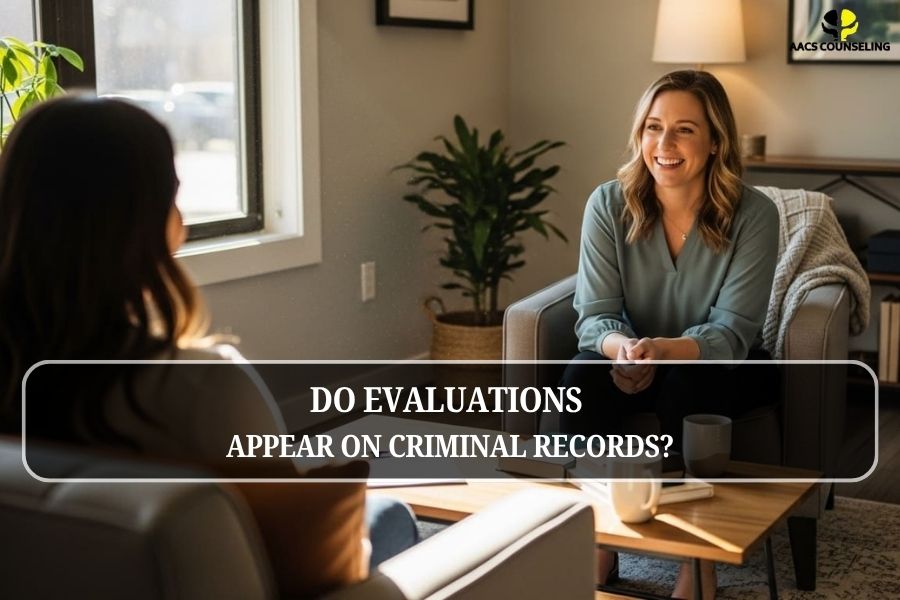
Do Evaluations Appear on Criminal Records?

Facing a legal charge brings up a massive wave of anxiety and countless questions. When a judge tells you to complete a psychological or substance use assessment, your mind probably races. You might immediately wonder if this assessment will follow you forever. Will future employers see your mental health details? Will a landlord know about your substance use history?

You are not alone in having these fears. Many people worry that taking a court-mandated test means giving up their right to medical privacy. They fear that every answer they give will end up on a public background check. Fortunately, the legal system separates your health information from your criminal history.

Knowing exactly what is a court-ordered evaluation helps calm these common fears. This guide breaks down exactly how courts handle your private information. We will explore how evaluation privacy laws work and explain why your clinical details stay protected, even during a public court case.

Understanding Court-Ordered Evaluations and Criminal Records

To understand your privacy rights, you first need to understand how background checks work. A standard criminal record tracks your interactions with law enforcement. It shows arrests, formal charges, and final court convictions. It does not act as a medical chart.

Court-ordered evaluations and criminal records serve two completely different purposes. A criminal record documents your legal history for public safety reasons. An evaluation report gives the judge specific clinical insights to help them make a fair decision about your future.

Because the evaluation focuses on your behavioral health, it falls under strict medical privacy protections. The actual contents of your interview, your test scores, and your clinical diagnosis do not become part of your public rap sheet. When an employer runs a background check, they will see the DUI charge or the assault conviction. They will not see the clinical notes from your substance abuse assessment.

What Actually Goes on a Background Check?

Public records only display the administrative actions of the court. If you plead guilty to a charge, that guilty plea becomes public knowledge. If the judge sentences you to probation and requires you to attend an education class, the fact that you have probation conditions might appear on a detailed legal record.

However, the specific clinical findings remain separate. The background check will not say “diagnosed with severe alcohol use disorder.” It will only show the legal outcome of the specific charge you faced. This separation allows you to speak honestly with your evaluator without fear of ruining your future job prospects.

Evaluation Privacy Laws and Your Rights

When you walk into a clinic for an assessment, you carry strict legal protections with you. The fact that a judge ordered the test does not strip away your rights as a patient. Evaluators operate under a strict code of ethics and heavy federal regulations.

Evaluation privacy laws prevent clinical professionals from sharing your information freely. An evaluator cannot call your boss to discuss your mental health. They cannot post your test results online. They have a legal obligation to protect your sensitive data from anyone who does not have explicit permission to view it.

These laws exist to encourage honesty. If people knew their medical details would become public, everyone would lie during their assessments. The courts need the truth to make good decisions, so they strictly enforce laws that keep your clinical information locked down.

How Federal Laws Protect Your Health Data

The strongest shield you have is the Health Insurance Portability and Accountability Act. This federal law dictates exactly how medical professionals must handle your private data. Evaluators must follow the strict HIPAA privacy rules from the moment you walk through their door.

Under these rules, you control who sees your health information. During your initial appointment, the clinic will ask you to sign a release form. This piece of paper explicitly lists the names of the people allowed to receive your final report. If a person’s name is not on that form, the evaluator cannot legally talk to them. This ensures your medical history stays securely within the designated legal circle.

Who Actually Sees Your Evaluation Report?

While the public cannot read your report, specific individuals involved in your case must review it. The court ordered the assessment to gather facts. Therefore, the people deciding your legal outcome need access to the clinical findings.

Your legal assessment confidentiality only extends to outside parties. The presiding judge will read the full report. They need this information to decide if you need a treatment program instead of a standard jail sentence. The judge uses the clinical data to build a fair, productive legal resolution.

Your defense attorney also receives a copy. They use the findings to argue for a better sentence on your behalf. Additionally, the prosecuting attorney often has the right to review the document, depending on your state’s laws. If you are on probation, your probation officer will receive a copy to ensure you follow the evaluator’s treatment recommendations.

The Court Clerk and Sealed Records

You might wonder what happens to the physical document once it enters the courthouse. After all, court files are usually public records. Anyone can walk into a courthouse and request to see a case file.

However, courts handle medical documents very differently than standard legal motions. When an evaluator sends your report to the court, the clerk typically files it under seal. A sealed document sits in the case file, but the general public cannot view it. Only court officials and the attorneys assigned to your specific case have the authority to open and read a sealed medical evaluation.

Mental Health, Legal Issues, and Public Records

The legal system slowly recognizes that punishment does not cure illness. Many people end up in court because of untreated trauma, deep anxiety, or severe depression. Using the legal system to address behavioral health is becoming much more common across the country.

Understanding the deep link between mental wellness and legal trouble changes how courts operate. Organizations like the National Institute of Mental Health provide vast amounts of research showing how stress affects human behavior. Because courts rely on this type of clinical science, they must protect the medical data they collect.

If courts made mental health evaluations public, it would create a massive stigma. It would punish people twice—once with a legal sentence and again by exposing their personal struggles to the world. By keeping these records private, the justice system encourages people to get the real help they desperately need.

The Importance of Honesty and Compliance

Knowing your privacy is secure should change how you approach your assessment. Many individuals walk into their interview feeling highly defensive. They try to hide their drinking habits or minimize their depression because they fear public exposure.

This strategy always backfires. Evaluators use advanced, scientifically backed tests designed to catch lies and inconsistencies. If an evaluator feels you are trying to manipulate the assessment, they will write that in your report. A judge who reads that you acted uncooperative will usually hand down a much harsher sentence.

You must treat the evaluation as an opportunity, not a trap. When you speak openly about your struggles, the evaluator can recommend a supportive treatment plan. Judges love to see defendants who take accountability and show a genuine desire to improve their lives.

Don’t Let Fear Silence You

Do not let the fear of a permanent record keep you from speaking up. Your clinical diagnosis will not appear on your background check. Your intimate family history will not become front-page news.

Use the clinical interview to explain your side of the story. If you drink because of intense job stress, tell the evaluator. If you made a mistake because you stopped taking a prescribed medication, explain that clearly. The evaluator is there to understand you, not to judge you. Your transparency gives them the context they need to write a fair, balanced report for the judge.

Finding Support During Your Legal Case

Navigating a legal charge while dealing with a mandated evaluation creates extreme stress. You might feel totally isolated, exhausted, and unsure of what to do next. You do not have to carry this heavy burden all by yourself.

Professional support networks exist entirely to help people in your exact situation. If you struggle with severe cravings, dark thoughts, or extreme anxiety about your case, you can reach out for free help right now. The SAMHSA National Helpline offers completely confidential guidance. They can connect you with local support groups and counseling centers to help you stay strong during your legal journey.

Leaning on outside resources shows the court that you take your situation seriously. It proves you want to build a better, healthier future.

Take the Next Step for Your Future

Court-ordered evaluations and criminal records remain distinctly separate. Your public background check shows your legal charges, but your evaluation privacy laws keep your personal medical details locked away securely. Legal assessment confidentiality ensures you can speak the truth without ruining your reputation.

Because your privacy is strictly protected, you have no reason to hide the truth during your assessment. Approach your appointment with honesty, comply fully with the evaluator’s requests, and focus on the road ahead. Following the professional recommendations sets you up for a much better legal outcome.

If you have an upcoming mandate and need to schedule your assessment with a trusted, compliant professional, take action right now. Reach out to the AACS Service Center to book your appointment. Our experienced team will guide you through the process, protect your privacy, and help you take the right steps toward resolving your legal case.

What Documents to Bring to a Court-Ordered Evaluation

Walking into a professional evaluator’s office often feels incredibly intimidating. You know the resulting report will directly influence your legal case, which naturally causes stress and anxiety. However, you have more control over this situation than you might realize.

The secret to a successful assessment lies entirely in your preparation. Arriving empty-handed or scrambling for paperwork makes you look disorganized. Conversely, showing up with organized, comprehensive records demonstrates responsibility and respect for the legal process. Evaluators appreciate clients who take the mandate seriously.

Knowing exactly what is a court-ordered evaluation helps you understand why specific paperwork is necessary. This guide provides a complete checklist of court-ordered evaluation documents you must bring to your appointment. We will explain exactly why the evaluator needs each item and how proper legal assessment preparation directly impacts your case.

Why Legal Assessment Preparation Matters

Evaluators do not make decisions based on assumptions. They rely on hard facts, objective data, and clinical observations. If you do not provide the necessary background information, the evaluator cannot form an accurate clinical picture.

Failing to bring the right documents delays your assessment. The evaluator might refuse to complete your interview until you provide the required paperwork. This delay frustrates the court, angers your attorney, and prolongs your legal uncertainty.

When you gather your documents ahead of time, you remove a massive source of anxiety. You can sit down for your interview knowing you have everything the professional needs. This allows you to focus entirely on answering the evaluator’s questions honestly and clearly.

The Essential Checklist: What to Bring to Court Evaluations

Every legal case involves unique circumstances. A child custody dispute requires different background information than a third-offense DUI charge. However, a core set of documents applies to almost every clinical assessment.

Use this checklist to build your paperwork folder. Gather these items well before your scheduled appointment to avoid last-minute panic.

Official Identification and Court Orders

You cannot begin an evaluation without proving your identity. Bring a valid, government-issued photo ID. A standard driver’s license, state ID card, or passport works perfectly.

Next, you must bring a physical copy of the actual court order. This document serves as the foundation for the entire appointment. The court order tells the evaluator exactly what type of assessment the judge requires. It outlines the specific questions the court wants answered and dictates the scope of the interview.

Do not rely on your memory to explain what the judge wants. The evaluator needs to see the official mandate stamped by the court. If your attorney gave you a referral letter or specific instructions alongside the court order, bring those documents as well.

Legal Documents and Incident Reports

Evaluators need to understand the exact circumstances that brought you to their office. They cannot rely solely on your personal recounting of the event. Human memory is flawed, and people naturally minimize their own negative behaviors.

Bring the official police report or arrest record related to your current charge. This gives the evaluator an objective, third-party account of the incident. If you face a DUI or a traffic-related charge, bring a recent copy of your driving record.

If you have prior arrests or previous legal convictions, bring documentation for those as well. Attempting to hide a past criminal record from an evaluator is a massive mistake. They will eventually discover the truth through background checks or court communications. Providing your complete legal history upfront establishes immediate trust and proves your honesty.

Medical and Mental Health Records

Courts frequently order evaluations to determine if an underlying medical or psychological condition influences a person’s behavior. To make this determination, the evaluator needs a clear view of your health history.

Bring a complete list of any prescription medications you currently take. Include the dosage amounts and the name of the prescribing doctor. Certain medications affect mood, memory, and behavior. The evaluator must know what substances are legally in your system during the interview.

If you have a history of mental health treatment, bring those records. Documentation from previous therapists, psychiatrists, or inpatient hospital stays provides vital context. Understanding how behavioral health impacts decision-making is a critical part of the assessment process. The National Institute of Mental Health offers extensive data showing how untreated mental health disorders often lead to legal complications. Sharing your mental health history ensures the evaluator recommends the right type of supportive treatment.

Substance Use and Treatment History

If your case involves drug or alcohol allegations, the evaluator will focus heavily on your substance use history. You must provide documentation of any previous or ongoing treatment.

Bring completion certificates from any drug education classes, DUI schools, or rehabilitation programs you attended in the past. If you currently participate in support groups like Alcoholics Anonymous or Narcotics Anonymous, bring your attendance logs. These logs prove you are actively working on your recovery.

Additionally, bring the results of any recent drug or alcohol screenings. If your employer, probation officer, or attorney required you to take a drug test, those negative results strongly support your case. They provide concrete evidence of your current sobriety.

Protecting Your Privacy During the Process

Gathering this stack of highly personal paperwork often makes people feel vulnerable. You might hesitate to hand over your medical history or details about past mistakes to a stranger. It is completely normal to worry about who will see this sensitive information.

Fortunately, strict federal laws protect your privacy throughout the legal assessment process. Professional evaluators must adhere to rigorous HIPAA privacy rules to keep your health data secure. They cannot share your intimate medical files with the general public, your employer, or unauthorized family members.

During your intake, you will sign a specific release of information form. This form explicitly lists who receives the final evaluation report. Typically, the report only goes to the presiding judge, your defense attorney, and your probation officer. Your underlying medical documents remain securely locked in the evaluator’s clinical files.

Common Mistakes to Avoid

Even with a checklist, people make critical errors when preparing for an assessment. The most common mistake is waiting until the morning of the appointment to gather court-ordered evaluation documents. Requesting medical records or official police reports often takes several days or even weeks. Start requesting these documents the moment the judge orders the evaluation.

Another frequent mistake is bringing incomplete records. Do not bring just the first page of a ten-page police report. The evaluator needs the full context to make an accurate clinical judgment. Bring complete, unedited copies of every document.

Finally, never alter or forge a document. Some individuals try to change dates on attendance logs or white-out negative remarks on medical records. Evaluators easily spot altered documents. Submitting falsified records destroys your credibility, ruins your evaluation, and often leads to additional criminal charges for perjury or fraud.

Seeking Support Before Your Evaluation

The pressure of a pending legal case takes a heavy toll on your emotional well-being. Gathering documents detailing past arrests or medical struggles often brings up painful memories. You do not have to navigate this stressful period completely alone.

Professional support networks exist to help individuals manage crises and build healthier habits. If you feel overwhelmed by substance use cravings or extreme anxiety, reach out for immediate guidance. The SAMHSA National Helpline offers free, confidential treatment referrals and information. Connecting with a local support group before your evaluation shows the court you are proactive about your recovery.

Using available resources helps you stay grounded. When you feel supported, you communicate much more clearly during your clinical interview.

Next Steps for a Successful Assessment

Proper legal assessment preparation sets the stage for a fair, accurate, and smooth evaluation. By organizing your IDs, court orders, medical history, and legal records, you eliminate unnecessary delays. You show the evaluator that you respect their time and take the court’s mandate seriously.

Remember to start gathering your court-ordered evaluation documents immediately. Organize them neatly in a single folder so you can hand them over confidently when you arrive at the clinic.

If you have all your documents ready and need to schedule your mandated assessment, take action today. Reach out to the AACS Service Center to book your appointment with a qualified professional. Our team will guide you through the process, review your paperwork, and help you take the next positive step in your

What Happens During a Court-Ordered Evaluation in 2026

Receiving a mandate from a judge to undergo a psychological or substance abuse assessment often brings a wave of anxiety. You might wonder what the evaluator will ask, who will see your answers, and how the results will affect your future. Stepping into an evaluator’s office feels much less intimidating when you understand the exact steps involved.

Judges do not order these assessments to punish you. Instead, they use them to gather objective, professional insights. Courts need factual data to make fair decisions regarding child custody, probation terms, or DUI sentencing. Knowing what is a court-ordered evaluation gives you a clear advantage and helps you prepare effectively.

This guide breaks down exactly what to expect in court evaluations. We will walk you through the entire court-ordered evaluation process, from the initial paperwork to the final report, so you can approach your appointment with confidence and clarity.

The Purpose Behind the Evaluation

The legal system relies on evidence to make life-altering decisions. However, a judge is a legal expert, not a doctor or a psychologist. When a case involves complex behavioral issues, mental health concerns, or suspected substance abuse, the court requires an outside professional to step in.

An evaluation provides the court with a neutral, clinical perspective. It removes guesswork and bias from the equation. For example, in a contentious divorce, one parent might accuse the other of unstable behavior. The judge cannot rely solely on these accusations. An independent assessment provides a factual basis to determine if a parent poses a risk to their child.

Similarly, if you face a DUI charge, the court needs to know your risk level. Are you a first-time offender who made a poor choice, or do you struggle with chronic alcohol dependence? The evaluator answers these questions and recommends appropriate treatment or education, helping the judge hand down a fair and productive sentence.

Step-by-Step: The Court-Ordered Evaluation Process

Walking into a clinic feels much easier when you know the agenda. While specific tests vary based on your unique legal situation, the core structure remains consistent. Here are the primary legal assessment steps you will encounter.

Step 1: The Initial Intake and Paperwork

Your appointment begins with standard administrative tasks. You will fill out forms detailing your basic demographic information, medical history, and the specific legal charges you face. You must also bring your official court order and any relevant legal documents for the evaluator to review.

During this phase, the clinic will ask you to sign release forms. Because the court mandated the assessment, the evaluator must send the final report to the judge, your lawyer, or your probation officer. Do not let this worry you. Evaluators must follow strict HIPAA privacy rules to protect your sensitive health data. They only share the required documents with authorized individuals, ensuring your information stays secure.

Step 2: The Clinical Interview

After finishing the paperwork, you will sit down for a one-on-one interview with a licensed professional. This face-to-face conversation forms the foundation of the assessment. The evaluator will ask detailed questions about your upbringing, employment history, physical health, and current lifestyle.

They will also ask direct questions about the incident that led you to court. You must answer these questions openly. Mental health often plays a significant role in legal issues. The evaluator wants to understand your stress levels and coping mechanisms. Organizations like the National Institute of Mental Health offer extensive research showing how stress and trauma impact decision-making, which the evaluator keeps in mind while speaking with you.

Step 3: Standardized Testing and Questionnaires

Following the interview, you will complete several standardized written or digital tests. Evaluators use these scientifically backed questionnaires to screen for specific mental health disorders, behavioral patterns, or substance abuse tendencies.

These tests contain built-in validity scales. This means the test can detect if a person is lying, exaggerating, or trying to minimize their symptoms. Attempting to trick the test almost always backfires. Honesty provides the clearest, most accurate clinical picture, which ultimately works in your favor.

How Your Results Impact Legal Outcomes

Once you complete the interview and the testing phase, your job is done. The evaluator then takes all the gathered data and compiles a comprehensive written report. This document includes a summary of your background, the results of your standardized tests, and a professional clinical diagnosis.

More importantly, the report contains actionable recommendations for the court. If the evaluator identifies a substance use issue, they might recommend a 12-week outpatient treatment program. If they identify anger management issues, they might suggest specific counseling sessions.

Judges lean heavily on these recommendations when making their final rulings. If you comply with the suggested treatment plan, the court often views your case more favorably. Refusing to participate or fighting the recommendations usually leads to harsher penalties, longer probation periods, or unfavorable custody arrangements.

Preparing for Your Assessment

You cannot study for a clinical evaluation, but you can take specific steps to ensure the process goes smoothly. Proper preparation shows the evaluator—and the court—that you take the matter seriously.

First, arrive early. Punctuality demonstrates respect for the process and lowers your own stress levels before the interview begins. Bring a physical copy of your court order, a valid ID, and any medical records the clinic requested in advance.

Second, commit to total honesty. Many people try to hide embarrassing details about their drinking habits or mental health struggles. Evaluators are highly trained professionals who interview people in similar situations every single day. They are not there to judge you; they are there to assess you accurately. Telling the truth builds trust and ensures you receive the exact type of support you need.

Finding Support and Next Steps

Going through the legal system takes a massive toll on your mental and emotional well-being. Facing a mandated assessment often forces you to confront difficult habits or personal struggles. You do not have to carry this burden alone.

If you realize you need help managing substance use or a mental health crisis, immediate support is available. You can reach out to the SAMHSA National Helpline for free, confidential guidance. They can connect you with local support groups and treatment facilities to help you get back on track.

Taking proactive steps today sets the foundation for a better tomorrow. Fulfilling your court requirements promptly allows you to put your legal troubles behind you. If you need to schedule your assessment and want to work with a team of compassionate experts, contact the AACS Service Center. We are ready to guide you through the process, ensure your compliance, and help you move forward with your life.

Court-Ordered Evaluations for Juvenile Cases

Discovering that your child is facing legal trouble brings overwhelming fear and confusion to any family. When a judge mandates a psychological or behavioral assessment for your teen, you likely have countless questions. You might wonder if this means your child is going to jail or if the court thinks you are a bad parent.

The juvenile justice system operates very differently than the adult system. For minors, the court’s primary goal is almost always correction and guidance, not punishment. To figure out the best way to help a struggling teen, judges frequently rely on clinical assessments.

Understanding exactly what is a court-ordered evaluation can ease your family’s anxiety. This comprehensive guide explains the purpose and process of court-ordered evaluations for juveniles. We will explore how these assessments help uncover the root causes of misbehavior, shape rehabilitation-focused outcomes, and provide critical opportunities for early intervention.

The Purpose of Juvenile Legal Assessments

When a minor stands before a judge, the court sees a developing human being. A teenager’s brain is still growing, making them highly susceptible to peer pressure, trauma, and emotional distress. A single legal charge, such as vandalism, truancy, or underage drinking, usually acts as a symptom of a much deeper issue.

Juvenile legal assessments help the court look past the immediate offense. A judge knows the law, but they are not behavioral health experts. They need a licensed clinical professional to sit down with the minor and figure out why the incident occurred.

Does the child struggle with an undiagnosed learning disability that makes school frustrating? Are they acting out because of bullying, family conflict, or an underlying mental health condition? The evaluation answers these critical questions. It provides the judge with a clear, objective understanding of the child’s environment and emotional state.

How the Evaluation Process Works for Minors

The evaluation process for a minor is thorough and heavily involves the family unit. Evaluators know that you cannot understand a child’s behavior without understanding their home and school life. Here is what you and your child can expect during the assessment process.

The Clinical Interviews

The process usually begins with individual interviews. The evaluator will speak privately with your child in a safe, non-judgmental environment. They will ask age-appropriate questions about the child’s friendships, school performance, and feelings about the legal incident.

The evaluator will also interview you, the parents or guardians. You will provide crucial background information about your child’s medical history, developmental milestones, and any recent changes in their behavior. Your input gives the professional a complete picture of the child’s daily life.

Psychological and Behavioral Testing

Following the interviews, the evaluator may administer standardized tests. These assessments screen for common issues that affect adolescents, such as ADHD, severe anxiety, or depression.

Mental health plays a massive role in juvenile behavior. The National Institute of Mental Health offers extensive resources detailing how emotional disorders often present as anger or rebellion in teenagers. By identifying these conditions early, the evaluator can recommend a plan that actually helps the child heal and mature safely.

Protecting Your Family’s Privacy

Many parents worry that an evaluation will attach a permanent, public stigma to their child. You might fear that teachers or future employers will read the clinical notes. Fortunately, the law fiercely protects your child’s medical and psychological data.

Clinical evaluators must follow strict HIPAA privacy rules at all times. They cannot share the details of the assessment with your child’s school, your employer, or the general public. You will sign a release form that strictly limits who receives the final report. Usually, this includes only the judge, your defense attorney, and potentially a juvenile probation officer. Your family’s private struggles remain completely secure.

Rehabilitation for Juvenile Offenders

The most important aspect of court-ordered evaluations for juveniles is how they influence the judge’s final decision. The juvenile justice system emphasizes rehabilitation over incarceration. The evaluation report serves as the roadmap to achieve that rehabilitation.

When the evaluator finishes their assessment, they write a detailed report containing actionable recommendations. If the child acts out due to severe family conflict, the evaluator might recommend mandatory family therapy. If the minor struggles with early-stage substance use, they might suggest an outpatient teen education program.

Judges rely heavily on these recommendations. Instead of sending a minor to a juvenile detention center, the court uses the evaluation to justify alternative sentencing. The judge can mandate that the child complete the recommended therapy or educational classes. This approach keeps the child in their home community while providing the exact structural support they need to thrive.

The Role of Parental Support and Compliance

As a parent, your attitude toward the evaluation process directly impacts your child’s outcome. If you act defensive or refuse to cooperate with the evaluator, the court will notice. Judges view parental resistance as a sign that the child lacks a supportive environment at home.

You must treat the evaluation for your child’s success. Ensure you attend all required appointments, provide honest answers during your interviews, and gather any requested school or medical records promptly. Show the court that you are a willing, active participant in your child’s rehabilitation journey.

If the evaluator recommends a specific therapy program, commit to it fully. Taking the process seriously shows your child that their actions have consequences, but it also shows them that you are entirely dedicated to helping them navigate those consequences.

Finding Additional Help for Your Teen

Dealing with the juvenile court system places incredible stress on a family. Watching your child struggle with behavioral issues or substance use is heartbreaking. You do not have to figure out how to handle this crisis all by yourself.

Community resources exist specifically to support families navigating these difficult waters. If you need immediate guidance on teen substance use or mental health support, reach out to the SAMHSA National Helpline. They provide free, confidential routing to local counseling centers, support groups, and family intervention programs. Using these resources strengthens your family unit and provides your teen with extra layers of professional guidance.

Securing a Better Future for Your Child

Court-ordered evaluations for juveniles are not a punishment. They are a necessary step toward understanding your child’s unique needs. By cooperating fully with the evaluation process, you give the court the information it needs to mandate effective, compassionate rehabilitation.

A single legal mistake does not have to define your child’s entire future. With the right clinical insights and a supportive home environment, your teen can learn from this experience, correct their behavior, and move forward successfully.

If your family is facing a juvenile court mandate and needs to schedule a professional assessment, take action today. Contact the AACS Service Center to connect with our compassionate team. We will guide you through the evaluation process, protect your family’s privacy, and help you find the best path forward for your child.

Call Now