Ayesha, Author at AACS Counseling - Page 6 of 16

AACS Counseling Expands Nationwide Leadership in DOT SAP Evaluations and Behavioral Health Services

Atlanta, GA — AACS Counseling, a nationally recognized behavioral health provider, continues to strengthen its position as a premier and trusted provider of DOT SAP (Substance Abuse Professional) services nationwide, delivering fast, affordable, and culturally responsive care to clients across the United States.

With over 30 years of experience in court-ordered assessments and behavioral health services, AACS Counseling has built a reputation for helping individuals navigate complex regulatory requirements, including DOT return-to-duty processes, alcohol and drug evaluations, and mental health assessments.

As demand for virtual and accessible SAP services continues to rise, AACS Counseling has expanded its reach to serve clients in all 50 states, offering 100% virtual evaluations, flexible scheduling, and multilingual support.

Meeting a Growing Nationwide Need

The Department of Transportation (DOT) requires individuals who fail or refuse a drug or alcohol test to complete a structured SAP program before returning to safety-sensitive work. This process is governed by federal regulations under 49 CFR Part 40.

Learn more about DOT requirements:
https://www.transportation.gov/odapc/part40

FMCSA Clearinghouse information:
https://clearinghouse.dot.gov

AACS Counseling addresses these challenges by providing:

  • Fast scheduling (same-day or next-day appointments)
  • Return-to-duty timelines as fast as 2–4 days
  • Affordable pricing with flexible payment options
  • Virtual services accessible from anywhere. Start your SAP evaluation:

https://www.aacscounseling.com/sap-evaluations/

Commitment to Accessibility and Cultural Responsiveness

AACS Counseling stands out for its commitment to inclusive and culturally sensitive care, offering services in multiple languages, including:

  • English
  • Spanish
  • Arabic
  • Armenian
  • Turkish
  • Hindi
  • Ewe
  • Pulaar
  • Tagalog

The organization also provides evening and weekend availability, ensuring accessibility for clients with demanding work schedules, including CDL drivers and safety-sensitive employees.

Virtual services allow clients to complete evaluations from home:
https://www.aacscounseling.com/virtual-mental-health-assessment/

Client Experiences Reflect Service Quality

Clients across the country have shared positive experiences with AACS Counseling’s services, highlighting professionalism, speed, and support.

  • “The process was much faster than I expected. I was able to complete everything within a few days and get back to work.”
  • “They explained everything clearly and made a stressful situation much easier to handle.”
  • “I appreciated being able to do everything online without traveling.”
  • “Very professional and respectful. They treated me with dignity throughout the process.”
  • “The multilingual support made a huge difference for my family.”
  • “I was able to schedule an appointment the same day and get started immediately.”
  • “Affordable pricing compared to other providers I looked at.”
  • “They guided me step by step and answered all my questions.”
  • “Great customer service and very responsive team.”
  • “I highly recommend them for anyone needing SAP services quickly.”

Addressing Client Expectations with Transparency

Like many organizations serving high-stakes regulatory and legal requirements, AACS Counseling emphasizes transparency and professionalism.

All evaluations are conducted in accordance with federal guidelines:

https://www.fmcsa.dot.gov/regulations/drug-alcohol-testing

The organization maintains a commitment to:

  • Ethical clinical practices
  • Objective evaluations
  • Compliance with DOT and federal standards

“Our responsibility is to provide accurate, professional, and compliant evaluations,” the organization explains. “We focus on helping clients understand the process and move forward efficiently.”

Comprehensive Service Offering

In addition to DOT SAP programs, AACS Counseling provides:

Alcohol and Drug Evaluation
https://www.aacscounseling.com/alcohol-and-drug-evaluation/

Substance Abuse Evaluation
https://www.aacscounseling.com/substance-abuse-evaluation/

Mental Health Assessments
https://www.aacscounseling.com/virtual-mental-health-assessment/

Additional industry resources:

Substance Abuse and Mental Health Services Administration (SAMHSA):
https://www.samhsa.gov

National Institute of Mental Health (NIMH):
https://www.nimh.nih.gov

Positioning as a National Leader

Through its combination of speed, affordability, accessibility, and professionalism, AACS Counseling continues to grow as a leading provider of DOT SAP services nationwide.

With a focus on:

  • Client-centered care
  • Regulatory compliance
  • Multilingual access
  • Nationwide virtual delivery

The organization is well-positioned to serve individuals and industries across the United States.

About AACS Counseling

AACS Counseling is a behavioral health organization specializing in:

  • DOT SAP Evaluations
  • Court-Ordered Assessments
  • Substance Abuse Evaluations
  • Mental Health Services

With decades of experience and a nationwide presence, AACS Counseling is committed to delivering professional, ethical, and accessible care.

Learn more:
https://www.aacscounseling.com/

Court-Ordered Evaluation Near Me: The 50-State Legal Requirements Database

Being ordered by a court to undergo a specific evaluation can initially feel overwhelming. Adding to the complexity, legal requirements for these evaluations vary widely across U.S. states. Judges frequently request professional behavioral or health assessments to determine whether therapy, counseling, or educational programs could benefit your legal situation.

Since laws differ across the U.S., it’s crucial for individuals, attorneys, and probation officers to understand the specific requirements in each state. At AACS, we recognize the importance of mental and physical health during these challenging experiences.

At AACS Counseling, we help people across the country complete court-ordered evaluations quickly and professionally. Our licensed therapists conduct assessments that meet strict court standards while supporting you in moving forward with your legal case.

For more details about our evaluation services, visit:
https://www.aacscounseling.com/aacs-service-center/

This guide provides a clear overview of the requirements for court-ordered evaluations across all 50 U.S. states.

What Is a Court-Ordered Evaluation?

A court-ordered evaluation is a professional assessment requested by a judge during legal proceedings. These evaluations help courts determine if someone could benefit from treatment, psychological counseling, or behavioral education.

Courts often request these evaluations in cases involving:

  • DUI or DWI charges (driving under the influence)
  • Drug possession offenses
  • Probation violations
  • Domestic disputes
  • Child custody battles
  • Behavioral issues

Licensed professionals conduct these evaluations using structured interviews and standardized testing.

The final report typically includes:

  • Clinical observations
  • An assessment of behavioral risks
  • Specific treatment recommendations

Types of Court-Ordered Evaluations Courts May Require

Depending on the legal case, courts may require different types of assessments.

Drug and Alcohol Evaluations

These assessments examine an individual’s substance use to determine if targeted treatment programs are needed. Courts often request these evaluations for DUI charges or drug-related offenses.

If you’re seeking help for addiction, you can contact the National SAMHSA Helpline:
https://www.samhsa.gov/find-help/helplines/national-helpline

Psychological Evaluations

Psychological assessments evaluate emotional well-being and mental stability. They are often used in child custody cases or situations involving behavioral issues.

Educational materials about mental health can be found through the National Institute of Mental Health:
https://www.nimh.nih.gov

Anger Management Evaluations

These assessments focus on emotional regulation and responses to conflict.

Domestic Violence Evaluations

Domestic violence assessments analyze relationship dynamics and identify specific behavioral risk factors.

50-State Court-Ordered Evaluation Requirements Database

Here is a general overview of common evaluation practices across various U.S. states. Each state has its own guidelines on how evaluation reports are utilized in court.

Requirements in Alabama

Courts in Alabama frequently request drug and alcohol evaluations, often following DUI charges or drug possession incidents. Licensed counselors conduct these assessments and submit reports directly to the court or probation officers.

Requirements in Alaska

Alaska courts prioritize behavioral psychological evaluations, commonly in criminal cases or probation reviews. The court uses these reports to determine therapy requirements.

Requirements in Arizona

Judges in Arizona routinely call for substance abuse evaluations, particularly in DUI or drug-related cases. The results often influence sentencing or educational program requirements.

Requirements in Arkansas

Arkansas courts use substance and mental health evaluations to issue personalized treatment recommendations for individuals.

Requirements in California

California courts regularly request comprehensive psychological assessments, especially in DUI cases, domestic disputes, and complex custody battles. These evaluations help judges ensure the well-being of all parties involved, particularly children.

Requirements in Colorado

In Colorado, the focus is on drug and alcohol assessments. Courts utilize these reports to match defendants with appropriate treatment programs.

Requirements in Connecticut

Connecticut courts often order mental health evaluations, used in both criminal and family court cases to guide further requirements.

Requirements in Delaware

In Delaware, DUI charges almost always result in a required substance use evaluation. These assessments help officials determine if deeper addiction issues are present.

Requirements in Florida

Florida courts rely on drug and alcohol evaluations, typically following DUI arrests or probation violations.

Requirements in Georgia

In Georgia, substance abuse evaluations are standard, especially in DUI and drug possession cases. Courts use these reports to establish probation terms.

Other States

Evaluation requirements are similar in other states but tailored to local laws. These include:
Hawaii, Idaho, Illinois, Indiana, Iowa, Kansas, Kentucky, Louisiana, Maine, Maryland, Massachusetts, Michigan, Minnesota, Mississippi, Missouri, Montana, Nebraska, Nevada, New Hampshire, New Jersey, New Mexico, New York, North Carolina, North Dakota, Ohio, Oklahoma, Oregon, Pennsylvania, Rhode Island, South Carolina, South Dakota, Tennessee, Texas, Utah, Vermont, Virginia, Washington, West Virginia, Wisconsin, and Wyoming.

In each state, legal frameworks dictate the type of evaluation required and how much influence the report has on court decisions.

How Courts Use Evaluation Reports

Court-ordered evaluations help judges make informed legal decisions. These reports can significantly impact:

  • Sentencing decisions
  • Specific probation requirements
  • Recommendations for treatment or counseling
  • Mandatory participation in education programs

The reports provide courts with professional insights into an individual’s behavioral health and identify factors that may have contributed to the legal issues.

Preparing for a Court-Ordered Evaluation

Proper preparation can reduce stress. If you’re scheduled for an evaluation, bring:

  • A valid photo ID
  • Relevant court documents
  • Medical records, if applicable

Be honest during the evaluation. This ensures therapists can provide accurate recommendations that the court will accept.

Privacy and Confidentiality

Behavioral health professionals follow strict privacy laws. Your information is secure.

Federal privacy laws, such as HIPAA, ensure your personal health information remains confidential. No unauthorized parties will have access to your records.

Learn more about these protections here:
https://www.hhs.gov/hipaa/index.html

Why Individuals Choose AACS Counseling

AACS Counseling provides professional court-ordered evaluations recognized by courts across the U.S.

Clients choose AACS Counseling because we offer:

  • Experienced, licensed therapists
  • Strictly confidential services
  • Rapid appointment scheduling
  • Professional reports that meet court standards

For more information about our evaluation services, visit:
https://www.aacscounseling.com/aacs-service-center/

Final Thoughts

Court-ordered evaluations play a critical role in many legal proceedings. They provide valuable professional insights into an individual’s mental health and behavior, helping courts recommend appropriate treatments, educational programs, or probation terms.

Understanding the specific requirements in your state can help you navigate the legal process with confidence.

If you need a court-ordered evaluation, AACS Counseling is here to help. We offer professional services designed to meet court requirements and help you move forward with your case.

Learn more here:
https://www.aacscounseling.com/aacs-service-center/

Court-Ordered Evaluation Near Me: 500 Frequently Asked Questions Courts Ask

When courts require individuals to complete a court-ordered evaluation, many people feel uncertain about what the process entails. Judges, probation officers, and attorneys often rely on these evaluations to assess behavioral health concerns, substance use history, and other factors that influence legal decisions.

Since evaluations play a critical role in court cases, individuals often have numerous questions about the process. At AACS Counseling, we help individuals complete court-ordered evaluations quickly and professionally, ensuring compliance with legal requirements and helping cases move forward.

Learn more about our evaluation services here:
Visit AACS Counseling Service Center

This guide answers 500 frequently asked questions about court-ordered evaluations, helping individuals understand what to expect.

Section 1: General Questions About Court-Ordered Evaluations

  • What is a court-ordered evaluation?
  • Why do courts require evaluations?
  • Who conducts court-ordered evaluations?
  • Are evaluations required in every legal case?
  • What types of evaluations do courts order?
  • How long does a court-ordered evaluation take?
  • How quickly can I schedule an evaluation?
  • Can court-ordered evaluations be done online?
  • Who receives the evaluation report?
  • How does the evaluation affect my case?
  • Can evaluations influence sentencing?
  • Do courts require evaluations for DUI charges?
  • Are evaluations required for probation violations?
  • Do family courts require evaluations?
  • What documents should I bring to the evaluation?
  • Can I choose my own evaluator?
  • What qualifications must evaluators have?
  • Are evaluations confidential?
  • How are evaluation results used in court?
  • What happens after the evaluation is completed?

Section 2: Questions About Substance Abuse Evaluations

  • What is a substance abuse evaluation for court?
  • Why would a judge order a substance abuse assessment?
  • What substances are evaluated during the assessment?
  • How do clinicians determine substance misuse severity?
  • What screening tools are used in substance abuse evaluations?
  • Can alcohol use alone require evaluation?
  • What happens if the evaluation recommends treatment?
  • Can evaluations recommend education programs instead of treatment?
  • What questions are asked about alcohol use?
  • What questions are asked about drug use?
  • Can past substance use affect evaluation results?
  • How does substance use affect sentencing decisions?
  • Do evaluators review prior legal records?
  • Can evaluations identify addiction disorders?
  • What happens if substance abuse is confirmed?
  • Are follow-up programs required?
  • Can treatment recommendations reduce penalties?
  • Are substance abuse evaluations required for DUI cases?
  • How do probation officers use evaluation reports?
  • Are evaluations required before entering rehabilitation programs?

For help with substance use concerns, contact the SAMHSA National Helpline:
Visit SAMHSA Helpline

Section 3: Questions Asked During Mental Health Evaluations

  • What is a court-ordered mental health evaluation?
  • Why would a judge request a psychological assessment?
  • What conditions do evaluators assess?
  • How do evaluators identify depression symptoms?
  • Are anxiety disorders assessed during evaluations?
  • What psychological tests are used?
  • Can mental health evaluations affect sentencing?
  • Do evaluators diagnose mental health conditions?
  • Are treatment recommendations common?
  • Can counseling be required after an evaluation?

For mental health resources, visit the National Institute of Mental Health:
Visit NIMH

Section 4: Questions Courts Ask About Personal Background

  • What is your educational background?
  • What type of work do you do?
  • Are you currently employed?
  • What is your living situation?
  • Do you have family support?
  • Have you experienced major life stressors?
  • Do you have a history of counseling?
  • Have you taken medications for mental health conditions?
  • Have you previously completed court programs?
  • Have you had legal issues in the past?

Section 5: Questions Courts Ask About Behavior and Risk

  • How do you handle stressful situations?
  • Do you have difficulty controlling anger?
  • Have you participated in anger management programs?
  • Do you recognize behaviors that led to your legal issue?
  • What changes have you made since the incident?
  • Do you have strategies for managing stress?
  • Are there triggers that influence risky behavior?
  • Have you experienced violent conflicts?
  • Are you willing to participate in counseling programs?
  • What support systems are available to you?

Section 6: Questions About Treatment and Rehabilitation

  • Have you attended substance abuse counseling?
  • Have you completed rehabilitation programs?
  • Are you willing to attend counseling sessions?
  • Do you understand court treatment requirements?
  • What barriers might prevent treatment attendance?
  • Are transportation options available for counseling programs?
  • Are you open to behavioral therapy?
  • What goals do you have for personal improvement?
  • Are you willing to comply with court recommendations?
  • How can treatment programs support recovery?

Section 7: Questions Evaluators Ask When Writing Reports

  • Does the individual acknowledge responsibility?
  • Are behavioral risks present?
  • Does the individual show motivation to change?
  • Are treatment recommendations appropriate?
  • Is monitoring necessary?
  • Are follow-up evaluations recommended?
  • Does the individual pose a risk to others?
  • What interventions may reduce future legal issues?
  • What educational programs may help?
  • Are long-term support programs needed?

How to Schedule a Court-Ordered Evaluation

If a judge has ordered you to complete an evaluation, scheduling your appointment promptly ensures compliance with legal deadlines. AACS Counseling provides professional court-ordered evaluations nationwide.

To begin your evaluation, visit:
Schedule Your Evaluation

Our clinicians collaborate with courts, attorneys, and probation departments to deliver professional evaluation reports that meet legal requirements.

Final Thoughts

Court-ordered evaluations are a vital part of many legal cases. They help courts understand behavioral health factors and determine appropriate treatment, education programs, or probation conditions. By familiarizing yourself with the questions evaluators may ask, you can feel more prepared and confident during the process.

If you need a court-ordered evaluation, AACS Counseling offers professional services to help you comply with court requirements and move forward with your case.

Learn more here:
Visit AACS Counseling Service Center

What Happens After a DOT Drug Test Violation?

A Department of Transportation (DOT) drug or alcohol test violation can feel overwhelming for safety-sensitive employees, including commercial truck drivers, pipeline workers, aviation employees, transit operators, and railroad personnel. Many workers worry their careers are over or that they will never be able to return to duty.

The good news is that DOT regulations provide a structured process for returning to work after a violation. This process, called Return-to-Duty (RTD), is supervised by a Substance Abuse Professional (SAP).

Understanding what happens next—and how to move quickly through the process—can help employees protect their careers and get back on the job faster.

In this guide, we will explain:

  • What counts as a DOT drug or alcohol violation
  • What happens immediately after a violation
  • How the SAP evaluation process works
  • The steps required to complete the Return-to-Duty process
  • How remote and virtual SAP services from AACS Counseling can help accelerate compliance
  • How to register in the FMCSA Drug & Alcohol Clearinghouse and choose your SAP

What Is a DOT Drug or Alcohol Test Violation?

A DOT violation occurs when a safety-sensitive employee fails to comply with federal drug and alcohol testing regulations established by the U.S. Department of Transportation.

Violations may include:

  • Positive drug test
  • Alcohol test of 0.04 or higher
  • Refusal to test
  • Tampering or adulterating a sample
  • Leaving the testing site without completing the testing
  • Failure to appear for a scheduled test

These rules apply to workers regulated by federal agencies such as:

  • Federal Motor Carrier Safety Administration (FMCSA)
  • Federal Aviation Administration (FAA)
  • Federal Railroad Administration (FRA)
  • Federal Transit Administration (FTA)
  • Pipeline and Hazardous Materials Safety Administration (PHMSA)
  • U.S. Coast Guard

You can review federal drug and alcohol regulations here:

Under DOT rule 49 CFR Part 40, employees who violate drug and alcohol rules cannot return to safety-sensitive duties until completing the SAP process.

Immediate Consequences of a DOT Drug Test Violation

When a violation occurs, several things happen immediately.

Removal From Safety-Sensitive Duties

Employers must immediately remove the employee from safety-sensitive functions such as:

  • Driving a commercial motor vehicle
  • Operating heavy machinery
  • Performing regulated transportation work

The employee cannot return to safety-sensitive work until completing the Return-to-Duty process.

DOT regulations require this removal to protect public safety and workplace safety.

Reporting to the FMCSA Clearinghouse

For commercial drivers regulated by FMCSA, the violation must be recorded in the FMCSA Drug & Alcohol Clearinghouse.

The Clearinghouse is a federal database that tracks DOT drug and alcohol violations.

You can learn more here:

Employers and medical review officers must report violations to this system.

Impact on Employment

violation may affect employment in several ways:

  • Some employers terminate employment immediately
  • Others allow employees to complete the RTD process and return
  • Even if employment ends, employees can still complete the SAP process independently and later return to safety-sensitive work with another employer.

The DOT Return-to-Duty Process Explained

After a violationemployees must complete the DOT Return-to-Duty (RTD) process.

This process includes several required steps:

  1. Initial SAP Evaluation
  2. Education and/or Treatment Program
  3. Follow-Up SAP Evaluation
  4. Return-to-Duty Drug Test
  5. Follow-Up Testing Plan

Each step must be overseen by a qualified Substance Abuse Professional (SAP).

What Is a Substance Abuse Professional (SAP)?

A Substance Abuse Professional (SAP) is a qualified expert who evaluates employees following a DOT drug or alcohol violation.

SAPs are authorized under 49 CFR Part 40 to:

  • Evaluate employees after violations
  • Recommend treatment or education
  • Monitor progress
  • Conduct follow-up evaluations
  • Develop a follow-up testing plan

SAPs must meet strict federal qualifications and be trained in DOT regulations.

You can read more about SAP responsibilities here:

https://www.fmcsa.dot.gov/regulations/drug-alcohol-testing/substance-abuseprofessionals-saps

Step 1: Register in the FMCSA Drug & Alcohol Clearinghouse

Before completing the RTD process, drivers must register in the FMCSA Drug & Alcohol Clearinghouse.

Registration allows drivers to:

  • View violation records
  • Assign a SAP
  • Track RTD progress

How to Register

  1. Create a Login.gov account
  2. Register in the Clearinghouse
  3. Select a Substance Abuse Professional

Register here:

https://clearinghouse.fmcsa.dot.gov

When selecting a SAP in the Clearinghouse, choose:

Jacques Khorozian, Ph.D., LPC — Substance Abuse Professional

Selecting your SAP promptly allows the evaluation process to begin quickly.

Step 2: Complete the Initial SAP Evaluation

The initial SAP evaluation is the first step in the Return-to-Duty process.

During this evaluation, the SAP will:

  • Review the circumstances of the violation
  • Assess substance use history
  • Evaluate behavioral health concerns
  • Determine appropriate education or treatment

This evaluation typically includes:

  • Clinical interview
  • Substance use screening
  • Risk assessment
  • Treatment recommendations

Fast Remote SAP Evaluations With AACS Counseling

Fast Remote SAP Evaluations With AACS Counseling

Many employees want to complete the RTD process as quickly as possible.

AACS Counseling offers fast, remote SAP evaluations to help employees move through the process efficiently.

Benefits include:

  • Same-week appointments
  • Virtual telehealth evaluations
  • Nationwide service
  • Secure online sessions
  • Rapid documentation submission

Remote services eliminate travel delays and allow drivers to begin the process immediately.

To register for the fastest SAP evaluation, visit us now.

Early registration helps employees start the RTD process sooner and shorten downtime.

Step 3: Education or Treatment Program

After the initial evaluation, the SAP determines whether the employee needs:

  • Education programs
  • Counseling
  • Substance use treatment

The recommendation depends on factors such as:

  • Substance use history
  • Severity of violation
  • Risk level
  • Clinical assessment

Common recommendations may include:

  • Drug and alcohol education classes
  • Outpatient counseling
  • Substance abuse treatment programs

The employee must fully complete the SAP recommendations before moving forward.

Step 4: Follow-Up SAP Evaluation

After completing the recommended program, the employee must return to the SAP for a follow-up evaluation.

During this evaluation, the SAP determines whether the employee has:

  • Successfully complied with recommendations
  • Demonstrated readiness to return to duty

If successful, the SAP will authorize the employee to proceed with the Return-to-Duty test.

Step 5: Return-to-Duty Drug Test

The employee must pass a DOT Return-to-Duty drug or alcohol test.

Requirements include:

  • Must be observed (for drug tests)
  • Must produce a negative result
  • Must be conducted at a DOT-approved testing facility

Once the employee passes this test, they can resume safety-sensitive duties.

Step 6: Follow-Up Testing Plan

The final step is a follow-up testing plan created by the SAP.

DOT regulations require:

  • Minimum of 6 unannounced tests
  • Conducted over 12 months
  • May continue for up to 5 years

These tests ensure continued compliance and safety.

Why Fast SAP Evaluations Matter

The longer employees delay the SAP process, the longer they remain unable to work.

Completing the process quickly helps:

  • Restore employment eligibility
  • Minimize income disruption
  • Maintain professional licensing
  • Demonstrate responsibility to employers

Using remote SAP services can significantly speed up the process.

How AACS Counseling Helps Drivers Return to Duty Faster

AACS Counseling provides specialized services designed for employees who need rapid compliance with DOT regulations.

Services include:

Virtual SAP Evaluations

Employees can complete evaluations from anywhere using secure telehealth.

Rapid Scheduling

Appointments often available within days.

Nationwide Service

Drivers across the United States can access services remotely.

Expert DOT Compliance Guidance

Clients receive step-by-step guidance through:

  • Clearinghouse requirements
  • SAP process
  • Return-to-Duty testing
  • Follow-up compliance

To begin the process today.

Common Questions About DOT Violations

Can I Still Work After a DOT Violation?

Yes, but not in safety-sensitive duties until the RTD process is completed.

Do I Need a SAP Even if My Employer Fired Me?

Yes.

Even if your employer terminates employment, you must complete the SAP process before working for another DOT-regulated employer.

How Long Does the SAP Process Take?

It depends on:

  • Appointment availability
  • Completion of recommended education or treatment
  • Scheduling of return-to-duty testing

Many drivers complete the process within a few weeks to a few months.

Can the SAP Process Be Done Online?

Yes.

DOT regulations allow virtual SAP evaluations, which can significantly reduce delays.

Take the First Step Toward Returning to Work

Take the First Step Toward Returning to Work

A DOT drug or alcohol violation does not have to end your career.

By taking immediate action and completing the required steps, many employees successfully return to safety-sensitive work.

The key is starting the SAP process quickly.

Register today for a remote SAP evaluation:

https://www.aacscounseling.com/sap-evaluations/

When registering in the FMCSA Drug & Alcohol Clearinghouse, remember to choose:

Jacques Khorozian, Ph.D., LPC — Substance Abuse Professional

Prompt action can help you complete the Return-to-Duty process and get back to work as soon as possible.

Final Thoughts

DOT drug and alcohol regulations are designed to ensure transportation safety and accountability. While a violation can be stressful, the Return-to-Duty process provides a clear path forward.

By understanding the steps, registering in the Clearinghouse, and completing a SAP evaluation quickly, employees can regain eligibility for safety-sensitive work.

With remote SAP services through AACS Counseling, drivers and other DOT-regulated employees can move through the process efficiently and start rebuilding their careers.

Start your SAP evaluation today.

SAP Evaluations for DISA Violations and Pipeline Workers

Complete Guide to the Pipeline SAP Program and DISA SAP Evaluation Process

Workers in the pipeline, oil, gas, and energy industries perform safety-sensitive duties that require strict compliance with federal drug and alcohol testing regulations. When a worker receives a drug or alcohol violation through DISA or a PHMSA-regulated program, they cannot return to safety-sensitive work until completing a Substance Abuse Professional (SAP) evaluation and the Return-to-Duty (RTD) process.

For many workers, this situation can be stressful and confusing. Questions often arise, such as:

  • What happens after a DISA drug test violation?
  • How does the pipeline SAP program work?
  • How quickly can I return to work?
  • What is required for a DISA SAP evaluation?

This comprehensive guide explains everything pipeline workers need to know about SAP evaluations for DISA violations, including federal regulations, the Return-to-Duty process, and how AACS Counseling provides fast, nationwide SAP services to help workers get back to work quickly.

If you need to begin the process immediately, you can register for a SAP evaluation here.

Understanding DISA Drug Testing in the Pipeline Industry

Many pipeline companies and energy contractors participate in DISA Global Solutions’ drug and alcohol testing programs. DISA helps employers maintain compliance with federal safety regulations and industry standards.

Workers in the pipeline and energy sectors may be subject to:

  • Pre-employment drug testing
  • Random drug testing
  • Post-accident testing
  • Reasonable suspicion testing
  • Return-to-duty testing

These testing programs are often administered through DISA consortia, which manage compliance for employers across the energy sector.

Learn more about DISA transportation compliance here.

When a worker fails a test or refuses to be tested, they must complete the SAP evaluation process before returning to safety-sensitive work.

Federal Regulations for Pipeline Workers

Pipeline employees who perform safety-sensitive duties are regulated by the Pipeline and Hazardous Materials Safety Administration (PHMSA), which operates under the U.S. Department of Transportation (DOT).

These regulations are designed to protect public safety and ensure that individuals working in critical infrastructure environments are free from substance misuse.

Key regulatory resources include:

https://www.transportation.gov/odapc
https://www.phmsa.dot.gov

Under 49 CFR Part 40, any employee who violates DOT drug and alcohol testing rules must complete the Substance Abuse Professional (SAP) Return-to-Duty process before returning to work.

What Is a DISA SAP Evaluation?

A DISA SAP evaluation is a clinical assessment conducted by a DOT-qualified Substance Abuse Professional (SAP) after a drug or alcohol violation occurs.

The SAP evaluation determines:

  • Whether the worker has a substance use disorder
  • What level of education or treatment is required
  • When the worker is eligible to return to safety-sensitive duties

SAPs are independent professionals trained in federal DOT regulations.

Their responsibilities include:

  • Conducting the initial evaluation
  • Recommending education or treatment programs
  • Monitoring compliance with recommendations
  • Conducting follow-up evaluations
  • Establishing a follow-up testing plan

The SAP’s role is not to punish employees but to ensure safety and rehabilitation before returning to work.

Common DISA Violations for Pipeline Workers

Pipeline workers may be required to complete a pipeline SAP program after violations such as:

Positive Drug Test

Common substances detected include:

  • Marijuana
  • Cocaine
  • Amphetamines
  • Opioids
  • PCP

Alcohol Violations

Alcohol testing violations typically include:

  • Alcohol concentration of 0.04 or higher
  • Refusal to test

Refusal to Test

Refusal violations may include:

  • Leaving the testing site
  • Failing to provide a sample
  • Tampering with a specimen

Each of these violations requires completion of the SAP Return-to-Duty process.

Why Pipeline Workers Must Complete the SAP Process

Federal law requires the SAP process for workers in safety-sensitive industries, as pipeline operations pose significant safety risks.

Workers often handle:

  • High-pressure gas systems
  • Hazardous materials
  • Heavy equipment
  • Critical infrastructure

A worker impaired by drugs or alcohol could create serious safety hazards.

Therefore, DOT regulations require a structured rehabilitation and monitoring process before employees return to work.

Step-by-Step: Pipeline SAP Program Process

Workers who receive a violation must complete the SAP Return-to-Duty process.

This process involves several steps.

Step 1: Schedule a SAP Evaluation

The first step is scheduling an evaluation with a qualified Substance Abuse Professional.

AACS Counseling provides fast virtual SAP evaluations nationwide, allowing pipeline workers to begin the process immediately.

Register here:

https://www.aacscounseling.com/sap-evaluations/

Remote telehealth evaluations eliminate travel delays and allow workers to begin the Return-to-Duty process quickly.

Step 2: Initial SAP Evaluation

During the initial evaluation, the SAP conducts a comprehensive assessment.

This evaluation typically includes:

  • Substance use history review
  • Clinical interview
  • Behavioral health screening
  • Risk assessment

The SAP determines whether the worker requires:

  • Education
  • Counseling
  • Substance use treatment

This step is required before workers can move forward in the pipeline SAP program.

Step 3: Education or Treatment Program

Based on the SAP evaluation, the worker must complete the recommended program.

Common recommendations include:

  • Drug and alcohol education classes
  • Substance abuse counseling
  • Outpatient treatment programs

The SAP determines the appropriate level of intervention based on the worker’s circumstances.

Step 4: Follow-Up SAP Evaluation

After completing the recommended program, the worker returns to the SAP for a follow-up evaluation.

The SAP verifies:

  • Completion of required education or treatment
  • Readiness to return to safety-sensitive

For more visit now.

Court-Ordered Online Evaluations: Are They Accepted?

If you’re involved in legal proceedings, the court may require a professional evaluation. In the past, this meant long commutes, waiting rooms, and rigid appointment schedules. But with the rise of digital tools, even the legal system is embracing technology. At AACS Counseling, people often ask us: Are court-ordered online evaluations even recognized by the courts?

The short answer: Yes, in many cases. However, there are strict conditions that must be met. A simple document downloaded from the internet won’t suffice. Courts have high standards for the qualifications of evaluators and the evaluation process itself.

In this article, we’ll explore the growing trend of digital evaluations, highlight their benefits, discuss potential risks, and explain what to look for when choosing a provider.

The Growing Trend of Online Evaluations

The legal and medical fields have undergone significant changes over the years. Virtual meetings and telemedicine are now everyday practices. This shift has also extended to court-mandated evaluations.

Judges, probation officers, and attorneys increasingly recognize that professional assessments conducted via secure video calls can be just as effective as in-person sessions. As long as the provider is licensed and complies with legal regulations, courts often accept these evaluations as equivalent. Advanced technology allows professionals to assess body language, tone, and emotional responses accurately through video.

That said, acceptance varies depending on the state, court, and specific case. Before scheduling a digital evaluation, you should always consult your attorney or the relevant court.

The Clear Advantages of Digital Evaluations

Why are so many people opting for online evaluations? The answer lies in their flexibility. For those with jobs or family commitments, attending in-person appointments during the day can be challenging.

Convenience and Time Savings

An online evaluation can be done from the comfort of your home, saving you the hassle of commuting, finding parking, and sitting in a waiting room. This convenience reduces the stress that often comes with legal proceedings, allowing you to better focus on the evaluator’s questions in a familiar setting.

Greater Accessibility

For people in rural areas, online options are a game changer. If the nearest qualified specialist is hours away, the internet provides immediate access to licensed professionals. This speeds up the process and helps you meet court deadlines on time.

Budget is also an important consideration. If you’re wondering about the costs involved, check out this guide for detailed information on how much a court-ordered evaluation costs.

Potential Concerns and Pitfalls

Despite the many advantages, there are risks involved. Not every online provider is credible. The biggest concern is that the court may reject your evaluation.

Credibility and Legal Requirements

Courts only accept evaluations completed by a recognized, licensed professional. The report must meet specific formal criteria and address particular legal questions. If you choose a provider offering generic forms without a proper interview, judges will likely dismiss the evaluation.

The Danger of Cheap Providers

The internet is full of websites promising fast and inexpensive certificates. Be cautious. A low-quality evaluation will likely be rejected in court, forcing you to repeat the process. This can lead to significant delays and additional legal fees. Learn more about the hidden costs of cheap evaluations to avoid costly mistakes and setbacks.

Types of Evaluations at a Glance

Not all legal situations require the same type of evaluation. Requirements vary based on the charges and circumstances. Below are some of the most common evaluations that can now often be completed online.

Domestic Violence Assessments

In cases involving family disputes, courts often require sensitive and thorough assessments. Evaluators must carefully analyze family dynamics and potential risks. Learn more about the specific requirements for court-ordered domestic violence assessments. These evaluations require experienced professionals who can build trust, even through video calls.

Anger Management Evaluations

When physical altercations or aggressive behavior are involved, courts often mandate anger management programs. The goal is to determine if there’s a risk of further incidents and recommend appropriate interventions. Find out what to expect from anger management evaluations for court cases. These assessments evaluate impulse control and conflict resolution strategies.

Workplace-Related Evaluations (DOT SAP)

Employees in the transportation industry are subject to strict regulations. If you’ve violated workplace policies on alcohol or drugs, you’ll need to follow a regulated process to regain your work eligibility. A court-approved DOT SAP program is essential. These specialized evaluations can often be completed virtually under certain conditions.

Final Thoughts: Preparation Is Key

Online evaluations are a modern, efficient, and often accepted solution for court requirements. They offer a stress-free way to meet your obligations. At AACS Counseling, we recommend that you never choose the first provider you come across without doing your research.

Always consult your attorney first. Get written confirmation from the court that an online evaluation is acceptable for your case. Then verify the provider’s licenses and references thoroughly. By following these steps, you can save time, money, and stress on your way to a positive legal resolution.

How Much Does a Court-Ordered Evaluation Cost?

Here at AACS, we spend a lot of time discussing physical health, body composition, and holistic wellness. But true wellness extends far beyond the gym and the kitchen. Sometimes, life throws complex legal and personal challenges your way, and your mental and emotional well-being take center stage. If you or a loved one are navigating the legal system, you might face a requirement to undergo a professional assessment.

When a judge or legal representative tells you that you need an evaluation, a heavy wave of anxiety usually follows. Right after asking what the process involves, the very next question is almost always about the price. How much does a court-ordered evaluation cost?

The short answer is that prices vary wildly. You might see numbers ranging from a few hundred dollars to several thousand. This massive price gap leaves many people confused and stressed. This guide breaks down exactly what drives these costs, what you should look for, and why trying to save a few dollars upfront can lead to financial disaster down the road.

What Drives the Cost of an Evaluation?

No two legal cases are exactly alike, and the same rule applies to psychological and behavioral assessments. The price you pay depends on several distinct factors. Understanding these variables will help you budget effectively and choose the right professional for your specific needs.

The Type of Evaluation Required

The biggest factor influencing your total bill is the specific type of assessment the court requested. Different situations require different levels of clinical testing, interviewing, and paperwork.

  • Substance Abuse Evaluations: These are incredibly common for DUI offenses or drug-related charges. They typically involve an interview and a standardized screening questionnaire to assess your relationship with alcohol or drugs. Because they are straightforward, they tend to sit on the lower end of the pricing spectrum.
  • Anger Management Assessments: Often required in domestic disputes or assault charges, these evaluations determine if you need anger management classes. They require slightly more behavioral analysis but remain relatively affordable.
  • Mental Health Evaluations: If the court needs to understand your overall psychological state, the evaluator will use complex diagnostic tools. This requires specialized training, more time, and comprehensive reporting, driving the cost higher.
  • Child Custody Evaluations: These are the most exhaustive and expensive assessments. Evaluators must interview both parents, the children, and sometimes teachers or doctors. They require extensive documentation and home visits, pushing the cost into the thousands.

Location and Regional Economics

Where you live plays a massive role in the cost of your medical and legal services. If you reside in a major metropolitan area with a high cost of living, expect the hourly rates of licensed professionals to reflect that economy. Conversely, providers in rural areas might charge less, though your options for specialized evaluators might be severely limited.

The Provider’s Expertise and Credentials

Not all evaluators hold the same qualifications. A licensed clinical social worker (LCSW) might charge a different rate than a licensed psychologist (PhD or PsyD) or a board-certified psychiatrist. The court often dictates the level of credentialing required for your specific case. Highly specialized experts who frequently testify in court command premium rates because their professional reputation and rigorous testing methods hold significant weight with judges.

The Real Danger of Choosing the Cheapest Option

When you look at your budget, you might feel tempted to search for the absolute lowest price available. This is a massive mistake that countless individuals make every single year. A cheap evaluation often translates to a rushed process, inadequate testing, and a poorly written final report.

Courts have strict standards for these documents. If your evaluator fails to meet these rigorous standards, the judge will reject the report. When a judge throws out your evaluation, you do not get a refund from the cheap provider. Instead, you have to start the entire process over again.

This creates a snowball effect of expenses. You will have to pay for a second, high-quality evaluation. Furthermore, the delay might force your attorney to file extensions, drastically increasing your legal bill. To understand just how damaging this scenario can be, you must read about The Hidden Cost of Cheap Evaluations: Why a Rejected Report Could Cost You $5,000 in Legal Fees. Paying a little more upfront for a competent professional is the best financial protection you can secure.

Choosing a Reliable and Accepted Provider

Your goal is to satisfy the court’s requirements efficiently and accurately the first time. To do this, you need to work with an established, reputable agency that understands the specific legal frameworks in your jurisdiction.

You need professionals who know exactly what judges and probation officers look for in a final report. The evaluator must use court-approved testing instruments and follow ethical, standardized interviewing techniques. If they cut corners, your case suffers.

We highly recommend looking into established providers with a proven track record. For instance, you can explore the comprehensive services offered at the AACS Service Center. Choosing a dedicated facility ensures your paperwork is handled properly, your assessment is thorough, and your final report holds up under judicial scrutiny.

Preparing for Your Evaluation

Once you understand the costs and select a reliable provider, you must prepare yourself for the appointment. Transparency and honesty are your best tools. Many people try to “beat” the assessment by giving the answers they think the evaluator wants to hear. Modern psychological testing includes validity scales designed specifically to catch this type of deception.

If the evaluator detects that you are lying or minimizing your issues, they will note this in their report. The court looks very poorly upon individuals who attempt to manipulate an evaluation. Arrive on time, bring any required documentation (like police reports or prior medical records), and answer questions truthfully.

Taking the Next Step

Navigating legal requirements can feel incredibly overwhelming, but understanding the financial and procedural aspects gives you back a sense of control. Remember that an evaluation is not just a punishment; it is a clinical tool used to determine the best path forward for your specific situation.

Do not let price be the only factor driving your decision. Focus on quality, credentialing, and court acceptance. If you want a deeper dive into the exact processes, requirements, and steps involved in these assessments, we encourage you to read this court-ordered evaluations complete guide. Educate yourself, choose a reputable professional, and take the necessary steps to resolve your legal obligations with confidence.

Domestic Violence Assessments Ordered by Courts

Welcome back to the AACS Counseling blog, where we tackle the difficult topics surrounding health, wellness, and navigating life’s toughest hurdles. Facing a court order can feel overwhelming, especially when it involves highly sensitive matters. If a judge has recently mandated that you or someone you know undergo a domestic violence assessment, you probably have a lot of questions.

Understanding exactly what this evaluation entails can help reduce your anxiety and prepare you for the steps ahead. This guide breaks down what these assessments are, why courts order them, and what you can expect during the process.

What Are Domestic Violence Assessments?

A domestic violence assessment is a comprehensive evaluation conducted by a licensed mental health professional or a certified domestic violence counselor. The primary goal is to evaluate an individual’s behavioral patterns, emotional regulation, and potential risk for future violent or abusive behavior.

These evaluations are not designed to punish you. Instead, they provide the court with an objective, professional understanding of your unique situation. By gathering detailed information about your mental health, relationship history, and behavioral triggers, the evaluator can recommend the most appropriate interventions, educational classes, or counseling programs.

Why Do Courts Order These Evaluations?

Judges mandate domestic violence assessments for several crucial reasons. Family and criminal courts rely on these evaluations to make informed decisions that prioritize safety and rehabilitation.

Protecting Families and Communities

The court’s primary responsibility is to ensure the safety of everyone involved in a domestic dispute. By ordering an assessment, the judge can gauge the level of risk an individual might pose to their partner, their children, or the general public. This information helps the court establish necessary boundaries, such as issuing or modifying restraining orders, or determining safe custody and visitation arrangements.

Tailoring Rehabilitation Programs

Not every situation is the same, and a one-size-fits-all approach rarely works for behavioral rehabilitation. A thorough assessment identifies the root causes of the conflict. Whether the underlying issues involve anger management, substance abuse, or unresolved trauma, the evaluation helps the court mandate the specific type of help you need. This tailored approach dramatically increases the chances of successful rehabilitation.

How the Assessment Process Works

Walking into an assessment feels much less intimidating when you know what to expect. While the exact procedures vary depending on your state and the specific evaluator, the process generally includes a few standard steps.

Initial Interviews and Questionnaires

The core of the evaluation is a face-to-face interview. The counselor will ask you a series of questions about the incident that led to the court order. They will also inquire about your childhood, past relationships, employment history, and any previous legal issues. You will likely fill out standardized psychological questionnaires that help the evaluator measure your stress levels, anger triggers, and coping mechanisms. Honesty and cooperation during this stage are essential.

Background and Record Reviews

Evaluators do not rely solely on the interview. They typically review relevant documents to get a complete picture of the situation. This can include police reports, court transcripts, previous medical or psychological records, and statements from other parties involved. The goal is to cross-reference the information you provide with official records to ensure a highly accurate assessment.

The Role of Assessments in Legal Proceedings

The final product of this process is a formal written report submitted directly to the court. This document outlines the evaluator’s findings and includes specific recommendations.

The judge uses this report to guide their rulings. If the evaluator recommends a 24-week batterer intervention program, the court will likely make completing that program a condition of your probation or a requirement for regaining custody rights. Because this report carries significant weight in legal proceedings, it is crucial that you approach the assessment with a cooperative and willing attitude. Showing that you take the process seriously reflects positively on your character and your commitment to growth.

Moving Forward with the Right Support

Facing a court-mandated assessment can be stressful, but it also serves as an opportunity for personal growth and positive change. Completing the evaluation is the first step toward understanding your behavior, improving your relationships, and fulfilling your legal obligations.

You do not have to navigate this challenging time alone. Getting the right professional help makes a world of difference. We highly recommend reaching out to the experts at the AACS Service Center. Their compassionate, highly trained professionals specialize in providing thorough, fair, and supportive assessments that meet all court requirements. By partnering with experienced counselors, you can ensure your assessment is handled with the utmost professionalism, helping you move forward with clarity and confidence.

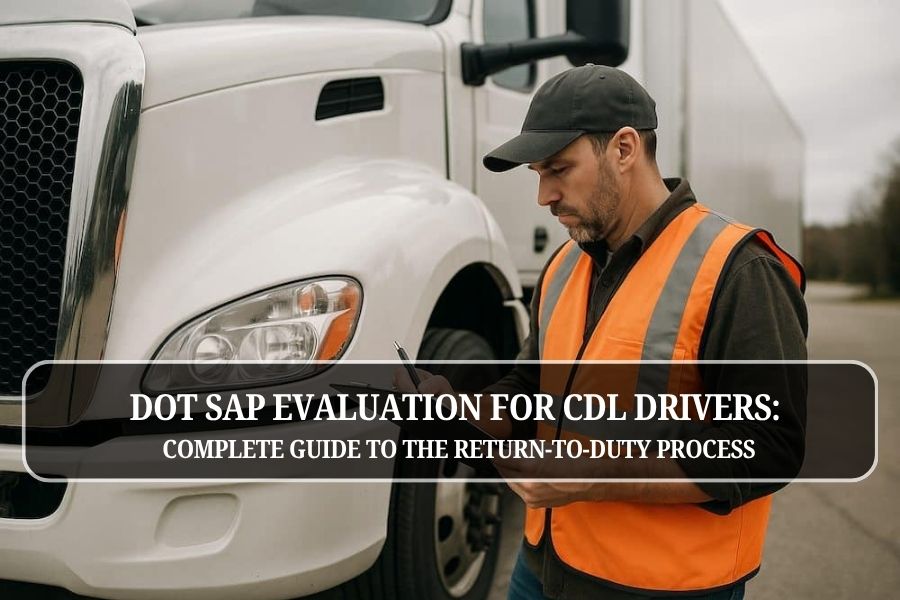
DOT SAP Evaluation for CDL Drivers: Complete Guide to the Return-to-Duty Process

Introduction to DOT SAP Evaluations

Commercial drivers play a vital role in keeping the United States economy functioning. Every day, thousands of truck drivers transport goods across the country, ensuring supply chains remain stable and businesses continue operating. Because of the significant safety responsibilities associated with commercial driving, the Department of Transportation (DOT) enforces strict drug and alcohol testing regulations.

When a driver violates DOT drug or alcohol policies, they are temporarily removed from safety-sensitive duties. However, the violation does not permanently end a driver’s career. Instead, federal regulations require the driver to complete a structured process known as the SAP Return-to-Duty program.

At AACS Counseling, we help drivers nationwide complete their SAP evaluations quickly and affordably, so they can regain eligibility to work as soon as possible.

Drivers beginning the process should first review the official Department of Transportation website:

https://www.fmcsa.dot.gov/

During registration, drivers must select their Substance Abuse Professional (SAP). To begin the process with AACS Counseling, drivers should enter:

Jacques Khorozian

as their SAP professional.

What Is a SAP Evaluation?

A Substance Abuse Professional (SAP) evaluation is a federally mandated assessment required after a driver violates DOT drug or alcohol regulations.

SAP professionals are specially trained counselors responsible for evaluating drivers and determining the appropriate education or treatment necessary before they return to safety-sensitive work.

The SAP program exists to protect both drivers and the public.

The evaluation process ensures that drivers returning to operate commercial vehicles are prepared to meet federal safety standards.

Understanding the FMCSA Drug and Alcohol Clearinghouse

The FMCSA Drug and Alcohol Clearinghouse is a national database that tracks violations of DOT drug and alcohol regulations.

The system allows:

  • Employers
  • SAP professionals
  • Medical review officers
  • Transportation agencies

to report violations and track compliance.

Drivers must register in the Clearinghouse before beginning the SAP process.

More information about federal transportation regulations can be found here:

https://www.fmcsa.dot.gov/

How CDL Drivers Register for the SAP Process

Drivers must register in the FMCSA Clearinghouse before they can begin the SAP return-to-duty process.

Steps include:

  1. Visit the FMCSA website
  2. Create a Clearinghouse driver account
  3. Review your violation record
  4. Select a SAP professional

When asked, “Who is your SAP professional?” enter:

Jacques Khorozian

This allows you to begin your SAP evaluation through AACS Counseling.

DOT Violations That Require SAP Evaluations

Several violations trigger the SAP program.

These include:

  • Positive drug tests
  • Positive alcohol tests
  • Refusing drug testing
  • Tampering with testing procedures
  • Missing scheduled testing

Once a violation is recorded, the driver must complete the SAP program before returning to work.

SAP Evaluations for DISA Violations

Many industrial workers and commercial drivers are also subject to DISA drug and alcohol compliance programs.

Workers in pipeline, transportation, and energy sectors may need SAP evaluations after violations.

More information about transportation compliance programs can be found here:

https://disa.com/dot-transportation-compliance/phmsa-compliance/

AACS Counseling helps workers resolve DISA violations and DOT violations through professional SAP evaluations.

SAP Programs for Pipe Fitters and Skilled Trades

Drug and alcohol testing requirements extend beyond trucking.

Workers in industries such as:

  • Pipe fitting
  • Construction
  • Energy
  • Pipeline maintenance

may be required to complete SAP evaluations before returning to work after violations.

AACS Counseling helps pipe fitters and union workers complete their SAP evaluations and return to their jobs.

The 5 Steps of the DOT Return-to-Duty Process

1. Initial SAP Evaluation

Drivers meet with a certified SAP professional for an assessment.

2. Education or Treatment

The SAP recommends a program based on the driver’s evaluation.

3. Program Completion

Drivers must complete recommended education or treatment.

4. Follow-Up Evaluation

The SAP verifies program completion.

5. Return-to-Duty Testing

Drivers must pass a drug or alcohol test before returning to work.

Why Drivers Choose AACS Counseling

Drivers across the United States choose AACS Counseling because we provide:

  • The quickest SAP program nationwide
  • The most affordable SAP evaluations
  • Nationwide service
  • Fast scheduling
  • Experienced SAP professionals

Our goal is to help drivers complete the process and return to work as quickly as possible.

Multilingual SAP Evaluations for CDL Drivers

We proudly support drivers from many backgrounds by offering services in multiple languages:

  • English
  • Spanish
  • Tagalog
  • Armenian
  • Arabic
  • French
  • Hindi
  • Ewe

Providing multilingual services ensures drivers fully understand the SAP process.

Frequently Asked Questions About SAP Evaluations

How long does the SAP program take?

Timelines vary depending on the education or treatment required.

Can drivers from any state use AACS Counseling?

Yes. Our SAP program is available nationwide.

Can I choose my SAP professional?

Yes. Drivers may select their SAP when registering in the Clearinghouse.

Enter Jacques Khorozian to begin with AACS Counseling.

Start Your SAP Evaluation Today

To begin the SAP process:

  1. Visit:  https://www.fmcsa.dot.gov/
  2. Register in the FMCSA Clearinghouse.
  3. Enter Jacques Khorozian as your SAP professional.
  4. Schedule your SAP evaluation with AACS Counseling.

Our program helps drivers nationwide complete SAP requirements quickly and affordably.

Court-Approved DOT SAP Program Near Me: 100 Questions Judges, Probation Officers, and Attorneys Ask

Welcome back to AACS Counseling. While we usually cover health and body type topics, today we’re diving into a specific and highly important area: workplace compliance and rehabilitation. If you’ve ever dealt with traffic violations, probation requirements, or workplace issues related to drugs or alcohol, chances are you’ve come across the term “DOT SAP.”

In this article, we’ll break down what a DOT SAP (Substance Abuse Professional under Department of Transportation guidelines) program is. We’ll also explain why court approval matters so much and summarize the top “100 questions” that judges, probation officers, and attorneys often ask about these programs.

What is a DOT SAP Program?

A DOT SAP program is a structured process for assessing, treating, and monitoring individuals who violated the Department of Transportation’s drug and alcohol regulations. The Substance Abuse Professional (SAP) acts as a gatekeeper in this process.

The SAP ensures public safety by professionally evaluating individuals. Only when the person successfully completes the program can they begin the “Return-to-Duty” process and return to the workplace. This program isn’t just for truck drivers or pilots—it’s also a critical factor in civil and criminal cases involving addiction and driving ability.

Why Court Approval is Critical

Not every rehabilitation program is accepted by courts or probation officers. A court-approved DOT SAP program ensures that strict legal standards are met.

For judges and probation officers, this certification guarantees quality and objectivity. Simply attending counseling sessions isn’t enough; courts require solid proof that the person was evaluated by a certified expert who followed specific, standardized guidelines. A court-approved program protects defendants from having their efforts rejected in court and gives legal professionals confidence that public safety is prioritized.

100 Questions About the DOT SAP Program

Below is a comprehensive list of 100 questions courts, probation officers, attorneys, and participants often ask about the DOT SAP program—covering eligibility, process, compliance, outcomes, legal concerns, costs, documentation, and more.

Eligibility and Enrollment

  1. Who is required to complete a DOT SAP program?
  2. What are the minimum eligibility requirements?
  3. Can anyone voluntarily enroll in a DOT SAP program?
  4. Are both employees and job applicants eligible?
  5. Does the type of violation matter?
  6. What prior offenses impact eligibility?
  7. Can first-time offenders participate?
  8. What if someone has completed a SAP program before?
  9. Are there age requirements?
  10. Is there a deadline to start the program after a violation?

Program Process

  1. How do I begin the SAP process?
  2. What does the initial evaluation involve?
  3. Who conducts the assessment?
  4. What documents are required to start?
  5. How long does the typical program last?
  6. Are the steps individualized for each person?
  7. Is there an appeals process for SAP recommendations?
  8. What happens after the initial assessment?
  9. Are family members involved in the process?
  10. Can the process be conducted virtually?

Cost and Payment

  1. How much does the SAP program cost?
  2. Is financial assistance available?
  3. Do insurance plans cover SAP services?
  4. Can employers pay for the program?
  5. What payment methods are accepted?

Compliance and Monitoring

  1. Who monitors attendance and compliance?
  2. What happens if I miss a required session?
  3. How are absences reported?
  4. Can sessions be rescheduled for emergencies?
  5. What steps are taken after a missed drug test?
  6. Are there exceptions for medical emergencies?
  7. How is ongoing compliance verified?
  8. Are follow-up appointments required after completion?
  9. Is progress shared with the court or employer?
  10. What is required for successful completion?

Testing and Evaluation

  1. What types of drug and alcohol tests are conducted?
  2. Are all tests observed?
  3. How often are tests administered?
  4. What happens after a positive test?
  5. Can medication interfere with test results?
  6. Are hair follicle tests ever required?
  7. Is there a retest policy for disputed results?
  8. How are false positives handled?
  9. What substances are tested for?
  10. Are test results confidential?

Treatment and Education

  1. What treatment options are offered?
  2. Is counseling mandatory?
  3. Are both group and individual sessions required?
  4. Are education classes part of the program?
  5. How is progress measured during treatment?

Legal and Court Questions

  1. Is the program recognized by all courts?
  2. Will my participation affect sentencing?
  3. Can program reports be used in court?
  4. Are there court-approved SAPs in every state?
  5. What legal documentation is needed before starting?
  6. How do I prove completion to the court?
  7. Are there specific forms for judicial review?
  8. What happens if a participant violates probation terms?
  9. Can the program be a substitute for other penalties?
  10. Does the court follow up after program completion?

Return-to-Duty and Employment

  1. What is the Return-to-Duty process?
  2. When can I go back to work?
  3. Will my employer be notified of my progress?
  4. Can I change jobs during the process?
  5. Are employers legally required to reinstate participants?
  6. How is job reinstatement confirmed?
  7. What additional steps are required before returning to duty?
  8. What happens if employment ends mid-program?
  9. Can the program help with job placement?
  10. How do I provide proof of eligibility to the employer?

Outcomes and Follow-Up

  1. What happens after successful completion?
  2. Is long-term follow-up required?
  3. How many follow-up tests are needed?
  4. Who pays for follow-up testing?
  5. How soon can follow-up testing begin?
  6. What if a relapse occurs after completion?
  7. Are there support resources for aftercare?
  8. How is successful rehabilitation measured?
  9. Can follow-up requirements ever be waived?
  10. Will follow-up be reported to legal authorities?

Documentation and Privacy

  1. Who has access to my program records?
  2. How is confidentiality ensured?
  3. Can I obtain copies of my records?
  4. What information must be shared with the employer or court?
  5. How long are records kept?
  6. Are there additional release forms to sign?
  7. Can I request my information not be shared?
  8. Where are program records stored?
  9. What happens to records after program completion?
  10. Who should I contact with questions about privacy?

General and Special Circumstances

  1. Are accommodations available for disabilities?
  2. Can the program be completed in another state?
  3. Are all SAPs equally qualified?
  4. What if the closest SAP is far away?
  5. Can I request a different SAP?
  6. What should I do if I disagree with the SAP’s evaluation?
  7. Can the process be expedited?
  8. Are translation services available?
  9. What if new regulations take effect during my program?
  10. How can I verify a program is truly court-approved?

In legal cases, certain questions come up repeatedly. Legal professionals need to understand every detail to make informed decisions. Below are the key categories of questions they frequently ask.

Questions About Eligibility

Attorneys and judges often want to know who is eligible for the program and under what conditions they can begin.

  • Does the case qualify for a DOT SAP program? Not all violations require this specific program. Experts carefully determine whether the offense falls under DOT regulations.
  • Can someone voluntarily enroll in the program? Yes, attorneys often recommend their clients start the program proactively to show good faith in court.
  • Are prior offenses a disqualifier? Most programs prioritize rehabilitation regardless of past violations, but judges will review the overall context.

Questions About the Process

The process needs to be transparent and easy to monitor. Probation officers often oversee the steps closely.

  • How long does the SAP program take? The duration varies depending on the SAP’s initial evaluation. There’s no one-size-fits-all timeline.
  • What treatment methods are used? Judges often ask about specific therapies, whether it’s inpatient treatment, outpatient programs, or educational workshops.
  • What is the Return-to-Duty test process? This final step is critical, and legal professionals want reassurance that post-return monitoring is thorough.

Questions About Compliance

For probation officers, ensuring compliance is the top priority.

  • What happens if someone misses an appointment? Strict programs immediately report absences to the probation officer or court.
  • How reliable are the drug tests? Courts demand the highest accuracy. DOT standards typically require observed testing to prevent tampering.
  • Do probation officers receive regular progress reports? A court-approved program is characterized by clear, continuous communication with legal authorities.

Questions About Outcomes

Ultimately, outcomes matter most. Attorneys use successful completions to argue for reduced penalties, while judges focus on long-term public safety.

  • What is the program’s success rate? Statistics and case studies are critical for proving the program’s effectiveness.
  • What happens if someone relapses during probation? Relapses often result in termination of the Return-to-Duty process with additional legal consequences.
  • What follow-up care is provided? SAPs typically order random follow-up tests that can continue for years. This extended monitoring reassures courts about long-term compliance.

Conclusion and Next Steps

A court-approved DOT SAP program is far more than a basic training course. It’s a highly regulated, life-saving process that ensures individuals can safely return to work and society. For judges, probation officers, and attorneys, it offers a reliable, standardized framework for handling complex cases fairly and securely.

Whether you’re seeking legal guidance, fulfilling probation requirements, or advancing your professional knowledge, understanding this process is invaluable.

Want to learn more or find a certified program near you? Reach out to us here on AACS Counseling, explore our additional resources, or connect directly with a certified Substance Abuse Professional to take the first step toward a safer, legally compliant future.

Call Now