Qualified SAP Counselor, Author at AACS Counseling - Page 5 of 33

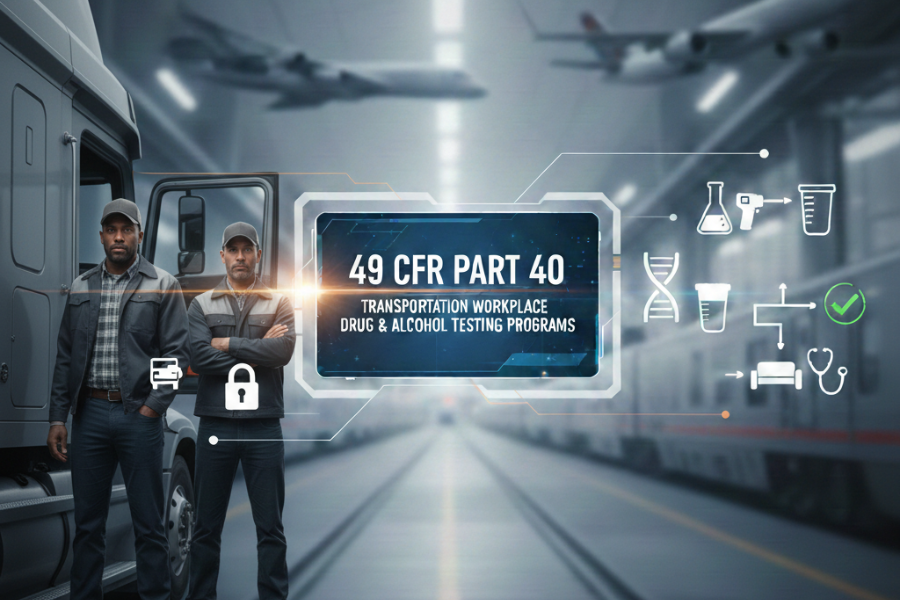
49 CFR Part 40

49 CFR Part 40 – Procedures for Transportation Workplace Drug and Alcohol Testing Programs

Subpart A - Administrative Provisions

This regulation acts as the “gold standard” for transportation safety. It covers every person and entity involved in the DOT drug and alcohol testing process. This includes all DOT-regulated employers, safety-sensitive employees (such as truck drivers, pilots, and mariners), and service agents—including collectors, Medical Review Officers (MROs), Substance Abuse Professionals (SAPs), and laboratories.

This section establishes a uniform language for the industry. It defines critical roles like the Designated Employer Representative (DER), who is the only individual authorized to take immediate action to remove employees from safety-sensitive duties, and technical terms such as “Adulterated Specimen,” which refers to a specimen containing a substance not normally found in human urine.

Official clarifications emphasize that an “employee” is anyone currently performing, or applying to perform (applicants), a safety-sensitive function. It also clarifies that Service Agents are not considered “employers” and cannot sign off on program decisions as a DER.

To prevent conflicting advice, only the DOT Office of the General Counsel (OGC) and the Office of Drug and Alcohol Policy and Compliance (ODAPC) have the power to issue binding, official interpretations. Guidance from other sources is considered “information” but not legally binding.

Exemptions are granted only in extreme circumstances. An applicant must submit a written request to the Secretary of Transportation proving that complying with the current rule is impossible and that their proposed alternative provides a level of safety equal to or greater than the original regulation.

If a private restroom isn’t available, a same-gender monitor stands outside the stall but inside the restroom to listen for sounds that suggest the employee is using a hidden device or pouring water.

Accordion Content

Subpart B - Employer Responsibilities

Employers hold the ultimate legal “buck.” They are responsible for every aspect of the program. Even if an employer hires a third party (C/TPA) to manage their testing, the employer is the one held liable by the DOT if a collector makes a mistake or if a test is missed.

DOT tests must be entirely isolated from “company” (non-DOT) tests. You cannot use a single specimen for both, and you cannot use a Federal CCF for a non-Federal test. This prevents the “mixing” of legal authorities and protects the integrity of the federal program.

For every test, the employer must provide the collector with the employee’s full name or SSN/ID, the specific authority (e.g., FMCSA), the reason for the test (Random, Post-Accident, etc.), and the DER’s contact information.

Yes, employers frequently use Consortia/Third-Party Administrators (C/TPAs). However, the employer cannot delegate the role of the DER; there must be a person within the company who can receive results and pull drivers off the road.

Clarifies that while a service agent can coordinate the random pool, the employer remains responsible for ensuring the employees actually go to the collection site when selected.

Yes. An employer must actively ensure their service agents are qualified. If a collector hasn’t been trained correctly, the employer—not just the collector—can be cited for a violation during an audit.

This is generally prohibited and called “Stand-Down.” Employers cannot remove an employee from safety-sensitive duties based on a laboratory “confirmed positive” alone. They must wait for the MRO to talk to the employee and verify the result, unless the DOT has granted that specific employer a formal waiver.

If an employee admits to drug use before verification, the employer can remove them, but they cannot do so based on a “rumor” or a preliminary lab report.

If the result is a verified positive or a refusal, the employer must immediately remove the employee from safety-sensitive duties. No “one last trip” is allowed. They must also provide a list of SAPs with contact info and locations.

Yes. Before an employee starts safety-sensitive work, the employer must (with written consent) obtain the drug and alcohol testing history from all previous DOT employers for the past two years.

If a previous employer is out of business or refuses to answer, the new employer must document every attempt they made to get those records to prove “good faith” effort.

Employers must use the standardized MIS Data Collection Form (Appendix H) to report their annual testing statistics when required by their specific DOT agency.

No. While employees sign the CCF to authorize the test itself, an employer cannot force them to sign a legal waiver that releases the employer from liability for negligence or malpractice.

Subpart C - Specimen Collection Personnel

Only individuals who have completed the specific “qualification training” and “proficiency demonstration” required by Part 40. Even a licensed doctor or nurse cannot collect unless they have specifically trained in DOT procedures.

Collectors must complete three phases: 1) Basic information/rules, 2) Qualification training, and 3) Five error-free mock collections monitored by a qualified trainer. This must be repeated every five years.

Clarifies that mock collections must include specific “problem” scenarios (like a “shy bladder” or an out-of-temperature specimen) to ensure the collector knows how to handle trouble.

The training mirrors urine collection but focuses on the specific oral fluid device used. Collectors must perform five mock collections and prove they can correctly use the volume indicator and seal the vials.

The collector must have the DER’s name and phone number. This is vital because if an employee walks out (refusal) or cannot provide a specimen, the collector needs to reach the DER immediately to report the situation.

Subpart D - Collection Sites, Forms, Equipment, and Supplies

The Federal Drug Testing Custody and Control Form (CCF). It is a five-part form (or electronic equivalent) that tracks the specimen from the donor’s hands to the laboratory’s analysis.

The DOT confirms that Electronic CCFs (eCCFs) are acceptable as long as the laboratory’s system is HHS-certified and the donor can sign electronically.

No. This is a strict “cross-contamination” rule. Using the wrong form is a violation and requires a formal “memorandum for record” to correct if it happens by mistake.

At a site that provides a “private enclosure” (usually a bathroom stall). It must have a source of water for handwashing outside the stall to prevent the donor from diluting the specimen with tap water.

Collectors must:
1) Secure the site from unauthorized people,
2) Use blue dye in the toilet,
3) Turn off water inlets.
4) Inspect the area for “cheating” materials before and after the collection.

A single-use, wrapped collection cup and two specimen bottles (Bottle A: 30mL, Bottle B: 15mL) that are leak-resistant and tamper-evident.

Shipping containers (courier bags) that are sealed with a shipping label and contain the lab’s copy of the CCF.

Anywhere that ensures privacy. Unlike urine, oral fluid does not require a bathroom, but it does require a site that prevents unauthorized people from seeing the collection.

An HHS-approved device consisting of a collection wand and a tube containing a stabilizing buffer/preservative fluid.

Similar to urine, it requires a primary and secondary leak-resistant container and a secure shipping mailer.

Subpart E - Specimen Collections


    1. 1. Verify ID.


    1. 2. Ask the employee to leave bags and coats outside.


    3.  Ask the employee to empty their pockets and display the items to ensure no tampering devices (like “Clean Stream” kits) are present.

The collector must have the employee wash their hands and then provide them with the collection container. The collector stays outside the stall while the employee provides the sample.

The collector must immediately:
1) Check for at least 45 mL of volume.
2) Check the temperature within 4 minutes (must be 90–100°F).
3) Inspect for unusual color, odor, or floating objects.
Direct observation is mandatory if:
1) The specimen is out of temperature.
2) The specimen looks tampered with.
3) The MRO orders it.
4) It is a Return-to-Duty or Follow-up test. The observer (same gender) must watch the urine flow from the body into the cup.

If a private restroom isn’t available, a same-gender monitor stands outside the stall but inside the restroom to listen for sounds that suggest the employee is using a hidden device or pouring water.

The specimen is poured into Bottle A and Bottle B. The collector applies the tamper-evident seals and has the employee initial the seals. This must all happen in full view of the employee.

The collector must check the employee’s mouth for “foreign objects” (gum, food, candy). If found, the objects are removed and the collector waits 10 minutes to ensure the oral environment is clear for a valid sample.

The collector (or employee) swabs the cheek and gum area until the device’s volume indicator turns color, showing a sufficient amount of saliva has been absorbed.

The employee signs the CCF certifying the specimen is theirs. The collector then gives the employee their copy and prepares the package for the courier. If an employee refuses to sign the final certification, it is not a refusal, but the collector must document the incident.

Subpart F - Drug Testing Laboratories

Only laboratories that have been inspected and certified by the Department of Health and Human Services (HHS). A list of these labs is published monthly.

The “DOT 5” panel:
1) Marijuana (THC),
2) Cocaine,
3) Amphetamines (including Meth and MDMA),
4) Opioids (Heroin, Codeine, Morphine, Oxycodone, etc.)
5) PCP

The lab first checks the seals. If a seal is broken, they reject the specimen. If intact, they perform a primary screen. If the screen is “non-negative,” they perform a second, highly accurate test (GC/MS or LC/MS) to confirm the specific drug.

Cutoffs are the “thresholds” for a positive result.
Drug AnalyteUrine Initial CutoffOral Fluid Initial Cutoff
Marijuana (THC)50 ng/mL4 ng/mL
Cocaine150 ng/mL15 ng/mL

Yes. Laboratories must test specimens to ensure they are human and have not been tampered with. For urine, they check pH and creatinine. For oral fluid, they check for specific proteins like Albumin or IgG to prove it is saliva.

Dilute: Low creatinine and low specific gravity (often caused by drinking massive amounts of water).
Substituted: The creatinine and specific gravity are so low (or high) that the specimen is “physiologically impossible” for a human to produce.

The lab reports the final result (Positive, Negative, Dilute, Adulterated) directly to the MRO. They do not call the employer with the results.

They must be “at arm’s length.” To prevent bias, an MRO cannot work for the lab that processes the tests they verify, nor can they have a financial stake in that lab.

Every January and July, labs must send a report to the employer and the DOT summarizing the total number of tests and the number of positives/negatives. This report contains no names—only data.


How Employers Should Handle DOT Drug Test Violations

Discovering that a safety-sensitive employee has violated Department of Transportation (DOT) drug or alcohol rules can be a stressful and disruptive event. As an employer, your immediate actions are governed by strict federal regulations. How you manage these situations is critical for maintaining compliance, ensuring workplace safety, and protecting your business from significant penalties.

Navigating the aftermath of a positive test, refusal, or other violation requires a clear, step-by-step process. This guide outlines exactly how employers should handle DOT drug test violations, from the initial removal from duty to the final steps of the Return-to-Duty process. Understanding these procedures ensures you act confidently and correctly every time.

The Immediate First Step: Removal from Duty

The moment you receive verified notice of a DOT drug test violation, your first and most important responsibility is to immediately remove the employee from all DOT-regulated safety-sensitive functions. This is not optional; it is a federal mandate under 49 CFR Part 40.

A “violation” is not just a positive drug test. It also includes:

  • A confirmed alcohol test result of 0.04 or higher.
  • A refusal to submit to a required test.
  • An adulterated or substituted test result.

The removal must be immediate. The employee cannot drive a commercial vehicle, operate machinery, or perform any other safety-sensitive task until they have successfully completed the entire Return-to-Duty (RTD) process. Allowing an employee to continue working after a known violation exposes your company to severe fines and legal liability.

The Employer’s Core Responsibilities

Once the employee is removed from their duties, you have several key obligations. These steps are crucial for compliance and for starting the official corrective action process.

1. Document Everything

Meticulous record-keeping is your best defense in a DOT audit. Create a confidential file that documents the violation. This should include the verified test result from the Medical Review Officer (MRO), the date and time you notified the employee, and a record of their removal from safety-sensitive functions.

2. Report to the FMCSA Clearinghouse (If Applicable)

For employers regulated by the Federal Motor Carrier Safety Administration (FMCSA), you are required to report all DOT drug test violations to the FMCSA Drug & Alcohol Clearinghouse. This report must be submitted within three business days of learning of the violation. Failing to report in a timely manner is a separate violation and carries its own penalties.

3. Provide a List of Substance Abuse Professionals (SAPs)

You are required to provide the employee with a list of qualified Substance Abuse Professionals (SAPs) in their area. A SAP is a specially trained and certified professional who evaluates employees who have violated DOT drug and alcohol rules.

You are not required to pay for the SAP’s services, nor can you force the employee to choose a specific SAP from the list. Your obligation is simply to provide the resources so the employee can begin the RTD process. It is the employee’s responsibility to contact a SAP and schedule the initial evaluation.

Understanding the SAP and the Return-to-Duty (RTD) Process

The RTD process is a structured, multi-step journey managed by the SAP. The employer’s role is to follow the SAP’s guidance and ensure all steps are completed before allowing the employee to resume safety-sensitive work. Trying to bypass any part of this process is a serious compliance breach.

Step 1: The Initial SAP Evaluation

The employee must meet with a qualified SAP for a comprehensive, face-to-face clinical evaluation. During this meeting, the SAP assesses the employee’s history with substance use to determine the extent of the problem. This is not a “pass/fail” test but a diagnostic assessment. The SAP is the sole decision-maker regarding the employee’s path forward.

Step 2: The SAP’s Recommendation

Following the evaluation, the SAP will provide a formal recommendation for a specific course of education, treatment, or both. This plan is tailored to the individual’s needs. It could range from a short-term education course to an intensive outpatient or even residential treatment program. The employee must comply fully with this recommendation.

Step 3: Completing the Required Program

The employee is responsible for completing the treatment or education plan prescribed by the SAP. The SAP will monitor their progress and receive reports from the treatment provider.

Step 4: The Follow-Up SAP Evaluation

Once the employee has successfully completed their prescribed program, they must return to the same SAP for a follow-up evaluation. The SAP will assess their compliance and determine if they are ready to be considered for a return to safety-sensitive duties. If the SAP is satisfied with the employee’s progress and commitment to sobriety, they will issue a formal report to the employer, clearing them for the next step.

The Employer’s Role in Finalizing the RTD Process

Receiving the SAP’s follow-up report does not mean the employee can immediately go back to work. Two final steps, managed by the employer, are required.

1. The Observed Return-to-Duty Test

You must schedule a DOT Return-to-Duty test for the employee. This test must be conducted under direct observation, meaning a collector of the same gender will physically watch the employee provide the specimen. The test must have a negative result. A positive result on an RTD test constitutes another violation, and the employee must start the entire SAP process over again from the beginning.

2. The Follow-Up Testing Plan

If the RTD test is negative, the employee is now eligible to return to safety-sensitive duties. However, they are also subject to a mandatory follow-up testing plan as determined by the SAP. This plan includes a minimum of six unannounced, directly observed tests during the first 12 months after their return. The SAP can require more tests or extend the testing period for up to 60 months.

As the employer, you are responsible for executing this testing schedule. These tests are in addition to your normal random testing program.

Common Questions from Employers

Do I have to fire an employee after a DOT drug test violation?
No. DOT regulations do not require you to terminate employment. This decision is based on your company’s internal policies. Some employers have a zero-tolerance policy, while others may choose to provide a path back to employment through the RTD process. This is a business decision, not a DOT requirement.

Who pays for the SAP and the treatment?
The DOT does not regulate who pays for the RTD process. This is a matter to be decided between the employer and the employee, often guided by company policy or collective bargaining agreements.

What if the employee refuses to go through the RTD process?
If an employee refuses to participate in the SAP process, they cannot legally perform any safety-sensitive functions for any DOT-regulated employer until they do. Their violation remains in the FMCSA Clearinghouse, preventing them from being hired for another safety-sensitive role.

Take Control of Your Compliance

Handling DOT drug test violations correctly is a non-negotiable part of being a DOT-regulated employer. By following a clear and compliant process, you protect your company, uphold public safety, and provide a structured path for employees to address their issues. A well-defined policy, consistent execution, and thorough documentation are your keys to successfully managing these challenging situations.

Need expert guidance on the SAP process? Visit our SAP Evaluation page for more details. To understand the employer’s role in testing, explore our RTD process page today.

Is an Online DOT SAP Program Accepted in All 50 States?

For a commercial driver, a failed drug or alcohol test is a career-halting event. Suddenly, you are pulled from safety-sensitive duties, your income is at risk, and you are facing a mandatory Return-to-Duty (RTD) process. In the rush to get back behind the wheel, many drivers turn to the internet for solutions. This leads to one of the most critical questions in the industry right now: Is an online DOT SAP program accepted in all 50 states?

The answer is not a simple “yes” or “no.” It involves navigating federal regulations, understanding the difference between “online programs” and “remote assessments,” and knowing exactly what the Federal Motor Carrier Safety Administration (FMCSA) demands. Misunderstanding these rules can result in wasted money, rejected assessments, and a prolonged suspension from driving.

This guide breaks down exactly how the Department of Transportation (DOT) views virtual SAP services and what you need to do to ensure your return-to-duty process is valid, legal, and accepted nationwide.

What is a DOT SAP Program?

Before diving into the format (online vs. in-person), it is crucial to understand the function of the Substance Abuse Professional (SAP).

Under DOT regulations (49 CFR Part 40), any employee performing safety-sensitive duties who violates drug and alcohol rules must be removed from duty immediately. They cannot return until they complete the Return-to-Duty process (The Steps of the Return-to-Duty Process Explained). The SAP is the gatekeeper of this process.

The SAP’s role includes:

  • Conducting an initial face-to-face assessment of the driver.
  • Recommending education and/or treatment.
  • Monitoring the driver’s progress.
  • Conducting a follow-up face-to-face evaluation to determine if the driver has successfully complied with the recommendations.

Only when the SAP signs off can the driver take a return-to-duty drug test and potentially resume working.

How DOT SAP Programs Work: The “Face-to-Face” Requirement

Historically, the DOT has strictly required that SAP assessments be conducted face-to-face. This means the driver and the SAP must be in the same physical room.

The reasoning is simple: SAPs need to observe physical cues, body language, and other indicators that might be missed over a phone call or a text-based chat. For years, “online” programs that promised instant certification via a questionnaire were scams, and the DOT rejected them outright.

The Shift to Remote Assessments

However, the landscape shifted significantly during the COVID-19 pandemic. The DOT issued guidance allowing for remote assessments under specific conditions, primarily using video conferencing technology (like Zoom or Skype) where the SAP and driver can see each other in real-time.

Crucial Distinction: There is a massive difference between a remote video assessment conducted by a certified SAP and a purely “online course” that you click through at your own pace without human interaction.

Current FMCSA Rules on Virtual SAP Formats

As of 2026, the FMCSA and DOT regulations still prioritize face-to-face interaction, but they acknowledge the validity of technology-assisted assessments if they meet specific criteria.

Accepted:

  • In-Person Assessments: The gold standard.
  • Video Conferencing: Real-time, two-way video and audio where the SAP can clearly see the driver. This is often accepted as “face-to-face” equivalent provided the technology is reliable.

NOT Accepted:

  • Phone-only interviews: Audio alone is insufficient.
  • Self-paced online courses: You cannot simply watch videos and take a quiz to satisfy the SAP requirement.
  • Email or chat-based evaluations.

Is an Online DOT SAP Program Accepted in All 50 States?

If by “online program” you mean a video-based assessment conducted by a qualified SAP, then yes, this is generally accepted across all 50 states, provided the SAP holds the proper licensure for the jurisdiction where the assessment takes place (or where the driver is located, depending on state licensing board rules).

Federal law (DOT regulations) supersedes state law regarding transportation safety. Since the DOT program is federal, a compliant return-to-duty process is valid nationwide.

However, there are nuances:

1. State Licensing Board Restrictions

While the DOT allows flexibility, the SAP must be a licensed professional (e.g., Licensed Clinical Social Worker, Licensed Psychologist, etc.). Some state licensing boards have strict rules about “telehealth.” A SAP licensed only in Florida may not legally be allowed to conduct a telehealth session with a driver sitting in California.

  • The Risk: If the SAP operates outside their licensing jurisdiction, the assessment could be challenged not just by the DOT, but by state medical boards.

2. Employer Policies

An employer is federally required to accept a valid return-to-duty plan, but they may have internal company policies that are stricter than the DOT minimums. Some major carriers may prefer or require in-person assessments to limit their liability.

3. The “Online Course” Trap

If you find a website offering a “$99 Instant SAP Certificate” that involves clicking through slides, that is not accepted in any of the 50 states. Using such a service will result in your Clearinghouse status remaining “Prohibited.”

Legal and Compliance Implications

For CDL Holders, choosing the wrong program has severe consequences:

  • Loss of Time and Money: You will pay for a service that the DOT rejects, and you will have to pay again for a real SAP.
  • Career Stagnation: Your violation remains in the FMCSA Drug and Alcohol Clearinghouse until you complete a valid program.
  • Audit Risks: If you return to work based on an invalid assessment, and a subsequent audit catches it, you will be pulled from duty immediately, and your miles driven during that period could be considered illegal.

For Employers:

  • Accepting an invalid SAP evaluation exposes your company to massive liability in the event of an accident.
  • Learn more about Who Pays for the SAP Program? Employer vs. Driver and ensure your policies are clear and compliant.
  • You must verify that the SAP is qualified and that the assessment met the “face-to-face” (or valid video equivalent) requirement.

Actionable Steps for Compliance

If you need a SAP, follow these steps to ensure your online/remote assessment is valid:

  1. Verify Credentials: Ensure the SAP is listed on a reputable provider network and holds a valid license (LCSW, LMFT, MD, etc.).
  2. Confirm Video Capabilities: Ask explicitly: “Will we be doing this via secure video conference?” If they say “phone only” or “just fill out this form,” hang up.
  3. Check Cross-State Licensing: If you are in a different state than the SAP, ask them if they are licensed to provide telehealth services in your specific state.
  4. Check the Clearinghouse: Ensure the SAP is registered in the FMCSA Clearinghouse. For a detailed guide, see How to Register for the FMCSA Clearinghouse. They must be able to report your progress directly to the federal database.

FAQs: Common Questions About Online SAP Acceptance

Q: Can I do my SAP education classes online?
A: Yes. The education or treatment recommended by the SAP can often be completed via online courses or virtual counseling, depending on what the SAP prescribes. However, the initial assessment and follow-up evaluation must be face-to-face or valid video conference.

Q: Does the DOT Clearinghouse know if I did my assessment online?
A: The Clearinghouse records that an assessment occurred. It does not flag “video vs. in-person.” However, if an audit reveals the SAP did not follow 49 CFR Part 40 procedures (e.g., used phone only), the process is void.

Q: Why do some SAPs refuse to do video assessments?
A: Some SAPs believe they cannot adequately assess a driver’s honesty or physical symptoms of addiction through a screen. It is their professional prerogative to require in-person visits.

Conclusion

So, is an Online DOT SAP program accepted in all 50 states?

The answer is Yes—but only if “online” means a synchronous, face-to-face video assessment with a licensed professional.

Automated courses, phone calls, and email assessments are never accepted. While the federal DOT guidelines allow for video assessments nationwide, you must ensure the SAP you choose is licensed to practice in your state to avoid technicalities that could stall your return to the road.

Don’t gamble with your CDL. Ensure your SAP utilizes compliant video technology and holds valid credentials.

Call to Action:
Are you a driver needing to get back on the road, or an employer navigating complex compliance rules? Contact a certified DOT SAP provider today to schedule a compliant, convenient assessment that protects your career and your company.

Key Takeaways: Online SAP Acceptance by State

Feature

Acceptance Status

Notes

Federal Acceptance

Accepted (Conditional)

DOT allows video assessments that simulate face-to-face interaction.

All 50 States

Accepted

Valid nationwide if the SAP follows federal rules.

Cross-State Service

Varies by License

A SAP must be licensed to treat patients in the state where the driver is located.

Self-Paced Courses

REJECTED

“Click-through” courses are scams and not accepted in any state.

Phone-Only

REJECTED

Audio-only does not meet the “face-to-face” requirement.

FAA SAP Program in Georgia: Complete Guide for Pilots, Aviation Employees & Employers (2026 Update)

Receiving a notification of a drug or alcohol violation can feel like a career-ending moment for aviation professionals. Whether you are a pilot based at Hartsfield-Jackson in Atlanta or an aircraft mechanic in Savannah, the Federal Aviation Administration (FAA) holds you to the highest safety standards in the transportation industry. A violation requires immediate removal from safety-sensitive duties, but it does not always mean the end of your aviation career.

The path back to the cockpit or the hangar lies through the FAA SAP Program Georgia. This rigorous return-to-duty process ensures that aviation employees are evaluated, treated, and deemed safe to resume work. This guide outlines exactly what pilots, flight attendants, and employers in Georgia need to know about the 2026 regulations, the specific role of a Substance Abuse Professional (SAP), and the steps required to regain eligibility.

What Is the FAA SAP Program?

The FAA SAP Program is a mandatory federal process designed to evaluate employees who have violated DOT/FAA drug and alcohol regulations. It serves as a safety barrier, ensuring that no one returns to a safety-sensitive position until they have successfully addressed the issues that led to the violation.

Role of a Substance Abuse Professional (SAP)

An SAP is not just a counselor. They are federally qualified professionals charged with protecting public safety. Their job is to evaluate you, recommend specific education or treatment, and determine if you have successfully complied with that plan. They hold the keys to your return-to-duty eligibility.

FAA SAP vs. General DOT SAP

While the FAA falls under the Department of Transportation (DOT), aviation regulations are often stricter than those for trucking or transit. The FAA requires a more rigorous medical clearance process in addition to the standard SAP process. An SAP working with aviation clients must understand these nuances, including how specific medications or treatment plans might affect a pilot’s medical certificate.

Choosing the right professional is critical. You need access to FAA-compliant Substance Abuse Professional (SAP) evaluation services to ensure your return-to-duty process meets the specific scrutiny of aviation regulators.

Who Is Required to Complete the FAA SAP Program in Georgia?

If you hold a job that the FAA designates as “safety-sensitive” and you fail or refuse a drug test, you must complete this program before you can perform those duties again for any employer. This applies to a wide range of aviation professionals across Georgia.

Covered Roles Include:

  • Flight Crew members: Pilots, flight engineers, and navigators.
  • Flight Attendants: Any cabin crew responsible for passenger safety.
  • Flight Instructors: Those teaching others to fly.
  • Aircraft Dispatchers: Personnel responsible for flight planning and monitoring.
  • Aircraft Maintenance Technicians: Mechanics and repairmen working on airframes or powerplants.
  • Ground Security Coordinators: Staff managing aviation security.
  • Aviation Screeners: Personnel screening passengers or cargo.
  • Air Traffic Controllers: (Note: ATCs may have specific internal FAA protocols, but contract tower operators fall under these rules).

It is vital to understand who is considered a safety-sensitive aviation employee under FAA rules so you know your rights and obligations immediately following a violation.

Common FAA Drug & Alcohol Violations That Trigger SAP

Many employees assume a “violation” only means a positive drug test result. However, the FAA defines violations much more broadly.

Triggers for the SAP Process:

  • Positive Drug Test: Testing positive for marijuana, cocaine, opioids, amphetamines, or PCP. Note that even if marijuana is legal locally or you have a medical card, it remains a federal violation for aviation personnel.
  • Alcohol Concentration Violations: Having a breath alcohol concentration of 0.04 or greater.
  • Refusal to Test: This is treated as severely as a positive result. Walking away from a collection site, failing to provide a sample without a medical reason, or carrying adulteration devices all count as refusals.
  • Pre-Duty Alcohol Use: Consuming alcohol within 8 hours of a flight or safety-sensitive duty (the “bottle to throttle” rule).

Understanding the full scope of FAA drug and alcohol testing violation consequences is essential for protecting your license and career.

FAA SAP Program Process (Step-by-Step)

Navigating the FAA return-to-duty program Georgia involves a specific sequence of events. You cannot skip steps.

  1. Immediate Removal from Duty: Your employer must remove you from safety-sensitive functions immediately upon notification of the violation.
  2. Referral to an SAP: Your employer must provide a list of qualified SAPs, but you generally choose who to see.
  3. Initial SAP Evaluation: You meet with the SAP for a face-to-face (or approved telehealth) assessment. They evaluate your history and current situation. You can learn more about the Initial FAA SAP evaluation process to prepare for this meeting.
  4. Recommendation: The SAP prescribes a plan comprising education and/or treatment.
  5. Compliance: You must complete the recommended plan. This could range from a weekend education course to inpatient treatment.
  6. Follow-Up SAP Evaluation: Once you finish the treatment, you return to the SAP. They determine if you have successfully complied and demonstrated a commitment to safety.
  7. Return-to-Duty (RTD) Test: If the SAP clears you, you are eligible to take a directly observed drug and/or alcohol test. You must pass this to resume work.
  8. Follow-Up Testing Plan: The SAP sets a schedule for unannounced testing that continues after you return to work.

Review the specific Return-to-Duty testing requirements for FAA employees to understand exactly what happens during that critical final testing phase.

FAA SAP Program Timeline in Georgia

Pilots and mechanics often ask, “How fast can I get back to work?” The answer depends on your specific case.

There is no “cookie-cutter” timeline. The duration is dictated by the clinical recommendation of your SAP.

  • Education-only tracks may take a few weeks.
  • Treatment tracks can take several months or longer.

Factors that delay completion include difficulty scheduling appointments, waitlists for treatment centers in Georgia, or failure to follow the SAP’s instructions precisely. Rushing the process often leads to mistakes that prolong the suspension.

For a realistic expectation, read about how long an FAA SAP program typically takes.

Cost of the FAA SAP Program in Georgia

Financial planning is necessary when entering this program, as costs can vary significantly depending on the provider and the recommended treatment.

Breakdown of Potential Costs:

  • SAP Evaluation Fee: This usually covers the initial and follow-up evaluations. Fees generally range from $400 to $600 or more depending on the provider’s expertise.
  • Education or Treatment Costs: This is separate from the SAP fee. An education course might cost a few hundred dollars, while inpatient treatment can run into the thousands.
  • Testing Fees: Return-to-duty and follow-up tests are often paid for by the employer, but this depends on company policy.

Who Pays?

Under FAA regulations, employers are not required to pay for the SAP evaluation or the treatment. Most often, the employee bears this cost. However, some union contracts or company policies may offer assistance.

Check this FAA SAP program cost breakdown for a detailed look at what you might expect to pay.

FAA Return-to-Duty & Follow-Up Testing Requirements

The process doesn’t end when you get back in the cockpit. The FAA mandates a strict monitoring period to ensure continued safety.

The SAP must mandate a minimum of six unannounced tests in the first 12 months of returning to duty. However, the plan can last up to five years. These tests are in addition to standard random testing pools.

  • Observation: All return-to-duty and follow-up drug tests must be directly observed.
  • Employer Responsibility: The employer (current or future) is responsible for ensuring these tests are conducted according to the SAP’s schedule.

Strict adherence to FAA return-to-duty and follow-up testing rules is mandatory; missing a follow-up test constitutes a new violation.

Choosing an FAA-Qualified SAP Provider in Georgia

Not all SAPs are created equal. For aviation professionals, selecting an FAA SAP provider in Georgia with specific aviation knowledge is crucial.

Qualification Checklist:

  • DOT Qualified: They must meet 49 CFR Part 40 requirements.
  • Exam Training: They must have completed training specific to their role.
  • Aviation Knowledge: While not strictly legally required, an SAP familiar with the FAA’s specific medical certification requirements (Part 67) can help avoid conflicting recommendations that might jeopardize your medical certificate.

Whether you are in Atlanta, Columbus, or Augusta, you need to know how to choose an FAA-qualified SAP provider in Georgia to ensure your evaluation is valid and recognized by the FAA.

What Happens If You Don’t Complete the FAA SAP Program?

Ignoring a violation is not an option. The violation remains on your record in the FAA Drug and Alcohol Testing (MIS) database and the Pilot Records Database (PRD).

If you do not complete the SAP program:

  1. You are permanently barred from performing safety-sensitive duties for any FAA-regulated employer.
  2. No other aviation employer can hire you for a safety-sensitive role.
  3. Your medical certificate may be revoked or suspended until compliance is shown.

The career impacts are severe. Understanding the consequences of not completing an FAA SAP program is vital for anyone considering leaving the industry rather than completing the process.

Frequently Asked Questions (FAQ)

Q: What is the FAA SAP Program?
A: The FAA SAP Program is a mandatory return-to-duty process for aviation employees who violate FAA drug or alcohol testing regulations. It requires evaluation, treatment or education, and monitoring by a qualified Substance Abuse Professional before you can return to safety-sensitive work.

Q: Is the FAA SAP Program different from the DOT SAP Program?
A: Yes. While the FAA follows the general DOT Part 40 procedural rules, aviation employees face additional oversight. The medical standards for pilots and controllers are higher, and the FAA often reviews SAP reports more scrupulously than other DOT agencies.

Q: How long does the FAA SAP Program take in Georgia?
A: Timelines vary based on the individual’s clinical needs. It typically ranges from several weeks for education-based plans to several months for treatment-based plans. It depends entirely on the SAP’s clinical recommendation and your speed of compliance.

Q: Can I work while completing the FAA SAP Program?
A: You cannot perform FAA safety-sensitive duties (like flying, dispatching, or maintenance) until you successfully complete the SAP process and pass a return-to-duty test. You may be able to work in non-safety-sensitive roles if your employer allows it.

Q: Who pays for the FAA SAP Program?
A: In most cases, the employee pays for the SAP evaluations and the required treatment. Employers are not federally required to cover these costs, though some may do so voluntarily or due to union agreements.

Q: Does completing the FAA SAP Program clear my FAA record?
A: No. Completion allows you to become eligible for return-to-duty, but it does not erase the violation. The violation remains in the Pilot Records Database (PRD) and must be disclosed to future aviation employers.

The Ultimate Guide to the DOT SAP Evaluation Process

Failing a Department of Transportation (DOT) drug or alcohol test stops your career in its tracks. You are immediately removed from safety-sensitive functions, and you cannot legally return to work until you complete the specific steps outlined by federal regulations. The most critical first step in this journey is the SAP Evaluation.

This guide is the definitive resource for CDL drivers, owner-operators, and safety-sensitive employees navigating the Return-to-Duty process. We will break down exactly what a Substance Abuse Professional (SAP) does, the costs involved in 2026, and the strict FMCSA Clearinghouse requirements you must meet to get back behind the wheel.

What Is a SAP Evaluation?

A SAP Evaluation is a face-to-face clinical assessment conducted by a qualified Substance Abuse Professional (SAP). It is the federally mandated starting point for any employee who has violated US Department of Transportation drug and alcohol regulations.

The evaluation is not just a counseling session; it is a regulatory requirement. Under 49 CFR Part 40, the SAP’s primary role is to protect public safety. They evaluate employees who have tested positive for drugs or alcohol (or refused to test) to determine what education or treatment is necessary.

During the initial SAP Evaluation, the professional assesses your usage history, the circumstances of the violation, and your level of substance use. Based on this assessment, they will prescribe a specific course of action—either education, treatment, or a combination of both—that you must successfully complete before you can even be considered for a return-to-duty test.

Who Is Required to Complete a SAP Evaluation?

The Department of Transportation requires a SAP Evaluation for any employee performing “safety-sensitive” duties who violates drug and alcohol testing rules. This requirement spans across all DOT agencies, including:

  • FMCSA (Federal Motor Carrier Safety Administration): Commercial driver’s license (CDL) holders, bus drivers, and truck drivers.
  • FAA (Federal Aviation Administration): Flight crews, flight attendants, air traffic controllers, and aircraft maintenance personnel.
  • FRA (Federal Railroad Administration): Train engineers, conductors, and dispatchers.
  • FTA (Federal Transit Administration): Public transit operators, subway drivers, and vehicle controllers.
  • PHMSA (Pipeline and Hazardous Materials Safety Administration): Pipeline operators and emergency response personnel.
  • USCG (United States Coast Guard): Crew members operating a commercial vessel.

If you fall under any of these categories and fail a drug test, you cannot simply wait for the drugs to leave your system and re-test. You must go through the SAP Evaluation process.

When Is a SAP Evaluation Mandatory Under DOT Law?

A DOT SAP Evaluation is triggered immediately upon a violation. You are legally required to undergo this process if you:

  1. Test Positive: Your drug test results show the presence of marijuana, cocaine, amphetamines, opioids, or PCP.
  2. Alcohol Violation: You have a blood alcohol concentration (BAC) of 0.04 or higher while on duty or immediately prior to duty.
  3. Refusal to Test: You refuse to submit to a random, post-accident, or reasonable suspicion test. This includes leaving the testing site before completion or failing to provide a sufficient specimen without a medical reason.
  4. Adulteration or Substitution: You attempt to cheat the test by using a prosthetic device, synthetic urine, or adding chemicals to your sample.

Once a violation occurs, your employer is legally required to provide you with a list of qualified SAPs. However, they are not required to pay for the SAP Evaluation or hold your job open for you, depending on company policy.

SAP Evaluation vs SAP Program

Many drivers confuse the evaluation with the entire program. It is vital to understand the distinction to manage your expectations.

The SAP Evaluation

This refers specifically to the two mandatory meetings with the Substance Abuse Professional.

  • Initial Evaluation: The first meeting where the SAP analyzes your situation and prescribes a plan.
  • Follow-Up Evaluation: The second meeting, which happens after you finish your education or treatment, to determine if you have complied with the recommendations.

The SAP Program

The “SAP Program” (often called the Return-to-Duty process) encompasses the entire timeline. It includes:

  1. The violation.
  2. Selection of a SAP.
  3. The initial SAP Evaluation.
  4. Completion of prescribed education/treatment.
  5. The follow-up SAP Evaluation.
  6. The Return-to-Duty drug test.
  7. The schedule of unannounced follow-up testing.

You do not “pass” or “fail” a SAP Evaluation. You either comply with the program or you do not. Compliance is the only path back to safety-sensitive work.

Step-by-Step SAP Evaluation Process

Navigating the DOT Return-to-Duty Process can feel overwhelming. Here is the exact workflow you will follow.

Step 1: Selection and Verification

You must select a DOT-qualified SAP. Once selected, you (or your employer, if they are facilitating it) must designate the SAP in the FMCSA Clearinghouse. The SAP must accept this designation before the evaluation can begin.

Step 2: The Initial SAP Evaluation

This is a clinical interview. The SAP will review your testing history and discuss your substance use. Following this, they will draft an initial report outlining the required education and/or treatment plan.

Step 3: Education and Treatment

You must complete the plan exactly as prescribed. This could range from a weekend drug education course to inpatient rehabilitation or intensive outpatient counseling. The SAP monitors your progress but generally does not provide the treatment themselves to avoid conflicts of interest.

Step 4: The Follow-Up SAP Evaluation

Once you finish the treatment, you return to the same SAP for a follow-up evaluation. They will verify that you have successfully complied with the initial recommendation.

Step 5: Compliance Report

If the SAP is satisfied, they issue a “Notice of Compliance.” This report is uploaded to the FMCSA Clearinghouse and sent to your employer (or prospective employer).

Step 6: Return-to-Duty Test

Only after the SAP issues the compliance report can an employer send you for a Return-to-Duty drug test. This test must be directly observed.

How Long Does a SAP Evaluation Take?

One of the most common questions is, “How soon can I drive again?” The answer depends entirely on the treatment prescribed during your SAP Evaluation.

  • The Evaluation Itself: The initial face-to-face interview typically lasts between 1 to 2 hours. The follow-up evaluation is similar in length.
  • The Treatment Phase: This is the variable. If your evaluation indicates a need for basic education, the process might take as little as 1–2 weeks. If the SAP identifies a substance abuse disorder requiring significant treatment, the process could take several weeks or months.

There is no “standard” timeframe because the DOT requires the SAP to make clinical decisions based on individual diagnosis, not a cookie-cutter schedule.

SAP Evaluation Cost in the USA (2026)

The SAP Evaluation cost varies by region and the specific provider. As of 2026, you should expect the following price ranges for the combined service (Initial + Follow-Up evaluations):

  • Average Range: $450 – $700
  • High Cost Areas: $800 – $1,000+ (major metropolitan areas)
  • Treatment Costs: Separate from the evaluation fee. Education classes may cost $100–$300, while counseling or rehab costs vary wildly depending on insurance coverage.

Who pays?
DOT regulations do not dictate who pays for the SAP Evaluation. Many union contracts require employers to cover it, but for most non-union employees and owner-operators, the cost is out-of-pocket.

Can You Do a SAP Evaluation Online?

This is a critical area of confusion. Prior to the COVID-19 pandemic, all evaluations had to be in person. During the pandemic, the DOT allowed remote evaluations.

Current 2026 Rules:
While technology has advanced, the DOT has strict guidelines regarding Online SAP Evaluation procedures. Generally, the preference remains for face-to-face assessments. However, remote evaluations via secure video conferencing are permitted only if the SAP has the technology to conduct a high-quality clinical interview that meets DOT standards.

Warning: You cannot do a SAP Evaluation over the phone or via email. It must be a visual, real-time interaction if not done physically in person. Always verify that your SAP’s remote capabilities are DOT-compliant before booking.

SAP Evaluation for CDL Drivers

For CDL drivers, the SAP Evaluation is tied directly to your licensure status. When a violation is reported to the FMCSA Clearinghouse, your state licensing agency (DMV) is notified.

In many states, your CDL privileges are downgraded to a non-commercial status until the Return-to-Duty process is complete. This means you cannot legally operate a Commercial Motor Vehicle (CMV) until you:

  1. Complete the SAP Evaluation.
  2. Pass the Return-to-Duty test.
  3. Have your status updated in the Clearinghouse to “Not Prohibited.”

Ignoring the evaluation means you are effectively disqualified from driving commercially indefinitely.

SAP Evaluation for Owner-Operators

Owner-operators face a unique challenge. You are both the employer and the employee. However, DOT regulations prohibit you from managing your own SAP Evaluation process entirely.

  • Designation: You must designate a SAP in the Clearinghouse yourself.
  • Return-to-Duty Test: You cannot send yourself for the Return-to-Duty test. You must use a Consortium/Third-Party Administrator (C/TPA) to schedule this test and manage your follow-up testing schedule.

Failing to use a C/TPA for the return-to-duty steps will render your process void, wasting your time and money.

SAP Evaluation and FMCSA Clearinghouse Explained

The FMCSA Clearinghouse is the central database that tracks violations. Your SAP Evaluation is intimately linked to this system.

  1. Violation Entry: The Medical Review Officer (MRO) enters your violation. Your status changes to “Prohibited.”
  2. SAP Designation: You log in and select your SAP.
  3. SAP Updates: Your SAP enters the date of your initial assessment and, eventually, the date you complete the program.
  4. Employer Checks: Current and future employers query this database. They can see if you have an open violation or if you have successfully completed the SAP Evaluation.

Without the Clearinghouse updates, your paper documentation means nothing. The digital record is what allows you to drive again.

What Happens After the SAP Evaluation?

Once you complete the follow-up SAP Evaluation and the SAP reports your compliance to the Clearinghouse, you are eligible for the Return-to-Duty (RTD) test.

It is important to note that the SAP’s job ends once they verify your compliance. They do not schedule your drug test. Your employer (or C/TPA for owner-operators) must order the RTD test. This test must be negative. A “dilute” negative may be accepted depending on employer policy, but a positive result restarts the entire process from zero.

Follow-Up Testing Requirements

Completing the SAP Evaluation is not the end of the monitoring. The SAP will prescribe a schedule of SAP follow-up testing.

  • Minimum Requirement: At least 6 unannounced tests in the first 12 months.
  • Maximum Duration: Testing can continue for up to 60 months (5 years).
  • Frequency: The schedule is confidential. Neither you nor your employer knows when the tests will occur until immediately beforehand.
  • Substance: The SAP can require testing for both drugs and alcohol, regardless of what the original violation was for.

These tests are in addition to standard random testing pools. Failing a follow-up test results in a new violation, requiring a new SAP Evaluation.

Common Mistakes Drivers Make During SAP Evaluations

We see drivers make avoidable errors that delay their return to work.

  1. Thinking “Time Heals All”: Waiting a year doesn’t clear the violation. The violation stays in the Clearinghouse until you complete the SAP Evaluation.
  2. Using Non-DOT Providers: Going to a marriage counselor or a general therapist does not count. They must be a DOT-qualified Substance Abuse Professional.
  3. Assuming the SAP is “On Your Side”: The SAP works for public safety, not for you. Being dishonest about your usage history usually leads to conflicting clinical data, prolonging the evaluation process.
  4. Shopping for a “Favorable” SAP: Once you start the evaluation with one SAP, you cannot switch to another just because you dislike their treatment recommendation. This is considered “doctor shopping” and is prohibited by DOT rules.

How to Choose a Legitimate DOT-Qualified SAP

With thousands of providers, finding a “SAP Evaluation near me” is easy, but finding a good one requires diligence.

  • Verify Credentials: Ensure they hold a qualifying credential (licensed physician, social worker, psychologist, EAP professional, or drug & alcohol counselor) AND have completed the specific DOT SAP qualification training and exams.
  • Check Clearinghouse Registration: They must be registered in the FMCSA Clearinghouse. If they aren’t there, they cannot update your record.
  • Ask About Availability: Since the process is time-sensitive, ask how quickly they can schedule the initial and follow-up appointments.

FAQs About SAP Evaluations

What does SAP stand for in trucking?

SAP stands for Substance Abuse Professional. They are the gatekeepers of the DOT Return-to-Duty process for drivers who have violated drug and alcohol regulations.

How much does a SAP program cost?

The SAP Evaluation cost typically ranges from $450 to $800 for the evaluations themselves. Treatment and education costs are extra and vary by provider.

Can I fail a SAP evaluation?

You cannot “fail” the evaluation in the traditional sense. However, you can fail to comply with the SAP’s recommendations. Non-compliance means you cannot return to safety-sensitive work.

How long does a SAP violation stay on your record?

A violation remains in the FMCSA Clearinghouse for 5 years OR until you successfully complete the SAP Evaluation and Return-to-Duty process—whichever is longer. If you never complete the process, it stays indefinitely.

Can I switch SAPs if I don’t like mine?

No. Once the initial evaluation has begun, you cannot transfer to a different SAP. You must complete the process with the SAP who conducted your initial assessment.

Does insurance cover the SAP evaluation?

Most health insurance plans cover treatment (rehab/counseling) but often do not cover the SAP Evaluation fee itself, as it is considered a forensic/legal assessment rather than medical healthcare.

What questions are asked during a SAP evaluation?

The SAP will ask about your history of drug/alcohol use, the circumstances surrounding your violation, your family history of substance abuse, and your current health and lifestyle.

Is the Return-to-Duty test observed?

Yes. By federal law, all Return-to-Duty and Follow-Up drug tests must be directly observed by a person of the same gender to prevent cheating.

Can I do a SAP evaluation online?

Yes, provided the SAP utilizes technology that meets DOT requirements for a secure, visual, real-time interview.

Do I have to tell future employers about my SAP evaluation?

Yes. Your Clearinghouse record will show the violation and the completed return-to-duty process. Employers are required to query this data before hiring you.

Final Summary + Compliance Reminder

A DOT drug violation is a major career hurdle, but it is not necessarily the end of the road. The SAP Evaluation is the structured, legal pathway designed to get you back to work safely.

Remember the golden rules of the process:

  1. Act Fast: Delaying the evaluation only keeps you out of work longer.
  2. Be Honest: The SAP is there to assess safety, and honesty expedites the clinical process.
  3. Follow Through: Complete every hour of education and every test required.

Compliance is non-negotiable. By understanding the SAP Evaluation process, CDL drivers and employers can navigate these choppy waters with confidence, ensuring that our roads remain safe and that careers can eventually be restored. If you are currently sitting in “Prohibited” status, your next step is clear: find a qualified SAP and book your evaluation today.

Child Custody Assessment in Georgia: A 2026 Guide

Navigating a child custody dispute is one of the most emotionally taxing experiences a parent can face. When you and your co-parent cannot agree on what is best for your child, a Georgia court may step in and order a formal evaluation to help make the decision. This process, known as a child custody assessment or evaluation, can feel invasive and overwhelming.

A child custody assessment in Georgia is a detailed investigation conducted by a neutral expert. Its purpose is to provide the judge with objective information about your family’s dynamics. This helps the court determine a custody arrangement that serves the “best interests of the child,” a standard defined by Georgia law. This guide explains the process, legal standards, and what you can expect in 2026.

Learn more about Georgia custody cases and how the law determines what’s best for your child in these situations.

When Is a Custody Evaluation Ordered in Georgia?

A judge won’t order an evaluation in every custody case. They are typically reserved for high-conflict situations where parents present very different pictures of family life. A court might mandate an evaluation under several circumstances:

  • Disputed Custody: When parents have fundamental disagreements about parenting time, decision-making, or who should be the primary physical custodian.
  • Requests by a Parent: One parent can formally request an evaluation if they have serious concerns about the other parent’s fitness. Often, both parents will consent to the process to show transparency.
  • Concerns About Parental Fitness: Allegations of substance abuse, untreated mental health issues, domestic violence, or neglect almost always trigger a custody evaluation.
  • Child’s Welfare: If there are questions about a child’s safety, emotional well-being, or special needs that are not being met.
  • Legal Mandate: Georgia Code, specifically O.C.G.A. § 19-9-3, gives judges the authority to order a psychological evaluation or custody assessment for a child or parent when their mental or emotional state is relevant to the custody decision.

Legal Standards & “Best Interests of the Child” in Georgia

Learn more about the Best interests of the child custody evaluation and how this standard shapes decisions in Georgia family courts.In Georgia, every custody decision revolves around one central theme: the best interests of the child. This isn’t just a vague concept; it’s a legal standard that requires judges to consider a specific set of factors. A custody evaluator’s job is to gather information related to these factors.

Some of the key “best interests” factors that a best interests of the child custody evaluation will explore include:

  • The emotional ties between each parent and the child.
  • Each parent’s capacity to provide love, guidance, and education.
  • The knowledge and familiarity each parent has with the child’s needs.
  • Each parent’s ability to provide food, shelter, clothing, and medical care.
  • The stability of each parent’s home environment.
  • The mental and physical health of each parent.
  • Evidence of family violence, substance abuse, or criminal history.

The evaluator’s report translates their observations and findings into a framework that helps the judge apply these factors to your specific situation.

Who Conducts a Custody Assessment?

Learn more about Georgia custody evaluator qualifications and the difference between clinical and forensic evaluations before your case proceeds.The person performing the evaluation plays a critical role, and not just any therapist can do it. The court requires a qualified, neutral professional.

Georgia custody evaluator qualifications typically require the individual to be a licensed mental health professional, such as a psychologist (PhD or PsyD), psychiatrist (MD), or a licensed clinical social worker (LCSW) with specialized training in forensics and family law.

Crucially, the evaluator must be a neutral third party. They cannot have a prior therapeutic relationship with any member of the family. Their only client is the court, and their sole duty is to provide an objective recommendation.

Types of Custody Evaluations

Not all evaluations are the same. The court will order a specific type based on the questions that need to be answered.

  • Full Custody Evaluations: This is the most comprehensive type. It involves extensive interviews with both parents and the children, home visits, psychological testing, and interviews with collateral sources like teachers, doctors, and family friends.
  • Focused Evaluations: These are narrower in scope and designed to answer a specific question. For example, the court may order a focused evaluation to investigate a parent’s potential substance abuse or to assess the impact of a proposed relocation.
  • Parental Fitness / Psychological Evaluations: Sometimes called a custody psychological evaluation GA, this assessment focuses on one parent’s mental and emotional stability and its potential impact on their parenting abilities.

What Happens During the Evaluation Process?

For more details, see How to prepare for a custody evaluation.

The child custody evaluation Georgia process is methodical and multi-faceted. While each evaluator has their own approach, the core components generally remain the same.

  1. Interviews with Parents and Children: The evaluator will meet with each parent separately to discuss their history, parenting style, and concerns. They will also interview the children, using age-appropriate techniques to understand their experiences and relationships.
  2. Home Observations: The evaluator will visit each parent’s home to observe parent-child interactions in a natural setting. They are looking at the living conditions, the relationship dynamics, and how the parent manages daily routines.
  3. Psychological Testing: Parents are often asked to complete standardized psychological tests. These tests help identify personality traits, emotional functioning, and potential underlying issues that could affect parenting.
  4. Collateral Interviews: The evaluator will contact third parties who know your family. This can include teachers, therapists, daycare providers, and relatives. This helps them verify information and get a more complete picture.
  5. Records Review and Final Report: The evaluator reviews all relevant documents, such as school records, medical files, and court documents. Finally, they compile all this information into a detailed report that includes their findings and specific recommendations for custody and parenting time.

Timeline & Costs in Georgia

For a deeper breakdown on what to expect, see our Custody evaluation cost Georgia guide, including the main factors affecting custody evaluation pricing.
Two of the biggest concerns for parents are how long the process takes and how much it will cost.

The Georgia custody evaluation timeline can vary significantly. A focused evaluation might be completed in a few weeks, but a full, comprehensive evaluation often takes two to four months from start to finish.

The custody evaluation cost Georgia is also highly variable. Costs can range from $2,500 for a simple focused assessment to over $15,000 for a complex, high-conflict full evaluation. The court typically orders parents to split the cost, though a judge can assign a higher percentage to one parent based on financial circumstances or their role in creating the conflict.

How Evaluators’ Reports Influence Custody Orders

To learn more about the legal process, see How custody decisions are made in Georgia.
An evaluator’s report carries significant weight in the courtroom, but it is not the final word. The judge is the ultimate decision-maker.

However, since the evaluator is a neutral expert appointed by the court, their recommendations are highly influential. Judges often adopt the evaluator’s suggestions regarding:

  • Legal Custody: Who makes major decisions (education, healthcare, religion).
  • Physical Custody: The day-to-day parenting time schedule.
  • Supervised Visitation: If there are safety concerns.
  • Therapeutic Interventions: Recommendations for family therapy, co-parenting counseling, or individual treatment.

Preparing for a Custody Evaluation in Georgia

For detailed advice and a checklist, see our How to prepare for a court-ordered custody evaluation guide.You cannot “study” for a custody evaluation, but you can prepare. Your goal should be to present yourself as an honest, stable, and child-focused parent.

  • Gather Your Documents: Organize relevant records, including your child’s school and medical reports, logs of your parenting time, and examples of positive communication with the other parent.
  • Be Honest and Cooperative: Evaluators are trained to spot deception. Lying or being evasive will damage your credibility. Cooperate with all requests for information and interviews.
  • Focus on Your Child: Frame your answers and concerns around your child’s needs, not your feelings about the other parent. Avoid blaming or bad-mouthing your co-parent.
  • Maintain a Clean and Safe Home: Ensure your home is tidy and safe for the home observation. The goal is to show a stable, child-friendly environment.

Frequently Asked Questions (FAQ)

Q: What is a child custody assessment in Georgia?
A: It’s a formal evaluation by a neutral mental health professional to help the court decide custody arrangements. It assesses each parent’s ability to meet a child’s needs according to the “best interests of the child” standard.

Q: When will a judge order a custody evaluation?
A: Courts order evaluations when parents disagree on custody or if there are serious concerns about parental fitness, mental health, substance abuse, or child safety.

Q: Who performs custody evaluations in Georgia?
A: Licensed professionals such as psychologists, psychiatrists, or clinical social workers who have specialized training and no prior involvement with the family perform these evaluations.

Q: How long does a custody evaluation take in Georgia?
A: A full custody evaluation can take several weeks or even months to complete, depending on the case’s complexity, scheduling, and the evaluator’s workload.

Q: How much does a custody evaluation cost in Georgia?
A: Costs vary widely, often ranging from several thousand to tens of thousands of dollars. The court usually orders the parents to split the fee, but not always equally.

Q: Can I refuse to participate in a custody evaluation?
A: While you can technically refuse, it is strongly advised against. A refusal can be viewed negatively by the court, suggesting you have something to hide and are not cooperating in a process designed to protect your child.
Q: What is a child custody assessment in Georgia?
A: It’s a formal evaluation by a neutral mental health professional to help the court decide custody arrangements. It assesses each parent’s ability to meet a child’s needs according to the “best interests of the child” standard.

Q: When will a judge order a custody evaluation?
A: Courts order evaluations when parents disagree on custody or if there are serious concerns about parental fitness, mental health, substance abuse, or child safety.

Q: Who performs custody evaluations in Georgia?
A: Licensed professionals such as psychologists, psychiatrists, or clinical social workers who have specialized training and no prior involvement with the family perform these evaluations.

Q: How long does a custody evaluation take in Georgia?
A: A full custody evaluation can take several weeks or even months to complete, depending on the case’s complexity, scheduling, and the evaluator’s workload.

Q: How much does a custody evaluation cost?
A: Costs vary widely, often ranging from several thousand to tens of thousands of dollars. The court usually orders the parents to split the fee, but not always equally.

Q: Can I refuse to participate in a custody evaluation?
A: While you can technically refuse, it is strongly advised against. A refusal can be viewed negatively by the court, suggesting you have something to hide and are not cooperating in a process designed to protect your child.

SAP Evaluation Cost in the USA: What Drivers Pay and Why

For professional drivers and safety-sensitive employees, a Department of Transportation (DOT) drug or alcohol violation is more than just a regulatory hurdle—it is a significant financial event. The immediate concern is often getting back to work, but the second question is almost always: “How much is this going to cost me?” Understanding the SAP Evaluation cost is critical for budgeting your return to duty.

In 2026, the landscape of substance abuse professional services has evolved, and costs can vary widely depending on location, provider credentials, and the complexity of your case. This guide provides a comprehensive breakdown of what you can expect to pay, why prices fluctuate, and the hidden expenses often overlooked in the initial quote. We will dissect the fees associated with the DOT SAP Evaluation process to ensure you are financially prepared to reclaim your career.

Why Is a SAP Evaluation Required?

Before discussing the price tag, it is essential to understand why this expense is non-negotiable. The SAP Evaluation is a federal mandate under 49 CFR Part 40. It is not a simple doctor’s visit; it is a forensic assessment designed to protect public safety.

When a CDL driver, pilot, or other safety-sensitive employee violates DOT drug and alcohol regulations (via a positive test or refusal to test), they are immediately removed from safety-sensitive functions. The only legal pathway back to work is through a qualified Substance Abuse Professional (SAP).

The SAP serves as a gatekeeper for the DOT Return-to-Duty Process. Their role is to:

  • Assess the extent of the substance use.
  • Prescribe education or treatment.
  • Verify compliance with that prescription.
  • Clear the employee for return-to-duty testing.

Because this role carries immense legal liability and requires specialized training and examination, the SAP Evaluation cost reflects the professional expertise required to make decisions that affect public safety on our highways, railways, and airways.

What Does a SAP Evaluation Include?

When you receive a quote for a SAP Evaluation cost, you need to know exactly what you are paying for. A legitimate, DOT-compliant SAP service typically includes a bundled fee covering two distinct clinical sessions and the associated administrative work.

1. The Initial Evaluation

This is the primary face-to-face assessment. The SAP conducts a clinical interview to review your violation, your history of substance use, and your psychosocial background. Based on this, they formulate a specific plan for education and/or treatment.

  • Deliverable: An initial evaluation report sent to your employer (or designated representative).

2. Case Management & Referrals

The SAP must research and refer you to appropriate education or treatment providers. They act as a case manager, ensuring the providers understand the DOT requirements.

  • Deliverable: A specific referral to a treatment provider or education course.

3. The Follow-Up Evaluation

After you complete the prescribed program, you return to the SAP for a second face-to-face meeting. This is to verify that you have successfully complied with the initial recommendations and demonstrate a readiness to return to safety-sensitive duty.

  • Deliverable: A Notice of Compliance (or Non-Compliance) report.

4. Clearinghouse Reporting

The SAP is required to input data into the FMCSA Clearinghouse. This includes entering the date of the initial assessment and the date of eligibility for return-to-duty testing.

  • Deliverable: Digital updates to your federal record.

5. Follow-Up Testing Plan

Finally, the SAP generates a schedule for SAP follow-up testing. This confidential schedule dictates when and how often you will be tested after returning to work.

Important Note: The SAP Evaluation cost usually covers the SAP’s time and reports. It rarely covers the cost of the education or treatment itself.

Average SAP Evaluation Cost in 2026

Prices for professional services have risen across the board in the United States, and SAP services are no exception. While there is no federally regulated price cap, market rates have established a general baseline.

As of 2026, the average SAP Evaluation cost for the complete process (Initial + Follow-Up) falls into these ranges:

  • National Average: $450 – $650
  • Low-End (Budget Providers): $350 – $450
  • High-End (Premium/Urban Providers): $700 – $1,000+

Breakout of Fees

Some providers charge a flat fee for the entire package, while others bill per session.

  • Initial Evaluation Only: $250 – $400
  • Follow-Up Evaluation Only: $200 – $350

It is almost always more cost-effective to pay a bundled flat rate. If a provider quotes you significantly less than $300 for the entire process, proceed with caution. Ensure they are fully qualified and not cutting corners that could jeopardize your return to work. Conversely, paying over $1,000 is generally unnecessary unless you are in a very high-cost-of-living area or require expedited “rush” services.

Factors That Influence SAP Evaluation Costs

Why does one driver pay $400 while another pays $800? Several variables influence the final SAP Evaluation cost.

1. Provider Credentials

A Substance Abuse Professional can be a licensed physician (MD/DO), a licensed psychologist, a licensed social worker, or a certified drug and alcohol counselor.

  • Higher Cost: MDs and Ph.D. psychologists typically charge higher hourly rates due to their advanced medical licensure.
  • Standard Cost: Licensed Clinical Social Workers (LCSW) and Certified Employee Assistance Professionals (CEAP) often provide the bulk of SAP services at market-standard rates.

2. Urgency and Scheduling

If you need an appointment within 24 hours to save your job, you may pay a premium. “Rush” appointments or weekend evaluations often come with a surcharge of $100–$200.

3. Complexity of the Case

Most DOT violations are straightforward. However, if a driver has multiple violations, a history of non-compliance, or complex legal circumstances, the SAP may charge more for the increased time required to manage the case and coordinate with multiple employers or the FMCSA Clearinghouse.

4. Administrative Support

Larger SAP networks or agencies that handle all the paperwork, finding treatment providers, and managing Clearinghouse updates for you often charge slightly more than independent solo practitioners. You are paying for the convenience and the assurance that the paperwork is handled correctly.

Regional Cost Differences Across the USA

The cost of living in your specific region significantly impacts the SAP Evaluation cost. Just as rent is higher in New York than in Nebraska, professional service fees follow suit.

East Coast & Northeast

  • Typical Range: $600 – $900
  • Major hubs like NYC, Boston, and Washington D.C. see the highest rates due to overhead costs for office space and licensure.

West Coast

  • Typical Range: $550 – $850
  • California, Washington, and Oregon tend to be on the higher end of the pricing spectrum.

Midwest & South

  • Typical Range: $400 – $600
  • Drivers in Texas, Ohio, or Georgia often find more affordable rates. Rural areas may have lower costs, but finding a local provider can be difficult, potentially necessitating travel.

Major Metropolitan vs. Rural

  • Urban: Higher fees but more competition and availability.
  • Rural: Lower fees but scarcity of providers. This can sometimes lead to price gouging if there is only one SAP in a 100-mile radius.

Online SAP Evaluation Costs vs In-Person Costs

The rise of the Online SAP Evaluation has shifted the pricing dynamic. During the COVID-19 pandemic, the DOT allowed remote evaluations, and this practice has largely continued under strict guidelines for secure video conferencing.

Is Online Cheaper?

Generally, yes.

  • Online SAP Evaluation Cost: Typically $400 – $550.
  • In-Person Evaluation Cost: Typically $500 – $750.

Online providers have lower overhead (no physical office rent, utilities, etc.) and can pass those savings on to the driver. Additionally, they can serve a statewide or even nationwide audience, allowing for volume-based pricing.

However, be careful. An Online SAP Evaluation must still meet DOT standards for visual, real-time assessment. Some low-cost online providers try to cut corners with phone-only assessments, which are strictly prohibited and will result in your evaluation being rejected by the DOT. Always confirm the video technology used before paying.

Who Pays for the SAP Evaluation? (Employer vs Employee)

This is the most contentious aspect of the DOT SAP Program. Who is responsible for the bill?

DOT Regulations

The Department of Transportation regulations do not specify who must pay for the evaluation. It is entirely a matter of employer policy or collective bargaining agreements.

Scenario A: The Employer Pays

This is common in unionized environments (e.g., transit workers, some major carriers) where contracts stipulate that the employer covers the cost of rehabilitation for a first offense. Some large carriers may also pay for it if they intend to retain the driver, though this is becoming rarer.

Scenario B: The Employee Pays (Most Common)

For the vast majority of non-union CDL drivers and at-will employees, the cost falls 100% on the driver.

  • If you are fired after the violation: You are responsible for finding and paying a SAP yourself to become employable again.
  • If you are suspended but retained: The employer may require you to pay for the evaluation as a condition of keeping your job.

Scenario C: Owner-Operators

As an owner-operator, you are the employer and the employee. You pay for everything out of pocket. You are also responsible for hiring a Consortium/Third-Party Administrator (C/TPA) to manage the process, adding another layer of cost.

Hidden Costs of the SAP Program

The SAP Evaluation cost is just the tip of the iceberg. Drivers often budget $500 for the SAP and are shocked when the total bill for the Return-to-Duty process exceeds $1,500 or $2,000. You must budget for these additional expenses:

1. Education and Treatment Fees

The SAP only prescribes the treatment; they do not provide it. You must pay the treatment provider separately.

  • Education Course: $100 – $300 (often an 8-12 hour class).
  • Outpatient Treatment: $500 – $2,000+ (depending on duration and insurance).
  • Inpatient Rehab: $5,000 – $20,000+ (rarely required for first offenses unless there is a severe dependency diagnosis).

2. Return-to-Duty Testing

Once the SAP clears you, you must take a Return-to-Duty drug test.

  • Cost: $60 – $100.
  • Employers sometimes cover this, but if you are unemployed seeking a new job, you may need to cover pre-employment testing costs.

3. SAP Follow-Up Testing

This is a long-term cost. You will be subject to a minimum of 6 unannounced tests in the first year.

  • Cost: $60 – $100 per test.
  • Total: Minimum $360 – $600 extra in the first year.
  • Employers usually pay for these tests once you are back on the payroll, but some companies deduct these costs from driver paychecks if company policy allows.

4. Lost Wages

The biggest hidden cost is the downtime. The SAP Program takes time—usually a minimum of 2-3 weeks, sometimes months. During this time, you cannot drive. The loss of income far outweighs the $500 evaluation fee.

How to Budget for a SAP Evaluation

If you are facing a violation, financial planning is crucial. Here is a realistic budget for a standard first-time violation scenario in 2026:

Expense Item

Estimated Low End

Estimated High End

SAP Evaluation (Initial + Follow-Up)

$400

$800

Education / Treatment Class

$150

$400

Return-to-Duty Drug Test

$60

$100

Total Immediate Out-of-Pocket

$610

$1,300

Note: This does not include lost wages or future follow-up testing costs.

Strategy:

  1. Ask for a Bundle: When calling a “SAP Evaluation near me,” ask if they have relationships with education providers. Sometimes they can refer you to affordable classes.
  2. Check Insurance: While health insurance rarely covers the SAP fee (as it is legal/forensic), it often covers the treatment portion (counseling or rehab). Utilizing insurance for the treatment phase can save you thousands.

Is the SAP Evaluation Cost Tax-Deductible?

Disclaimer: We are not tax professionals. Consult a CPA for advice specific to your situation.

Generally, for W-2 employees, unreimbursed employee expenses (like a SAP evaluation required to keep a job) are no longer deductible on federal tax returns under current tax laws.

However, for Owner-Operators and independent contractors (1099), the SAP Evaluation cost may be considered a necessary business expense. It is a regulatory requirement to maintain your business operations (driving a truck). If you are incorporated or operate as a sole proprietorship, you may be able to write off the evaluation, treatment, and testing costs as professional services or licensing maintenance fees.

How to Avoid Overpaying for a SAP Evaluation

In a moment of panic, drivers often pay the first number they hear. Here is how to ensure you are getting a fair price without compromising on quality.

1. Verify Before You Buy

There are “middleman” services that advertise heavily online. They charge you $800+, take a cut, and then farm you out to a local SAP who only charges $400.

  • Tip: Try to book directly with the SAP. Ask, “Are you the actual Substance Abuse Professional I will be speaking with?”

2. Avoid “Guaranteed Pass” Scams

Any provider promising a “guaranteed pass” or a “one-day return to duty” is a scam. The SAP process is clinical and regulatory; outcomes cannot be bought. You will lose your money and likely have to pay a legitimate SAP to redo the work properly.

3. Ask About Re-Evaluation Fees

What happens if you miss an appointment? Or if the treatment takes longer than expected? Ask if there are extra charges for rescheduling or for additional follow-up reports. A transparent SAP Evaluation cost structure should be clear about these potential extras.

4. Use the Clearinghouse Search

The FMCSA Clearinghouse has a searchable list of SAPs. While it doesn’t list prices, it ensures you are contacting legitimate providers directly, cutting out expensive third-party brokers.

FAQs About SAP Evaluation Costs

1. How much is a SAP evaluation for DOT?

The average SAP Evaluation cost in 2026 ranges between $450 and $650 for the complete process (initial and follow-up meetings).

2. Does health insurance cover SAP evaluation?

Typically, no. Most insurance plans classify SAP evaluations as “forensic” or “legal” services rather than “medically necessary” healthcare. However, insurance often covers the prescribed treatment or counseling that follows the evaluation.

3. Can I make payments for my SAP evaluation?

Some private SAPs offer payment plans (e.g., 50% at the first meeting, 50% at the second). However, most require full payment before releasing the final paperwork to the Clearinghouse.

4. Why is the SAP evaluation so expensive?

You are paying for the SAP’s specialized DOT qualification, their liability insurance, and the administrative time required to manage federal reporting. It is a specialized niche service, not general therapy.

5. Do I have to pay for SAP follow-up testing?

Usually, the employer pays for follow-up testing once you are back at work. However, some employers may deduct this cost from your paycheck if their company policy and state labor laws allow it.

6. Is the cost different for alcohol vs. drug violations?

No. The SAP Evaluation cost is generally flat regardless of the substance involved. The treatment cost, however, might vary if an alcohol violation requires more intensive rehab than a marijuana violation.

7. What is the cheapest way to get a SAP evaluation?

Booking an Online SAP Evaluation directly with an independent provider (avoiding large national agencies) is usually the most cost-effective method.

8. Do I get my money back if I don’t finish the program?

No. SAPs charge for their time and assessment. If you drop out of the program or fail to comply with treatment, you are not entitled to a refund for the evaluation that was already conducted.

9. Who pays for the Return-to-Duty test?

This depends on the employer. Many employers require the driver to pay for the Return-to-Duty test ($60-$100) as a condition of rehiring.

10. Can I use my EAP (Employee Assistance Program) for a SAP evaluation?

Maybe. If your company has an EAP that includes DOT-qualified SAPs, the evaluation might be free or low-cost. However, you must verify that the EAP counselor is specifically DOT-qualified (SAP). A general counselor cannot perform the DOT Return-to-Duty function.

Final Thoughts: Investing in Compliance

The sticker shock of the SAP Evaluation cost is real. When you combine the evaluation fee, treatment costs, testing fees, and lost wages, the total financial impact of a DOT violation can easily exceed $3,000 to $5,000.

However, viewing this strictly as a “cost” is the wrong mindset. It is an investment in your license. Without completing the SAP Program, your CDL is essentially frozen. You cannot drive a commercial vehicle for any employer in the United States. The $500 or $600 you spend on a SAP is the key to unlocking your earning potential again.

Whether you are an owner-operator or a fleet driver, the smartest financial move is to initiate the process immediately. Every week you wait is a week of lost income. Find a reputable, transparently priced SAP, budget for the treatment, and focus on compliance. It is the only road back to the driver’s seat.

SAP Evaluation vs DOT SAP Program: What’s the Difference?

Navigating the Department of Transportation (DOT) regulations after a drug or alcohol violation is complicated. One of the most common sources of confusion for drivers and employers is the distinction between two similar-sounding terms: SAP Evaluation vs DOT SAP Program.

Are they the same thing? Do you pay for them separately? Which one gets you back on the road?

Understanding the difference is not just semantics; it is crucial for managing your timeline, budget, and expectations. A SAP Evaluation is a specific event, while the DOT SAP Program is the comprehensive journey you must travel to reclaim your career. This guide will break down every nuance of the SAP Evaluation vs DOT SAP Program, ensuring you understand exactly what is required to satisfy federal regulations and return to safety-sensitive duty.

Introduction: Why Understanding the Difference Matters

When a CDL driver or safety-sensitive employee fails a drug test, they often rush to Google and search for a “SAP.” They might be told by their employer, “You need to complete the SAP Program.” Then, they call a provider who quotes a price for a “SAP Evaluation.”

This terminology mix-up causes significant friction.

  • Budgeting Errors: Drivers budget $500 for an evaluation, thinking that covers the whole program, only to be hit with treatment costs later.
  • Timeline Misunderstandings: Drivers think the evaluation is the program, assuming they can return to work the next day.
  • Compliance Risks: Employers may mistakenly send a driver for a return-to-duty test after just the evaluation, resulting in a regulatory violation.

By clarifying SAP Evaluation vs DOT SAP Program, we empower you to take control of your Return-to-Duty process. You will know exactly what steps are involved, where the costs lie, and how to navigate the FMCSA Clearinghouse requirements without delay.

What Is a SAP Evaluation?

To understand the comparison of SAP Evaluation vs DOT SAP Program, we must first define the core component: the evaluation itself.

A SAP Evaluation is a clinical, face-to-face assessment conducted by a qualified Substance Abuse Professional (SAP). It is a specific point in time—a meeting.

The Purpose of the SAP Evaluation

Under 49 CFR Part 40, the SAP’s role is to protect public safety. The evaluation is not a therapy session where you vent about your problems; it is a forensic assessment.

  1. Assessment: The SAP reviews your violation (positive test, refusal, etc.) and discusses your substance use history.
  2. Diagnosis: They determine if there is a clinical substance abuse disorder or if the violation was an isolated incident.
  3. Prescription: Based on their findings, they prescribe a mandatory course of action (education or treatment).

Types of SAP Evaluations

There are actually two distinct evaluations in the process:

  • Initial Evaluation: This is the first meeting where the plan is created.
  • Follow-Up Evaluation: This is the second meeting, occurring after you complete the education or treatment, to verify compliance.

When people ask about “SAP Evaluation cost,” they are typically asking about the fee for these two meetings.

What Is the DOT SAP Program?

If the evaluation is a single event, the DOT SAP Program (often called the Return-to-Duty Process) is the entire timeline. It is the comprehensive regulatory framework that starts the moment you violate a rule and ends only after you have successfully completed your follow-up testing schedule years down the line.

The SAP Program encompasses:

  1. The violation itself.
  2. The selection of a SAP.
  3. The Initial SAP Evaluation.
  4. The actual education or treatment (rehab, classes, counseling).
  5. The Follow-Up SAP Evaluation.
  6. The Return-to-Duty drug test.
  7. The schedule of unannounced follow-up tests (lasting 1–5 years).

When an employer says, “He is in the SAP Program,” they mean the driver is currently navigating one of these stages. The program is the “container” that holds all the individual steps.

Key Differences Between SAP Evaluation vs DOT SAP Program

To simplify the comparison of SAP Evaluation vs DOT SAP Program, think of it like a college degree.

  • The SAP Evaluation is like the entrance exam and the final exam.
  • The DOT SAP Program is the entire college experience: the exams, the classes, the homework, the tuition, and the graduation.

Here is a side-by-side breakdown:

Feature

SAP Evaluation

DOT SAP Program

Definition

A clinical face-to-face meeting.

The complete Return-to-Duty regulatory process.

Duration

1–2 hours per session.

Weeks, months, or even years (for follow-up testing).

Provider

Conducted by the Substance Abuse Professional (SAP).

Involves the SAP, treatment providers, MRO, employer, and C/TPA.

Cost

Fixed fee for the SAP’s time ($400–$700).

Variable total cost (Evaluation + Treatment + Testing).

Outcome

A report recommending a plan or verifying compliance.

Eligibility to return to safety-sensitive duty.

Clearinghouse Status

Triggers specific status updates.

Represents the entire lifecycle of the violation record.

How the SAP Evaluation Fits Into the SAP Program

The SAP Evaluation is the anchor of the SAP Program. You cannot start the program without the initial evaluation, and you cannot finish the program without the follow-up evaluation.

It is helpful to visualize the relationship:

  • The SAP Program is the roadmap.
  • The SAP Evaluation is the GPS recalculating your route at the beginning and checking your arrival at the destination.

Without the evaluation, the program has no direction. The SAP sets the requirements for the program during that first meeting. If the SAP says you need 12 hours of education, your “SAP Program” is short. If the SAP says you need 6 weeks of inpatient rehab, your “SAP Program” is long and intensive. The evaluation dictates the shape and scope of the program.

Step-by-Step Breakdown of the SAP Program

To fully grasp SAP Evaluation vs DOT SAP Program, let’s walk through the actual chronological steps a driver takes.

Step 1: The Violation

You fail a drug test or refuse to test. You are immediately removed from duty. The clock starts on your SAP Program.

Step 2: Selecting a SAP

You must find a qualified provider. You search for “SAP Evaluation near me” or use an online directory. You must designate them in the FMCSA Clearinghouse.

Step 3: The Initial SAP Evaluation

  • This is the “SAP Evaluation” part.
  • You meet with the SAP.
  • They interview you and draft a treatment plan.

Step 4: Education and Treatment

  • This is the core of the “SAP Program” work.
  • You attend the classes or counseling prescribed by the SAP.
  • Note: The SAP does not provide this treatment. You must go to a separate provider. This separation prevents conflicts of interest.

Step 5: The Follow-Up SAP Evaluation

  • This is the second “SAP Evaluation” part.
  • You return to the SAP.
  • They review your discharge paperwork from the treatment provider.
  • They determine if you “complied” with the plan.

Step 6: Return-to-Duty Testing

If the SAP issues a Notice of Compliance, the program shifts back to the employer. The employer orders a directly observed drug test.

Step 7: Follow-Up Testing

Once you pass the return-to-duty test and start driving, you enter the final phase of the SAP Program. You are subject to unannounced testing for a minimum of 12 months.

Common Misconceptions About SAP Evaluation vs SAP Program

Confusion between these terms leads to several dangerous myths.

Myth 1: “The SAP Evaluation fee covers everything.”

Fact: The fee you pay the SAP usually covers only the SAP Evaluation (the two meetings and reports). It rarely covers the education or treatment costs, which are part of the broader SAP Program.

Myth 2: “I can just do the evaluation and go back to work.”

Fact: Impossible. The evaluation is just step one. You must complete the treatment and the follow-up evaluation before you are legally allowed near a truck.

Myth 3: “The SAP Program is just a weekend class.”

Fact: Not necessarily. While some drivers with minor issues may get a short education course, the SAP Program is tailored to the individual. If the SAP Evaluation reveals an addiction, the program could involve 30 days of rehab.

Myth 4: “I failed my SAP Evaluation.”

Fact: You cannot “fail” an evaluation. It is an assessment, not a test. However, you can fail to comply with the SAP Program. If you don’t do the treatment, you don’t drive.

SAP Evaluation Cost vs SAP Program Cost

Financial planning requires distinguishing between the cost of the event and the cost of the process.

SAP Evaluation Cost

  • What it is: The fee paid to the Substance Abuse Professional.
  • Includes: Initial interview, referral management, follow-up interview, Clearinghouse reporting.
  • Average 2026 Price: $450 – $700.

SAP Program Cost (Total)

  • What it is: The total financial impact of the return-to-duty journey.
  • Includes:
    • The SAP Evaluation fee ($450–$700).
    • Treatment/Education fees ($150–$5,000+ depending on insurance and severity).
    • Return-to-Duty drug test ($60–$100).
    • Follow-up testing fees over the next year ($300–$600).
  • Total Average Cost: $1,000 – $2,500 (for standard cases).

When asking “How much does it cost?”, clarify if you mean just the SAP’s fee or the total expected layout.

Online SAP Evaluation and Its Role in the SAP Program

The rise of the Online SAP Evaluation has modernized the program, but it hasn’t changed the fundamental structure.

Is It Different?

An online evaluation serves the exact same role in the SAP Program as an in-person one. It is simply a different delivery method. The SAP conducts the interview via secure video.

Impact on the Program

  • Speed: Online evaluations can often be scheduled faster, which accelerates the start of the SAP Program.
  • Access: Drivers in rural areas can access top-tier SAPs without traveling, making the logistics of the program easier.

However, be aware that while the evaluation can be online, the treatment portion of the SAP Program might still require in-person attendance depending on the provider the SAP refers you to.

SAP Evaluation for CDL Drivers vs Owner-Operators

Does the SAP Evaluation vs DOT SAP Program distinction change based on your job type? The regulations are the same, but the execution differs.

For CDL Company Drivers

  • Evaluation: You find a SAP (or your employer provides a list) and pay the fee.
  • Program Management: Your employer handles the Return-to-Duty test and the follow-up testing schedule. They are the “enforcers” of the program’s final stages.

For Owner-Operators

  • Evaluation: You must hire the SAP yourself.
  • Program Management: You cannot manage your own program. You are legally required to hire a Consortium/Third-Party Administrator (C/TPA). The C/TPA acts as your “employer” for compliance purposes, ordering your tests and managing your follow-up schedule.
  • Risk: Owner-operators often complete the SAP Evaluation but fail to finish the SAP Program because they forget to hire a C/TPA for the testing phase. This leaves them permanently prohibited from driving.

FMCSA Clearinghouse and Its Role in the SAP Program

The FMCSA Clearinghouse is the digital ledger that tracks your status throughout the SAP Program.

  1. Violation Recorded: Status changes to “Prohibited.”
  2. SAP Designated: You select your SAP.
  3. Initial Evaluation Complete: The SAP enters this data. The status remains “Prohibited,” but the record shows progress.
  4. Follow-Up Evaluation Complete: The SAP enters this data.
  5. Return-to-Duty Test Negative: The employer/C/TPA enters this result.
  6. Status Change: Your status flips to “Not Prohibited.” You can drive again.
  7. Follow-Up Plan: The SAP enters the plan, and the employer reports completion of each test.

The Clearinghouse makes the distinction between SAP Evaluation vs DOT SAP Program visible. Employers can see exactly where you are in the timeline.

FAQs About SAP Evaluation vs SAP Program

1. Are the SAP Evaluation and SAP Program the same thing?

No. The SAP Evaluation is the specific meeting with the counselor. The SAP Program is the entire return-to-duty process, including treatment and testing.

2. Do I pay for the SAP Program all at once?

Usually not. You pay the SAP for the evaluation. You pay the treatment center for the classes. You pay the clinic for the drug tests. It is a “pay as you go” process.

3. Can I fail the SAP Program?

Yes. If you do not complete the prescribed treatment or if you fail a follow-up drug test, you have failed the program and cannot return to safety-sensitive duty.

4. How long is the SAP Program?

The initial phase (evaluation + treatment) usually takes 2 weeks to 2 months. The follow-up testing phase lasts for a minimum of 12 months after you return to work.

5. Can I switch SAPs in the middle of the program?

No. Once you complete the initial SAP Evaluation, you are locked in with that SAP. You cannot switch just because you dislike their treatment recommendation.

6. Does the SAP Program wipe the violation from my record?

No. The violation stays on your Clearinghouse record for 5 years or until the program is complete (whichever is longer). However, completing the program updates your status so you can work again.

7. Is an Online SAP Evaluation valid for the SAP Program?

Yes, provided it is conducted via secure video conferencing by a qualified SAP. Phone-only evaluations are not valid.

8. What happens if I quit the SAP Program halfway through?

You remain in “Prohibited” status indefinitely. You cannot drive a Commercial Motor Vehicle (CMV) until you pick up where you left off and finish the process.

9. Does insurance cover the SAP Program?

Insurance often covers the treatment portion (rehab/counseling) but rarely covers the evaluation fee or the drug tests.

10. Who determines the length of my SAP Program?

The Substance Abuse Professional (SAP) determines the education/treatment length during the initial evaluation. The DOT mandates the minimum follow-up testing length (12 months), but the SAP can extend it up to 5 years.

Final Thoughts: Navigating the DOT Return-to-Duty Process

The distinction between SAP Evaluation vs DOT SAP Program is more than vocabulary—it is the blueprint for your return to work.

If you focus only on the “Evaluation,” you might underestimate the commitment required. You might think writing a check for $500 is the end of your problems. By understanding that you are entering a “Program,” you prepare yourself mentally and financially for the journey ahead: the assessment, the coursework, the compliance verification, and the rigorous testing schedule.

The DOT SAP Program is designed to be a pathway, not a barrier. It exists to help safe drivers get back on the road. Now that you understand the difference, you can stop confusing the steps and start taking them. Find a qualified SAP, book your evaluation, and commit to the program. Your career is waiting at the finish line.

How Long Does a SAP Evaluation Take? Real Timelines Explained

After a Department of Transportation (DOT) drug or alcohol violation, the question on every driver’s mind is, “How fast can I get back on the road?” The answer is tied directly to a federally mandated process. But how long does a SAP Evaluation take? Is it a matter of days, weeks, or months?

The timeline for a DOT SAP Evaluation is one of the most misunderstood aspects of the Return-to-Duty process. Many drivers assume it’s a quick, one-day affair, leading to significant frustration when they realize the journey is much longer. This guide will provide a definitive, step-by-step breakdown of the real timelines involved, from the initial assessment to the final follow-up test. Understanding these timelines is essential for managing your finances, communicating with your employer, and planning your return to safety-sensitive work.

Introduction: Why Timelines Matter for DOT Compliance

For a CDL holder or any safety-sensitive employee, time is money. Every day you are not working due to a “Prohibited” status in the FMCSA Clearinghouse is a day of lost income. The timeline of the SAP Program directly impacts your livelihood, your family’s financial stability, and your career prospects.

Knowing how long does a SAP Evaluation take helps you:

  • Set Realistic Expectations: Avoid the shock of discovering the process is longer than you thought.
  • Budget Accordingly: Plan for a specific period of unemployment or reduced income.
  • Communicate with Employers: Give current or prospective employers an accurate estimate of your availability.
  • Avoid Unnecessary Delays: Identify potential bottlenecks and take proactive steps to keep your process moving.

This article will dissect each phase of the DOT Return-to-Duty Process, giving you clear, data-driven timelines for what to expect in 2026.

What Is a SAP Evaluation? (Quick Overview)

Before we talk about timelines, let’s quickly clarify what a SAP Evaluation is. It is not the entire program, but two specific, critical meetings with a Substance Abuse Professional (SAP).

  1. Initial Evaluation: A clinical interview where the SAP assesses your situation and prescribes a course of education or treatment.
  2. Follow-Up Evaluation: A second interview after you complete the prescribed plan, where the SAP verifies your compliance.

These evaluations are the gateposts of the process. The time it takes to get from the first evaluation to the second is the most variable part of the entire journey.

Factors That Influence SAP Evaluation Timelines

How long does a SAP Evaluation take? The answer is not a single number. The total duration of your DOT SAP Program depends on several key variables, each of which can add days, weeks, or even months to your timeline.

1. The SAP’s Recommendation

This is the single biggest factor. The SAP’s clinical judgment determines the length and intensity of the education or treatment you must complete.

  • Short Timeline: A recommendation for a simple 8-hour drug and alcohol education class.
  • Long Timeline: A recommendation for intensive outpatient counseling (several weeks) or even inpatient rehabilitation (30+ days).

2. Your Proactivity and Compliance

Your speed in scheduling appointments and completing assignments is critical.

  • Fast: You call a SAP the day after your violation and start your classes immediately.
  • Slow: You wait weeks to find a SAP or procrastinate on completing your treatment plan.

3. SAP and Treatment Provider Availability

You are dependent on other people’s schedules.

  • Fast: The SAP can see you this week, and the treatment center has an open spot.
  • Slow: The only SAP in your area is booked for two weeks, and the required class only starts on the first of next month.

4. Method of Evaluation (Online vs. In-Person)

An Online SAP Evaluation can often be scheduled faster than an in-person one, potentially shaving a few days off the start of your timeline.

How Long Does the Initial SAP Evaluation Take?

Let’s break down the first concrete step: the initial meeting with the SAP.

Scheduling the Appointment

  • Best Case: 1-3 business days. Many online providers and SAPs in competitive markets can get you in quickly.
  • Average Case: 3-7 business days. This is a common waiting period.
  • Worst Case: 1-2 weeks or more. This can happen in rural areas with only one provider or during peak demand periods.

The Evaluation Itself

  • Duration: The face-to-face (or screen-to-screen) clinical interview typically lasts between 60 and 90 minutes.
  • Red Flag: If a provider offers a “15-minute evaluation,” they are likely not performing a thorough assessment, which could invalidate your entire process later.

Receiving the Report

After the meeting, the SAP must write a report detailing their findings and recommendations.

  • Timeline: Most SAPs will send this report to you and your employer within 24 to 48 hours.

Total Time for Initial Evaluation Phase: From your first call to receiving the report, this step typically takes 3 to 10 business days.

How Long Does the Follow-Up SAP Evaluation Take?

The follow-up evaluation is the bookend to your treatment. Its timeline is similar to the initial meeting.

Scheduling the Appointment

  • Timeline: Once you receive your discharge paperwork from your treatment provider, you can schedule the follow-up. The waiting time is usually the same as the initial meeting: 3-7 business days.

The Evaluation Itself

  • Duration: This meeting is also typically 60 to 90 minutes. The SAP will review your treatment experience, assess your current mindset, and confirm you have met the requirements.

Receiving the Compliance Report

If the SAP determines you have complied, they will issue a Notice of Compliance.

  • Timeline: This report is usually sent out, and your FMCSA Clearinghouse record is updated, within 24 to 48 hours of the follow-up meeting.

Total Time for Follow-Up Evaluation Phase: This step typically takes 3 to 10 business days from the moment you finish treatment.

Education and Treatment Timelines Explained

This is the “middle” phase of the program and the one with the most timeline variability. The answer to “How long does a SAP Evaluation take?” is largely determined here.

Scenario 1: Basic Education Recommendation

  • Who gets this: Often for first-time, low-level violations (e.g., marijuana) where no dependency is found.
  • What it is: A structured drug and alcohol education course.
  • Typical Length: 8 to 16 hours.
  • Real-World Timeline: These courses are often completed over a weekend or a few weeknights. The total time from start to finish is usually 1 to 2 weeks, depending on class schedules.

Scenario 2: Outpatient Treatment Recommendation

  • Who gets this: For cases where the SAP identifies a substance abuse problem that requires counseling but not 24/7 care.
  • What it is: Regular counseling sessions (individual or group).
  • Typical Length: 1-3 sessions per week for a set number of weeks.
  • Real-World Timeline: A plan requiring 12 sessions might take 4 to 6 weeks to complete.

Scenario 3: Intensive Outpatient Program (IOP)

  • Who gets this: For more significant substance abuse issues.
  • What it is: A more structured program of counseling.
  • Typical Length: 3-4 sessions per week, 3-4 hours per session.
  • Real-World Timeline: Most IOPs last 6 to 10 weeks.

Scenario 4: Inpatient Rehabilitation Recommendation

  • Who gets this: For cases involving severe substance dependency or addiction. This is less common for a first DOT violation but can happen.
  • What it is: Living at a treatment facility.
  • Typical Length: 28 to 90 days.
  • Real-World Timeline: This will add 1 to 3 months to your overall process.

How Long Does the Entire SAP Program Take?

Now, let’s put all the pieces together to answer the big question. We will look at a typical “best case” and “average case” timeline.

Best-Case Scenario (Basic Education)

  • Day 1: Violation occurs.
  • Day 2: You contact a SAP and book an appointment.
  • Day 4: Initial SAP Evaluation completed.
  • Day 5: You receive your report and enroll in a weekend education class.
  • Day 8: You complete the 12-hour education course.
  • Day 9: You schedule your follow-up evaluation.
  • Day 11: Follow-up evaluation completed.
  • Day 12: SAP issues compliance, and you are eligible for the Return-to-Duty test.

Total Minimum Time: Approximately 2 weeks. This is the absolute fastest the process can realistically be completed.

Average-Case Scenario (Outpatient Counseling)

  • Week 1: Violation occurs. You spend a few days researching and select a SAP.
  • Week 2: You complete your initial SAP Evaluation and are referred to 12 sessions of outpatient counseling.
  • Weeks 3-7: You attend counseling sessions twice a week.
  • Week 8: You complete treatment and schedule your follow-up evaluation.
  • Week 9: You complete the follow-up evaluation and receive your compliance report.

Total Average Time: Approximately 8-9 weeks.

This does not include the final step: the Return-to-Duty test and SAP follow-up testing.

Online SAP Evaluation Timelines vs In-Person Timelines

Choosing an Online SAP Evaluation can be a strategic move to shorten your timeline.

Scheduling Advantage

  • Online: Providers often have nationwide practices and more flexible hours, including nights and weekends. It is often possible to get an appointment within 24-48 hours.
  • In-Person: You are limited to local providers’ office hours and availability. If you live in a rural area, the wait can be longer.

Time Saved: Using an online provider can shave 2 to 7 days off the very beginning of your process.

Document Transmission

  • Online: Reports are sent instantly via secure email or portal.
  • In-Person: While most use email, some old-school providers might still use fax or mail, adding delays.

The core treatment timeline remains the same, but an online evaluation can get you to the starting line of your treatment phase faster.

Common Delays in the SAP Evaluation Process

Many drivers inadvertently extend their time off work. Here are common mistakes that add weeks to the timeline.

  1. Procrastination: The biggest delay. Waiting a month to call a SAP because you are angry or overwhelmed turns a 2-week process into a 6-week process.
  2. Financial Delays: Not having funds ready for the SAP Evaluation cost or treatment fees.
  3. Using a Non-Qualified Provider: Going to a general therapist instead of a DOT-qualified SAP will result in your evaluation being rejected, forcing you to start over from scratch.
  4. Non-Compliance with Treatment: Skipping counseling sessions or failing to complete assignments will cause the treatment provider to delay your discharge, thus delaying your follow-up evaluation.
  5. Failing the Return-to-Duty Test: A positive RTD test sends you back to square one. You must start a new SAP Evaluation with a SAP.

How to Speed Up Your SAP Evaluation and Program

While you cannot change the SAP’s recommendation, you can control your own actions to ensure the process moves as quickly as possible.

  • Act Immediately: Call a SAP the same day you are notified of the violation.
  • Be Prepared: Have your violation documents and payment information ready when you book.
  • Choose an Online SAP: Consider an Online SAP Evaluation for faster scheduling.
  • Commit to the Plan: Attend all sessions and do all the work required by the treatment provider.
  • Communicate: Keep in touch with your SAP and treatment provider. As soon as you finish treatment, call the SAP to schedule your follow-up.

SAP Evaluation Timelines for CDL Drivers vs Owner-Operators

The core timeline is the same, but owner-operators have an extra administrative step that can cause delays.

CDL Company Drivers

The timeline is as described above. Your employer will handle scheduling the Return-to-Duty and follow-up tests once the SAP clears you.

Owner-Operators

You are required to use a Consortium/Third-Party Administrator (C/TPA) to manage your drug testing program.

  • Potential Delay: Many owner-operators complete the entire SAP process but forget to enroll with a C/TPA. The SAP will issue a compliance report, but you will have no one legally authorized to send you for the Return-to-Duty test. This can add a week or more as you scramble to find and register with a C/TPA.
  • Pro Tip: If you are an owner-operator, find and register with a C/TPA at the same time you are looking for a SAP.

FMCSA Clearinghouse Updates and Timeline Expectations

The FMCSA Clearinghouse is the official record. Do not expect instant updates.

  • Initial Evaluation Update: The SAP is required to enter the date of your initial assessment into the Clearinghouse. Most do this within 1-2 business days of your meeting.
  • Compliance Update: After your follow-up, the SAP will update your record to show you are eligible for Return-to-Duty testing. This also takes 1-2 business days.
  • Return-to-Duty Test Update: The MRO who reviews your negative test result will report it to the Clearinghouse. This can take 2-3 business days.

Your status will not change to “Not Prohibited” until that final MRO update. Do not attempt to drive until you have confirmed this change in your Clearinghouse record.

FAQs About SAP Evaluation Timelines

1. How long does a SAP evaluation take from start to finish?

The entire SAP Program, from the first evaluation to eligibility for the RTD test, takes a minimum of 2 weeks but an average of 6-9 weeks, depending on the treatment prescribed.

2. What is the fastest I can get a SAP evaluation?

You can often schedule an Online SAP Evaluation within 24-48 hours. The meeting itself takes about 90 minutes.

3. Can I do a one-day SAP program?

No. A “one-day” program is a red flag for a scam. Even with the lightest recommendation (an 8-hour class), the process of two evaluations and completing the class takes several days at minimum.

4. Does the SAP evaluation expire?

The evaluation itself doesn’t “expire,” but if you wait too long (e.g., over a year) between the initial evaluation and starting treatment, the SAP may require a new assessment to account for any changes in your life.

5. How long after my SAP evaluation can I take my drug test?

You cannot test after the initial evaluation. You can only take the Return-to-Duty drug test after you have completed treatment AND the follow-up evaluation.

6. Does a refusal to test take longer than a positive test?

No. The DOT SAP Evaluation timeline is based on the clinical findings of the SAP, not the type of violation.

7. Why is my SAP program taking so long?

The most common reasons are a recommendation for intensive treatment (which takes weeks or months) or your own delays in scheduling appointments and completing the work.

8. How long do I have to do follow-up testing?

The SAP will prescribe a minimum of 6 tests in the first 12 months. This testing plan can be extended for up to 60 months (5 years).

9. Can my employer make me wait longer after I finish my SAP program?

Yes. An employer is not obligated to return you to safety-sensitive duty immediately. They may have internal policies that require additional review or training.

10. Does a weekend slow down my SAP evaluation timeline?

Yes. SAPs and treatment providers typically operate on business days. If your evaluation is on a Friday, you may not get the report until Monday. This can add 2-3 days to each step.

Final Thoughts: Planning Your Return-to-Duty Journey

While the question “How long does a SAP Evaluation take?” has a complex answer, the path forward is clear. The timeline is not something that just happens to you; it is something you can actively influence.

By being proactive, choosing qualified and efficient providers, and committing fully to the prescribed plan, you can navigate the DOT Return-to-Duty Process on the fastest possible timeline. Don’t let delays compound the stress of a violation. Take control of your schedule, understand the steps, and plan your journey back to the driver’s seat with confidence. Your career is worth the focused effort.

SAP Evaluation for CDL Drivers After a Failed Drug Test

For a commercial driver, few things are as terrifying as hearing the words, “Your drug test came back positive.” In an instant, your livelihood is paused. The Federal Motor Carrier Safety Administration (FMCSA) has strict regulations that immediately disqualify you from operating a Commercial Motor Vehicle (CMV) upon a violation. However, this does not have to be the end of your career. The path back to the driver’s seat begins with one critical step: the SAP Evaluation for CDL Drivers.

This guide serves as the definitive legal and procedural resource for drivers navigating the aftermath of a failed drug test in 2026. We will strip away the confusion surrounding the Department of Transportation (DOT) Return-to-Duty process, explain the exact role of the Substance Abuse Professional (SAP), and provide a clear roadmap to help you regain your eligibility to drive. Whether you are a company driver or an owner-operator, understanding the SAP Evaluation for CDL Drivers is the key to unlocking your future.

Introduction: What Happens After a Failed Drug Test?

The moment a Medical Review Officer (MRO) verifies a positive drug test result—or an employer documents a refusal to test—a legal chain reaction is triggered.

  1. Immediate Removal: You are instantly removed from all safety-sensitive functions. This means you cannot drive a truck, load cargo, or perform vehicle maintenance.
  2. Clearinghouse Flag: The violation is reported to the FMCSA Clearinghouse, the federal database that tracks CDL driver violations. Your status changes to “Prohibited.”
  3. Job Consequences: Depending on your employer’s policy, you may be suspended or terminated. However, being fired does not clear your record. The violation follows you to every future employer until resolved.

The only way to remove the “Prohibited” status is to successfully complete the SAP Evaluation for CDL Drivers and the subsequent Return-to-Duty program. There is no waiting period that automatically clears your record; action is required.

Why Is a SAP Evaluation Mandatory for CDL Drivers?

The requirement for a SAP Evaluation for CDL Drivers is not an employer rule; it is federal law under 49 CFR Part 40. The Department of Transportation prioritizes public safety above all else. When a driver violates drug and alcohol rules, the DOT views it as a potential safety risk that must be assessed clinically.

The process is mandatory because:

  • Public Safety: A qualified professional must determine if the driver poses a risk to the motoring public.
  • Root Cause Analysis: It ensures that if a driver has a substance abuse problem, it is addressed through education or treatment before they return to the road.
  • Regulatory Gatekeeping: The SAP acts as the “gatekeeper.” No employer, no matter how desperate for drivers, can legally put you back behind the wheel until a SAP signs off on your return.

Ignoring the SAP Evaluation for CDL Drivers means you are effectively banned from commercial driving for life.

What Is a SAP Evaluation? (Definition and Purpose)

A SAP Evaluation is a comprehensive face-to-face clinical assessment conducted by a United States DOT-qualified Substance Abuse Professional (SAP). It is important to distinguish the SAP from a regular therapist or counselor. A SAP has specific training in DOT regulations and their primary responsibility is to the public, not to the driver or the employer.

The Two-Part Evaluation Structure

The SAP Evaluation for CDL Drivers involves two distinct meetings:

  1. The Initial Evaluation:
    In this first session, the SAP interviews you to understand the context of your violation and your history of substance use. Based on clinically validated criteria, they determine the severity of the issue. The outcome of this meeting is a recommendation for a specific course of education and/or treatment.
  2. The Follow-Up Evaluation:
    This second meeting occurs only after you have completed the recommended education or treatment. The SAP evaluates your compliance and progress. If satisfied, they issue a determination of eligibility for return-to-duty testing.

Purpose: The goal is not necessarily “rehab” for everyone. The goal is to ensure compliance with safety standards. For some, this means a short education course; for others, it means intensive treatment.

The Role of the FMCSA Clearinghouse in SAP Evaluations

Since its implementation, the FMCSA Clearinghouse has become the central nervous system of DOT compliance. For any SAP Evaluation for CDL Drivers, the Clearinghouse is where the official record lives.

How It Works for Drivers

  • Registration: You must register as a driver in the Clearinghouse to view your violation.
  • Designation: You must actively “designate” your chosen SAP in the portal. A SAP cannot upload any reports about you until you send them a request and they accept it.
  • Tracking: Every step of your DOT SAP Program is logged here.
    • Date of Initial Assessment.
    • Date of Eligibility for Return-to-Duty Testing.
    • Date of Negative Return-to-Duty Test.
    • Completion of Follow-Up Testing Plan.

Without the Clearinghouse, your SAP Evaluation for CDL Drivers is just paperwork. The digital record is what allows state DMVs and future employers to verify your status.

Step-by-Step SAP Evaluation Process for CDL Drivers

Navigating the bureaucracy can be daunting. Here is the exact workflow required for a compliant SAP Evaluation for CDL Drivers.

Step 1: Find a DOT-Qualified SAP

You need to locate a “Substance Abuse Professional” who is qualified under DOT rules. You can find one through your employer (if they provide a list), a C/TPA, or by searching online for “SAP Evaluation near me.”

  • Crucial: Verify they are registered in the FMCSA Clearinghouse.

Step 2: Designate the SAP

Log into your Clearinghouse account and send a designation request to the SAP. They must accept this request before the evaluation begins.

Step 3: Attend the Initial Evaluation

During this clinical interview, be honest. The SAP is trained to detect inconsistency. Trying to minimize your usage often leads to stricter treatment recommendations because it signals a lack of accountability.

  • Outcome: The SAP will give you a referral to an education or treatment provider.

Step 4: Complete the Prescribed Program

You must contact the provider the SAP referred you to (or one that meets the SAP’s criteria) and complete the required hours. This could be a 12-hour drug education class or an 8-week outpatient counseling program.

  • Note: The SAP manages the case but does not provide the treatment.

Step 5: Attend the Follow-Up Evaluation

Once you have discharge paperwork from your treatment provider, return to the SAP. They will conduct a second interview to verify you have complied with the plan.

Step 6: The Compliance Report

If the SAP is satisfied, they enter your “Eligibility for Return-to-Duty Testing” into the Clearinghouse and send a written report to your designated employer.

Step 7: The Return-to-Duty Drug Test

Your employer (or C/TPA for owner-operators) sends you for a directly observed drug test. Once the MRO reports a negative result to the Clearinghouse, your status changes to “Not Prohibited.”

How Long Does the SAP Evaluation Process Take for CDL Drivers?

Drivers often ask, “Can I get this done in a week?” The timeline for a SAP Evaluation for CDL Drivers varies based on the SAP’s clinical recommendation.

  • Minimum Timeline (Education Only): If the SAP assesses a low risk (e.g., a one-time marijuana violation with no dependency signs), they may prescribe a drug education course. This process—initial eval, course, follow-up eval—can take 2 to 3 weeks.
  • Moderate Timeline (Outpatient Treatment): If the assessment indicates a need for counseling, you might attend sessions 1-2 times per week for 6-8 weeks. Total time: 2 months.
  • Extended Timeline (Inpatient/Intensive): Serious substance abuse issues may require residential treatment or intensive outpatient programs (IOP), lasting 3 months or more.

Reality Check: There is no “one-day” SAP program. The process is designed to be rigorous. Rushing through it or looking for a “guaranteed pass” provider usually leads to non-compliance and wasted money.

SAP Evaluation Cost for CDL Drivers (2026)

The financial burden of a failed drug test falls squarely on the driver in most non-union cases. Understanding the SAP Evaluation cost helps you budget for your return.

Breakdown of Costs

  1. The SAP Fee: This covers the initial and follow-up evaluations, plus case management and Clearinghouse reporting.
    • Average Cost: $450 – $700.
  2. Education/Treatment Cost: You pay the treatment provider separately.
    • Education Classes: $100 – $300.
    • Counseling/Rehab: $500 – $5,000+ (often covered by health insurance).
  3. Return-to-Duty Test: $60 – $100.
  4. Follow-Up Testing: You will pay for (or have deducted from pay) at least 6 unannounced tests in the first year ($300 – $600 total).

Total Estimated Out-of-Pocket: For a standard education-based recommendation, expect to spend between $600 and $1,000 total. For treatment-based plans, costs rise significantly without insurance.

Online SAP Evaluation for CDL Drivers: Is It an Option?

In 2026, the Online SAP Evaluation is a widely accepted and legal option for CDL drivers, provided it meets strict DOT criteria.

The Rules for Remote Evaluations

The DOT allows SAP evaluations to be conducted via video conferencing (telehealth) if:

  1. Visual Quality: The technology allows for real-time, high-quality video and audio interaction.
  2. Security: The platform is secure and protects driver privacy.
  3. No Phone Calls: Audio-only evaluations are prohibited.

Benefits for Truckers

For a driver who lives in a rural area or is currently off the road without a vehicle, an Online SAP Evaluation is a lifeline. It eliminates travel time and allows you to choose from a broader range of qualified providers in your state, potentially lowering the cost and speeding up the appointment scheduling.

Common Mistakes CDL Drivers Make During the SAP Evaluation Process

The SAP Evaluation for CDL Drivers is a strict regulatory procedure. Small errors can cause major delays.

  1. Thinking “Time Heals All”: Waiting 6 months to start the process does not help. The violation stays “Prohibited” in the Clearinghouse forever until you complete the SAP process.
  2. Going to a “Friendly” Doctor: Your family doctor or a general marriage counselor cannot perform this evaluation. It must be a DOT-qualified SAP.
  3. Doctor Shopping: If you don’t like the SAP’s recommendation (e.g., they recommend rehab and you wanted a class), you cannot just go to another SAP. Once the initial evaluation starts, you are locked in. Shopping around is a violation of DOT rules.
  4. Self-Testing: You cannot go to a lab and pay for your own Return-to-Duty test. An employer or C/TPA must order it. A self-paid test is invalid for DOT purposes.
  5. Forgetting the C/TPA (Owner-Operators): Many owner-operators finish the evaluation but forget they need a C/TPA to order the return-to-duty test, leaving them in limbo.

How to Choose a Qualified SAP for CDL Drivers

Not all counselors are created equal. When searching for a provider, ensure they check these boxes to conduct a valid SAP Evaluation for CDL Drivers:

  1. Credentials: They must be a licensed physician, psychologist, social worker, EAP professional, or certified drug and alcohol counselor.
  2. DOT Qualification: They must have completed the specific DOT SAP training and passed the examination.
  3. Clearinghouse Registration: Ask explicitly, “Are you registered in the FMCSA Clearinghouse?” If they say no or seem unsure, hang up.
  4. Experience with CDL Rules: While all SAPs are DOT-qualified, some specialize in aviation or rail. Find one who understands the specific pressures and regulations of the trucking industry.

SAP Evaluation and the DOT Return-to-Duty Process Explained

Completing the SAP Evaluation for CDL Drivers is the major hurdle, but it is not the finish line. The “Return-to-Duty Process” continues after the SAP signs off.

The Return-to-Duty (RTD) Test

This is the only drug test where “Direct Observation” is federally mandated for everyone. A collector of the same gender will observe the urination to ensure no prosthetic devices or synthetic urine are used.

SAP Follow-Up Testing

Once you are back at work, the SAP sends your employer a schedule for follow-up testing.

  • Minimum: 6 unannounced tests in the first 12 months.
  • Maximum: Testing can continue for up to 60 months (5 years).
  • Confidentiality: The driver is never told when these tests will happen.

This ongoing testing is the safety net that ensures the SAP Evaluation for CDL Drivers has lasting effectiveness.

FAQs About SAP Evaluation for CDL Drivers

1. Can I drive a non-CDL vehicle while in the SAP process?

Yes. The DOT prohibition only applies to safety-sensitive functions (driving a CMV). You can work in a warehouse, drive a forklift (non-public road), or drive a non-commercial delivery van, provided the employer allows it.

2. Will a SAP evaluation remove the violation from my record?

No. The violation remains on your Clearinghouse record for 5 years OR until the entire SAP process (including follow-up testing) is complete—whichever is longer. However, completing the SAP Evaluation for CDL Drivers changes your status to “Not Prohibited,” allowing you to work.

3. How much does a SAP evaluation cost for CDL drivers?

The average cost for the SAP services (initial and follow-up) is between $450 and $700.

4. Can I use my health insurance for the SAP evaluation?

Most insurance plans do not cover the SAP evaluation fee itself, classifying it as a legal/forensic service. However, they often cover the treatment (counseling/rehab) prescribed by the SAP.

5. What happens if I fail a follow-up test?

Failing a follow-up test is a new violation. You are immediately removed from duty, and you must start the entire SAP Evaluation for CDL Drivers process over from the beginning with a new evaluation.

6. Can I do the SAP evaluation online?

Yes, provided the SAP uses secure video conferencing technology that meets DOT standards. Phone-only evaluations are not permitted.

7. Do I have to tell a new employer about my SAP evaluation?

Yes. Employers are required to query the Clearinghouse before hiring you. They will see your violation and whether you have successfully completed the SAP process.

8. How long does the SAP process take?

The minimum time is about 2-3 weeks for education-only cases. Treatment-based cases can take 8 weeks or longer.

9. What if I can’t afford the SAP evaluation?

Unfortunately, there is no federal funding for this. You must find a way to pay for it to regain your CDL eligibility. Some drivers work non-driving jobs to save up for the process.

10. Can I switch SAPs if I don’t like mine?

No. Once the initial evaluation begins, you cannot transfer to another SAP. You must finish the process with the SAP who started it, to prevent “doctor shopping.”

Final Thoughts: Getting Back Behind the Wheel

A failed drug test is a serious career obstacle, but it is a navigable one. The SAP Evaluation for CDL Drivers is not designed to punish you endlessly; it is designed to reset your safety status and provide a structured path back to work.

For CDL drivers, time is the enemy. Procrastination only extends the time you are out of the cab and losing income. By understanding the rules, budgeting for the SAP Evaluation cost, and committing to the process, you can reclaim your career. The trucking industry needs safe, compliant drivers. Take the first step today: find a qualified SAP, log into the Clearinghouse, and start your journey back to the road.

Call Now