Recent Posts Archives - Page 5 of 20 - AACS Counseling

USDOT Strengthens SAP Roles and Responsibilities

Workplace safety is the cornerstone of the transportation industry, and there’s no room for error when it comes to compliance. Recently, the U.S. Department of Transportation (USDOT) introduced significant updates that tighten expectations for Substance Abuse Professionals (SAPs). At AACS, we’re here to break down these new guidelines and what they mean for drivers and companies alike.

This article outlines the key points of the latest USDOT updates, explaining why strict compliance is now more critical than ever and what steps you need to take to stay aligned with federal regulations.

Why USDOT is Focusing on SAP Roles

In the past, there was often confusion surrounding the specific responsibilities in the return-to-duty process. The USDOT has addressed this by clarifying guidelines for SAPs. The goal is simple: safer roads and clear standards for everyone involved.

A key part of this process is the DOT SAP Program. This program ensures that employees who violate DOT drug and alcohol regulations have a structured, safe pathway to return to work. The updated guidelines ensure that SAP evaluations are now conducted with greater rigor and transparency.

The Return-to-Duty Process

When a driver tests positive for drugs or alcohol, they are immediately prohibited from performing safety-sensitive duties. The first and most critical step to regaining eligibility is a professional SAP Evaluation.

What Happens During the Evaluation?

During a SAP evaluation, employees undergo a thorough assessment. Based on this assessment, the SAP develops a personalized plan, which may include education, counseling, or specific treatment. Under the new USDOT rules, these plans must be meticulously documented and closely monitored to ensure compliance.

If you need assistance with this process, the AACS Service Center offers comprehensive support to help you navigate federal requirements with ease.

Key Compliance Updates

The tighter SAP role requirements bring several key changes that companies and drivers must prepare for by 2026.

Detailed Documentation and Data Privacy

SAPs are now required to produce even more detailed progress reports on employees. At the same time, protecting personal health information is a top priority. SAPs must strictly adhere to the latest HIPAA guidelines, ensuring that medical and psychological data is only shared under strict protocols.

Direct Communication with Employers

The USDOT now requires more direct and timely communication between SAPs and employers. Reporting delays should be minimized, allowing transportation companies to make quicker, informed decisions about a driver’s readiness to return to duty.

Mental Health and Support Resources

Returning to work after a DOT policy violation can be a mentally challenging journey. Often, a violation indicates deeper issues that need attention. At AACS, we believe education and the right support are vital for long-term recovery.

No one has to go through this process alone. There are many confidential and professional resources available:

Conclusion: Why the New USDOT Standards Matter

The USDOT’s updated guidelines for SAP roles and responsibilities mark a positive step forward for the transportation industry. They eliminate gray areas, enhance the quality of evaluations, and ultimately make our roads safer.

For transportation companies, this means reevaluating compliance procedures. For drivers, it ensures a structured, fair, and professional process when re-entering the workforce. Stay informed, work with qualified providers, and ensure your practices meet all updated federal standards.

Court-Ordered Evaluations: The National Legal Resource Library

Legal proceedings often bring stress and uncertainty. When a judge requires someone to complete a psychological or medical evaluation, both individuals and their attorneys usually have many questions. For example, they want to know how the process works and where to find the right guidelines. Fortunately, the National Legal Resource Library gives clear answers and guidance at every stage. Additionally, you can review privacy standards at HHS.gov or find helpful support through the SAMHSA National Helpline. If you ever feel confused, resources like the AACS Service Center can guide you toward the next step. Using these reliable sources, you can move forward with greater confidence and less anxiety about court-ordered evaluations.

In this article, we explain why court-ordered evaluations matter and how the National Legal Resource Library can make the process easier for everyone involved. We also show how AACS Counseling’s AACS Service Center works with you, step by step, to help you meet these legal requirements efficiently and with less stress. Along the way, we’ll connect you to trusted resources, such as the SAMHSA National Helpline for support, and HIPAA guidelines to answer privacy questions.

What Are Court-Ordered Evaluations?

Court-ordered evaluations are formal reviews that a judge asks for during a legal case. These assessments give a clear and unbiased look at a person’s mental health, parenting abilities, or possible substance use issues. They support the search for truth and fairness in court, rather than serving as punishment. If you want to learn more about the process or need support during a court-ordered evaluation, you can always reach out to the AACS Service Center for guidance. Additionally, the National Legal Resource Library provides reliable information on evaluation procedures, while the SAMHSA National Helpline and HIPAA guidelines can help you understand your privacy rights and find further help. By using these resources, you make informed choices and take positive steps through your legal journey.

Why They Matter in the Legal System

Judges know the law, but they do not have medical or psychological training. To make fair and informed decisions, they depend on clear and accurate reports from professional evaluators. These evaluations translate legal questions into insights about a person’s mental health or well-being. By using trusted resources like the National Legal Resource Library, judges and attorneys can better understand what high-quality assessments require. If you need help preparing for your evaluation or want more details on what to expect, visit the AACS Service Center for guidance. Throughout the process, you can stay protected by learning about your privacy rights with the HIPAA guidelines. For added support, the SAMHSA National Helpline is available if you need to talk to someone. In the end, reliable evaluations build trust, help the court make better choices, and give everyone more peace of mind.

Common Use Cases

You will often see court-ordered evaluations in cases like custody disputes, criminal trials, probation requirements, or situations involving domestic violence. The results of these assessments can change the outcome of a case, so it is critical for experienced and certified professionals to handle them. If you want extra guidance about these cases, the AACS Service Center offers important resources for you. To learn more about evaluation processes, visit the National Legal Resource Library or explore privacy rights with HIPAA guidelines. If you need support, the SAMHSA National Helpline is also available. Using these resources helps you stay informed and prepared for each step.

The Role of the National Legal Resource Library

The National Legal Resource Library is a vital for legal and psychological professionals, as well as individuals who need court-ordered evaluations. You will find clear guidelines, practical case studies, and helpful best practices on legal assessments all in one place. If you want to understand every step or need reassurance, visiting the AACS Service Center connects you to up-to-date information and compassionate support. When you explore the National Legal Resource Library, you gain access to reliable details about evaluation procedures. For additional privacy and support resources, check the HIPAA guidelines and the SAMHSA National Helpline. By relying on trusted sources like these, you can move through your evaluation process with greater confidence, clearer expectations, and helpful support at every stage.

A Reliable Source of Information

Attorneys and judges can quickly find up-to-date standards and precedents in the library, which helps them follow the latest scientific and legal guidelines for every evaluation. If you are an individual preparing for an evaluation, you will also find clear information about what to expect and how to navigate each step. In fact, this guidance often helps reduce stress and uncertainty. To make your journey easier, consider reviewing AACS Service Center for personalized support or visit the National Legal Resource Library to learn more about the process. For questions about privacy, you can consult the HIPAA guidelines, and for mental health support, reach out to the SAMHSA National Helpline. By exploring these resources, you take control of your experience and move forward with greater confidence.

Promoting Transparency and Quality

The National Legal Resource Library makes it easier for professionals to use standardized resources, which helps maintain high-quality evaluations. It guides evaluators to avoid common mistakes and ensures their reports meet court standards. As a result, everyone involved can trust that the process supports fair outcomes and protects the rights of those being evaluated. For more support, you can visit the AACS Service Center to find helpful tips and step-by-step guidance. Furthermore, you might want to explore additional resources from the National Legal Resource Library, review important privacy information at HHS.gov, or reach out to the SAMHSA National Helpline if you need extra help. With these trusted resources, you can move forward with more confidence, knowing you have support and clear standards at every step.

Mind and Body in the Legal Process

Because I write a lot about the connection between physical and mental health, I often see how heavy stress affects people’s lives. Legal proceedings can push anyone to their limit. As a result, the uncertainty that comes with a court-ordered evaluation may lead to sleepless nights, muscle tension, and emotional exhaustion. Fortunately, you don’t have to face these challenges alone. For guidance and support, you can reach out to the AACS Service Center any time. Moreover, reliable resources like the National Legal Resource Library, the SAMHSA National Helpline, and the HIPAA guidelines offer helpful information and extra reassurance. By turning to these options, you take meaningful steps to protect your well-being while handling the demands of the legal process.

Taking a Holistic Approach

You should view evaluations as more than just legal steps. Instead, they can give you helpful insights into your own behavior and health. A skilled evaluator considers both your physical health and mental well-being, showing how these are closely connected. This approach helps you cope better and can make the entire process less stressful. If you need more guidance or support, visit the AACS Service Center for personalized information. For additional resources on mental health and privacy, you can also explore the National Legal Resource Library, check the SAMHSA National Helpline for support, or review your privacy rights at HHS.gov. By using these trusted sources, you make the journey more manageable and informed.

Managing Stress During Evaluations

To make the evaluation process less stressful, preparation plays a vital role. When you understand the requirements and know what to expect, you feel more confident and calmer. For example, experts often suggest practicing relaxation techniques or doing light exercise, which can help you manage any nerves before your session. By approaching your evaluation with a clear and relaxed mind, you will be able to show your true self and achieve more genuine results.

If you are unsure about what to expect, you can find step-by-step guidance and support at the AACS Service Center. You may also want to explore helpful tips for self-care and mental health at the SAMHSA National Helpline and review privacy information at HHS.gov. For more information about evaluation standards and procedures, visit the National Legal Resource Library. By using these trusted resources, you can reduce your stress, stay informed, and feel empowered throughout your court-ordered evaluation.

How AACS Counseling Can Help

If you need to complete a court-ordered evaluation, it helps to have a supportive and experienced team by your side. At AACS Counseling, we offer direct and compassionate support, always tailored to meet your unique needs. We know how important it is to have a smooth evaluation process, especially when your legal case depends on it. As you move forward, you can also check resources like the National Legal Resource Library, learn about your privacy rights at HHS.gov, or find additional support with the SAMHSA National Helpline. By working closely with our team and using these helpful links, you can stay informed, reduce stress, and approach your evaluation with more confidence.

Customized, Court-Approved Evaluations

At AACS Counseling’s AACS Service Center, our experienced team conducts court-ordered evaluations with care and expertise. We follow the important standards described by trusted resources like the National Legal Resource Library. Whether you need an evaluation for anger management, substance use, or a general psychological assessment, you can expect a clear, objective, and court-approved report every time. If you want extra support during this process, explore the SAMHSA National Helpline for guidance. Additionally, to better understand your privacy rights, you can review the HIPAA guidelines. By using these helpful links and connecting with our team, you make the evaluation process smoother and less stressful from start to finish.

A Supportive Environment

We understand how stressful this time can feel. That’s why our team focuses on building a respectful, welcoming, and nonjudgmental environment for you at every step. We want you to feel informed, not judged, as we guide you through the evaluation process. Our counselors make sure to explain each part of the journey and answer your questions, so you’re never left wondering what happens next. For extra support and detailed explanations, you can always visit our AACS Service Center. If you need more resources, explore the SAMHSA National Helpline for guidance and emotional support, find information about best practices at the National Legal Resource Library, or review your privacy rights using the HIPAA guidelines.

Communication with Legal Representatives

For attorneys, our team works closely with you to ensure everything runs smoothly. We provide clear updates and always meet important deadlines, which helps you stay on track with your legal cases. By following all legal requirements for evaluations, we make the process easier for you and your clients. When you use our AACS Service Center, you gain access to valuable, helpful links, and ongoing assistance from our dedicated staff. For more information on national standards or privacy policies, we encourage you to check the National Legal Resource Library, review your privacy rights at HHS.gov, or get confidential support through the SAMHSA National Helpline. These resources, combined with our collaborative approach, make your legal responsibilities less stressful and more manageable.

Take the Next Step

Facing a court-ordered evaluation can feel overwhelming, but you do not have to go through it alone. When you use trusted sources like the National Legal Resource Library, you gain the guidance needed to approach each step with clarity and confidence. Also, our AACS Service Center offers direct support and answers to your questions, helping you take action right away. To further protect your privacy, review the latest HIPAA guidelines. If you ever feel stressed or need someone to talk to, the SAMHSA National Helpline provides round-the-clock assistance. By combining these resources with support from our team, you can meet your legal requirements and approach your evaluation with less stress and more hope.

Are you ready to get started or have more questions about court-ordered evaluations? Visit our AACS Service Center to explore our full range of services, schedule your evaluation, or get clear answers from our team. While you begin this process, remember you can also find extra support through the SAMHSA National Helpline, and read more about best practices in the National Legal Resource Library. For privacy information, take time to review the HIPAA guidelines, ensuring you feel secure every step of the way. Our team will guide you through each phase, making sure you meet all legal requirements quickly and professionally.

2-4 DaysDOT SAP Program Near Me: Your Path Back to Work

Here at AACS, we often focus on physical and mental wellness in everyday life. A big part of that is workplace well-being. For commercial drivers and employees in the transportation industry, regulations are especially strict. A positive drug or alcohol test at work can completely upend your life, leaving you uncertain about your professional future and under immense stress.

That’s where the DOT SAP Program comes in. It provides a clear, structured process to meet safety requirements and get back to work quickly. AACS Counseling near me specializes in making this process as smooth as possible. In fact, many drivers are able to return to work within two to four days.

We’ll walk you through how it all works, the necessary steps, and why AACS Counseling is your trusted partner during this journey.

The 5-Step Process of the DOT SAP Program

Violating DOT regulations for drugs and alcohol means you’ll need to go through a strict process. This ensures you’re ready to resume safety-sensitive work.

Step 1: The SAP Evaluation

The first step is meeting with a qualified Substance Abuse Professional (SAP). This expert evaluates the violation and assesses your situation. AACS Counseling offers both virtual and in-person appointments near me. The SAP listens to your story without judgment and fully understands your circumstances.

Step 2: Education or Treatment

Based on the initial evaluation, the SAP will recommend the next steps, which could involve a drug and alcohol education program. In some cases, more intensive treatment or counseling is required. Completing this program is essential to move forward in the process.

Step 3: The Follow-Up Evaluation

Once you’ve finished the recommended program, you’ll meet with the SAP again for a follow-up evaluation. The SAP ensures you’ve successfully met the requirements. AACS Counseling streamlines this step to save time and get you back on track as quickly as possible.

Step 4: The Return-to-Duty Test

After the SAP clears you, you’ll need to take a Return-to-Duty test, which is a directly observed drug or alcohol test under DOT regulations. Only a negative result allows you to return to safety-sensitive work.

Step 5: Follow-Up Testing Plan

Returning to work is a significant milestone, but the DOT requires unannounced follow-up tests in the months and years ahead. The SAP will create a testing schedule for you, which can last up to five years depending on your case.

What Is the FMCSA Clearinghouse?

The FMCSA Drug and Alcohol Clearinghouse is a secure online database created to improve safety across the transportation industry. Employers, state licensing agencies, and federal regulators use this system to track violations of the DOT drug and alcohol testing program.

Before the Clearinghouse, drivers who failed a test could often switch employers without the violation being flagged. The database closed this loophole. Employers are now legally required to check the Clearinghouse before making new hires and to perform annual reviews for current employees.

If you fail a test, refuse a test, or violate alcohol regulations, the violation is entered into the Clearinghouse. From that point forward, you cannot perform safety-sensitive duties until you complete the entire SAP process.

The Role of a Substance Abuse Professional (SAP)

An SAP is much more than a counselor. They are highly qualified professionals who meet strict DOT requirements. These experts have specialized certifications, extensive training, and years of experience in addiction counseling and psychological evaluation.

Key responsibilities of an SAP include:

  • Conducting objective evaluations of employees after a DOT violation
  • Recommending appropriate education or treatment programs
  • Monitoring compliance with these recommendations
  • Performing thorough follow-up assessments
  • Determining readiness for the Return-to-Duty test

The SAP’s role is critical to public safety. They ensure that employees returning to work have successfully addressed substance-related issues.

Common Violations and Involved DOT Agencies

While the SAP program is often associated with truck drivers, it applies to many federal transportation agencies, including the Federal Motor Carrier Safety Administration (FMCSA), Federal Aviation Administration (FAA), Federal Transit Administration (FTA), and United States Coast Guard (USCG).

Drivers end up in the Clearinghouse for various reasons, with the most common violations including:

  • A confirmed positive drug test for substances like marijuana, cocaine, amphetamines, opioids, or PCP
  • An alcohol violation with a breath alcohol concentration of 0.04 or higher
  • Refusing to take a required drug or alcohol test
  • Tampering with or substituting a test sample
  • Leaving a testing site before completing the test

Any of these violations require participation in the SAP program. Only after completing the program can you legally return to work in a safety-sensitive role.

Why AACS Counseling Is the Best Choice in Georgia

The area near me serves as a major transportation hub in the U.S., with thousands of commercial drivers passing through daily. When a violation occurs, quick action is vital. AACS Counseling has established itself as a leader in DOT SAP services.

The SAP process can be confusing, intimidating, and stressful. That’s why drivers across the area near me turn to AACS Counseling. Led by Dr. Jacques Khorozian, the team has over 30 years of experience in behavioral health.

Here’s why AACS Counseling stands out:

  • Speed: Accelerated SAP evaluations are often available within 24 hours, so you can start the process immediately.
  • Flexibility: Evaluations can be done 100% online, saving you travel time and letting you participate from the comfort of home.
  • Cultural Competence: The team offers support in multiple languages, breaking down barriers and building trust.
  • Transparency: You’ll receive a clear explanation of the entire Return-to-Duty process, with no hidden surprises.
  • Affordability: Fair pricing and flexible payment options make it easier to restart your career.

Take charge of your professional future today. The team at AACS Counseling will guide you through every step of the compliance process with professionalism and discretion.

FAQs About the DOT SAP Program

At AACS, we understand that legal and medical procedures often raise questions. Here are answers to some of the most common questions about the SAP process and the Clearinghouse.

Who needs to register with the Clearinghouse?

All CDL (Commercial Driver’s License) holders and their employers regulated by the FMCSA must register.

What happens immediately after failing a drug test?

You’ll be removed from all safety-sensitive duties. To return to work, you must begin the SAP Return-to-Duty process.

Can I change employers during the SAP process?

No. You cannot legally work for a new employer in a safety-sensitive position until completing the SAP program.

Is medical marijuana allowed for CDL drivers?

No. Marijuana is still federally prohibited. A positive test will result in a Clearinghouse entry, regardless of state laws on medical cannabis.

Are SAP evaluations confidential?

Yes. AACS Counseling prioritizes discretion and ethical clinical practices. Your health information is strictly confidential and only shared as required by DOT regulations.

Can Clearinghouse violations be removed?

Violations typically remain visible for five years or until you complete the SAP program and all follow-up tests—whichever period is longer.

What if I fail the Return-to-Duty test?

If you fail, the entire SAP process must start over from the beginning. It’s crucial to follow all treatment guidelines carefully.

Getting back to work may seem daunting at first, but with the right support, it’s entirely achievable. The experts at AACS Counseling near me understand what you’re going through and will provide the tools you need for a successful restart. Take the first step toward reclaiming your career and mental well-being today.

Court-Ordered Evaluation Near Me: The 50-State Legal Requirements Database

Being ordered by a court to undergo a specific evaluation can initially feel overwhelming. Adding to the complexity, legal requirements for these evaluations vary widely across U.S. states. Judges frequently request professional behavioral or health assessments to determine whether therapy, counseling, or educational programs could benefit your legal situation.

Since laws differ across the U.S., it’s crucial for individuals, attorneys, and probation officers to understand the specific requirements in each state. At AACS, we recognize the importance of mental and physical health during these challenging experiences.

At AACS Counseling, we help people across the country complete court-ordered evaluations quickly and professionally. Our licensed therapists conduct assessments that meet strict court standards while supporting you in moving forward with your legal case.

For more details about our evaluation services, visit:
https://www.aacscounseling.com/aacs-service-center/

This guide provides a clear overview of the requirements for court-ordered evaluations across all 50 U.S. states.

What Is a Court-Ordered Evaluation?

A court-ordered evaluation is a professional assessment requested by a judge during legal proceedings. These evaluations help courts determine if someone could benefit from treatment, psychological counseling, or behavioral education.

Courts often request these evaluations in cases involving:

  • DUI or DWI charges (driving under the influence)
  • Drug possession offenses
  • Probation violations
  • Domestic disputes
  • Child custody battles
  • Behavioral issues

Licensed professionals conduct these evaluations using structured interviews and standardized testing.

The final report typically includes:

  • Clinical observations
  • An assessment of behavioral risks
  • Specific treatment recommendations

Types of Court-Ordered Evaluations Courts May Require

Depending on the legal case, courts may require different types of assessments.

Drug and Alcohol Evaluations

These assessments examine an individual’s substance use to determine if targeted treatment programs are needed. Courts often request these evaluations for DUI charges or drug-related offenses.

If you’re seeking help for addiction, you can contact the National SAMHSA Helpline:
https://www.samhsa.gov/find-help/helplines/national-helpline

Psychological Evaluations

Psychological assessments evaluate emotional well-being and mental stability. They are often used in child custody cases or situations involving behavioral issues.

Educational materials about mental health can be found through the National Institute of Mental Health:
https://www.nimh.nih.gov

Anger Management Evaluations

These assessments focus on emotional regulation and responses to conflict.

Domestic Violence Evaluations

Domestic violence assessments analyze relationship dynamics and identify specific behavioral risk factors.

50-State Court-Ordered Evaluation Requirements Database

Here is a general overview of common evaluation practices across various U.S. states. Each state has its own guidelines on how evaluation reports are utilized in court.

Requirements in Alabama

Courts in Alabama frequently request drug and alcohol evaluations, often following DUI charges or drug possession incidents. Licensed counselors conduct these assessments and submit reports directly to the court or probation officers.

Requirements in Alaska

Alaska courts prioritize behavioral psychological evaluations, commonly in criminal cases or probation reviews. The court uses these reports to determine therapy requirements.

Requirements in Arizona

Judges in Arizona routinely call for substance abuse evaluations, particularly in DUI or drug-related cases. The results often influence sentencing or educational program requirements.

Requirements in Arkansas

Arkansas courts use substance and mental health evaluations to issue personalized treatment recommendations for individuals.

Requirements in California

California courts regularly request comprehensive psychological assessments, especially in DUI cases, domestic disputes, and complex custody battles. These evaluations help judges ensure the well-being of all parties involved, particularly children.

Requirements in Colorado

In Colorado, the focus is on drug and alcohol assessments. Courts utilize these reports to match defendants with appropriate treatment programs.

Requirements in Connecticut

Connecticut courts often order mental health evaluations, used in both criminal and family court cases to guide further requirements.

Requirements in Delaware

In Delaware, DUI charges almost always result in a required substance use evaluation. These assessments help officials determine if deeper addiction issues are present.

Requirements in Florida

Florida courts rely on drug and alcohol evaluations, typically following DUI arrests or probation violations.

Requirements in Georgia

In Georgia, substance abuse evaluations are standard, especially in DUI and drug possession cases. Courts use these reports to establish probation terms.

Other States

Evaluation requirements are similar in other states but tailored to local laws. These include:
Hawaii, Idaho, Illinois, Indiana, Iowa, Kansas, Kentucky, Louisiana, Maine, Maryland, Massachusetts, Michigan, Minnesota, Mississippi, Missouri, Montana, Nebraska, Nevada, New Hampshire, New Jersey, New Mexico, New York, North Carolina, North Dakota, Ohio, Oklahoma, Oregon, Pennsylvania, Rhode Island, South Carolina, South Dakota, Tennessee, Texas, Utah, Vermont, Virginia, Washington, West Virginia, Wisconsin, and Wyoming.

In each state, legal frameworks dictate the type of evaluation required and how much influence the report has on court decisions.

How Courts Use Evaluation Reports

Court-ordered evaluations help judges make informed legal decisions. These reports can significantly impact:

  • Sentencing decisions
  • Specific probation requirements
  • Recommendations for treatment or counseling
  • Mandatory participation in education programs

The reports provide courts with professional insights into an individual’s behavioral health and identify factors that may have contributed to the legal issues.

Preparing for a Court-Ordered Evaluation

Proper preparation can reduce stress. If you’re scheduled for an evaluation, bring:

  • A valid photo ID
  • Relevant court documents
  • Medical records, if applicable

Be honest during the evaluation. This ensures therapists can provide accurate recommendations that the court will accept.

Privacy and Confidentiality

Behavioral health professionals follow strict privacy laws. Your information is secure.

Federal privacy laws, such as HIPAA, ensure your personal health information remains confidential. No unauthorized parties will have access to your records.

Learn more about these protections here:
https://www.hhs.gov/hipaa/index.html

Why Individuals Choose AACS Counseling

AACS Counseling provides professional court-ordered evaluations recognized by courts across the U.S.

Clients choose AACS Counseling because we offer:

  • Experienced, licensed therapists
  • Strictly confidential services
  • Rapid appointment scheduling
  • Professional reports that meet court standards

For more information about our evaluation services, visit:
https://www.aacscounseling.com/aacs-service-center/

Final Thoughts

Court-ordered evaluations play a critical role in many legal proceedings. They provide valuable professional insights into an individual’s mental health and behavior, helping courts recommend appropriate treatments, educational programs, or probation terms.

Understanding the specific requirements in your state can help you navigate the legal process with confidence.

If you need a court-ordered evaluation, AACS Counseling is here to help. We offer professional services designed to meet court requirements and help you move forward with your case.

Learn more here:
https://www.aacscounseling.com/aacs-service-center/

Court-Ordered Evaluation Near Me: 500 Frequently Asked Questions Courts Ask

When courts require individuals to complete a court-ordered evaluation, many people feel uncertain about what the process entails. Judges, probation officers, and attorneys often rely on these evaluations to assess behavioral health concerns, substance use history, and other factors that influence legal decisions.

Since evaluations play a critical role in court cases, individuals often have numerous questions about the process. At AACS Counseling, we help individuals complete court-ordered evaluations quickly and professionally, ensuring compliance with legal requirements and helping cases move forward.

Learn more about our evaluation services here:
Visit AACS Counseling Service Center

This guide answers 500 frequently asked questions about court-ordered evaluations, helping individuals understand what to expect.

Section 1: General Questions About Court-Ordered Evaluations

  • What is a court-ordered evaluation?
  • Why do courts require evaluations?
  • Who conducts court-ordered evaluations?
  • Are evaluations required in every legal case?
  • What types of evaluations do courts order?
  • How long does a court-ordered evaluation take?
  • How quickly can I schedule an evaluation?
  • Can court-ordered evaluations be done online?
  • Who receives the evaluation report?
  • How does the evaluation affect my case?
  • Can evaluations influence sentencing?
  • Do courts require evaluations for DUI charges?
  • Are evaluations required for probation violations?
  • Do family courts require evaluations?
  • What documents should I bring to the evaluation?
  • Can I choose my own evaluator?
  • What qualifications must evaluators have?
  • Are evaluations confidential?
  • How are evaluation results used in court?
  • What happens after the evaluation is completed?

Section 2: Questions About Substance Abuse Evaluations

  • What is a substance abuse evaluation for court?
  • Why would a judge order a substance abuse assessment?
  • What substances are evaluated during the assessment?
  • How do clinicians determine substance misuse severity?
  • What screening tools are used in substance abuse evaluations?
  • Can alcohol use alone require evaluation?
  • What happens if the evaluation recommends treatment?
  • Can evaluations recommend education programs instead of treatment?
  • What questions are asked about alcohol use?
  • What questions are asked about drug use?
  • Can past substance use affect evaluation results?
  • How does substance use affect sentencing decisions?
  • Do evaluators review prior legal records?
  • Can evaluations identify addiction disorders?
  • What happens if substance abuse is confirmed?
  • Are follow-up programs required?
  • Can treatment recommendations reduce penalties?
  • Are substance abuse evaluations required for DUI cases?
  • How do probation officers use evaluation reports?
  • Are evaluations required before entering rehabilitation programs?

For help with substance use concerns, contact the SAMHSA National Helpline:
Visit SAMHSA Helpline

Section 3: Questions Asked During Mental Health Evaluations

  • What is a court-ordered mental health evaluation?
  • Why would a judge request a psychological assessment?
  • What conditions do evaluators assess?
  • How do evaluators identify depression symptoms?
  • Are anxiety disorders assessed during evaluations?
  • What psychological tests are used?
  • Can mental health evaluations affect sentencing?
  • Do evaluators diagnose mental health conditions?
  • Are treatment recommendations common?
  • Can counseling be required after an evaluation?

For mental health resources, visit the National Institute of Mental Health:
Visit NIMH

Section 4: Questions Courts Ask About Personal Background

  • What is your educational background?
  • What type of work do you do?
  • Are you currently employed?
  • What is your living situation?
  • Do you have family support?
  • Have you experienced major life stressors?
  • Do you have a history of counseling?
  • Have you taken medications for mental health conditions?
  • Have you previously completed court programs?
  • Have you had legal issues in the past?

Section 5: Questions Courts Ask About Behavior and Risk

  • How do you handle stressful situations?
  • Do you have difficulty controlling anger?
  • Have you participated in anger management programs?
  • Do you recognize behaviors that led to your legal issue?
  • What changes have you made since the incident?
  • Do you have strategies for managing stress?
  • Are there triggers that influence risky behavior?
  • Have you experienced violent conflicts?
  • Are you willing to participate in counseling programs?
  • What support systems are available to you?

Section 6: Questions About Treatment and Rehabilitation

  • Have you attended substance abuse counseling?
  • Have you completed rehabilitation programs?
  • Are you willing to attend counseling sessions?
  • Do you understand court treatment requirements?
  • What barriers might prevent treatment attendance?
  • Are transportation options available for counseling programs?
  • Are you open to behavioral therapy?
  • What goals do you have for personal improvement?
  • Are you willing to comply with court recommendations?
  • How can treatment programs support recovery?

Section 7: Questions Evaluators Ask When Writing Reports

  • Does the individual acknowledge responsibility?
  • Are behavioral risks present?
  • Does the individual show motivation to change?
  • Are treatment recommendations appropriate?
  • Is monitoring necessary?
  • Are follow-up evaluations recommended?
  • Does the individual pose a risk to others?
  • What interventions may reduce future legal issues?
  • What educational programs may help?
  • Are long-term support programs needed?

How to Schedule a Court-Ordered Evaluation

If a judge has ordered you to complete an evaluation, scheduling your appointment promptly ensures compliance with legal deadlines. AACS Counseling provides professional court-ordered evaluations nationwide.

To begin your evaluation, visit:
Schedule Your Evaluation

Our clinicians collaborate with courts, attorneys, and probation departments to deliver professional evaluation reports that meet legal requirements.

Final Thoughts

Court-ordered evaluations are a vital part of many legal cases. They help courts understand behavioral health factors and determine appropriate treatment, education programs, or probation conditions. By familiarizing yourself with the questions evaluators may ask, you can feel more prepared and confident during the process.

If you need a court-ordered evaluation, AACS Counseling offers professional services to help you comply with court requirements and move forward with your case.

Learn more here:
Visit AACS Counseling Service Center

How to Register in the FMCSA Drug and Alcohol Clearinghouse

Step-by-Step Guide to FMCSA Clearinghouse Registration and SAP Program Registration

The FMCSA Drug and Alcohol Clearinghouse is a secure federal database that tracks drug and alcohol violations for commercial motor vehicle (CMV) drivers holding a Commercial Driver’s License (CDL) or a Commercial Learner’s Permit (CLP). If you are a CDL driver who has had a DOT drug or alcohol violation, you must complete FMCSA Clearinghouse registration and begin the Substance Abuse Professional (SAP) program registration process before you can return to safety-sensitive work.

Understanding how to properly register in the Clearinghouse is critical because the system is the official platform used by the Federal Motor Carrier Safety Administration (FMCSA) to manage the Return-to-Duty (RTD) process.

This comprehensive guide explains:

  • What the FMCSA Clearinghouse is
  • Who must register
  • Step-by-step instructions for FMCSA Clearinghouse registration
  • How to complete SAP program registration
  • How to select Jacques Khorozian as your SAP professional
  • How remote SAP services from AACS Counseling can speed up your Return-to-Duty process

We will also include official government resources and links so you can access the most accurate regulatory information available.

What Is the FMCSA Drug and Alcohol Clearinghouse?

The FMCSA Drug and Alcohol Clearinghouse is an online database that records violations of the DOT drug and alcohol testing program for commercial drivers.

It was created to improve highway safety by ensuring drivers who violate drug or alcohol regulations complete the Substance Abuse Professional (SAP) Return-to-Duty process before operating commercial vehicles again.

Official FMCSA Clearinghouse information can be found here:

https://www.fmcsa.dot.gov/

Additional regulatory resources:

https://www.fmcsa.dot.gov/regulations/drug-alcohol-clearinghouse
https://clearinghouse.fmcsa.dot.gov
https://www.fmcsa.dot.gov/regulations/drug-alcohol-testing
https://www.transportation.gov/odapc

The Clearinghouse became fully operational in January 2020 and is now mandatory for:

  • CDL drivers
  • Motor carriers
  • Medical Review Officers
  • Substance Abuse Professionals (SAPs)
  • Third-party administrators

Why FMCSA Clearinghouse Registration Is Required

Federal regulations under 49 CFR Part 382 and Part 40 require CDL drivers to register in the Clearinghouse to:

  • View their drug and alcohol testing records
  • Provide consent for employer queries
  • Begin the SAP Return-to-Duty process
  • Assign a Substance Abuse Professional
  • Track their compliance progress

If a driver has a violation, they cannot return to safety-sensitive work until the SAP process is completed and documented in the Clearinghouse.

FMCSA explains these requirements here:

https://www.fmcsa.dot.gov/regulations/drug-alcohol-clearinghouse/clearinghouse-learning-center

Who Must Register in the FMCSA Clearinghouse?

FMCSA Clearinghouse registration is required for several groups.

CDL Drivers

Drivers must register to:

  • Review violation records
  • Provide employer consent
  • Assign a SAP professional

Motor Carriers

Employers must register to:

  • Conduct driver queries
  • Report violations
  • Monitor driver compliance

Substance Abuse Professionals

SAPs must register to:

  • Accept driver referrals
  • Document evaluation results
  • Monitor treatment completion

Third-Party Administrators

Some companies manage Clearinghouse reporting for motor carriers.

Keywords Explained: FMCSA Clearinghouse Registration and SAP Program Registration

Two key processes are commonly searched by drivers:

FMCSA Clearinghouse Registration

This refers to creating your driver account in the federal database.

SAP Program Registration

This refers to selecting a Substance Abuse Professional (SAP) and beginning the Return-to-Duty process. Both steps are required after a DOT violation.

Step-by-Step Guide: FMCSA Clearinghouse Registration

Below is the official process for registering in the FMCSA Drug and Alcohol Clearinghouse.

Step 1: Create a Login.gov Account

Before registering in the Clearinghouse, you must first create a Login.gov account. Login.gov is the secure federal authentication system used by multiple government agencies.

Create your account here:

https://login.gov

You will need:

  • Email address
  • Secure password
  • Identity verification
  • Multi-factor authentication

Step 2: Go to the FMCSA Clearinghouse Website

Once your Login.gov account is created, go to:

https://clearinghouse.fmcsa.dot.gov

Click Register and select Driver.

Step 3: Sign In Using Login.gov

The Clearinghouse will redirect you to Login.gov.

Enter your:
  • Email address
  • Password
  • Verification code

After authentication, you will return to the Clearinghouse system.

Step 4: Complete Your Driver Profile

During FMCSA Clearinghouse registration, you must enter:

  • Full legal name
  • CDL number
  • State of license
  • Contact information
  • Employment details (optional)

Make sure your information matches your CDL records.

Step 5: Accept Clearinghouse Terms and Conditions

Drivers must acknowledge:

  • Federal privacy policies
  • Drug and alcohol program regulations
  • Clearinghouse usage requirements

These policies are governed by 49 CFR Parts 382 and 40.

More information here:

https://www.ecfr.gov/current/title-49/subtitle-A/part-40

Step 6: Access Your Driver Dashboard

Once registration is complete, you will gain access to the Clearinghouse driver dashboard.

From here you can:
  • View violations
  • Provide employer consent
  • Assign a SAP professional
  • Track Return-to-Duty progress
Step-by-Step Guide: SAP Program Registration

If you have a DOT drug or alcohol violation, the next step is SAP program registration.

This means selecting a Substance Abuse Professional in the Clearinghouse.

Step 7: Select a Substance Abuse Professional (SAP)

In the Clearinghouse dashboard, choose Find a SAP.

Search for the professional you want to assign.

Drivers seeking fast evaluations should select:

Jacques Khorozian, Ph.D., LPC – Substance Abuse Professional

Selecting your SAP in the Clearinghouse officially begins the Return-to-Duty process.

Step 8: Schedule Your SAP Evaluation

Once you assign your SAP, contact the professional to schedule the initial SAP evaluation.

AACS Counseling offers fast virtual SAP evaluations nationwide.

Drivers can register here:

https://www.aacscounseling.com/sap-evaluations/

Early scheduling helps reduce delays in the RTD process.

Why Choose AACS Counseling for SAP Evaluations?

AACS Counseling specializes in DOT SAP evaluations and Return-to-Duty services.

Key advantages include:

  • Fast scheduling
  • Nationwide telehealth services
  • Experienced DOT-qualified SAP professionals
  • Secure and confidential virtual sessions
  • Guidance through the entire RTD process

Drivers across the United States use AACS Counseling to complete SAP evaluations quickly and efficiently.

Languages Spoken at AACS Counseling

AACS Counseling serves a diverse population and provides support in multiple languages, helping drivers from different backgrounds navigate the SAP process.

Languages supported include:

  • English
  • Spanish
  • Russian
  • Armenian
  • Ukrainian
  • Farsi

Multilingual services help ensure drivers fully understand federal regulations and the steps required for compliance.

What Happens After SAP Registration?

After selecting your SAP and completing the evaluation, the Return-to-Duty process begins.

The steps include:

  1. Initial SAP evaluation
  2. Education or treatment recommendations
  3. Follow-up SAP evaluation
  4. Return-to-Duty drug test
  5. Follow-up testing plan

More information from FMCSA:

https://www.fmcsa.dot.gov/regulations/drug-alcohol-testing/substance-abuse-professionals-saps

Additional Government Resources

To better understand DOT drug and alcohol regulations, review these official sources:

Industry Compliance Resources

Many employers and consortia also use compliance organizations such as DISA Global Solutions to manage drug testing programs.

Learn more here: https://disa.com

These organizations help employers maintain compliance with DOT testing regulations.

Frequently Asked Questions About FMCSA Clearinghouse Registration

Do All CDL Drivers Need to Register?

Drivers must register to provide electronic consent for employer queries and to view their Clearinghouse records.

How Long Does Registration Take?

FMCSA Clearinghouse registration usually takes 10–15 minutes once your Login.gov account is created.

Can I Complete the SAP Process Online?

Yes. DOT regulations allow remote SAP evaluations via telehealth, which helps drivers start the process faster.

Can I Change My SAP Later?

Drivers can change SAP professionals if the initial evaluation has not been completed.

Start Your SAP Evaluation Today

If you have a DOT violation recorded in the Clearinghouse, starting the SAP program registration process immediately can help you return to work faster.

Signup Form for SAP Evaluation here:

https://www.aacscounseling.com/sap-evaluations/

When selecting your SAP in the Clearinghouse, choose:

Jacques Khorozian, Ph.D., LPC – Substance Abuse Professional

Prompt action can shorten your Return-to-Duty timeline and help restore your eligibility for safety-sensitive work.

Final Thoughts

Completing FMCSA Clearinghouse registration and SAP program registration is the first step toward returning to work after a DOT drug or alcohol violation.

By following the step-by-step process outlined above, drivers can:

  • Register in the Clearinghouse
  • Assign a qualified SAP professional
  • Begin the Return-to-Duty process
  • Restore eligibility to operate commercial vehicles

With remote SAP evaluations from AACS Counseling, drivers can begin the process quickly and complete the required steps efficiently.

Start today and take the first step toward returning to duty.

Register here: https://www.fmcsa.dot.gov/

Choosing the Right SAP Professional for Your DOT Violation

How to Find the Best SAP Professional and SAP Evaluation Near Me

If you are a CDL driver or safety-sensitive employee who has received a DOT drug or alcohol violation, one of the most important decisions you will make is choosing the right substance abuse professional (SAP). The SAP you choose will guide you through the entire Return-to-Duty (RTD) process, determine your education or treatment requirements, and ultimately help you return to work.

Many drivers searching online for terms like “best SAP professional” or “SAP evaluation near me” want a provider who is experienced, affordable, and able to move quickly through the process. For thousands of drivers nationwide, Jacques Khorozian at AACS Counseling has become a trusted choice.

In this guide, we will explain how to choose the right SAP professional and why many drivers select AACS Counseling for fast, reliable SAP evaluations.

What Is a SAP Professional?

A Substance Abuse Professional (SAP) is a qualified expert responsible for evaluating employees who violate DOT drug and alcohol testing regulations under 49 CFR Part 40.

SAP professionals must meet strict federal qualifications and are responsible for:

  • Conducting the initial SAP evaluation
  • Determining whether education or treatment is required
  • Monitoring progress through the SAP program
  • Conducting a follow-up evaluation
  • Authorizing the Return-to-Duty drug test
  • Establishing a follow-up testing plan

These responsibilities are outlined by the U.S. Department of Transportation Office of Drug & Alcohol Policy and Compliance.

Learn more about federal SAP regulations here.

Why Choosing the Right SAP Professional Matters

Not all SAP providers offer the same level of service. The professional you choose can significantly affect how quickly and smoothly you complete the Return-to-Duty process.

Drivers often look for an SAP professional who offers:

  • Fast appointment scheduling
  • Clear guidance through DOT regulations
  • Transparent pricing
  • Remote or virtual evaluation options
  • Experience working with CDL drivers and safety-sensitive employees

Choosing the right provider can help you complete the SAP process quickly and return to work sooner.

Why Drivers Choose Jacques Khorozian at AACS Counseling

Many drivers searching for the best SAP professional choose Jacques Khorozian, Ph.D., LPC, at AACS Counseling. AACS Counseling has become a trusted provider for DOT SAP evaluations nationwide.

Here are several reasons drivers choose this program.

Fast Scheduling and Virtual SAP Evaluations

One of the biggest advantages of AACS Counseling is the availability of fast appointments.

Drivers can complete their SAP evaluation remotely via secure telehealth, eliminating travel delays and helping start the process quickly.

This is especially helpful for drivers searching for “SAP evaluation near me” who may not have a local SAP professional nearby.

You can begin the process here.

Nationwide SAP Services

AACS Counseling provides SAP evaluations for drivers across the United States.

Because evaluations are conducted virtually, drivers can schedule appointments regardless of their location.

This nationwide accessibility has made AACS Counseling a preferred provider for many drivers who need a fast and reliable SAP program.

Experienced DOT SAP Professional

Jacques Khorozian is a qualified substance abuse professional experienced in DOT compliance and Return-to-Duty programs.

He works with drivers and safety-sensitive employees from multiple industries, including:

  • Commercial trucking
  • Transportation
  • Pipeline workers
  • Construction
  • Aviation and safety-sensitive occupations

This experience allows him to guide clients efficiently through the SAP process.

Clear and Affordable Pricing

Many drivers are concerned about the cost of SAP evaluations. AACS Counseling provides transparent pricing so clients know exactly what to expect.

Typical program costs include:
  • SAP Evaluation: $420
  • Education Course: $125

Most drivers complete the entire SAP program for $545 total, making it one of the most affordable options available.

How to Assign Your SAP in the FMCSA Clearinghouse

Commercial drivers regulated by the Federal Motor Carrier Safety Administration (FMCSA) must select their SAP professional through the FMCSA Drug & Alcohol Clearinghouse.

The Clearinghouse is the federal database that tracks DOT drug and alcohol violations.

You can access the Clearinghouse here:

More information about FMCSA drug and alcohol regulations is available here.

Step-by-Step Instructions

Step 1: Create a Login.gov Account

Go to: https://login.gov

Create a secure federal account for authentication.

Step 2: Register in the Clearinghouse

Visit: https://clearinghouse.fmcsa.dot.gov

Register as a Driver.

Step 3: Search for a SAP Professional

Inside your Clearinghouse dashboard, search for an SAP.

Step 4: Choose Your SAP

Select: Jacques Khorozian, Ph.D., LPC — Substance Abuse Professional

Once assigned, the SAP will receive your referral, and the Return-to-Duty process can begin.

What Happens After the SAP Evaluation?

After you complete your initial SAP evaluation, the Return-to-Duty process will include:

  1. Education or treatment recommendation
  2. Completion of the recommended program
  3. Follow-up SAP evaluation
  4. Return-to-Duty drug test
  5. Follow-up testing plan

This structured process helps ensure safety while allowing drivers to return to work.

Start Your SAP Evaluation Today

If you are searching for the best SAP professional or looking for a SAP evaluation near me, AACS Counseling offers fast, affordable, and fully virtual SAP services designed to help drivers move through the DOT compliance process quickly.

You can begin your SAP evaluation here:

https://www.aacscounseling.com/sap-evaluations/

By starting the process today and selecting Jacques Khorozian as your SAP professional, you can begin working toward completing the Return-to-Duty program and getting back to your career.

Taking action quickly is the best way to minimize downtime and restore your eligibility for safety-sensitive work.

How Long Does the SAP Return-to-Duty Process Take?

If you are a CDL driver or safety-sensitive employee who has had a DOT drug or alcohol violation, one of the first questions you likely ask is: How long does the SAP Return-to-Duty (RTD) process take?

The answer depends on how quickly you begin the process and complete the required steps. For many drivers working with AACS Counseling, the process can move very quickly, often allowing drivers to be cleared and back to work within 2–4 days once they begin the SAP program.

Understanding the process and acting quickly can help you minimize downtime and return to safety-sensitive work as soon as possible.

What Is the SAP Return-to-Duty Process?

The Substance Abuse Professional (SAP) Return-to-Duty process is required by the U.S. Department of Transportation (DOT) under 49 CFR Part 40 for employees who violate drug and alcohol testing rules.

Official DOT regulations can be found here.

The process typically includes:

  1. Initial SAP evaluation
  2. Education or treatment recommendation
  3. Follow-up SAP evaluation
  4. Return-to-Duty drug test
  5. Follow-up testing plan

Additional federal guidance is available from the Federal Motor Carrier Safety Administration (FMCSA):

https://www.fmcsa.dot.gov/regulations/drug-alcohol-testing
https://www.fmcsa.dot.gov/regulations/drug-alcohol-clearinghouse

Fastest SAP Program: AACS Counseling

AACS Counseling offers one of the fastest SAP programs available nationwide through secure virtual evaluations.

Most drivers complete the process quickly because:

  • Evaluations are scheduled fast
  • Sessions are conducted via telehealth
  • Education programs can be completed quickly

Typical timeline:
Many clients are cleared and ready for Return-to-Duty testing within 2–4 days.

Affordable SAP Program Pricing

AACS Counseling provides transparent pricing:

  • SAP Evaluation: $420
  • Education Course: $125

Most drivers complete the full SAP program for $545 total.

You can start your evaluation here..

How to Register in the FMCSA Clearinghouse

Before beginning the SAP process, CDL drivers must register in the FMCSA Drug & Alcohol Clearinghouse, the federal database that tracks DOT drug and alcohol violations.

Learn more about the Clearinghouse here:

https://clearinghouse.fmcsa.dot.gov
https://www.fmcsa.dot.gov/

Step-by-Step Registration

  1. Create a Login.gov account
    https://login.gov
  2. Go to the Clearinghouse website
    https://clearinghouse.fmcsa.dot.gov
  3. Register as a Driver
  4. Complete your driver profile
  5. Search for a Substance Abuse Professional (SAP)
  6. Choose:

Jacques Khorozian, Ph.D., LPC — Substance Abuse Professional

Selecting your SAP allows the Return-to-Duty process to begin immediately.

Start Your SAP Evaluation Today

The sooner you start the SAP process, the sooner you can return to work. AACS Counseling provides fast, affordable, and fully virtual SAP evaluations designed to help drivers move through the DOT compliance process quickly.

Begin your evaluation today.

With the fastest SAP program available, many drivers can complete the process in just a few days and return to their careers safely and legally.


What Happens After a DOT Drug Test Violation?

A Department of Transportation (DOT) drug or alcohol test violation can feel overwhelming for safety-sensitive employees, including commercial truck drivers, pipeline workers, aviation employees, transit operators, and railroad personnel. Many workers worry their careers are over or that they will never be able to return to duty.

The good news is that DOT regulations provide a structured process for returning to work after a violation. This process, called Return-to-Duty (RTD), is supervised by a Substance Abuse Professional (SAP).

Understanding what happens next—and how to move quickly through the process—can help employees protect their careers and get back on the job faster.

In this guide, we will explain:

  • What counts as a DOT drug or alcohol violation
  • What happens immediately after a violation
  • How the SAP evaluation process works
  • The steps required to complete the Return-to-Duty process
  • How remote and virtual SAP services from AACS Counseling can help accelerate compliance
  • How to register in the FMCSA Drug & Alcohol Clearinghouse and choose your SAP

What Is a DOT Drug or Alcohol Test Violation?

A DOT violation occurs when a safety-sensitive employee fails to comply with federal drug and alcohol testing regulations established by the U.S. Department of Transportation.

Violations may include:

  • Positive drug test
  • Alcohol test of 0.04 or higher
  • Refusal to test
  • Tampering or adulterating a sample
  • Leaving the testing site without completing the testing
  • Failure to appear for a scheduled test

These rules apply to workers regulated by federal agencies such as:

  • Federal Motor Carrier Safety Administration (FMCSA)
  • Federal Aviation Administration (FAA)
  • Federal Railroad Administration (FRA)
  • Federal Transit Administration (FTA)
  • Pipeline and Hazardous Materials Safety Administration (PHMSA)
  • U.S. Coast Guard

You can review federal drug and alcohol regulations here:

Under DOT rule 49 CFR Part 40, employees who violate drug and alcohol rules cannot return to safety-sensitive duties until completing the SAP process.

Immediate Consequences of a DOT Drug Test Violation

When a violation occurs, several things happen immediately.

Removal From Safety-Sensitive Duties

Employers must immediately remove the employee from safety-sensitive functions such as:

  • Driving a commercial motor vehicle
  • Operating heavy machinery
  • Performing regulated transportation work

The employee cannot return to safety-sensitive work until completing the Return-to-Duty process.

DOT regulations require this removal to protect public safety and workplace safety.

Reporting to the FMCSA Clearinghouse

For commercial drivers regulated by FMCSA, the violation must be recorded in the FMCSA Drug & Alcohol Clearinghouse.

The Clearinghouse is a federal database that tracks DOT drug and alcohol violations.

You can learn more here:

Employers and medical review officers must report violations to this system.

Impact on Employment

violation may affect employment in several ways:

  • Some employers terminate employment immediately
  • Others allow employees to complete the RTD process and return
  • Even if employment ends, employees can still complete the SAP process independently and later return to safety-sensitive work with another employer.

The DOT Return-to-Duty Process Explained

After a violationemployees must complete the DOT Return-to-Duty (RTD) process.

This process includes several required steps:

  1. Initial SAP Evaluation
  2. Education and/or Treatment Program
  3. Follow-Up SAP Evaluation
  4. Return-to-Duty Drug Test
  5. Follow-Up Testing Plan

Each step must be overseen by a qualified Substance Abuse Professional (SAP).

What Is a Substance Abuse Professional (SAP)?

A Substance Abuse Professional (SAP) is a qualified expert who evaluates employees following a DOT drug or alcohol violation.

SAPs are authorized under 49 CFR Part 40 to:

  • Evaluate employees after violations
  • Recommend treatment or education
  • Monitor progress
  • Conduct follow-up evaluations
  • Develop a follow-up testing plan

SAPs must meet strict federal qualifications and be trained in DOT regulations.

You can read more about SAP responsibilities here:

https://www.fmcsa.dot.gov/regulations/drug-alcohol-testing/substance-abuseprofessionals-saps

Step 1: Register in the FMCSA Drug & Alcohol Clearinghouse

Before completing the RTD process, drivers must register in the FMCSA Drug & Alcohol Clearinghouse.

Registration allows drivers to:

  • View violation records
  • Assign a SAP
  • Track RTD progress

How to Register

  1. Create a Login.gov account
  2. Register in the Clearinghouse
  3. Select a Substance Abuse Professional

Register here:

https://clearinghouse.fmcsa.dot.gov

When selecting a SAP in the Clearinghouse, choose:

Jacques Khorozian, Ph.D., LPC — Substance Abuse Professional

Selecting your SAP promptly allows the evaluation process to begin quickly.

Step 2: Complete the Initial SAP Evaluation

The initial SAP evaluation is the first step in the Return-to-Duty process.

During this evaluation, the SAP will:

  • Review the circumstances of the violation
  • Assess substance use history
  • Evaluate behavioral health concerns
  • Determine appropriate education or treatment

This evaluation typically includes:

  • Clinical interview
  • Substance use screening
  • Risk assessment
  • Treatment recommendations

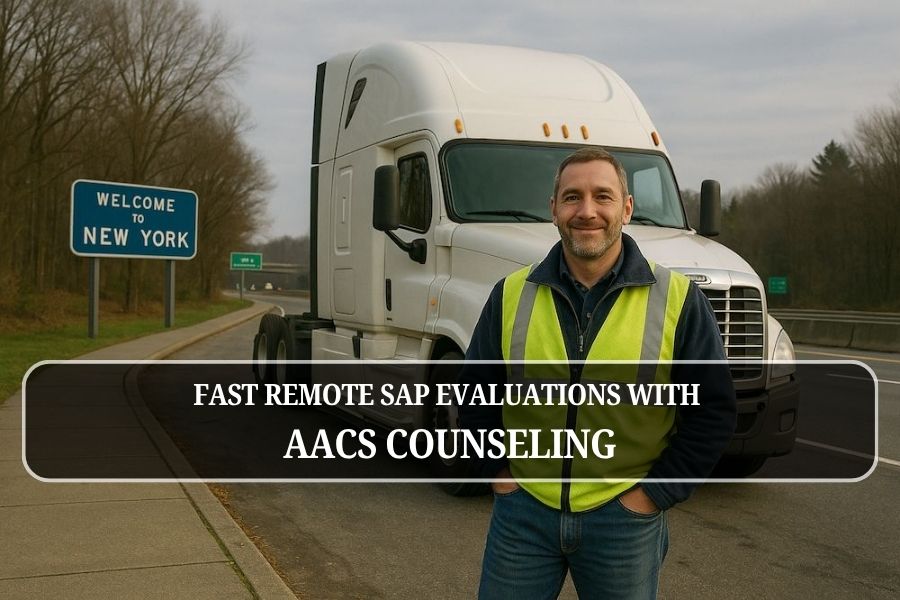
Fast Remote SAP Evaluations With AACS Counseling

Fast Remote SAP Evaluations With AACS Counseling

Many employees want to complete the RTD process as quickly as possible.

AACS Counseling offers fast, remote SAP evaluations to help employees move through the process efficiently.

Benefits include:

  • Same-week appointments
  • Virtual telehealth evaluations
  • Nationwide service
  • Secure online sessions
  • Rapid documentation submission

Remote services eliminate travel delays and allow drivers to begin the process immediately.

To register for the fastest SAP evaluation, visit us now.

Early registration helps employees start the RTD process sooner and shorten downtime.

Step 3: Education or Treatment Program

After the initial evaluation, the SAP determines whether the employee needs:

  • Education programs
  • Counseling
  • Substance use treatment

The recommendation depends on factors such as:

  • Substance use history
  • Severity of violation
  • Risk level
  • Clinical assessment

Common recommendations may include:

  • Drug and alcohol education classes
  • Outpatient counseling
  • Substance abuse treatment programs

The employee must fully complete the SAP recommendations before moving forward.

Step 4: Follow-Up SAP Evaluation

After completing the recommended program, the employee must return to the SAP for a follow-up evaluation.

During this evaluation, the SAP determines whether the employee has:

  • Successfully complied with recommendations
  • Demonstrated readiness to return to duty

If successful, the SAP will authorize the employee to proceed with the Return-to-Duty test.

Step 5: Return-to-Duty Drug Test

The employee must pass a DOT Return-to-Duty drug or alcohol test.

Requirements include:

  • Must be observed (for drug tests)
  • Must produce a negative result
  • Must be conducted at a DOT-approved testing facility

Once the employee passes this test, they can resume safety-sensitive duties.

Step 6: Follow-Up Testing Plan

The final step is a follow-up testing plan created by the SAP.

DOT regulations require:

  • Minimum of 6 unannounced tests
  • Conducted over 12 months
  • May continue for up to 5 years

These tests ensure continued compliance and safety.

Why Fast SAP Evaluations Matter

The longer employees delay the SAP process, the longer they remain unable to work.

Completing the process quickly helps:

  • Restore employment eligibility
  • Minimize income disruption
  • Maintain professional licensing
  • Demonstrate responsibility to employers

Using remote SAP services can significantly speed up the process.

How AACS Counseling Helps Drivers Return to Duty Faster

AACS Counseling provides specialized services designed for employees who need rapid compliance with DOT regulations.

Services include:

Virtual SAP Evaluations

Employees can complete evaluations from anywhere using secure telehealth.

Rapid Scheduling

Appointments often available within days.

Nationwide Service

Drivers across the United States can access services remotely.

Expert DOT Compliance Guidance

Clients receive step-by-step guidance through:

  • Clearinghouse requirements
  • SAP process
  • Return-to-Duty testing
  • Follow-up compliance

To begin the process today.

Common Questions About DOT Violations

Can I Still Work After a DOT Violation?

Yes, but not in safety-sensitive duties until the RTD process is completed.

Do I Need a SAP Even if My Employer Fired Me?

Yes.

Even if your employer terminates employment, you must complete the SAP process before working for another DOT-regulated employer.

How Long Does the SAP Process Take?

It depends on:

  • Appointment availability
  • Completion of recommended education or treatment
  • Scheduling of return-to-duty testing

Many drivers complete the process within a few weeks to a few months.

Can the SAP Process Be Done Online?

Yes.

DOT regulations allow virtual SAP evaluations, which can significantly reduce delays.

Take the First Step Toward Returning to Work

Take the First Step Toward Returning to Work

A DOT drug or alcohol violation does not have to end your career.

By taking immediate action and completing the required steps, many employees successfully return to safety-sensitive work.

The key is starting the SAP process quickly.

Register today for a remote SAP evaluation:

https://www.aacscounseling.com/sap-evaluations/

When registering in the FMCSA Drug & Alcohol Clearinghouse, remember to choose:

Jacques Khorozian, Ph.D., LPC — Substance Abuse Professional

Prompt action can help you complete the Return-to-Duty process and get back to work as soon as possible.

Final Thoughts

DOT drug and alcohol regulations are designed to ensure transportation safety and accountability. While a violation can be stressful, the Return-to-Duty process provides a clear path forward.

By understanding the steps, registering in the Clearinghouse, and completing a SAP evaluation quickly, employees can regain eligibility for safety-sensitive work.

With remote SAP services through AACS Counseling, drivers and other DOT-regulated employees can move through the process efficiently and start rebuilding their careers.

Start your SAP evaluation today.

SAP Evaluations for DISA Violations and Pipeline Workers

Complete Guide to the Pipeline SAP Program and DISA SAP Evaluation Process

Workers in the pipeline, oil, gas, and energy industries perform safety-sensitive duties that require strict compliance with federal drug and alcohol testing regulations. When a worker receives a drug or alcohol violation through DISA or a PHMSA-regulated program, they cannot return to safety-sensitive work until completing a Substance Abuse Professional (SAP) evaluation and the Return-to-Duty (RTD) process.

For many workers, this situation can be stressful and confusing. Questions often arise, such as:

  • What happens after a DISA drug test violation?
  • How does the pipeline SAP program work?
  • How quickly can I return to work?
  • What is required for a DISA SAP evaluation?

This comprehensive guide explains everything pipeline workers need to know about SAP evaluations for DISA violations, including federal regulations, the Return-to-Duty process, and how AACS Counseling provides fast, nationwide SAP services to help workers get back to work quickly.

If you need to begin the process immediately, you can register for a SAP evaluation here.

Understanding DISA Drug Testing in the Pipeline Industry

Many pipeline companies and energy contractors participate in DISA Global Solutions’ drug and alcohol testing programs. DISA helps employers maintain compliance with federal safety regulations and industry standards.

Workers in the pipeline and energy sectors may be subject to:

  • Pre-employment drug testing
  • Random drug testing
  • Post-accident testing
  • Reasonable suspicion testing
  • Return-to-duty testing

These testing programs are often administered through DISA consortia, which manage compliance for employers across the energy sector.

Learn more about DISA transportation compliance here.

When a worker fails a test or refuses to be tested, they must complete the SAP evaluation process before returning to safety-sensitive work.

Federal Regulations for Pipeline Workers

Pipeline employees who perform safety-sensitive duties are regulated by the Pipeline and Hazardous Materials Safety Administration (PHMSA), which operates under the U.S. Department of Transportation (DOT).

These regulations are designed to protect public safety and ensure that individuals working in critical infrastructure environments are free from substance misuse.

Key regulatory resources include:

https://www.transportation.gov/odapc
https://www.phmsa.dot.gov

Under 49 CFR Part 40, any employee who violates DOT drug and alcohol testing rules must complete the Substance Abuse Professional (SAP) Return-to-Duty process before returning to work.

What Is a DISA SAP Evaluation?

A DISA SAP evaluation is a clinical assessment conducted by a DOT-qualified Substance Abuse Professional (SAP) after a drug or alcohol violation occurs.

The SAP evaluation determines:

  • Whether the worker has a substance use disorder
  • What level of education or treatment is required
  • When the worker is eligible to return to safety-sensitive duties

SAPs are independent professionals trained in federal DOT regulations.

Their responsibilities include:

  • Conducting the initial evaluation
  • Recommending education or treatment programs
  • Monitoring compliance with recommendations
  • Conducting follow-up evaluations
  • Establishing a follow-up testing plan

The SAP’s role is not to punish employees but to ensure safety and rehabilitation before returning to work.

Common DISA Violations for Pipeline Workers

Pipeline workers may be required to complete a pipeline SAP program after violations such as:

Positive Drug Test

Common substances detected include:

  • Marijuana
  • Cocaine
  • Amphetamines
  • Opioids
  • PCP

Alcohol Violations

Alcohol testing violations typically include:

  • Alcohol concentration of 0.04 or higher
  • Refusal to test

Refusal to Test

Refusal violations may include:

  • Leaving the testing site
  • Failing to provide a sample
  • Tampering with a specimen

Each of these violations requires completion of the SAP Return-to-Duty process.

Why Pipeline Workers Must Complete the SAP Process

Federal law requires the SAP process for workers in safety-sensitive industries, as pipeline operations pose significant safety risks.

Workers often handle:

  • High-pressure gas systems
  • Hazardous materials
  • Heavy equipment
  • Critical infrastructure

A worker impaired by drugs or alcohol could create serious safety hazards.

Therefore, DOT regulations require a structured rehabilitation and monitoring process before employees return to work.

Step-by-Step: Pipeline SAP Program Process

Workers who receive a violation must complete the SAP Return-to-Duty process.

This process involves several steps.

Step 1: Schedule a SAP Evaluation

The first step is scheduling an evaluation with a qualified Substance Abuse Professional.

AACS Counseling provides fast virtual SAP evaluations nationwide, allowing pipeline workers to begin the process immediately.

Register here:

https://www.aacscounseling.com/sap-evaluations/

Remote telehealth evaluations eliminate travel delays and allow workers to begin the Return-to-Duty process quickly.

Step 2: Initial SAP Evaluation

During the initial evaluation, the SAP conducts a comprehensive assessment.

This evaluation typically includes:

  • Substance use history review
  • Clinical interview
  • Behavioral health screening
  • Risk assessment

The SAP determines whether the worker requires:

  • Education
  • Counseling
  • Substance use treatment

This step is required before workers can move forward in the pipeline SAP program.

Step 3: Education or Treatment Program

Based on the SAP evaluation, the worker must complete the recommended program.

Common recommendations include:

  • Drug and alcohol education classes
  • Substance abuse counseling
  • Outpatient treatment programs

The SAP determines the appropriate level of intervention based on the worker’s circumstances.

Step 4: Follow-Up SAP Evaluation

After completing the recommended program, the worker returns to the SAP for a follow-up evaluation.

The SAP verifies:

  • Completion of required education or treatment
  • Readiness to return to safety-sensitive

For more visit now.

Call Now