Recent Posts Archives - Page 6 of 20 - AACS Counseling

Court-Ordered Online Evaluations: Are They Accepted?

If you’re involved in legal proceedings, the court may require a professional evaluation. In the past, this meant long commutes, waiting rooms, and rigid appointment schedules. But with the rise of digital tools, even the legal system is embracing technology. At AACS Counseling, people often ask us: Are court-ordered online evaluations even recognized by the courts?

The short answer: Yes, in many cases. However, there are strict conditions that must be met. A simple document downloaded from the internet won’t suffice. Courts have high standards for the qualifications of evaluators and the evaluation process itself.

In this article, we’ll explore the growing trend of digital evaluations, highlight their benefits, discuss potential risks, and explain what to look for when choosing a provider.

The Growing Trend of Online Evaluations

The legal and medical fields have undergone significant changes over the years. Virtual meetings and telemedicine are now everyday practices. This shift has also extended to court-mandated evaluations.

Judges, probation officers, and attorneys increasingly recognize that professional assessments conducted via secure video calls can be just as effective as in-person sessions. As long as the provider is licensed and complies with legal regulations, courts often accept these evaluations as equivalent. Advanced technology allows professionals to assess body language, tone, and emotional responses accurately through video.

That said, acceptance varies depending on the state, court, and specific case. Before scheduling a digital evaluation, you should always consult your attorney or the relevant court.

The Clear Advantages of Digital Evaluations

Why are so many people opting for online evaluations? The answer lies in their flexibility. For those with jobs or family commitments, attending in-person appointments during the day can be challenging.

Convenience and Time Savings

An online evaluation can be done from the comfort of your home, saving you the hassle of commuting, finding parking, and sitting in a waiting room. This convenience reduces the stress that often comes with legal proceedings, allowing you to better focus on the evaluator’s questions in a familiar setting.

Greater Accessibility

For people in rural areas, online options are a game changer. If the nearest qualified specialist is hours away, the internet provides immediate access to licensed professionals. This speeds up the process and helps you meet court deadlines on time.

Budget is also an important consideration. If you’re wondering about the costs involved, check out this guide for detailed information on how much a court-ordered evaluation costs.

Potential Concerns and Pitfalls

Despite the many advantages, there are risks involved. Not every online provider is credible. The biggest concern is that the court may reject your evaluation.

Credibility and Legal Requirements

Courts only accept evaluations completed by a recognized, licensed professional. The report must meet specific formal criteria and address particular legal questions. If you choose a provider offering generic forms without a proper interview, judges will likely dismiss the evaluation.

The Danger of Cheap Providers

The internet is full of websites promising fast and inexpensive certificates. Be cautious. A low-quality evaluation will likely be rejected in court, forcing you to repeat the process. This can lead to significant delays and additional legal fees. Learn more about the hidden costs of cheap evaluations to avoid costly mistakes and setbacks.

Types of Evaluations at a Glance

Not all legal situations require the same type of evaluation. Requirements vary based on the charges and circumstances. Below are some of the most common evaluations that can now often be completed online.

Domestic Violence Assessments

In cases involving family disputes, courts often require sensitive and thorough assessments. Evaluators must carefully analyze family dynamics and potential risks. Learn more about the specific requirements for court-ordered domestic violence assessments. These evaluations require experienced professionals who can build trust, even through video calls.

Anger Management Evaluations

When physical altercations or aggressive behavior are involved, courts often mandate anger management programs. The goal is to determine if there’s a risk of further incidents and recommend appropriate interventions. Find out what to expect from anger management evaluations for court cases. These assessments evaluate impulse control and conflict resolution strategies.

Workplace-Related Evaluations (DOT SAP)

Employees in the transportation industry are subject to strict regulations. If you’ve violated workplace policies on alcohol or drugs, you’ll need to follow a regulated process to regain your work eligibility. A court-approved DOT SAP program is essential. These specialized evaluations can often be completed virtually under certain conditions.

Final Thoughts: Preparation Is Key

Online evaluations are a modern, efficient, and often accepted solution for court requirements. They offer a stress-free way to meet your obligations. At AACS Counseling, we recommend that you never choose the first provider you come across without doing your research.

Always consult your attorney first. Get written confirmation from the court that an online evaluation is acceptable for your case. Then verify the provider’s licenses and references thoroughly. By following these steps, you can save time, money, and stress on your way to a positive legal resolution.

How Much Does a Court-Ordered Evaluation Cost?

Here at AACS, we spend a lot of time discussing physical health, body composition, and holistic wellness. But true wellness extends far beyond the gym and the kitchen. Sometimes, life throws complex legal and personal challenges your way, and your mental and emotional well-being take center stage. If you or a loved one are navigating the legal system, you might face a requirement to undergo a professional assessment.

When a judge or legal representative tells you that you need an evaluation, a heavy wave of anxiety usually follows. Right after asking what the process involves, the very next question is almost always about the price. How much does a court-ordered evaluation cost?

The short answer is that prices vary wildly. You might see numbers ranging from a few hundred dollars to several thousand. This massive price gap leaves many people confused and stressed. This guide breaks down exactly what drives these costs, what you should look for, and why trying to save a few dollars upfront can lead to financial disaster down the road.

What Drives the Cost of an Evaluation?

No two legal cases are exactly alike, and the same rule applies to psychological and behavioral assessments. The price you pay depends on several distinct factors. Understanding these variables will help you budget effectively and choose the right professional for your specific needs.

The Type of Evaluation Required

The biggest factor influencing your total bill is the specific type of assessment the court requested. Different situations require different levels of clinical testing, interviewing, and paperwork.

  • Substance Abuse Evaluations: These are incredibly common for DUI offenses or drug-related charges. They typically involve an interview and a standardized screening questionnaire to assess your relationship with alcohol or drugs. Because they are straightforward, they tend to sit on the lower end of the pricing spectrum.
  • Anger Management Assessments: Often required in domestic disputes or assault charges, these evaluations determine if you need anger management classes. They require slightly more behavioral analysis but remain relatively affordable.
  • Mental Health Evaluations: If the court needs to understand your overall psychological state, the evaluator will use complex diagnostic tools. This requires specialized training, more time, and comprehensive reporting, driving the cost higher.
  • Child Custody Evaluations: These are the most exhaustive and expensive assessments. Evaluators must interview both parents, the children, and sometimes teachers or doctors. They require extensive documentation and home visits, pushing the cost into the thousands.

Location and Regional Economics

Where you live plays a massive role in the cost of your medical and legal services. If you reside in a major metropolitan area with a high cost of living, expect the hourly rates of licensed professionals to reflect that economy. Conversely, providers in rural areas might charge less, though your options for specialized evaluators might be severely limited.

The Provider’s Expertise and Credentials

Not all evaluators hold the same qualifications. A licensed clinical social worker (LCSW) might charge a different rate than a licensed psychologist (PhD or PsyD) or a board-certified psychiatrist. The court often dictates the level of credentialing required for your specific case. Highly specialized experts who frequently testify in court command premium rates because their professional reputation and rigorous testing methods hold significant weight with judges.

The Real Danger of Choosing the Cheapest Option

When you look at your budget, you might feel tempted to search for the absolute lowest price available. This is a massive mistake that countless individuals make every single year. A cheap evaluation often translates to a rushed process, inadequate testing, and a poorly written final report.

Courts have strict standards for these documents. If your evaluator fails to meet these rigorous standards, the judge will reject the report. When a judge throws out your evaluation, you do not get a refund from the cheap provider. Instead, you have to start the entire process over again.

This creates a snowball effect of expenses. You will have to pay for a second, high-quality evaluation. Furthermore, the delay might force your attorney to file extensions, drastically increasing your legal bill. To understand just how damaging this scenario can be, you must read about The Hidden Cost of Cheap Evaluations: Why a Rejected Report Could Cost You $5,000 in Legal Fees. Paying a little more upfront for a competent professional is the best financial protection you can secure.

Choosing a Reliable and Accepted Provider

Your goal is to satisfy the court’s requirements efficiently and accurately the first time. To do this, you need to work with an established, reputable agency that understands the specific legal frameworks in your jurisdiction.

You need professionals who know exactly what judges and probation officers look for in a final report. The evaluator must use court-approved testing instruments and follow ethical, standardized interviewing techniques. If they cut corners, your case suffers.

We highly recommend looking into established providers with a proven track record. For instance, you can explore the comprehensive services offered at the AACS Service Center. Choosing a dedicated facility ensures your paperwork is handled properly, your assessment is thorough, and your final report holds up under judicial scrutiny.

Preparing for Your Evaluation

Once you understand the costs and select a reliable provider, you must prepare yourself for the appointment. Transparency and honesty are your best tools. Many people try to “beat” the assessment by giving the answers they think the evaluator wants to hear. Modern psychological testing includes validity scales designed specifically to catch this type of deception.

If the evaluator detects that you are lying or minimizing your issues, they will note this in their report. The court looks very poorly upon individuals who attempt to manipulate an evaluation. Arrive on time, bring any required documentation (like police reports or prior medical records), and answer questions truthfully.

Taking the Next Step

Navigating legal requirements can feel incredibly overwhelming, but understanding the financial and procedural aspects gives you back a sense of control. Remember that an evaluation is not just a punishment; it is a clinical tool used to determine the best path forward for your specific situation.

Do not let price be the only factor driving your decision. Focus on quality, credentialing, and court acceptance. If you want a deeper dive into the exact processes, requirements, and steps involved in these assessments, we encourage you to read this court-ordered evaluations complete guide. Educate yourself, choose a reputable professional, and take the necessary steps to resolve your legal obligations with confidence.

Domestic Violence Assessments Ordered by Courts

Welcome back to the AACS Counseling blog, where we tackle the difficult topics surrounding health, wellness, and navigating life’s toughest hurdles. Facing a court order can feel overwhelming, especially when it involves highly sensitive matters. If a judge has recently mandated that you or someone you know undergo a domestic violence assessment, you probably have a lot of questions.

Understanding exactly what this evaluation entails can help reduce your anxiety and prepare you for the steps ahead. This guide breaks down what these assessments are, why courts order them, and what you can expect during the process.

What Are Domestic Violence Assessments?

A domestic violence assessment is a comprehensive evaluation conducted by a licensed mental health professional or a certified domestic violence counselor. The primary goal is to evaluate an individual’s behavioral patterns, emotional regulation, and potential risk for future violent or abusive behavior.

These evaluations are not designed to punish you. Instead, they provide the court with an objective, professional understanding of your unique situation. By gathering detailed information about your mental health, relationship history, and behavioral triggers, the evaluator can recommend the most appropriate interventions, educational classes, or counseling programs.

Why Do Courts Order These Evaluations?

Judges mandate domestic violence assessments for several crucial reasons. Family and criminal courts rely on these evaluations to make informed decisions that prioritize safety and rehabilitation.

Protecting Families and Communities

The court’s primary responsibility is to ensure the safety of everyone involved in a domestic dispute. By ordering an assessment, the judge can gauge the level of risk an individual might pose to their partner, their children, or the general public. This information helps the court establish necessary boundaries, such as issuing or modifying restraining orders, or determining safe custody and visitation arrangements.

Tailoring Rehabilitation Programs

Not every situation is the same, and a one-size-fits-all approach rarely works for behavioral rehabilitation. A thorough assessment identifies the root causes of the conflict. Whether the underlying issues involve anger management, substance abuse, or unresolved trauma, the evaluation helps the court mandate the specific type of help you need. This tailored approach dramatically increases the chances of successful rehabilitation.

How the Assessment Process Works

Walking into an assessment feels much less intimidating when you know what to expect. While the exact procedures vary depending on your state and the specific evaluator, the process generally includes a few standard steps.

Initial Interviews and Questionnaires

The core of the evaluation is a face-to-face interview. The counselor will ask you a series of questions about the incident that led to the court order. They will also inquire about your childhood, past relationships, employment history, and any previous legal issues. You will likely fill out standardized psychological questionnaires that help the evaluator measure your stress levels, anger triggers, and coping mechanisms. Honesty and cooperation during this stage are essential.

Background and Record Reviews

Evaluators do not rely solely on the interview. They typically review relevant documents to get a complete picture of the situation. This can include police reports, court transcripts, previous medical or psychological records, and statements from other parties involved. The goal is to cross-reference the information you provide with official records to ensure a highly accurate assessment.

The Role of Assessments in Legal Proceedings

The final product of this process is a formal written report submitted directly to the court. This document outlines the evaluator’s findings and includes specific recommendations.

The judge uses this report to guide their rulings. If the evaluator recommends a 24-week batterer intervention program, the court will likely make completing that program a condition of your probation or a requirement for regaining custody rights. Because this report carries significant weight in legal proceedings, it is crucial that you approach the assessment with a cooperative and willing attitude. Showing that you take the process seriously reflects positively on your character and your commitment to growth.

Moving Forward with the Right Support

Facing a court-mandated assessment can be stressful, but it also serves as an opportunity for personal growth and positive change. Completing the evaluation is the first step toward understanding your behavior, improving your relationships, and fulfilling your legal obligations.

You do not have to navigate this challenging time alone. Getting the right professional help makes a world of difference. We highly recommend reaching out to the experts at the AACS Service Center. Their compassionate, highly trained professionals specialize in providing thorough, fair, and supportive assessments that meet all court requirements. By partnering with experienced counselors, you can ensure your assessment is handled with the utmost professionalism, helping you move forward with clarity and confidence.

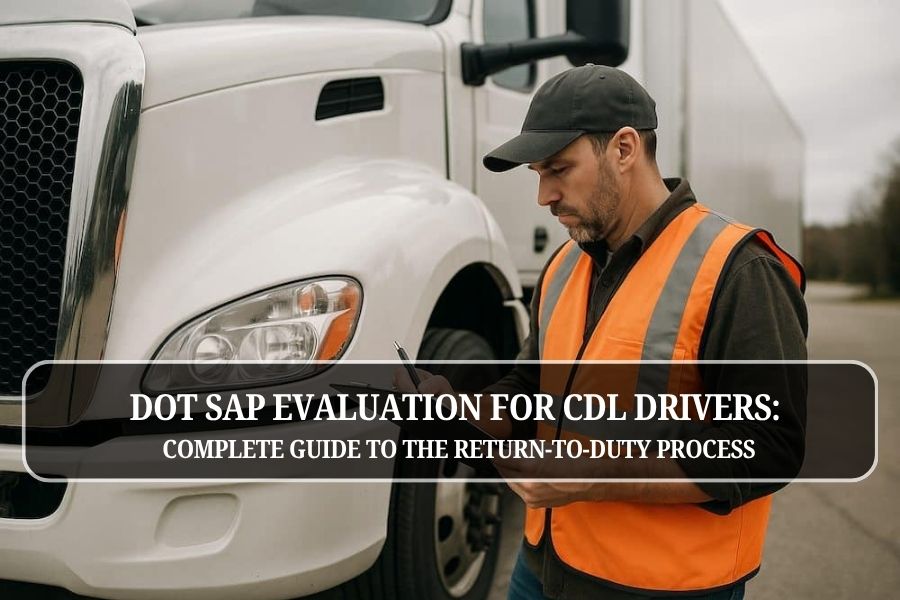
DOT SAP Evaluation for CDL Drivers: Complete Guide to the Return-to-Duty Process

Introduction to DOT SAP Evaluations

Commercial drivers play a vital role in keeping the United States economy functioning. Every day, thousands of truck drivers transport goods across the country, ensuring supply chains remain stable and businesses continue operating. Because of the significant safety responsibilities associated with commercial driving, the Department of Transportation (DOT) enforces strict drug and alcohol testing regulations.

When a driver violates DOT drug or alcohol policies, they are temporarily removed from safety-sensitive duties. However, the violation does not permanently end a driver’s career. Instead, federal regulations require the driver to complete a structured process known as the SAP Return-to-Duty program.

At AACS Counseling, we help drivers nationwide complete their SAP evaluations quickly and affordably, so they can regain eligibility to work as soon as possible.

Drivers beginning the process should first review the official Department of Transportation website:

https://www.fmcsa.dot.gov/

During registration, drivers must select their Substance Abuse Professional (SAP). To begin the process with AACS Counseling, drivers should enter:

Jacques Khorozian

as their SAP professional.

What Is a SAP Evaluation?

A Substance Abuse Professional (SAP) evaluation is a federally mandated assessment required after a driver violates DOT drug or alcohol regulations.

SAP professionals are specially trained counselors responsible for evaluating drivers and determining the appropriate education or treatment necessary before they return to safety-sensitive work.

The SAP program exists to protect both drivers and the public.

The evaluation process ensures that drivers returning to operate commercial vehicles are prepared to meet federal safety standards.

Understanding the FMCSA Drug and Alcohol Clearinghouse

The FMCSA Drug and Alcohol Clearinghouse is a national database that tracks violations of DOT drug and alcohol regulations.

The system allows:

  • Employers
  • SAP professionals
  • Medical review officers
  • Transportation agencies

to report violations and track compliance.

Drivers must register in the Clearinghouse before beginning the SAP process.

More information about federal transportation regulations can be found here:

https://www.fmcsa.dot.gov/

How CDL Drivers Register for the SAP Process

Drivers must register in the FMCSA Clearinghouse before they can begin the SAP return-to-duty process.

Steps include:

  1. Visit the FMCSA website
  2. Create a Clearinghouse driver account
  3. Review your violation record
  4. Select a SAP professional

When asked, “Who is your SAP professional?” enter:

Jacques Khorozian

This allows you to begin your SAP evaluation through AACS Counseling.

DOT Violations That Require SAP Evaluations

Several violations trigger the SAP program.

These include:

  • Positive drug tests
  • Positive alcohol tests
  • Refusing drug testing
  • Tampering with testing procedures
  • Missing scheduled testing

Once a violation is recorded, the driver must complete the SAP program before returning to work.

SAP Evaluations for DISA Violations

Many industrial workers and commercial drivers are also subject to DISA drug and alcohol compliance programs.

Workers in pipeline, transportation, and energy sectors may need SAP evaluations after violations.

More information about transportation compliance programs can be found here:

https://disa.com/dot-transportation-compliance/phmsa-compliance/

AACS Counseling helps workers resolve DISA violations and DOT violations through professional SAP evaluations.

SAP Programs for Pipe Fitters and Skilled Trades

Drug and alcohol testing requirements extend beyond trucking.

Workers in industries such as:

  • Pipe fitting
  • Construction
  • Energy
  • Pipeline maintenance

may be required to complete SAP evaluations before returning to work after violations.

AACS Counseling helps pipe fitters and union workers complete their SAP evaluations and return to their jobs.

The 5 Steps of the DOT Return-to-Duty Process

1. Initial SAP Evaluation

Drivers meet with a certified SAP professional for an assessment.

2. Education or Treatment

The SAP recommends a program based on the driver’s evaluation.

3. Program Completion

Drivers must complete recommended education or treatment.

4. Follow-Up Evaluation

The SAP verifies program completion.

5. Return-to-Duty Testing

Drivers must pass a drug or alcohol test before returning to work.

Why Drivers Choose AACS Counseling

Drivers across the United States choose AACS Counseling because we provide:

  • The quickest SAP program nationwide
  • The most affordable SAP evaluations
  • Nationwide service
  • Fast scheduling
  • Experienced SAP professionals

Our goal is to help drivers complete the process and return to work as quickly as possible.

Multilingual SAP Evaluations for CDL Drivers

We proudly support drivers from many backgrounds by offering services in multiple languages:

  • English
  • Spanish
  • Tagalog
  • Armenian
  • Arabic
  • French
  • Hindi
  • Ewe

Providing multilingual services ensures drivers fully understand the SAP process.

Frequently Asked Questions About SAP Evaluations

How long does the SAP program take?

Timelines vary depending on the education or treatment required.

Can drivers from any state use AACS Counseling?

Yes. Our SAP program is available nationwide.

Can I choose my SAP professional?

Yes. Drivers may select their SAP when registering in the Clearinghouse.

Enter Jacques Khorozian to begin with AACS Counseling.

Start Your SAP Evaluation Today

To begin the SAP process:

  1. Visit:  https://www.fmcsa.dot.gov/
  2. Register in the FMCSA Clearinghouse.
  3. Enter Jacques Khorozian as your SAP professional.
  4. Schedule your SAP evaluation with AACS Counseling.

Our program helps drivers nationwide complete SAP requirements quickly and affordably.

Court-Approved DOT SAP Program Near Me: 100 Questions Judges, Probation Officers, and Attorneys Ask

Welcome back to AACS Counseling. While we usually cover health and body type topics, today we’re diving into a specific and highly important area: workplace compliance and rehabilitation. If you’ve ever dealt with traffic violations, probation requirements, or workplace issues related to drugs or alcohol, chances are you’ve come across the term “DOT SAP.”

In this article, we’ll break down what a DOT SAP (Substance Abuse Professional under Department of Transportation guidelines) program is. We’ll also explain why court approval matters so much and summarize the top “100 questions” that judges, probation officers, and attorneys often ask about these programs.

What is a DOT SAP Program?

A DOT SAP program is a structured process for assessing, treating, and monitoring individuals who violated the Department of Transportation’s drug and alcohol regulations. The Substance Abuse Professional (SAP) acts as a gatekeeper in this process.

The SAP ensures public safety by professionally evaluating individuals. Only when the person successfully completes the program can they begin the “Return-to-Duty” process and return to the workplace. This program isn’t just for truck drivers or pilots—it’s also a critical factor in civil and criminal cases involving addiction and driving ability.

Why Court Approval is Critical

Not every rehabilitation program is accepted by courts or probation officers. A court-approved DOT SAP program ensures that strict legal standards are met.

For judges and probation officers, this certification guarantees quality and objectivity. Simply attending counseling sessions isn’t enough; courts require solid proof that the person was evaluated by a certified expert who followed specific, standardized guidelines. A court-approved program protects defendants from having their efforts rejected in court and gives legal professionals confidence that public safety is prioritized.

100 Questions About the DOT SAP Program

Below is a comprehensive list of 100 questions courts, probation officers, attorneys, and participants often ask about the DOT SAP program—covering eligibility, process, compliance, outcomes, legal concerns, costs, documentation, and more.

Eligibility and Enrollment

  1. Who is required to complete a DOT SAP program?
  2. What are the minimum eligibility requirements?
  3. Can anyone voluntarily enroll in a DOT SAP program?
  4. Are both employees and job applicants eligible?
  5. Does the type of violation matter?
  6. What prior offenses impact eligibility?
  7. Can first-time offenders participate?
  8. What if someone has completed a SAP program before?
  9. Are there age requirements?
  10. Is there a deadline to start the program after a violation?

Program Process

  1. How do I begin the SAP process?
  2. What does the initial evaluation involve?
  3. Who conducts the assessment?
  4. What documents are required to start?
  5. How long does the typical program last?
  6. Are the steps individualized for each person?
  7. Is there an appeals process for SAP recommendations?
  8. What happens after the initial assessment?
  9. Are family members involved in the process?
  10. Can the process be conducted virtually?

Cost and Payment

  1. How much does the SAP program cost?
  2. Is financial assistance available?
  3. Do insurance plans cover SAP services?
  4. Can employers pay for the program?
  5. What payment methods are accepted?

Compliance and Monitoring

  1. Who monitors attendance and compliance?
  2. What happens if I miss a required session?
  3. How are absences reported?
  4. Can sessions be rescheduled for emergencies?
  5. What steps are taken after a missed drug test?
  6. Are there exceptions for medical emergencies?
  7. How is ongoing compliance verified?
  8. Are follow-up appointments required after completion?
  9. Is progress shared with the court or employer?
  10. What is required for successful completion?

Testing and Evaluation

  1. What types of drug and alcohol tests are conducted?
  2. Are all tests observed?
  3. How often are tests administered?
  4. What happens after a positive test?
  5. Can medication interfere with test results?
  6. Are hair follicle tests ever required?
  7. Is there a retest policy for disputed results?
  8. How are false positives handled?
  9. What substances are tested for?
  10. Are test results confidential?

Treatment and Education

  1. What treatment options are offered?
  2. Is counseling mandatory?
  3. Are both group and individual sessions required?
  4. Are education classes part of the program?
  5. How is progress measured during treatment?

Legal and Court Questions

  1. Is the program recognized by all courts?
  2. Will my participation affect sentencing?
  3. Can program reports be used in court?
  4. Are there court-approved SAPs in every state?
  5. What legal documentation is needed before starting?
  6. How do I prove completion to the court?
  7. Are there specific forms for judicial review?
  8. What happens if a participant violates probation terms?
  9. Can the program be a substitute for other penalties?
  10. Does the court follow up after program completion?

Return-to-Duty and Employment

  1. What is the Return-to-Duty process?
  2. When can I go back to work?
  3. Will my employer be notified of my progress?
  4. Can I change jobs during the process?
  5. Are employers legally required to reinstate participants?
  6. How is job reinstatement confirmed?
  7. What additional steps are required before returning to duty?
  8. What happens if employment ends mid-program?
  9. Can the program help with job placement?
  10. How do I provide proof of eligibility to the employer?

Outcomes and Follow-Up

  1. What happens after successful completion?
  2. Is long-term follow-up required?
  3. How many follow-up tests are needed?
  4. Who pays for follow-up testing?
  5. How soon can follow-up testing begin?
  6. What if a relapse occurs after completion?
  7. Are there support resources for aftercare?
  8. How is successful rehabilitation measured?
  9. Can follow-up requirements ever be waived?
  10. Will follow-up be reported to legal authorities?

Documentation and Privacy

  1. Who has access to my program records?
  2. How is confidentiality ensured?
  3. Can I obtain copies of my records?
  4. What information must be shared with the employer or court?
  5. How long are records kept?
  6. Are there additional release forms to sign?
  7. Can I request my information not be shared?
  8. Where are program records stored?
  9. What happens to records after program completion?
  10. Who should I contact with questions about privacy?

General and Special Circumstances

  1. Are accommodations available for disabilities?
  2. Can the program be completed in another state?
  3. Are all SAPs equally qualified?
  4. What if the closest SAP is far away?
  5. Can I request a different SAP?
  6. What should I do if I disagree with the SAP’s evaluation?
  7. Can the process be expedited?
  8. Are translation services available?
  9. What if new regulations take effect during my program?
  10. How can I verify a program is truly court-approved?

In legal cases, certain questions come up repeatedly. Legal professionals need to understand every detail to make informed decisions. Below are the key categories of questions they frequently ask.

Questions About Eligibility

Attorneys and judges often want to know who is eligible for the program and under what conditions they can begin.

  • Does the case qualify for a DOT SAP program? Not all violations require this specific program. Experts carefully determine whether the offense falls under DOT regulations.
  • Can someone voluntarily enroll in the program? Yes, attorneys often recommend their clients start the program proactively to show good faith in court.
  • Are prior offenses a disqualifier? Most programs prioritize rehabilitation regardless of past violations, but judges will review the overall context.

Questions About the Process

The process needs to be transparent and easy to monitor. Probation officers often oversee the steps closely.

  • How long does the SAP program take? The duration varies depending on the SAP’s initial evaluation. There’s no one-size-fits-all timeline.
  • What treatment methods are used? Judges often ask about specific therapies, whether it’s inpatient treatment, outpatient programs, or educational workshops.
  • What is the Return-to-Duty test process? This final step is critical, and legal professionals want reassurance that post-return monitoring is thorough.

Questions About Compliance

For probation officers, ensuring compliance is the top priority.

  • What happens if someone misses an appointment? Strict programs immediately report absences to the probation officer or court.
  • How reliable are the drug tests? Courts demand the highest accuracy. DOT standards typically require observed testing to prevent tampering.
  • Do probation officers receive regular progress reports? A court-approved program is characterized by clear, continuous communication with legal authorities.

Questions About Outcomes

Ultimately, outcomes matter most. Attorneys use successful completions to argue for reduced penalties, while judges focus on long-term public safety.

  • What is the program’s success rate? Statistics and case studies are critical for proving the program’s effectiveness.
  • What happens if someone relapses during probation? Relapses often result in termination of the Return-to-Duty process with additional legal consequences.
  • What follow-up care is provided? SAPs typically order random follow-up tests that can continue for years. This extended monitoring reassures courts about long-term compliance.

Conclusion and Next Steps

A court-approved DOT SAP program is far more than a basic training course. It’s a highly regulated, life-saving process that ensures individuals can safely return to work and society. For judges, probation officers, and attorneys, it offers a reliable, standardized framework for handling complex cases fairly and securely.

Whether you’re seeking legal guidance, fulfilling probation requirements, or advancing your professional knowledge, understanding this process is invaluable.

Want to learn more or find a certified program near you? Reach out to us here on AACS Counseling, explore our additional resources, or connect directly with a certified Substance Abuse Professional to take the first step toward a safer, legally compliant future.

Anger Management Evaluations for Court Cases

A moment of unchecked anger can turn your life upside down in an instant. When a situation escalates and the legal system gets involved, judges often require what’s known as an Anger Management Evaluation. For many, this can feel intimidating at first. At aacscounseling.com, we believe physical and mental balance is key to navigating these challenging moments.

A court-ordered evaluation isn’t a punishment—it’s a diagnostic tool. Judges use it to determine whether your emotional reaction was an isolated incident or if it points to a deeper issue with impulse control. In this detailed guide, we’ll explain the purpose of these evaluations, walk you through the process, and discuss how the results may impact your case.

Why Would a Court Order an Anger Management Evaluation?

When incidents involving physical violence, domestic disputes, vandalism, or road rage occur, judges must assess the risk posed to the public and the individuals involved. Since judges aren’t psychologists, they rely on external experts for these assessments.

The primary goal of the evaluation is to identify the root causes of your anger. The court wants to know if you pose a risk to yourself or others and whether therapy or intervention would be beneficial. Judges often prioritize solutions that focus on rehabilitation over punishment. To dive deeper into these court-ordered measures, we recommend exploring this complete guide to court-ordered evaluations.

In some cases, poor impulse control can overlap with deeper psychological challenges. The court may also explore whether broader mental health issues are at play. For more on this, check out our article on court-ordered mental health evaluations.

What Happens During the Evaluation Process?

The idea of being assessed by a psychologist or therapist can feel nerve-wracking, but the process is structured and professional. It’s designed to provide an objective analysis of your emotional regulation.

The Initial Interview

The cornerstone of the evaluation is the personal interview. A licensed evaluator will ask you about the specific incident that led to your court case. They’ll also delve into your history, family dynamics, and how you typically handle stress. Honesty is crucial here—attempting to downplay the situation will likely backfire, as experienced evaluators can easily spot inconsistencies. For a detailed breakdown of the process, check out this article on what happens during a court-ordered evaluation.

Standardized Tests and Questionnaires

In addition to the interview, evaluators often utilize written tests to measure irritability, frustration tolerance, and tendencies toward aggressive behavior in hypothetical scenarios. The data from these tests helps the evaluator create an objective report for the court.

To prepare for the evaluation, it’s helpful to review typical questions that might come up. Take a look at these 100 questions commonly asked by judges, probation officers, and attorneys.

How It Differs from Other Evaluations

Sometimes anger isn’t the only issue. Substance use, for example, often plays a significant role in aggressive behavior. If the court suspects substance involvement, an anger management evaluation may be combined with a substance abuse assessment.

Courts take a specific approach to addiction-related issues. To learn more about what evaluators look for in these cases, check out this article on substance abuse evaluations. If your incident involved driving under the influence, there are additional criteria specific to DUI cases. For more information, refer to the guide on DUI substance abuse evaluations.

How the Evaluation Impacts Your Court Case

The evaluator compiles their findings into a formal report, which is sent directly to the court. This report is a key factor in determining how your case proceeds.

It provides an assessment of your aggression risk and includes recommendations for the judge. A positive evaluation showing a low risk of recurring incidents may lead to a lighter sentence. However, if the report highlights issues with impulse control, the judge may impose conditions such as mandatory anger management classes, regular therapy sessions, or probation with strict requirements.

The legal framework surrounding these reports is complex. To better understand how they are used as evidence in court, explore this comprehensive legal guide to court-ordered evaluations.

Finding a Qualified Evaluator

The court will typically give you a deadline for submitting the evaluation, so it’s important to act quickly. You’ll need to find an evaluator who is officially certified and recognized by the court for these specific assessments.

If you’re unsure where to start, this guide explains how to find a court-ordered evaluation near you. Keep in mind that requirements for these evaluations vary by state and even by county, so it’s crucial to work with a local expert. The national directory and state-by-state guide is a great resource for finding qualified providers. You can also consult the nationwide guide for all 50 states and major U.S. cities to locate a verified professional in your area.

Still Have Questions About the Process?

We understand that navigating legal proceedings can be overwhelming. The uncertainty of what lies ahead and the pressure of being evaluated by a stranger can create significant stress. But knowledge is your best ally. Prepare yourself, learn about the process, and approach it proactively. For quick answers to common concerns, check out these frequently asked questions about court-ordered evaluations.

Conclusion: Take Back Control

A court-ordered anger management evaluation is often a turning point. Rather than seeing it as a burden or punishment, view it as an opportunity to reflect on your behavior, identify patterns, and work on personal growth with professional guidance.

Act quickly to find a certified evaluator, gather your documents, and approach the process with honesty and a willingness to improve. At aacscounseling.com, we encourage you to use this chance to overcome legal obstacles while building a foundation for greater emotional balance and resilience. Take the first step today by using the resources provided to schedule your evaluation.

Court-Approved DOT SAP Program Near Me: National Directory & State-by-State Guide

Welcome back to AACS Counseling, We often talk about physical health, fitness, and building the right mindset for a strong daily life. Today, however, we’re diving into a topic that’s essential for many readers working in safety-sensitive jobs: professional rehabilitation and mental health.

If you’re a commercial driver or work in another safety-critical role, you know how strict the Department of Transportation (DOT) rules are. A positive drug test or alcohol violation can instantly put your career on hold. The solution? A court-approved DOT SAP (Substance Abuse Professional) program.

In this guide, we’ll break down what these programs do, why they’re essential, and how you can find the right one in your state.

What is a DOT SAP Program?

A SAP (Substance Abuse Professional) is a trained expert who assesses employees who have violated DOT drug and alcohol regulations. These programs go beyond simple training—they provide a professional evaluation of your situation.

The SAP plays a key role in determining whether and when an employee can safely return to work. This is critical for individuals operating heavy machinery, flying planes, or driving large trucks. The process not only protects you but also ensures public safety.

A qualified DOT SAP Program offers a structured, court-approved way to meet legal requirements. Typically, it includes an initial evaluation, recommendations for education or treatment, a follow-up assessment, and a plan for ongoing testing.

Why is a DOT SAP Program Essential?

If you work in a safety-sensitive role and violate DOT regulations, you immediately lose your qualification to perform those duties. You can’t return to work until you successfully complete the official Return-to-Duty process.

The program ensures that:

  1. The issue is taken seriously and professionally evaluated.
  2. The employee gets the necessary help and education.
  3. Employers can trust that the employee is ready to work safely again.

Without clearance from a qualified SAP, your status remains restricted in the DOT system. You can’t simply switch employers to bypass the process, as the DOT’s database keeps a detailed record of all violations.

The Path Back: The DOT Return-to-Duty Process

The Return-to-Duty process is clear and structured. It requires patience, but it’s the official path back to your career. Here’s how it typically works:

1. Initial Evaluation

You’ll meet with a qualified SAP for a detailed interview. They’ll assess your situation and create a customized plan, which may include education, treatment, or both.

2. Education or Treatment

You must follow the SAP’s recommendations carefully. This is a crucial step. Only by actively participating and completing the requirements can you move forward.

3. Follow-Up Assessment

Once you’ve completed the recommended steps, you’ll meet with the SAP again. They’ll evaluate whether you’ve successfully addressed the issues. If everything checks out, the SAP will approve you to take the DOT Return-to-Duty test.

4. Return-to-Duty Test

You’ll need to pass a strictly monitored drug and/or alcohol test. Only after a negative result can you resume your safety-sensitive duties. Following this, you’ll be subject to unannounced follow-up tests for 1 to 5 years.

New Rules and Clearinghouse Updates

Regulations are constantly evolving, so staying informed is essential. The FMCSA (Federal Motor Carrier Safety Administration) Clearinghouse is a centralized database that tracks CDL drivers’ violations.

Starting in 2026, new updates will affect how you manage your status. Employers will be required to check this database before hiring and conduct annual reviews. To learn how to navigate these challenges, check out our detailed post on the 2026 FMCSA Clearinghouse Return-to-Duty Process.

Additionally, all of these processes are governed by federal laws. The foundation for workplace drug and alcohol testing in the transportation industry is outlined in Title 49 of the Code of Federal Regulations (CFR), Part 40. This regulation specifies how tests are conducted and how SAP evaluations are handled. For a comprehensive overview, see the explanation of the FMCSA 49 CFR Part 40 Rules for 2025.

National Directory: Finding a Program Near You

One of the most stressful parts of a violation is finding a qualified expert. Not all counselors or therapists are DOT-certified SAPs. You’ll need someone who has completed the DOT’s specific training and certification.

A court-approved program ensures all legal requirements are met. But how do you find one?

State-by-State Guide: Nationwide Support

Whether you’re in Texas, California, Florida, or New York, DOT rules apply nationwide, but providers are organized locally. It’s important to find a SAP in your state or one authorized to conduct telemedicine evaluations in your area.

To simplify your search, we recommend using trusted networks and directories. A great resource for nationwide support is SAP Evaluation, where you can quickly connect with qualified professionals to guide you through the process.

Tips for Choosing the Right SAP

When selecting a SAP, look for the following:

  • Certification: Confirm their current DOT certification.
  • Experience: An experienced SAP understands the Clearinghouse and can help you avoid delays.
  • Clarity: The process can be confusing. Choose someone who explains each step clearly.
  • Network: A good SAP has strong connections with treatment centers, saving you time when following their recommendations.

Conclusion: Take Back Control of Your Career

A DOT violation can be a tough setback, but it doesn’t have to end your career. With the right professional support, you can meet the necessary requirements and safely return to work.

At AACS Counseling we believe everyone deserves a chance for a fresh start—whether it’s through physical training or overcoming professional challenges. The key is having the right information and the determination to take the required steps.

Use the resources available, stay updated on the latest FMCSA rules, and begin your Return-to-Duty process today. Find a qualified provider in your state and take the first step toward a safe and successful professional future.

FMCSA Phase II 2026: Protect Your CDL from Downgrade

Welcome back to AACS. Today, we’re diving into an issue that’s putting the livelihoods of thousands of commercial drivers at risk. The FMCSA Clearinghouse Phase II rules are now fully in effect as of 2026, and the grace period is over. If your status in the system is marked as “Prohibited,” you will automatically lose your CDL.

State Driver Licensing Agencies (SDLAs) are enforcing these rules strictly, and time is not on your side. The only way to get back behind the wheel is through an official DOT SAP program. Every day you delay puts your career in jeopardy. Let’s break down what these changes mean for you and how you can take action now to save your job.

What is FMCSA Clearinghouse Phase II?

The Federal Motor Carrier Safety Administration (FMCSA) created the Drug and Alcohol Clearinghouse to improve road safety. Phase I required employers to report violations of drug and alcohol policies and conduct pre-employment checks. Phase II, fully effective as of 2026, closes the final loophole in the system.

Previously, drivers with a “Prohibited” status could retain their Commercial Driver’s License (CDL) in certain states until it was time for renewal. Those days are over. Under the new regulations, SDLAs are now required to check the Clearinghouse before issuing, renewing, transferring, or updating a CDL.

The “Prohibited” Status and Automatic Downgrades

Even more concerning is the active downgrade rule. If your name appears in the Clearinghouse with a “Prohibited” status, your SDLA is automatically notified. By law, they must downgrade your CDL, effectively removing your ability to operate commercial vehicles.

Once downgraded, your Commercial Motor Vehicle (CMV) privileges are revoked until you fully complete the Return-to-Duty (RTD) process. A downgrade means you can’t work—no truck, no income. For many drivers, this leads straight to financial hardship unless they act immediately.

The 60-Day Countdown Has Begun

When the SDLA is notified of your “Prohibited” status, a strict clock starts ticking. In most states, you have a maximum of 60 days before the downgrade becomes permanent and irreversible. The 60-day window doesn’t wait, and the bureaucracy won’t slow down for you.

Once your CDL downgrade is finalized in the system, restoring it becomes incredibly complex and expensive. You’ll not only need to complete the DOT SAP program but also deal with your local licensing agency, pay additional fees, and possibly retake exams. The longer you wait, the harder it will be to get back on the road.

Return-to-Duty (RTD) Process: Your Only Path Back

If you failed a drug test or refused one, there’s only one legal way to regain your driving privileges: completing the Return-to-Duty process under the supervision of a Substance Abuse Professional (SAP).

The process involves several key steps:

  1. Initial Evaluation: You’ll need to be assessed by a qualified DOT SAP.
  2. Recommendations: The SAP will assign education or treatment requirements.
  3. Follow-Up Evaluation: Once you fulfill these requirements, the SAP determines if you’re ready to return.
  4. RTD Test: You must pass a Return-to-Duty drug test.
  5. Follow-Up Testing: You’ll face unannounced testing over the following months or years.

The biggest challenge for many drivers? Taking that first step. The process can’t begin until your initial evaluation is logged in the Clearinghouse.

AACS Counseling: The Fastest Solution to Your Problem

When every day matters, you need a partner who understands the urgency. That’s where AACS Counseling comes in.

AACS Counseling specializes in helping drivers navigate this exact crisis. They know your livelihood is on the line, which is why they offer the fastest way to complete your initial evaluation and, most importantly, upload it to the Clearinghouse within 24 hours.

Why 24 Hours Makes All the Difference

The Clearinghouse system is fully digital and automated. Until your initial SAP evaluation is logged in the system, your status remains “Prohibited,” and the SDLA clock keeps ticking.

By working with AACS Counseling, you can speed up the process significantly:

  • Fast Scheduling: No waiting weeks for an appointment.
  • DOT-Qualified Experts: You’ll work with professionals who know the process inside and out.
  • Immediate Upload: Within 24 hours of your evaluation, your report is uploaded to the Clearinghouse. This signals to both authorities and potential employers that you’ve started the RTD process.

Protect Your Career

Your health and career go hand in hand. At AACS, we always emphasize the importance of taking responsibility for your body and mind. A DOT violation is a setback, but it doesn’t have to end your career.

The FMCSA Clearinghouse Phase II rules are strict but provide a clear path to rehabilitation. The responsibility now lies with you to act before your CDL is permanently downgraded.

Act Now

Don’t ignore the problem. The SDLA’s automated system doesn’t make exceptions. If you’re marked “Prohibited,” you need to take immediate action.

Leverage the expertise of AACS Counseling to complete your evaluation quickly. Time is running out. Save your CDL, protect your income, and get your life back on track. Contact a DOT-qualified SAP today and stop the countdown before it’s too late.

Court-Ordered Evaluations for Probation Violations

Violating probation can feel overwhelming and stressful. When a court or probation officer suddenly mandates a court-ordered evaluation, it’s natural to have questions. What does this mean for your future? Will your probation be revoked? At aacscounseling.com, we’re here to guide you with clear and reliable information to help you navigate this difficult time.

A court-ordered evaluation isn’t necessarily the end of your probation. Instead, it’s a tool used by the court to better understand your current circumstances and determine if additional support may be needed. In this article, we’ll explain the purpose of these evaluations, how the process works, and how the outcome could impact your probation.

The Purpose of a Probation Violation Evaluation

When you violate a probation condition—whether by missing an appointment, failing a drug test, or facing new legal trouble—a judge must decide what happens next. Instead of immediately imposing a sentence, courts often request a professional evaluation.

The main goal is to identify the root cause of the violation. Was there a relapse into substance use? Are there underlying mental health concerns? To gain a full understanding of this legal tool, we recommend reviewing this comprehensive guide to court-ordered evaluations. These evaluations help judges make informed decisions and create a plan to keep you on track.

Types of Court-Ordered Evaluations

The type of evaluation required depends on the nature of your original offense and the specifics of the probation violation.

Substance Abuse Evaluations

If your violation involves drugs or alcohol, the court will typically require a substance abuse evaluation. The evaluator will assess your patterns of use and the risk of relapse. For more details on what evaluators look for, check out this article on substance abuse evaluations.

In cases like DUIs, there may be specific requirements. If this applies to you, read about what to expect from a DUI substance abuse evaluation.

Mental Health Evaluations

Sometimes emotional or mental health challenges contribute to probation violations. In these cases, the court may order a mental health evaluation to determine if therapy, counseling, or medication is needed to prevent further violations. Learn more about court-ordered mental health evaluations.

What Happens During the Evaluation Process?

Many people feel nervous ahead of their evaluation, but the process is often less intimidating than expected. Typically, it involves a standardized interview with a licensed evaluator.

The process generally includes an in-depth personal interview and completing questionnaires. The evaluator wants to hear your perspective, so honesty is crucial. If you want a detailed breakdown of the process, take a look at this guide: What Happens During a Court-Ordered Evaluation?.

Preparing for your evaluation can make a big difference. Knowing the types of questions you might be asked can help ease your nerves. Evaluators, probation officers, and judges often focus on similar topics. This list of 100 questions often asked by judges, probation officers, and attorneys is a great resource to get started.

How Does the Outcome Affect Your Probation?

The evaluator’s report plays a key role in determining the court’s next steps. The report includes not only a diagnosis but also specific recommendations for action.

If the evaluator finds you pose a high risk of reoffending, this could lead to probation revocation. However, in most cases, the evaluation results in adjusted probation conditions, such as:

  • Required participation in a rehab program
  • Regular therapy or counseling sessions
  • Stricter monitoring by your probation officer
  • Enrollment in anger management classes

Since legal implications can be complex, it’s worth reviewing this complete legal guide to court-ordered evaluations for better understanding.

How to Find a Certified Evaluator

Meeting the court’s requirements starts with choosing a licensed, court-approved evaluator. It’s important to act quickly, as deadlines for submitting evaluations are often tight.

If you’re unsure where to start, this article outlines how to find a court-ordered evaluation near you.

Requirements vary by state, so it’s essential to select a provider familiar with local laws. Use this national directory and state-by-state guide to find trusted evaluators. This nationwide guide for all 50 states and major U.S. cities is another excellent resource.

Still Have Questions?

Facing a probation violation can be stressful, and it’s normal to have many questions about the evaluation process. At aacscounseling.com, we encourage you to stay informed and not let fear take over. For more information and quick answers, check out these frequently asked questions about court-ordered evaluations.

Final Thoughts: Take Action

A court-ordered evaluation for a probation violation is serious, but it can also be an opportunity. It’s a chance to demonstrate accountability and commitment to personal growth. Use the resources provided, contact a licensed evaluator promptly, and approach the process with honesty and preparation. By doing so, you can set yourself up for a positive outcome. Stay focused—your team at aacscounseling.com wishes you strength as you take the next steps.

What Happens During a Court-Ordered Evaluation?

Receiving a letter from the court can be nerve-wracking. When a judge orders a court-ordered evaluation, it’s natural to have questions. What will they look into? Who conducts the evaluation? And most importantly, how will it affect your future? At aacscounseling.com, we understand how important it is to stay calm and balanced during stressful times while maintaining a sense of control over your body and mind.

A court-ordered evaluation doesn’t have to be a source of panic. It’s a structured process designed to help the court make the best decisions for everyone involved. In this article, we’ll walk you through what happens during a court-ordered evaluation, why it’s ordered, and how to best prepare for it.

What Is a Court-Ordered Evaluation?

A court-ordered evaluation is a professional assessment of your mental health, life circumstances, or potential substance-related issues. This process is formally mandated by a judge and conducted by a qualified specialist, such as a psychologist, therapist, or addiction counselor.

The purpose of the evaluation isn’t to punish you. Instead, it’s meant to give the court an objective, clear picture of your current situation. The evaluator provides insights into your mental health and makes recommendations for therapies or interventions if needed. For a deeper dive into the topic, check out this comprehensive guide to court-ordered evaluations.

Why Does the Court Order an Evaluation?

Judges are legal experts, not medical or psychological professionals. When a case involves emotional, psychological, or substance-related concerns, the court relies on expert evaluations to gain insight. Here are some common scenarios where a court might order an evaluation:

  • Custody Disputes: The court needs to ensure the child’s best interests are prioritized. Evaluations help assess the parenting capabilities of both parties.
  • Traffic Offenses (e.g., DUI): The evaluation determines if underlying substance abuse issues exist and whether therapy is needed before a license can be reinstated.
  • Criminal Cases: In certain offenses, psychological evaluations help determine if the defendant is fit to stand trial or if rehabilitation is a better alternative to traditional punishment.
  • Workplace Conflicts: Employers may request evaluations after specific incidents to assess an individual’s fitness for work.

What to Expect During the Evaluation Process

Many people picture a court-ordered evaluation as a harsh interrogation, but it’s typically a professional and structured conversation in a calm setting. While the specifics can vary, the process generally includes three key steps:

1. The Initial Interview

The evaluation usually starts with an in-depth one-on-one interview. The evaluator will ask you about your personal history, current circumstances, and the incident that led to the court order. It’s important to be honest and cooperative during this conversation. Evaluators are trained to detect inconsistencies, so focus on sharing your perspective and maintaining transparency. This step helps the evaluator understand your mental state and overall situation.

2. Questionnaires and Standardized Tests

In addition to the interview, you may be asked to complete standardized tests or questionnaires. These tools provide the evaluator with an objective understanding of your mental health, habits, or substance use patterns. Take your time and answer the questions as accurately as possible.

3. The Final Report and Recommendations

After gathering all the necessary information, the evaluator prepares a detailed report. This report is sent directly to the court or your legal counsel. It includes the results of your tests and interview, along with specific recommendations. The court uses this report to determine the next steps, which could involve therapy, anger management classes, or custody arrangements.

Finding the Right Support

Selecting the right provider for your evaluation is critical. You’ll need an expert who is recognized by the court and can handle the process professionally and efficiently.

For assistance with coordinating your evaluation or to learn about available services, contact the AACS Service Center. Their experienced team can guide you through every step of the process.

If you’re located in a different state or city and need to quickly find an approved provider, don’t worry. Use this nationwide guide for court-ordered evaluations to find a certified facility near you, no matter where you are in the U.S.

Conclusion: Preparation Is Key to Staying Calm

A court-ordered evaluation may feel intimidating at first, but understanding the process can help ease your concerns. Approach the evaluation as an opportunity to bring clarity to your current situation.

Gather all necessary documents, show up on time for your appointments, and cooperate fully with the evaluator. With the right mindset and professional support, you can navigate this step successfully and focus on moving forward. Use the resources above to schedule your evaluation and take control of the process today.

Call Now