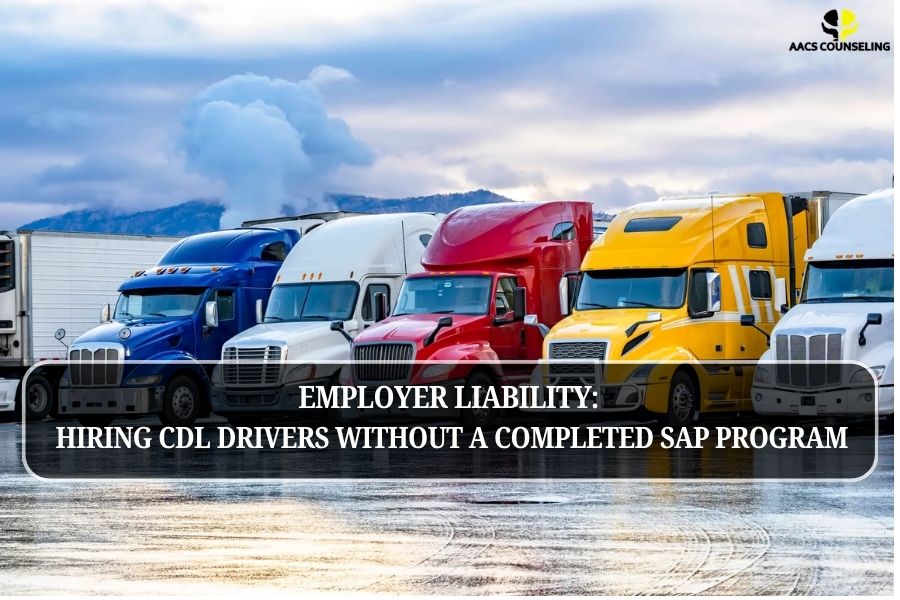
Running a commercial fleet comes with massive responsibilities. When you put a driver behind the wheel of an 80,000-pound vehicle, you take on significant legal and financial risks. The Department of Transportation (DOT) strictly regulates who can legally operate these trucks. When a commercial driver fails a drug or alcohol test, they must complete a highly specific rehabilitation process before driving again.
Unfortunately, some motor carriers cut corners to fill empty seats quickly. Hiring CDL drivers without a completed Substance Abuse Professional (SAP) program exposes your company to devastating consequences. Employer liability for CDL drivers goes far beyond simple administrative fines. It extends into the realm of multi-million dollar lawsuits, criminal negligence charges, and severe public safety risks.
This guide breaks down exactly what happens when carriers ignore safety mandates. We will explore the specific FMCSA regulations for employers, the staggering costs of non-compliance, and how you can protect your business by following the rules.
The Heavy Cost of Hiring Without SAP Compliance
Motor carriers face an ongoing driver shortage. The pressure to keep freight moving often pushes hiring managers to overlook red flags on an applicant’s record. However, ignoring a failed drug test is the most dangerous hiring mistake a company can make. The Federal Motor Carrier Safety Administration (FMCSA) shows zero tolerance for companies that bypass safety protocols.
When you hire a driver with unresolved violations, you directly violate federal law. The FMCSA conducts regular compliance audits on motor carriers. If an auditor discovers you employ a driver who never finished their mandatory SAP program, the immediate fallout is severe. The government will ground that driver instantly. Your company will face massive financial penalties for every single day that non-compliant driver operated a commercial vehicle under your authority.
Beyond federal fines, the legal concept of “negligent hiring” destroys transportation companies. If an uncertified driver causes an accident, your company is entirely at fault. Plaintiff attorneys look for these exact compliance failures. When they find out you knowingly or carelessly hired an unqualified driver, jury verdicts easily reach into the tens of millions of dollars. The cost of hiring without SAP compliance is simply not worth the risk to your business.
Understanding FMCSA Regulations for Employers
The DOT designed a rigid framework to keep impaired drivers off the highways. When a driver fails a drug or alcohol test, or refuses to take one, they immediately lose their driving privileges. They cannot legally perform any safety-sensitive duties until they finish a mandated return-to-duty process.
FMCSA regulations for employers require you to verify the status of every single driver before you let them drive. You cannot rely on the driver’s word. You must actively check their background and ensure they have clearance. To do this, the DOT implemented the Drug and Alcohol Clearinghouse. This secure online database tracks all drug and alcohol violations for commercial drivers nationwide.
Employers must run a full Clearinghouse query on every new hire. You must also run annual queries on your existing fleet. If a query reveals a violation, you cannot dispatch that driver. You must wait until a qualified professional updates the database to show the driver successfully completed their required rehabilitation steps. If you want to understand the intricate details of these clinical standards, you can review the extensive guidelines provided at SAP Evaluation to see exactly what professionals look for.
The DOT Return-to-Duty Process
Getting a driver back to work requires meticulous documentation. The driver must first undergo a face-to-face clinical evaluation with a credentialed expert. This evaluator assesses the driver’s substance use history and creates a tailored education or treatment plan. The DOT requires the driver to follow this plan perfectly.
You, as the employer, cannot legally clear the driver yourself. Only the evaluating professional can issue the final Notice of Compliance. Once the driver finishes their mandated education, they return for a follow-up evaluation. If the evaluator determines the driver successfully mitigated their substance use risks, they clear the driver for the DOT return-to-duty testing phase.
Your responsibility kicks in heavily during this final phase. You must send the driver for a directly observed return-to-duty drug or alcohol test. You cannot dispatch the driver until you hold a verified negative result in your hands. After they return to work, you must manage their unannounced follow-up testing schedule, which the evaluator dictates. Failing to execute these follow-up tests instantly pulls the driver out of compliance, renewing your employer liability.
Safety Risks and the Human Element
Rules and databases exist for a crucial reason: public safety. Commercial trucks share the road with families, school buses, and daily commuters. Impaired driving causes catastrophic accidents that change lives forever. Bypassing the SAP process ignores the very real danger that substance abuse poses on the highway.
Drivers who fail drug tests often deal with severe underlying stress. The trucking lifestyle isolates drivers, disrupts their sleep schedules, and keeps them away from their support systems. Many turn to illicit substances or heavy alcohol use as a coping mechanism. An SAP evaluation forces the driver to confront these unhealthy habits and learn safer ways to manage their demanding career.
Understanding the behavioral side of safety is essential for any fleet manager. Mental health heavily influences reaction times, decision-making, and risk tolerance. The National Institute of Mental Health offers profound research into how high-stress environments trigger substance dependency. When you demand SAP compliance, you ensure your drivers are mentally and physically fit to handle the rigors of the road.
Privacy and Professional Ethics
Handling drug test failures requires strict confidentiality. You will inevitably deal with sensitive medical information when managing a return-to-duty program. Fleet managers must respect driver privacy while maintaining federal compliance.
The DOT requires evaluating professionals to follow stringent ethical guidelines. They must adhere to federal privacy laws, including HIPAA privacy rules, to keep clinical data secure. The evaluator only shares the required compliance status and testing schedules with you. They do not send you the driver’s intimate therapy notes or medical history. You must lock away any compliance documents you receive to protect your driver’s privacy and shield your company from privacy violation lawsuits.
How to Protect Your Fleet and Your Business
Protecting your company from employer liability for CDL drivers requires a proactive approach. Do not wait for an auditor to knock on your door. Build a robust safety culture that prioritizes FMCSA compliance above all else.
Make the Clearinghouse a central part of your hiring workflow. Never let a driver take a truck off the lot until you have a clean query result in their driver qualification file. If a candidate has a violation, demand written proof of their SAP completion. Verify that the professional they used holds active DOT credentials. If the evaluator lacks the proper state licenses or DOT training, the FMCSA will void the driver’s return-to-duty status.
Partnering with a trusted DOT-qualified SAP program streamlines this process. A reputable program understands the exact paperwork required by the FMCSA. They communicate clearly with your safety department, ensuring you know exactly when a driver is legally ready for their return-to-duty test.
Supporting Drivers in Recovery
Fleet managers can play a positive role in driver recovery. When one of your existing drivers fails a random test, treat the situation professionally. Suspend their driving duties immediately, but offer them clear guidance on what to do next. Provide them with a list of qualified evaluators in their area.
If a driver struggles deeply with addiction, point them toward community resources. The SAMHSA National Helpline provides free, confidential treatment referrals for individuals facing substance use disorders. Supporting your drivers through recovery builds incredible loyalty. A driver who successfully completes an SAP program often returns to work safer, more focused, and deeply appreciative of their career.
Next Steps for Total Compliance
Hiring CDL drivers without SAP compliance is a gamble that eventually destroys transportation companies. Employer liability for CDL drivers is absolute when it comes to the DOT Drug and Alcohol Clearinghouse. You must enforce FMCSA regulations for employers rigorously to protect your fleet, your financial assets, and the driving public.
By understanding the return-to-duty process, respecting driver privacy, and demanding strict compliance, you build a safer, more profitable motor carrier business. Do not let administrative oversight ruin your company. Ensure every driver in your fleet is fully qualified and medically cleared to drive.
If you have questions about managing a driver with a violation or need to connect a driver with an expert evaluator, take action immediately. Reach out to the AACS Service Center for professional guidance. We can help you navigate the complexities of DOT compliance and ensure your fleet remains safe, legal, and ready for the road.