Qualified SAP Counselor, Author at AACS Counseling - Page 14 of 33

Is the DOT SAP Program Mandatory After Failing a Drug Test? FMCSA Guidelines Explained

Failing a Department of Transportation (DOT) drug or alcohol test can be overwhelming, especially if you’re unsure what happens next. One of the most common questions drivers ask is:

Is the DOT SAP program mandatory after failing a drug test?

Yes — according to the FMCSA (Federal Motor Carrier Safety Administration) guidelines, completing the SAP process is mandatory before returning to any safety-sensitive position.

We’ll break down what the DOT SAP program is, why it’s required, what the FMCSA says about it, and how you can get back to work safely and legally.

What Is the DOT SAP Program?

The Substance Abuse Professional (SAP) program is a structured return-to-duty protocol required for commercial drivers who violate DOT drug or alcohol regulations. This includes:

  • Failing a drug test
  • Refusing to take a test
  • Being found in possession of alcohol or controlled substances on duty

The SAP program is not optional. According to 49 CFR Part 40 of the DOT’s regulations, any driver found to be in violation must complete the SAP evaluation process before returning to safety-sensitive duties.

What Does the FMCSA Say About SAP Requirements?

The FMCSA makes it clear that:

  • Drivers who fail or refuse a DOT drug test are immediately removed from safety-sensitive functions.
  • To return to duty, the driver must complete the SAP process, which includes an evaluation, treatment or education, and a follow-up test.
  • Only a DOT-qualified SAP may conduct these evaluations.

This means that employers cannot bypass this requirement, and drivers cannot resume work in roles involving commercial vehicle operation until the SAP program is completed.

Steps to Return to Duty After a Failed Drug Test

Here’s what the mandatory DOT SAP process typically looks like:

  1. Initial SAP Evaluation – You meet with a DOT-qualified SAP for an assessment.
  2. Education and/or Treatment Recommendation – The SAP outlines a personalized plan (e.g., counseling sessions or substance abuse classes).
  3. Follow-Up SAP Evaluation – Once your program is complete, you meet with the SAP again for clearance.
  4. Return-to-Duty Test – You must take and pass a directly observed drug test.
  5. Follow-Up Testing Plan – You’ll undergo unannounced follow-up testing for 12–60 months.

What Happens If You Don’t Complete the SAP Program?

If you don’t complete the SAP program, you are barred from performing any safety-sensitive duties for DOT-regulated employers. You also remain flagged in the FMCSA Clearinghouse, which all employers are required to check before hiring drivers.

Why You Shouldn’t Delay the SAP Process

Skipping or delaying the SAP process can lead to serious consequences, including:

  • Loss of current employment
  • Ineligibility for rehire in safety-sensitive positions
  • A permanent record of non-compliance in the DOT Clearinghouse

Find a DOT-Qualified SAP and Get Back to Work

If you’ve violated DOT drug and alcohol regulations, completing the SAP evaluation process is the only approved path to return to duty. At AACS Counseling, we provide confidential, professional SAP evaluations to help you meet compliance requirements and return to work quickly — virtually or in-person, wherever you are.

At AACS Counseling, we offer:

  • Certified DOT SAP evaluations
  • Same-week appointments
  • Virtual or in-person sessions
  • Fast turnaround for your return-to-duty documentation

Final Thoughts: Is the DOT SAP Program Mandatory?

Yes, the DOT SAP program is mandatory for anyone who fails or refuses a DOT drug test. It’s the only FMCSA-approved path back to a safety-sensitive job.

Delaying or avoiding the process only extends the time you’re off the road. The good news? With the right support, many drivers complete the SAP process and resume their careers without issue.

Got a First DUI? Here’s What You Need to Know About Clinical Programs

If you’ve been arrested for your first DUI (Driving Under the Influence), you’re probably asking: Do I have to complete a clinical program?

The short answer: in many cases, yes. Even for first-time offenders, DUI laws across the U.S. often include a mandatory DUI evaluation. Depending on the results, you may also have to attend a clinical treatment program.

This guide explains what courts expect, how DUI clinical programs work, and what first-time offenders need to know.

What Is a DUI Clinical Program?

A DUI clinical program is a structured education or treatment plan for alcohol and drug use. Courts often require it after a DUI arrest.

The program is designed to:

  • Assess your alcohol or drug use.
  • Educate you on the risks of impaired driving.
  • Provide treatment (if needed) to lower the chance of another offense.
  • Depending on your evaluation results, the program may include:
  • One-on-one counseling.
  • Group therapy.
  • Substance use education.

Is a DUI Clinical Program Mandatory for a First Offense?

Requirements vary by state, but here’s the general process in the U.S.:

Step 1: Complete a DUI Evaluation

Almost all states require a clinical substance abuse evaluation after a DUI. A licensed provider conducts this assessment, which usually includes:

  • Reviewing your arrest details and blood alcohol content (BAC).
  • Screening your mental health.
  • Interviewing you about alcohol and drug use history.
  • Possibly using standardized tools (like SASSI or ASI).

Step 2: Evaluation Determines Next Steps

If the clinician finds signs of risky use or dependency, you will be referred to a DUI clinical treatment program. If no risks are found, you may only need to attend an alcohol education class.

Step 3: Some States Automatically Require Programs

In certain states such as Georgia, Florida, and Illinois, even first-time offenders must complete a set number of education or treatment hours.

DUI Evaluation vs. DUI Clinical Program

DUI Evaluation DUI Clinical Program
One-time assessment by a licensed provider Ongoing treatment or education
Determines your substance use risk Designed to reduce repeat DUIs
Required in almost every state Required if evaluation shows risk, or by state law

What Happens If You Skip the Program?

Skipping a court-ordered program has serious consequences. You may face:

  • Suspension or loss of your driver’s license.
  • Extra fines or possible jail time.
  • Violations of probation.
  • Trouble getting your DUI record reduced or expunged.

👉 Even if it’s your first DUI, ignoring the requirement can make your situation much worse.

How Long Does a DUI Clinical Program Take?

The length of a DUI clinical program depends on your evaluation and your state’s requirements:

  • Short-term education: 8–20 hours (1–3 days).
  • Outpatient treatment: 6–12 weeks.
  • Intensive outpatient treatment: 3–6 months, with multiple sessions per week.

Some states allow online classes, while others require in-person attendance at state-approved providers.

First-Time Offender Action Plan

If you just received your first DUI, here’s what you should do next:

  1. Schedule a DUI evaluation with a certified provider.
  2. Attend your assessment and answer questions honestly.
  3. Follow the recommendations — enroll quickly if treatment is required.
  4. Document your progress and keep proof for court.
  5. Stay on track with deadlines and probation requirements.

Benefits of Completing the Program (Even If Not Mandatory)

Finishing a clinical program has several advantages:

  • Reduces fines or jail time.
  • Increases chances of license reinstatement.
  • Shows judges or probation officers your commitment.
  • Strengthens your position in job or custody hearings.
  • Helps you understand and manage substance use risks.

State-Specific First DUI Requirements

Each state has unique DUI rules. Here are a few examples:

  • Georgia: DUI Clinical Evaluation + Risk Reduction Program (mandatory).
  • California: 3-month DUI First Offender Program.
  • Texas: DWI Education Program (12 hours minimum).
  • Illinois: At least 10 hours of education, with possible treatment.
  • Florida: Level I DUI School, plus treatment if needed.

Always confirm requirements with a DUI attorney or your court officer.

Final Takeaway: Is a DUI Clinical Program Required After a First Offense?

In most cases, the answer is yes. While some first-time DUI offenders may only take a short class, many must complete a clinical program, especially if alcohol misuse is suspected.

The best approach? Take your DUI seriously, act quickly, and complete all requirements early. Doing so shows responsibility and helps protect your license, your record, and your future.

DUI Intervention vs. DUI Clinical Program: What’s the Difference?

If you’ve been charged with Driving Under the Influence (DUI), the legal and personal consequences can feel overwhelming. You may need to complete a DUI-related program, but knowing which one applies can be confusing.

The two most common programs are the DUI Intervention Program and the DUI Clinical Program. While they sound similar, they serve very different purposes.

At AACS Counseling, we’ll explain the difference so you can take the right steps toward legal compliance, license reinstatement, and personal recovery.

Understanding the Basics

Let’s start by defining the two programs:

DUI Intervention Program

A structured, short-term educational course for people charged with DUI. It focuses on:

  • Awareness and prevention.
  • Personal responsibility.
  • Reducing the risk of repeat offenses.

It’s usually required for first-time or low-risk offenders.

DUI Clinical Program

A treatment-based program assigned after a clinical alcohol and drug evaluation. It addresses deeper substance use issues and may include:

  • Group therapy.
  • One-on-one counseling.
  • Outpatient treatment.

It is often required for moderate- to high-risk offenders.

Purpose of Each Program

DUI Intervention Program

  • Educates offenders about the risks of impaired driving.
  • Promotes accountability and safer choices.
  • Encourages prevention strategies for the future.
  • Typically assigned by the court or Department of Driver Services (DDS).

👉 Best suited for first-time or low-risk DUI offenders.

DUI Clinical Program

  • Provides counseling or therapy for substance use problems.
  • Recommended after an evaluation shows risk or dependency.
  • Includes customized treatment plans.
  • May require drug testing or relapse prevention planning.

👉 Designed for repeat offenders or those with signs of addiction.

Court and DDS Requirements

In Georgia, the court or probation office will order a clinical evaluation by a licensed professional. Based on the results:

  • No further treatment needed → You’ll attend the DUI Risk Reduction (Intervention) Program.

  • Treatment required → You’ll enter a DUI Clinical Program to address substance use.

At AACS Counseling, we provide both evaluations and treatment so you can handle everything in one place.

Key Differences Between DUI Intervention vs. DUI Clinical Program

Feature DUI Intervention Program DUI Clinical Program
Purpose Education & risk reduction Therapy & recovery
Length 20-hour course (2–3 days) Weeks or months
Format Classroom or online sessions Group or individual counseling
Assigned By Court, DDS, or low-risk evaluation Court or evaluator (moderate/high risk)
Ideal For First-time, low-risk offenders Repeat or high-risk offenders
Evaluation Required Not always Yes – mandatory clinical evaluation

Program Duration and Format

DUI Intervention Program

  • Lasts 20 hours, usually over a weekend or split sessions.
  • May be offered in-person or online.
  • Covers:
  • Effects of alcohol and drugs on driving.
  • Georgia DUI laws.
  • Better decision-making and coping strategies.
  • Duration varies: 8 to 24 weeks or longer.

DUI Clinical Program

  • Includes:

  • Weekly group therapy.
  • Individual counseling.
  • Relapse prevention planning.
  • Sometimes drug testing.

Legal Impact of Each Program

Both programs matter for license reinstatement, probation compliance, and sentence reduction. However, skipping the required program—or completing the wrong one—can delay your case or cause non-compliance.

DUI Intervention Program

  • Required for Georgia Risk Reduction certification.
  • Must be completed for license reinstatement after a first DUI.

DUI Clinical Program

  • Often mandatory for repeat offenses, high BAC cases, or evaluation findings.
  • May be required even for first offenses if signs of substance misuse are present.
  • Proves rehabilitation and compliance to the court.

Which Program Is Right for You?

In most cases, your evaluation and court order decide which program you must attend. Here’s a quick guide:

  • First DUI, low BAC, no signs of addiction → DUI Intervention Program.
  • Second DUI, high BAC, addiction signs, or failed prior intervention → DUI Clinical Program.

At AACS Counseling, we offer same-day SAP evaluations so you can get a clear recommendation fast and start the correct program without delay.

Why Choose AACS Counseling?

We’ve helped thousands of Georgia clients meet court, DDS, and probation requirements with:

  • Licensed and court-approved counselors.
  • Same-day DUI evaluations.
  • Flexible schedules for both programs.
  • Online and in-person options.
  • A safe, confidential, and supportive environment.

Whether you need a 20-hour intervention course or a personalized treatment plan, AACS Counseling is here to guide you every step of the way.

DOT SAP Program Near Me: Nationwide SAP Evaluations in All 50 States (2025 Guide)

Introduction

When CDL drivers fail or refuse a DOT drug or alcohol test, the first thing they search is: DOT SAP Program near me.” Finding a reliable, DOT-qualified Substance Abuse Professional (SAP) nearby is crucial to getting back on the road.

At AACS Counseling, we make it simple by offering nationwide SAP evaluations across all 50 states and every major city in the U.S. With telehealth and in-person options, you don’t need to wait weeks to find a local provider—help is always near you.

Why “DOT SAP Program Near Me” Searches Matter

Google prioritizes local intent when drivers search for SAP services. But not every city has DOT-qualified providers nearby. That’s why AACS Counseling fills the gap by offering:

  • Telehealth SAP evaluations accepted by FMCSA and DOT
  • In-person sessions where available
  • Nationwide coverage with providers licensed to practice across multiple states

This means whether you’re in a small town in Kansas or a big city like Chicago, you always have a “DOT SAP near me.”

Cities and States We Serve

We proudly serve all 50 states with SAP evaluations, including major hubs where CDL drivers frequently search for “SAP near me”:

East Coast Cities

  • New York, NY
  • Philadelphia, PA
  • Boston, MA
  • Washington, D.C.
  • Atlanta, GA

Midwest Cities

  • Chicago, IL
  • Detroit, MI
  • Columbus, OH
  • Minneapolis, MN
  • St. Louis, MO

South & Central Cities

  • Dallas, TX
  • Houston, TX
  • Nashville, TN
  • Miami, FL
  • Charlotte, NC

West Coast Cities

  • Los Angeles, CA
  • San Francisco, CA
  • Seattle, WA
  • Phoenix, AZ
  • Denver, CO

No matter your location, simply search “DOT SAP Program near me” and you’ll find AACS Counseling ready to assist.

How the DOT SAP Program Works

Whether you’re local or remote, the process is the same:

Initial Evaluation – Meet with a DOT-qualified SAP (telehealth or in-person)

Treatment or Education – Complete your SAP’s recommendations

Follow-Up Evaluation – Verify compliance with your SAP

Return-to-Duty Test – Take and pass a DOT RTD drug/alcohol test

Follow-Up Testing Plan – Stay compliant with ongoing monitoring (up to 5 years)

Telehealth: Making “Near Me” Truly Nationwide

One of the biggest challenges drivers face is availability of SAP providers in smaller cities. With telehealth SAP evaluations, you can:

  • Connect with a licensed, DOT-qualified SAP from anywhere
  • Avoid long wait times in your area
  • Start the process immediately without travel delays

This ensures that even if there’s no SAP office near you, help is just a phone call or video session away.

Why Choose AACS Counseling for SAP Evaluations?

  • Nationwide Coverage: Serving CDL drivers in all 50 states
  • Telehealth Options: Fully DOT-approved virtual sessions
  • Fast Scheduling: Appointments available within days, not weeks
  • Affordable Rates: Evaluations starting at $300
  • Trusted Experience: DOT-qualified SAPs with years of expertise

Frequently Asked Questions (FAQs)

1. How do I find a DOT SAP Program near me?

Search for DOT-qualified SAP providers in your city or state—or connect with AACS Counseling for nationwide telehealth coverage.

2. Are telehealth SAP evaluations accepted by the DOT?

Yes. As of 2025, telehealth SAP evaluations are fully accepted by DOT and FMCSA.

3. What if there are no SAP providers in my city?

No problem—our virtual evaluations ensure you still have access, no matter where you live.

4. How much does a SAP evaluation cost?

Most evaluations range from $300–$600, depending on provider and state.

5. Can employers check if I completed the SAP program?

Yes. All results are recorded in the FMCSA Clearinghouse, which employers must check before hiring.

SAP Evaluation Services | Return-to-Duty Process

FMCSA Clearinghouse | DOT Regulations Part 40

Image Suggestions with Alt Text

  1. Image: Truck driver searching on phone for SAP program
    Alt Text: Image: U.S. map with highlighted major cities
    Alt Text: Nationwide DOT SAP program coverage across 50 states
  2. Image: Driver on video call with counselor
    Alt Text: CDL driver completing DOT SAP evaluation via telehealth

Conclusion

When CDL drivers search DOT SAP Program near me,” they need fast, reliable, and DOT-compliant solutions. At AACS Counseling, we bring the SAP program to you—whether you’re in New York, Dallas, Los Angeles, or a small town in the Midwest. With nationwide coverage, telehealth evaluations, and affordable rates, help is always within reach.

📞 Contact AACS Counseling today to schedule your DOT SAP evaluation—because no matter where you are, we’re always near you.

Out-of-State DUI Clinical Evaluations: How to Complete Them Remotely in 2025

If you’ve been charged with a DUI in another state, you may be wondering how to complete the required DUI clinical program without traveling back for court. The good news? Out-of-state DUI clinical evaluations can now be completed remotely through court-accepted virtual DUI programs.

Whether you’re a commercial driver, college student, or traveler dealing with legal complications, this guide explains how to complete your substance use assessment and DUI requirements legally, affordably, and from the comfort of your home.

Who Needs a Remote DUI Evaluation?

A virtual DUI program may be right for you if:

  • You were arrested for DUI in another state.
  • You returned to your home state but still need to finish court-mandated treatment.
  • You cannot travel due to work, cost, or personal reasons.
  • You need an online alcohol or drug evaluation accepted by an out-of-state court.

What Is a Virtual DUI Clinical Program?

A virtual DUI clinical program is a telehealth-based alcohol or drug evaluation conducted by a licensed counselor or Substance Abuse Professional (SAP). The evaluation is designed to:

  • Assess substance use habits.
  • Recommend treatment if needed.
  • Fulfill state court requirements for DUI cases.

These evaluations are legally valid, as long as the provider is licensed in the arresting state or is recognized by the court.

Will Courts Accept Online DUI Evaluations?

Yes — many courts and DMVs across the U.S. now accept remote DUI evaluations, especially when travel creates a burden. To ensure approval, the provider must:

  • Be licensed or certified in the DUI-origin state.
  • Provide a signed, court-approved evaluation report.
  • Understand state-specific documentation (ADSAP, ASAM, Level I or II, etc.).

👉 Our clinicians are licensed to provide DUI evaluations in Georgia, Florida, Texas, California, New York, and more.

Benefits of Completing Your DUI Program Remotely

Here’s why many non-residents choose virtual DUI evaluations:

  • No Travel Costs – Save on flights, hotels, and long drives.
  • Court-Approved Documentation – Meet exact state court requirements.
  • Fast Turnaround – Get reports within 24 hours in some cases.
  • Privacy – Complete your evaluation from a secure location.
  • Anywhere Access – All you need is internet and a webcam.

CDL Drivers: Why Acting Quickly Matters

If you hold a CDL license, a DUI—even in another state—can affect your FMCSA Clearinghouse status. Completing your clinical evaluation promptly helps you:

  • Begin the Return-to-Duty process.
  • Avoid CDL reinstatement delays.
  • Stay compliant with DISA or DOT SAP protocols.

Is It Affordable?

Yes. Many providers offer:

  • Low-cost DUI evaluations.
  • Flat-fee pricing with no hidden costs.
  • Payment plans or installment options.
  • Virtual consultations starting under $200.

What Documents Will You Receive?

After completing your virtual evaluation, you’ll get:

  • ✅ Official Clinical Evaluation Report.
  • ✅ Treatment recommendations, if required.
  • ✅ Proof of completion for court or DMV.
  • ✅ Access to follow-up sessions if mandated.

We also work directly with your attorney or court staff to ensure compliance.

States We Commonly Serve

Our licensed team has helped clients across all 50 states resolve DUI obligations for charges in:

  • Georgia
  • Florida
  • California
  • Texas
  • North Carolina
  • Illinois
  • South Carolina
    …and more.

Ready to Begin?

If you want to meet your out-of-state DUI program requirements without costly travel, our licensed professionals can help. We provide:

📩 Contact Us Today
Visit aacscounseling.com or email info@aacscounseling.com to schedule your virtual DUI evaluation.

Immigration Hardship Waiver Evaluation: What You Need to Know in 2025

If you or a loved one is facing immigration challenges, you may have heard of an Low cost immigration Hardship Waiver Evaluation. This professional assessment can make the difference between a successful and denied waiver application.

The U.S. Citizenship and Immigration Services (USCIS) requires clear evidence of “extreme hardship” when applying for certain waivers, such as the I-601 Hardship Waiver. A psychological or clinical evaluation conducted by a licensed professional can provide powerful documentation to support your case.

In this guide, we’ll explain what an immigration hardship waiver evaluation is, why it matters, what it includes, and how to prepare.

What Is an Immigration Hardship Waiver Evaluation?

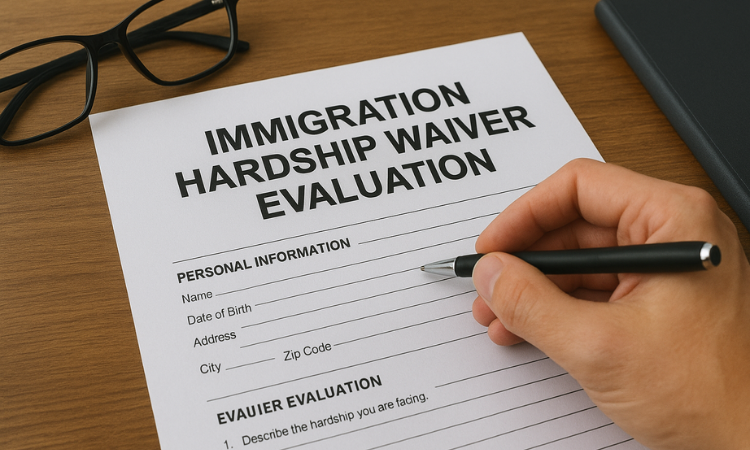
An immigration hardship waiver evaluation is a psychological or psychosocial assessment performed by a licensed mental health professional. The purpose is to document how deportation, removal, or separation from a family member would cause extreme hardship to a U.S. citizen or lawful permanent resident.

This evaluation is usually part of an application for:

  • I-601 Waiver (Application for Waiver of Grounds of Inadmissibility)
  • I-601A Waiver (Provisional Unlawful Presence Waiver)

Why Is This Evaluation Important?

USCIS does not grant waivers lightly. Applicants must prove that their U.S. citizen or permanent resident family member would suffer significant consequences if the waiver is denied.

An evaluation helps:

  • Provide objective, professional evidence of emotional, psychological, medical, financial, or cultural hardship.
  • Strengthen the legal argument prepared by your immigration attorney.
  • Increase the chances of approval by demonstrating the seriousness of the hardship.

What Does the Evaluation Include?

A professional immigration hardship waiver evaluation typically covers:

  1. Clinical Interview – Discussion of family background, immigration history, and current stressors.
  2. Psychological Testing (if needed) – To measure anxiety, depression, or trauma symptoms.
  3. Impact of Separation – How removal would affect mental health, family stability, and financial security.
  4. Medical Considerations – Existing health conditions worsened by separation.
  5. Cultural and Social Factors – Risks of relocating to another country (violence, lack of treatment, economic instability).
  6. Final Report – A detailed written evaluation submitted to USCIS as part of your application.

Who Needs an Immigration Hardship Waiver Evaluation?

You may need this evaluation if you or a loved one is:

  • Applying for a 601 or 601A waiver.
  • Facing possible deportation or removal.
  • Married to, or the parent of, a U.S. citizen or permanent resident.
  • Seeking to prove extreme emotional, medical, or financial hardship for a qualifying relative.

How to Prepare for Your Evaluation

  1. Gather Documents – Medical records, financial statements, school records, and any evidence of hardship.
  2. Be Honest – Share personal details openly; evaluations must be genuine.
  3. Work With Your Attorney – Coordinate with your immigration lawyer so the evaluation supports your legal argument.
  4. Choose an Experienced Provider – Not all clinicians are familiar with immigration standards; select one with a proven track record.

FAQs About Immigration Hardship Waiver Evaluations

Q: Who performs the evaluation?
A licensed mental health professional, such as a psychologist, clinical social worker, or counselor.

Q: How long does the process take?
Most evaluations require 1–2 clinical sessions, plus time for the written report (usually 1–2 weeks).

Q: Is the evaluation guaranteed to get my waiver approved?
No — but it significantly strengthens your case by providing objective, professional documentation of hardship.

Q: Can it be done virtually?
Yes. Many providers, including AACS Counseling, offer telehealth immigration hardship waiver evaluations.

Conclusion

An Immigration Hardship Waiver Evaluation can be the deciding factor in whether your waiver is approved. By documenting emotional, medical, financial, and cultural hardship, you give USCIS the evidence it needs to see the real-life impact of your case.

👉 Ready to begin your hardship waiver evaluation? Contact AACS Counseling today for professional, timely, and compassionate support.

Can You Choose Your Own SAP Provider? Rights Every Driver Should Know

After a DOT drug or alcohol violation, the Substance Abuse Professional (SAP) process is the only path back to safety-sensitive duties. But many drivers have one big question: Can you choose your own SAP provider? The answer is yes—with important conditions. This guide breaks down your rights, what DOT regulations allow, and how to make the best choice for your career.

Do DOT Regulations Allow You to Choose?

The Department of Transportation (DOT) does not assign you a SAP. Instead:

  • Employers must provide a list of qualified SAPs.
  • Drivers have the right to select from that list or find their own, provided the SAP meets DOT qualification requirements (per 49 CFR Part 40).
  • The choice is ultimately yours, as long as the provider is properly credentialed.

This ensures you aren’t locked into one option and can seek the provider that best suits your needs.

Why Your Choice Matters

Choosing your own SAP provider isn’t just about convenience. The right choice can affect:

  • Cost – Some SAP programs are far more affordable than others.
  • Speed – A responsive SAP can help you move through the Return-to-Duty process faster.
  • Location & Accessibility – Many providers now offer virtual SAP evaluations, saving travel time.
  • Experience with DOT cases – An experienced SAP knows exactly how to handle FMCSA, FAA, FRA, FTA, PHMSA, and USCG cases.

Rights Every Driver Should Know

  1. You are not required to use your employer’s preferred SAP.
  2. You can seek affordable or virtual SAP options as long as they meet DOT requirements.
  3. Employers cannot delay your process by restricting your choice of provider.
  4. You can switch SAP providers if your current one is unresponsive, but you must document the change properly.
  5. How to Verify a Qualified SAP
To make sure your chosen provider is compliant:
  • Confirm they meet DOT’s Subpart O qualification standards.
  • Check their credentials and licenses.
  • Ask if they report directly to the FMCSA Clearinghouse.
  • Request clear cost and timeline expectations upfront.

FAQ: Can You Choose Your Own SAP Provider?

Q1: Can I choose my own SAP provider after a DOT violation?

Yes, drivers have the right to choose their own SAP provider, as long as the provider is DOT-qualified under 49 CFR Part 40.

Q2: Can an employer force me to use a specific SAP provider?

No, employers cannot force you. They may give recommendations, but the final choice of SAP provider is yours.

Q3: How do I verify if a SAP provider is DOT-qualified?

You can check the provider’s credentials and verify their listing through the FMCSA Clearinghouse or ask for proof of DOT qualification.

Q4: Can I change my SAP provider after I’ve started the program?

Yes, you can switch providers, but it may delay your Return-to-Duty process, and you must inform your employer.

Q5: Are virtual SAP providers accepted by DOT and FMCSA?

Yes, virtual DOT SAP evaluations are accepted as long as the provider is DOT-qualified and follows compliance rules.

Final Thoughts

Yes, you can choose your own SAP provider—and it’s one of the most important decisions you’ll make in your Return-to-Duty journey. Always prioritize compliance, experience, and responsiveness when selecting a provider. By knowing your rights, you can protect your career and get back to work without unnecessary delays.

Fastest DOT SAP Evaluation: Can You Really Return to Duty Quickly?

After a DOT drug or alcohol violation, every commercial driver must complete a Substance Abuse Professional (SAP) evaluation before returning to safety-sensitive duties. Many drivers ask the same question: “What’s the fastest way to complete my DOT SAP evaluation and return to duty?”

While there are ways to speed up the process, it’s important to understand that DOT regulations—not the provider—set the timeline. In this blog, we’ll break down how fast a DOT SAP evaluation can be completed, what factors influence the timeline, and how to avoid delays.

Why the SAP Evaluation Matters

The SAP evaluation isn’t just paperwork—it’s a federally required process designed to protect public safety and help drivers succeed. During the evaluation, the SAP will:

  • Assess your substance use history
  • Recommend treatment or education if needed
  • Monitor your progress through follow-ups
  • Submit documentation to the FMCSA Clearinghouse

Skipping or rushing through this process can result in delays, non-compliance, and losing your CDL eligibility.

How Fast Can You Get a DOT SAP Evaluation?

  • Same-Day Appointments – Many providers (including telehealth SAPs) offer same-day or next-day evaluations.
  • Virtual Evaluations – Telehealth appointments allow drivers to connect quickly without travel delays.
  • Immediate Clearinghouse Updates – Once completed, the SAP updates your record in the FMCSA Clearinghouse, which speeds up employer verification.

👉 However, the treatment or education plan recommended by the SAP may take longer, depending on your situation.

What Determines the Speed of Your Return to Duty?

Several factors influence how quickly you can complete the DOT SAP process:

  1. Appointment Availability – Virtual SAPs often provide faster scheduling than in-person sessions.
  2. Driver Cooperation – Completing recommended education or treatment promptly helps avoid delays.
  3. Follow-Up Testing – Your employer must conduct a Return-to-Duty drug test after SAP clearance.
  4. Employer Readiness – Even if your SAP clears you, your employer must be ready to place you back in safety-sensitive duty.

Can You Really Return to Duty Quickly?

Yes—but only if you:

  • Choose a qualified DOT SAP provider with fast availability
  • Actively complete all recommended steps (education, treatment, testing)
  • Stay in communication with your SAP and employer
  • Avoid providers promising “shortcuts” (non-compliance risks your CDL and career)

Fast doesn’t mean skipping recovery—it means working efficiently within DOT rules.

Tips for the Fastest SAP Process

  1. Book a virtual SAP evaluation – No travel = faster results.
  2. Prepare your documents – Have CDL info, violation details, and employer contact ready.
  3. Follow recommendations promptly – The sooner you complete your program, the sooner your SAP clears you.
  4. Stay proactive – Don’t wait for reminders; stay ahead in your recovery plan.

Conclusion

The fastest DOT SAP evaluation is possible when you choose the right provider, act quickly on recommendations, and comply with every DOT regulation. While no provider can “skip steps,” you can absolutely return to duty quickly by working with a qualified, responsive SAP.

👉 At AACS Counseling, we provide same-day and virtual SAP evaluations nationwide—helping drivers get back on the road efficiently while meeting every compliance requirement.

Get a professional Immigration Hardship Waiver Evaluation | AACS

For many families, the immigration process can be overwhelming—especially when facing possible family separation or denied entry to the United States. In these situations, an immigration hardship waiver evaluation becomes essential. This professional report, prepared by a licensed psychologist, helps demonstrate to U.S. Citizenship and Immigration Services (USCIS) how a qualifying relative would suffer extreme hardship if a waiver is not approved.

At AACS Counseling, we provide thorough immigration hardship waiver evaluations that strengthen waiver applications, documenting the emotional toll, psychological distress, and financial hardship that families may face.

Hardship Evaluations for Immigration Services

An immigration evaluation—sometimes referred to as a psychological hardship assessment—is a detailed report created by a trained mental health professional. It provides evidence about the emotional well-being, mental health issues, and financial difficulties that would result if a loved one were removed from the country or forced to relocate.

Our immigration evaluation services are designed to support:

  • Extreme hardship waivers
  • Provisional unlawful presence waivers
  • Violence Against Women Act (VAWA) petitions
  • Political asylum applications
  • Cases involving domestic violence, human trafficking, or past trauma

Who Qualifies For An Extreme Hardship Waiver?

A hardship waiver is available to immigrants who can demonstrate that removal or denial of entry would create extreme hardship for a qualifying relative, such as:

  • U.S. citizen spouse
  • Lawful permanent resident spouse
  • Citizen or resident parent

To qualify, families must prove that separation or relocation would significantly affect the emotional well-being, mental health conditions, or financial stability of the relative. An experienced immigration attorney will determine eligibility for your immigration case and guide applicants through the process.

Psychological Evaluation For Extreme Hardship Waivers

A key part of the waiver application is the psychological evaluation. At AACS Counseling, our licensed psychologists conduct compassionate, in-depth interviews and assessments to evaluate:

  • Mental health conditions such as anxiety, depression, or PTSD
  • Psychological distress from possible family separation
  • The psychological impact of relocating to a native country where safety, resources, or healthcare may be limited
  • Effects of domestic abuse, physical abuse, or sexual assault

The result is a detailed report in legal language that your immigration lawyer can use as evidence to support your hardship petition.

What Factors Determine Extreme Hardship?

When reviewing waiver requests, USCIS looks at many extreme hardship factors, including:

  • Medical conditions requiring care in the U.S.
  • Limited access to treatment, education, or employment in the native country
  • Caregiving responsibilities for children, elders, or other family members
  • The emotional toll and psychological impact of family separation
  • The effect of financial hardship and loss of shared financial responsibilities
  • Exposure to civil unrest, criminal history, or unsafe living conditions abroad

These extreme hardship factors must be carefully documented in the hardship evaluation.

What Is An Extreme Hardship Letter, And What Should It Include?

Along with a professional evaluation, applicants often submit an extreme hardship letter. This personal statement explains, in detail, the challenges that the qualifying relative would face.

A strong letter typically includes:

  • Family dynamics and the role of the immigrant in the household
  • Financial obligations and financial difficulties if separated
  • Emotional being and psychological impact of removal
  • Evidence of caregiving responsibilities or dependence on the applicant

Your immigration attorney will help organize the hardship letter with the immigration evaluation services and psychological evaluation to create a powerful waiver petition.

What is Extreme or Exceptional Hardship?

“Extreme” or “exceptional hardship” goes beyond the usual difficulties that any family would face during relocation. It means that the impact is severe, lasting, and would constitute extreme hardship under immigration law.

Examples include:

  • A permanent resident spouse who cannot access proper medical care abroad
  • A citizen spouse whose emotional well-being would collapse due to separation
  • Children who would lose access to educational opportunities or face emotional distress
  • Families are forced to live in countries with civil unrest or a lack of healthcare

Examples of Extreme Hardship

Some real-life examples of extreme hardship include:

  • A mother with a serious medical condition who depends on her immigrant spouse for daily care
  • A child with mental wellness concerns who would lose stability and treatment if forced to relocate
  • A survivor of domestic violence applying under the Violence Against Women Act (VAWA) who faces danger if returned to their native country
  • Families suffering psychological distress and financial hardship due to lost shared financial responsibilities

What to Expect From a Hardship Assessment for Immigration?

When you schedule a hardship assessment at AACS Counseling, you can expect:

  1. Initial Consultation – We gather details about your immigration case and circumstances.
  2. Comprehensive Interviews – A licensed psychologist conducts one-on-one sessions to explore mental health, family dynamics, and the emotional toll.
  3. Mental Health Evaluation – We assess psychological impact, past trauma, and potential mental distress.
  4. Documentation of Financial Hardship – We evaluate how financial difficulties would affect your qualifying relative.
  5. Written Report – A thorough, evidence-based psychological evaluation ready for submission with your waiver.

How Much Does an Extreme Hardship Evaluation Cost?

The hardship evaluation cost depends on the complexity of the immigration case, the number of sessions required, and whether multiple family members need assessments. At AACS Counseling, we provide transparent pricing and flexible options, making sure professional support is accessible to those in need.

Investing in a proper immigration hardship evaluation can make the difference between an approved or denied waiver, as it provides your immigration attorney with the professional documentation needed to present a strong case.

Why Choose AACS Counseling for Immigration Hardship Evaluations?

  • Experienced Evaluator who understand both mental health and the immigration process
  • Reports tailored to meet immigration proceedings standards
  • Compassionate, trauma-informed care for sensitive cases involving domestic abuse, human trafficking, or past trauma
  • Affordable hardship evaluation cost and flexible scheduling
  • Close collaboration with your immigration lawyer to strengthen your petition

Start Your Evaluation Today

If you or a loved one is navigating the immigration process and may suffer extreme hardship due to separation or relocation, AACS Counseling is here to help. Our compassionate immigration hardship evaluations are designed to support your hardship waiver petition and provide your immigration attorney with the tools to fight for your qualifying relative’s future.

Contact AACS Counseling today to schedule your immigration hardship evaluation and begin building a stronger case for your family’s security.

Are Virtual DOT SAP Evaluations Legal Under FMCSA Rules?

When a commercial driver tests positive for drugs or alcohol, the Return-to-Duty process begins with a DOT SAP evaluation. Today, many drivers choose Virtual DOT SAP Evaluations, which are fully legal under FMCSA rules. In this blog, we’ll explain their legality, benefits, and how online assessments work.

But many drivers now ask: “Can I do my SAP evaluation virtually instead of in person? And is it legal under FMCSA rules?”

The short answer: Yes, virtual DOT SAP evaluations are legal and accepted—as long as they are conducted by a qualified DOT-approved SAP and follow all FMCSA guidelines. In this blog, we’ll explain the legality, benefits, and things drivers should know before choosing telehealth SAP services.

What the FMCSA Says About Virtual SAP Evaluations

The Federal Motor Carrier Safety Administration (FMCSA) allows DOT SAP evaluations to be conducted via telehealth/virtual platforms.

  • Virtual evaluations must be performed by a qualified SAP listed in the DOT guidelines.
  • The process must include the same assessment standards as in-person evaluations.
  • All reports and recommendations are documented in the FMCSA Clearinghouse just like in traditional evaluations.

👉 In other words, the method (in-person vs. virtual) doesn’t change the legal requirements. What matters is compliance and accuracy.

Benefits of Choosing Virtual SAP Evaluations

  1. Faster Scheduling – No travel; same-day appointments often available.
  2. Nationwide Access – You aren’t limited to local providers.
  3. Convenience – Conduct your evaluation from home, work, or even on the road.
  4. DOT Compliance – Virtual evaluations carry the same legal weight as in-person ones.
  5. Lower Costs – Save on travel expenses and time off work.

Are Virtual Evaluations Always Accepted?

Yes—employers, DOT, and FMCSA all accept virtual SAP evaluations as long as:

⚠️ Warning: Some unqualified providers claim to offer “quick SAP clearance” online. If your SAP is not DOT-approved, your evaluation will be rejected, delaying your Return-to-Duty process.

Step-by-Step: How a Virtual SAP Evaluation Works

  1. Book an appointment online with a DOT-approved SAP.
  2. Meet via secure telehealth video session (phone-only calls are not valid).
  3. Complete the assessment about your history, violation, and recovery needs.
  4. Receive a treatment/education recommendation.
  5. Finish required steps (classes, treatment, or counseling).
  6. SAP follow-up evaluation & clearance entered into FMCSA Clearinghouse.
  7. Employer Return-to-Duty drug test before resuming driving.

Conclusion

Virtual DOT SAP evaluations are 100% legal under FMCSA rules and offer a faster, more convenient way for CDL drivers to start the Return-to-Duty process. The key is choosing a qualified SAP provider who understands DOT regulations and ensures every step is compliant.

👉 At AACS Counseling, we offer nationwide virtual SAP evaluations that meet FMCSA standards—helping drivers return to duty safely, quickly, and legally.

Call Now