DOT SAP Program Archives - Page 25 of 32 - AACS Counseling

Restorative and Accountability Court Programs: A Second Chance Starts with Us

The justice system is evolving—and restorative and accountability court programs are at the heart of that transformation. These alternative justice pathways aim not only to reduce incarceration but also to heal communities, restore individuals, and prevent repeat offenses.

At AACS Counseling, we specialize in providing court-approved counseling and support services that meet the needs of restorative and accountability court participants. Whether you’ve been referred by a judge, a probation officer, or are taking proactive steps to get your life back on track—we’re here to help.

✅ What Are Restorative and Accountability Court Programs?

These programs are rehabilitative justice alternatives designed for individuals facing criminal charges—often involving substance abuse, mental health issues, or first-time offenses. Instead of jail time, participants are given the opportunity to undergo counseling, community service, restitution, and structured treatment.

The goal? To restore relationships, promote healing, and prevent future involvement with the justice system.

🔍 Why Courts Choose AACS Counseling

At AACS Counseling, we provide a comprehensive suite of services designed to meet court requirements across the U.S.:

Our certified professionals ensure every participant receives a personalized plan that is both therapeutic and compliant with legal mandates.

🧠 Real Change Starts with the Right Support

Unlike traditional sentencing, restorative court programs focus on helping individuals understand the impact of their actions, repair harm, and make amends. Our evidence-based programs are designed to:

  • Reduce recidivism

  • Support mental and emotional wellness

  • Promote personal accountability

  • Rebuild trust with families and communities

🌎 Nationwide Access – In-Person & Virtual Services

Whether you’re in Georgia or anywhere in the U.S., our services are available both in-person and via secure telehealth platforms, giving you the flexibility to complete your program on your schedule while staying in full compliance.

📞 Take the First Step – Contact Us Today

If you’ve been ordered or advised to complete a restorative or accountability court program, don’t wait. Our team at AACS Counseling is ready to guide you every step of the way with confidential, compassionate, and compliant care.

👉 Call Us Today: 800-683-7745
🌐 Visit Our Website to book your evaluation or learn more about our court-approved programs.

AI-Powered Treatment: The Role of Artificial Intelligence in SAP Evaluation and Recovery Planning

The landscape of substance use disorder (SUD) treatment is changing—artificial intelligence (AI) is leading that change. As the demand for faster, more accurate, and personalized care increases in DOT SAP evaluations and recovery programs, AI is emerging as a powerful tool to improve outcomes, streamline planning, and support long-term sobriety.

🤖 What Is AI’s Role in SAP and SUD Treatment?

Artificial Intelligence in SAP treatment planning involves using machine learning algorithms to analyze large volumes of behavioral, medical, and historical data. These systems can identify patterns, predict outcomes, and suggest tailored treatment pathways—faster and more precisely than traditional methods.

💡 Key Benefits of AI in SAP Evaluations and Treatment Planning

✅ 1. Precision in Personalized Care

AI can analyze a person’s drug test history, behavioral health records, and demographic data to suggest a highly tailored treatment plan. This leads to better engagement and improved success rates in recovery.

✅ 2. Real-Time Decision Support for SAPs

DOT-qualified SAPs can use AI tools to assess risk levels and recommend intervention strategies—speeding up the evaluation process without compromising clinical integrity.

✅ 3. Outcome Prediction Models

AI helps forecast which individuals are likely to relapse or respond poorly to certain treatments. This allows for early intervention and more focused support throughout the RTD process.

✅ 4. Streamlining the RTD Process

By automating administrative tasks and identifying optimal treatment durations, AI can reduce delays in the Return-to-Duty (RTD) process, helping CDL drivers get back on the road safely and sooner.

🛠️ Real-World Applications in DOT SAP Programs

  • Automated Treatment Matching: AI platforms match individuals with the most effective SAP programs based on thousands of case histories.

  • Virtual Coaching & Monitoring: Some AI tools offer real-time check-ins or reminders for follow-up testing and therapy sessions.

  • Compliance Tracking: AI assists SAPs in documenting and tracking compliance metrics to meet DOT regulatory standards.

🚧 Addressing Concerns

While AI adds incredible value, it’s important to note that human oversight remains essential. These tools assist but do not replace licensed professionals. SAPs still hold the responsibility for making final evaluations and ensuring DOT compliance.

📞 Need a Smart Path Back to Duty?

At AACS Counseling, we use modern tools—including AI-supported systems—to provide fast, effective, and confidential SAP evaluations that follow DOT guidelines.

👉 Call Now or Visit:
📞 800-683-7745
🌐 DOT SAP Program
🌐 SAP Evaluation

Telehealth Expansion in SAP Evaluations: A Game-Changer for Compliance and Accessibility

In the evolving landscape of Department of Transportation (DOT) regulations, the adoption of telehealth in SAP (Substance Abuse Professional) evaluations has emerged as a transformative solution. What was once a time-consuming and geographically limited process is now more efficient, cost-effective, and widely accessible.

🚀 What is Telehealth SAP Evaluation?

A telehealth SAP evaluation is a virtual meeting between an individual who violated DOT drug and alcohol regulations and a DOT-qualified SAP. Traditionally, these assessments were conducted in person and could take up to 3–4 hours. Now, with secure video conferencing platforms, SAPs can conduct these evaluations online—typically in 60 to 90 minutes, depending on the case.

📈 How Telehealth is Transforming the SAP Process

✅ 1. Increased Completion Rates

Since the expansion of telehealth, completion rates of SAP evaluations have increased by 25%. This is primarily due to the elimination of logistical barriers like travel time, scheduling conflicts, and availability of nearby SAPs.

✅ 2. Improved Adherence to Follow-Up Testing

Participants are also more likely to follow through with post-evaluation requirements. Reports show a 40% improvement in follow-up testing compliance, which is a critical component of the Return-to-Duty (RTD) process.

✅ 3. Nationwide Access

Telehealth removes geographical restrictions. Drivers and employees in remote or underserved areas can now access DOT-qualified SAPs across all 50 states without having to travel long distances.

✅ 4. Faster Return to Duty

The quicker the evaluation and compliance steps are completed, the sooner the employee can return to their safety-sensitive duties. Telehealth greatly accelerates this timeline, benefiting both employees and employers.

💼 Who Can Benefit?

  • Commercial drivers (CDL holders) needing RTD clearance

  • Employers managing DOT compliance

  • SAP professionals looking to expand services and reach more clients

  • Third-party administrators (TPAs) facilitating the RTD process

🔐 Is It Secure?

Yes. Telehealth platforms used for SAP evaluations must comply with HIPAA and DOT confidentiality standards. The evaluations remain confidential and follow all federally mandated protocols.

📞 Get Help Today with AACS Counseling

At AACS Counseling, we provide same-day SAP evaluations via secure telehealth platforms. Our goal is to make the RTD process as fast, confidential, and stress-free as possible.

👉 Call us now or visit our website:
📞 Office: 800-683-7745
🌐 DOT SAP Program
🌐 SAP Evaluation

🎓 Mastering Compliance: Upcoming SAP Qualification & Requalification Training – July 2025

In an era of evolving Department of Transportation (DOT) regulations and digital adaptation, staying current as a Substance Abuse Professional (SAP Evaluation) is not optional—it’s a professional imperative. With the DOT reinforcing its expectations for SAPs to remain compliant and informed, the Employee Assistance Professionals Association (EAPA) has stepped forward once again to deliver live-facilitated SAP Qualification and Requalification training this July.

📅 Training Schedule & Format

🗓 Dates: July 8, 10, 15, and 17, 2025
🕛 Time: 12 PM to 4 PM Eastern Time
📍 Format: Live, Virtual (Zoom or Equivalent)

Whether you’re qualifying for the first time or requalifying to maintain your active SAP status, these sessions are designed to offer interactive, regulatory-compliant instruction—all from the convenience of your own workspace.

🚛 Why This Training Matters Now More Than Ever

The role of SAPs in the DOT Return-to-Duty (RTD) process has expanded significantly in recent years, especially as telehealth becomes more widespread and documentation standards become more rigorous.

This training is vital for:

  • New SAPs seeking to meet federal standards under 49 CFR Part 40

  • Seasoned professionals due for their 3-year requalification

  • EAP counselors, addiction specialists, and therapists working with DOT-regulated employees

Failing to requalify on time can result in removal from DOT SAP registries, limiting your ability to legally evaluate and support safety-sensitive employees.

📘 What You’ll Learn

This four-day course dives deep into:

  • DOT regulations & procedural updates (Post-2023 revisions)

  • Best practices for conducting remote SAP evaluations

  • Navigating complex RTD scenarios and compliance errors

  • Creating legally defensible SAP reports and documentation

  • New ethical considerations in telehealth assessments

You’ll walk away with not just a certificate—but real-world strategies and legal clarity you can use immediately.

🧩 Additional Perks

✅ Real-time Q&A with DOT experts
✅ Access to SAP case templates & evaluation tools
✅ Certificate of Completion to meet DOT audit requirements
✅ Networking with fellow SAP professionals across the U.S.

🔗 How to Register

If you’re looking to advance your SAP career, meet DOT requalification deadlines, or transition to a remote SAP practice, this training is your launchpad.

📞 Call: 800-683-7745
🌐 Register via: AACS Counseling – DOT SAP Program
🌐 Or visit: SAP Evaluation Services

Will an Out-of-State DUI Show on Your Home State Record? Interstate Laws Explained

Introduction

If you’ve been charged with driving under the influence (DUI) in another state, you may be wondering: Will an out-of-state DUI show on your home state record? The answer can impact your driving privileges, insurance rates, and legal status. This guide explains interstate DUI reporting rules, how state DMVs handle these offenses, and what you need to know about DMV DUI reporting across the United States.

Understanding Out-of-State DUIs

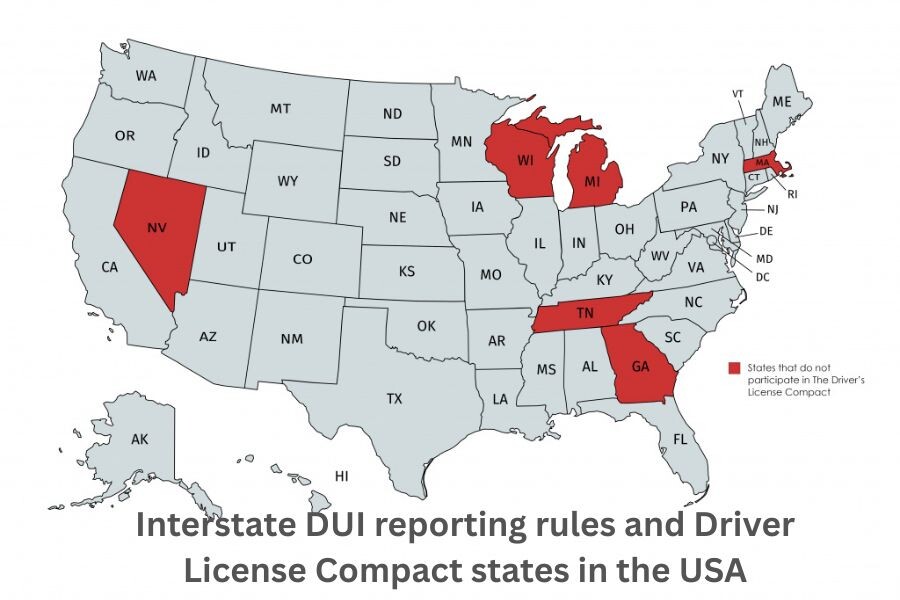
An out-of-state DUI occurs when you’re arrested for drunk driving in a state where you do not hold a driver’s license. Most states are part of the Driver License Compact (DLC) or the Non-Resident Violator Compact (NRVC) — agreements designed to share DUI offenses between states.

Interstate DUI reporting rules and Driver License Compact states in the USA

Will an Out-of-State DUI Show on Your Record?

In most cases, yes — an out-of-state DUI will show on your home state driving record. Here’s why:

  1. DMV DUI Reporting Systems Are Connected:
    States report serious violations such as DUIs to each other under federal agreements.

  2. The Driver License Compact (DLC):
    This compact ensures that a DUI committed in one member state is treated as if it happened in your home state.

  3. Non-Compact States:
    Only a few states (like Michigan, Wisconsin) are not part of the DLC — but they may still share DUI data voluntarily.

  4. Insurance Impact:
    Your car insurance company will likely find out about the DUI even if it happened out of state, affecting your premiums.

How DMV DUI Reporting Works Across States

  • Immediate Notification: Arrest and conviction details are sent to your home state’s DMV.

  • License Suspension: Your state may suspend your license based on another state’s action.

  • Reinstatement Requirements: You may need to complete DUI education programs, mental health assessments, or substance abuse evaluations.

✔ For court-ordered evaluations, visit our Out-of-State DUI Assessment Services page.

What Happens If You Ignore an Out-of-State DUI?

Ignoring or failing to address an out-of-state DUI charge can result in:

  • License Suspension in Your Home State

  • Bench Warrants Issued Across States

  • Additional Fines and Penalties

Consequences of ignoring out-of-state DUI charges for your DMV record

Interstate DUI Reporting Rules You Must Know

Rule Impact on Driver
Driver License Compact (DLC) Ensures all member states share DUI records.
National Driver Register (NDR) Tracks problem drivers nationwide, including DUIs.
Non-Resident Violator Compact (NRVC) Requires compliance with out-of-state traffic violations.

Q1: Will an out-of-state DUI always affect my license at home?
Yes, if your home state is part of the DLC or NRVC, the offense will be recorded and can lead to suspension.

Q2: Can I get a new license in another state to avoid a DUI record?
No — interstate databases like the NDR prevent drivers from bypassing DUI records by moving.

Q3: Will my insurance go up because of an out-of-state DUI?
Most likely — insurance companies check national driving records and can adjust rates accordingly.

Conclusion

So, will an out-of-state DUI show on your home state record? Almost always — thanks to interstate agreements and DMV DUI reporting rules. If you’re facing this situation, consult with a DUI attorney and complete any required evaluations or programs promptly.

Need an Out-of-State DUI Assessment? Contact our team today for fast, court-approved evaluations: Out-of-State DUI Assessment Services.


References:

Updated SAP Guidelines Emphasizing Remote Evaluations: What You Need to Know in 2025

In a significant step toward modernizing drug and alcohol testing compliance, the Department of Transportation (DOT), through its Office of Drug and Alcohol Policy and Compliance (ODAPC), released updated guidelines in June 2023 to address the growing demand for remote SAP evaluations.

These updates are designed to improve efficiency, uphold public safety, and reflect current telehealth advancements—particularly for DOT-regulated employees returning to duty after a drug or alcohol violation.

📌 Key Highlights of the Updated DOT SAP Guidelines

1️⃣ Remote Assessments Are Now Standardized

DOT has expanded provisions allowing virtual SAP evaluations under specific compliance conditions. Now, employees can undergo their initial and follow-up assessments via secure video conferencing platforms—without compromising the integrity of the Return-to-Duty (RTD) process.

This development is especially beneficial for:

  • CDL drivers in rural areas

  • Employees with limited access to in-person providers

  • Companies needing faster turnaround for workforce reinstatement

2️⃣ Personalized Return-to-Duty Plans

The updated guidelines now require SAPs to customize each return-to-duty process based on the individual’s history, job role, and level of substance misuse. This means no more one-size-fits-all protocols—each employee receives a tailored treatment and testing plan, ensuring more effective rehabilitation.

3️⃣ Enhanced Documentation Requirements

SAPs are now expected to provide more thorough and standardized reports, particularly for remote assessments. This includes:

  • Verified identity checks

  • HIPAA-compliant video session logs

  • Clear records of treatment completion

  • Follow-up testing schedules with justification

This move ensures greater accountability and documentation transparency, helping employers and the DOT track compliance more reliably.

🚛 Why These Changes Matter for DOT-Regulated Employees

Whether you’re a commercial truck driver, a railroad operator, or an FAA-regulated pilot, these changes give you faster, more flexible access to DOT-qualified SAP professionals—without sacrificing compliance.

For employers, these updates help reduce downtime, maintain workplace safety, and improve the overall management of DOT drug and alcohol violations.

✅ Get Help Navigating the Updated SAP Rules

At AACS Counseling, we offer fully compliant virtual SAP evaluations, designed to meet the latest DOT and ODAPC standards. Our certified SAPs are trained in both the 2023 guidelines and the latest telehealth procedures to help you or your employee return to work quickly and legally.

📞 Call Now: 800-683-7745
🌐 DOT SAP Program
🌐 SAP Evaluations Nationwide

Common Reasons for DOT Violations (Beyond Just Drugs)

The moment you learn you have a DOT violation, a sense of panic can set in. Your mind races with questions about your career, your license, and what comes next. While many people associate these violations with illegal drug use, the reality is more complex. A violation can happen for reasons you might not expect, from a prescribed medication to an inability to provide a sample.

Understanding what constitutes a violation is the first step toward resolving it. This guide will clarify some of the most common but often misunderstood reasons for a DOT violation. We will explore what a “refusal to test” really means, discuss the issue of failing a DOT drug test for prescription meds, and explain the specific rules around a “shy bladder” scenario. Knowing these details can help demystify your situation and prepare you for the required next steps.

It’s Not Just About a Positive Test

The Department of Transportation (DOT) has strict regulations to ensure public safety. A violation is any event that goes against these rules, and not all violations involve a lab report showing a prohibited substance. Many drivers are surprised to find themselves facing the same consequences as a positive test for entirely different reasons. This can include alcohol use, which also leads to a mandatory return-to-duty process through a SAP program for alcohol violations.

Let’s break down three key areas that often lead to confusion and violations.

1. Refusal to Test: An Automatic Failure

One of the most critical rules to understand is that a refusal to test is treated exactly the same as a positive test. You cannot avoid a violation by simply not participating. The refusal to test DOT consequences are identical to failing a test: immediate removal from all safety-sensitive duties and the requirement to complete the full Return-to-Duty (RTD) process with a Substance Abuse Professional (SAP).

What exactly counts as a refusal? It’s more than just saying “no.” According to DOT regulations, a refusal can include:

  • Failing to appear for a drug or alcohol test within a reasonable time after being directed to do so.
  • Leaving the collection site before the testing process is complete.
  • Failing to provide a sufficient sample (urine, breath, or saliva) without a valid medical explanation.
  • Tampering with or attempting to adulterate the specimen.
  • Not cooperating with the testing process in any way that prevents the completion of the test.

Receiving a violation for a refusal can be frustrating, especially if it felt unintentional. However, the rules are strict. If a collector documents any of these behaviors, it triggers the start of the RTD process.

2. Failing a DOT Drug Test for Prescription Meds

A common point of anxiety for drivers is the use of legally prescribed medications. Can a legitimate prescription cause you to fail a drug test? The answer is yes, it can, but it’s a situation with specific protocols.

Here’s how it works: after you provide a urine sample, it is sent to a lab for screening. If the initial screen is positive for a substance, it undergoes a confirmation test. If that is also positive, the result is sent to a Medical Review Officer (MRO), who is a licensed physician.

The MRO will contact you directly to determine if there is a legitimate medical explanation for the positive result. This is your opportunity to provide proof of a valid prescription.

When a Prescription Becomes a Violation

Even with a valid prescription, you can still receive a violation. This happens if the MRO determines that the medication you are taking could impair your ability to perform safety-sensitive duties safely. For example, some painkillers, anxiety medications, or sleep aids have side effects like drowsiness or delayed reaction times that are incompatible with operating a commercial vehicle.

If the MRO reports the result to your employer as a “safety concern,” your employer may be required to remove you from duty. This situation underscores the importance of discussing any and all medications with your prescribing doctor and the MRO. Always be transparent during the verification process. Failing a DOT drug test for prescription meds often comes down to whether the medication itself poses a public safety risk, regardless of its legality.

3. The “Shy Bladder” Rule and Its Consequences

One of the most stressful scenarios at a collection site is being unable to provide a sufficient urine sample. This is commonly known as having a “shy bladder.” The DOT has a specific procedure for this situation to ensure it is handled fairly.

If you are unable to provide at least 45 mL of urine on your first attempt, the collector will instruct you to drink up to 40 ounces of fluid, distributed over a period of up to three hours. You must remain at the collection site during this time.

If you are still unable to provide a sufficient sample after three hours, the process stops. The collector will document the event as an “insufficient sample.” This is not immediately classified as a refusal. Instead, it triggers a mandatory medical evaluation.

The Required Medical Evaluation

You will have five business days to see a licensed physician to determine if there is a medical reason for your inability to provide a sample.

  • If a medical reason is found: The physician will provide a written report, and the test will be canceled. Your employer may decide to send you for another test.
  • If no medical reason is found: The physician will report this, and the event will be officially declared a refusal to test. The consequences are immediate, and you will be required to start the SAP process.

This rule highlights why you should never leave a collection site early, even out of frustration. Following the shy bladder protocol is your only protection against an automatic refusal.

What to Do After Any Violation

Whether your violation is from a positive test, a refusal, or an alcohol-related incident like a SAP program for alcohol violations, the path forward is the same. The DOT requires you to successfully complete the RTD process with a qualified SAP. This process involves an initial evaluation, a prescribed education or treatment plan, a follow-up evaluation, and a series of follow-up drug tests after you return to work.

Facing a DOT violation is a serious challenge, but it does not have to be the end of your career. By understanding the rules and taking the required steps seriously, you can navigate the process and work toward getting back behind the wheel safely and legally.

Will I Lose My CDL License After Failing a DOT Drug Test?

Failing a DOT drug test can be one of the most frightening moments in a commercial driver’s career. The fear of losing your Commercial Driver’s License (CDL), your job, and your future livelihood is overwhelming—but it’s not the end of the road.

🚫 What Happens Immediately After a Failed DOT Drug Test?

Once you fail a DOT drug or alcohol test:

  • You’re immediately removed from all safety-sensitive duties.

  • Your status in the FMCSA Clearinghouse is updated to “Prohibited”.

  • Your employer must not allow you to operate a commercial vehicle until you complete the Return-to-Duty (RTD) process.

⚠️ Will You Lose Your CDL License?

Not immediately. But you will lose driving privileges associated with your CDL until:

  1. You complete a Substance Abuse Professional (SAP) Evaluation.

  2. You follow through with the recommended treatment or education plan.

  3. You pass a Return-to-Duty drug test.

  4. Your Clearinghouse status is updated to “Not Prohibited.”

If you ignore the SAP process, your CDL may be downgraded or revoked in accordance with FMCSA’s 2024 Clearinghouse II rules.

How to Prevent Permanent Loss of Your CDL

To protect your CDL and career:

  • Contact a DOT-qualified SAP immediately.

  • Enroll in a SAP evaluation and complete all recommendations.

  • Track your Clearinghouse status regularly.

  • Pass the Return-to-Duty test and follow-up testing to stay compliant.

Delaying action can cause serious long-term consequences including license suspension and unemployment.

🛠️ We’re Here to Help You Get Back on the Road

At AACS Counseling and SAP Evaluation Nationwide, we specialize in confidential, same-day SAP evaluations to help you regain your CDL status legally and quickly.dot-qualified-sap-program/


📞 Need Help Today?

Expansion of Telehealth SAP Evaluations: A Game-Changer for DOT Compliance

In recent years, the Department of Transportation (DOT) has taken a progressive step forward by officially embracing telehealth SAP evaluations for employees who have violated DOT drug and alcohol testing regulations. This shift toward virtual SAP assessments has not only improved accessibility but has also made the entire Return-to-Duty (RTD) process more efficient, affordable, and stress-free.

💻 What Are Telehealth SAP Evaluations?

A telehealth SAP evaluation is a virtual assessment conducted by a DOT-qualified Substance Abuse Professional (SAP) using secure video conferencing platforms. This evaluation fulfills the same requirements as an in-person session under 49 CFR Part 40—but from the comfort and convenience of your home or office.

🚀 Key Benefits of Telehealth SAP Evaluations

⏱️ 1. Shorter Duration

Traditional in-person SAP evaluations often took 3 to 4 hours due to travel time, clinic wait times, and extended interviews. With telehealth, the process is now streamlined into 60–90 minutes, saving both time and energy.

💸 2. Cost Savings

By eliminating the need for travel, lodging, or time off work, virtual SAP services offer significant cost reductions. Many providers now offer competitive pricing with no compromise on DOT compliance.

🌍 3. Nationwide Access

Perhaps the most impactful benefit is the nationwide availability. Whether you’re in a major city or a rural area, you can now access a certified SAP professional in all 50 states—without location being a barrier.

🧑‍⚕️ Why the DOT Supports Telehealth

According to trusted sources like DrugEval.com and ASAP Professionals, the DOT’s move to endorse virtual SAP evaluations is part of a larger effort to:

  • Modernize the Return-to-Duty process

  • Expand access to regulated employees across industries

  • Maintain regulatory compliance while offering flexibility

This initiative aligns with post-pandemic workplace trends where remote healthcare solutions are now a proven, practical standard.

✅ Is a Telehealth SAP Evaluation Right for You?

If you’ve tested positive on a DOT drug or alcohol test or refused testing, you’re legally required to complete a SAP evaluation to return to work. A telehealth SAP evaluation offers:

  • Same-day or next-day scheduling

  • 100% DOT-compliant services

  • Quick turnaround for Return-to-Duty clearance

📞 Get Started Today with a Virtual SAP Evaluation

AACS Counseling offers fast, confidential, and compliant telehealth SAP evaluations nationwide.

📞 Call Now: 800-683-7745
🌐 DOT Qualified SAP Program
🌐 SAP Evaluations Nationwide

Whether you’re a CDL driver, aviation worker, or public transit employee, we’re here to help you take the next right step—quickly, safely, and affordably.

Finding a Qualified SAP: The FMCSA Clearinghouse

When you are facing a DOT drug or alcohol violation, the pressure to get back on the road is intense. Your livelihood depends on your commercial driver’s license (CDL), and the Return-to-Duty (RTD) process is the only way to reclaim it. Since 2020, the Federal Motor Carrier Safety Administration (FMCSA) Clearinghouse has become the central hub for this entire journey. It is no longer just about finding someone who says they can help; it is about finding a verifyied, qualified substance abuse professional who is recognized by the federal government.

Navigating this digital system can be confusing, but getting it wrong has serious consequences. This guide explains why the FMCSA Clearinghouse is critical to your return, the dangers of choosing the wrong provider, and the exact steps for designating an SAP in FMCSA clearinghouse.

Why the FMCSA Clearinghouse Matters

Before the Clearinghouse existed, tracking violations and the completion of RTD programs was a fragmented process. Now, everything is centralized. The Clearinghouse is a secure online database that gives employers, the FMCSA, state driver licensing agencies, and law enforcement real-time information about commercial driver’s license (CDL) and commercial learner’s permit (CLP) holders’ drug and alcohol program violations.

For you, this means one thing: if your RTD progress isn’t recorded in the Clearinghouse, it didn’t happen. You cannot simply complete a program and hand a paper certificate to your employer. Your SAP must have the authority to log into the portal and officially update your status. If you choose a provider who isn’t registered or qualified to access this system, you will be stuck in limbo, unable to drive legally.

The Risks of Using an “Unqualified” SAP

Searching for an “SAP near me for DOT” will yield hundreds of results, but not all of them are safe bets. The term “SAP” is a specific Department of Transportation qualification, not just a general job title for a counselor.

To be a qualified SAP, a provider must meet strict credentials (such as being a licensed physician, social worker, or psychologist), undergo specific DOT training, pass an exam, and complete continuing education. Furthermore, they must be registered in the FMCSA Clearinghouse.

If you mistakenly work with an unqualified or unregistered SAP:

  • Wasted Money: You will pay for an evaluation that the DOT will not accept.
  • Wasted Time: You will have to restart the entire process with a legitimate provider.
  • Career Roadblocks: Your violation status in the Clearinghouse will remain “Prohibited” until a qualified SAP enters the correct data.

This is why verifying your SAP’s credentials inside the Clearinghouse portal before you pay a dime is essential.

How to Designate an SAP in the FMCSA Clearinghouse

You cannot start your evaluation until you have officially designated your SAP in the Clearinghouse. This action gives the SAP permission to enter information about your case. Without this designation, even the best SAP cannot help you moving forward.

Here is a step-by-step mini-guide to help you navigate the portal and select your provider.

Step 1: Log In or Register

Go to the FMCSA Clearinghouse website. If you haven’t registered yet, you will need to create a driver account. Ensure you have your CDL information handy.

Step 2: Locate the Dashboard status

Once logged in, your dashboard will display your current status. If you have a violation, you should see a status indicating you are “Prohibited from performing safety-sensitive functions.”

Step 3: Find the Designation Section

Look for the section titled “Return-to-Duty Process.” There will be an option to “Designate Substance Abuse Professional.”

Step 4: Search for Your SAP

You will need to search for the specific SAP you intend to use. You can usually search by their name or location.

  • Tip: Ask your SAP exactly how their name appears in the system to ensure you pick the right person.

Step 5: Send the Request

Once you find the correct profile, select them and send the designation request.

Step 6: Wait for Acceptance

The process isn’t complete until the SAP accepts your request. They will receive a notification and must log in to confirm they are taking your case. Once they accept, the status in your dashboard will update, and you can proceed with your initial evaluation.

What Happens After Designation?

After designating an SAP in FMCSA clearinghouse and having them accept the request, the real work begins. Your SAP will conduct the initial evaluation and enter the date of that assessment into the Clearinghouse.

Once you finish your education or treatment program, the SAP will conduct a follow-up evaluation. If they determine you have successfully complied with their recommendations, they will enter a “determination of eligibility” into the Clearinghouse. This critical step changes your status and informs your employer that you are eligible to take the Return-to-Duty test.

Choosing the Right Partner for Your Career

Your choice of SAP is one of the most important decisions you will make during this process. A qualified substance abuse professional does more than just evaluate you; they guide you through a federal process that safeguards your career.

Don’t rush the decision. When you search for an “SAP near me for DOT,” take the extra time to verify their standing in the Clearinghouse. Ask them directly if they are registered and familiar with the portal’s requirements.

The road back to duty can feel long, but with the right guide and a clear understanding of the digital tools involved, you can navigate it successfully. By following the proper steps in the Clearinghouse, you ensure that every bit of effort you put into your rehabilitation counts toward getting you back behind the wheel.

Call Now