
DOT SAP Program Archives - Page 5 of 28 - AACS Counseling

The National Standard for Court-Ordered Mental Health Assessments in 2026

Legal proceedings are stressful enough without the added confusion of finding the right evaluator. When a judge orders a mental health evaluation, the stakes are incredibly high. Your freedom, your custody rights, or your professional license may hang in the balance.

In 2026, the landscape of forensic psychology has shifted dramatically. The days of driving across state lines to find a qualified specialist are largely behind us. Virtual forensic evaluations have become the new national standard, offering a lifeline to defendants and legal professionals who need speed, accuracy, and rigorous adherence to clinical guidelines.

This guide breaks down exactly what constitutes a valid mental health assessment for court in today’s legal environment. We will explore how telehealth meets strict interstate standards and what you need to know to ensure your evaluation holds up under cross-examination.

The Evolution of Court-Ordered Assessments

The legal system moves slowly, but necessity breeds innovation. Prior to recent years, courts were often skeptical of anything that didn’t happen face-to-face in a clinical office. However, the widespread adoption of secure telehealth technologies has forced a re-evaluation of these old norms.

Today, virtual assessments are not just “accepted”—they are often preferred for their efficiency and accessibility. But acceptance comes with caveats. Courts now demand a higher level of standardization to ensure that a virtual assessment is just as rigorous as an in-person one.

For a mental health assessment for court to be valid in 2026, it must adhere to two primary clinical frameworks: the DSM-5-TR and the ASAM Criteria.

The Role of DSM-5-TR

The Diagnostic and Statistical Manual of Mental Disorders, Fifth Edition, Text Revision (DSM-5-TR) remains the gold standard for diagnosis in the United States. Whether you are in New York or Nevada, a diagnosis of Major Depressive Disorder or Post-Traumatic Stress Disorder must meet the specific criteria outlined in this manual.

In a forensic setting, “close enough” doesn’t cut it. Your evaluator must document exactly which criteria you meet and providing evidence for each. Virtual evaluations allow clinicians to use digital screening tools that integrate directly with DSM-5-TR coding, reducing human error and increasing the defensibility of the diagnosis in court.

The Importance of ASAM Criteria

While the DSM-5-TR handles diagnosis, the American Society of Addiction Medicine (ASAM) Criteria handles placement. This is critical for cases involving substance use, DUI charges, or drug courts.

Courts want to know: “What level of care does this person need?”

  • Do they need inpatient detox?
  • Do they need intensive outpatient therapy?
  • Is standard outpatient counseling sufficient?

A valid court-ordered assessment must map the diagnosis to a specific ASAM Level of Care. This standardization is what allows an assessment performed by a specialist in Texas to be interpreted clearly by a judge in Florida. The language of ASAM is universal across state lines.

Virtual Forensic Evaluations: Meeting Interstate Legal Standards

One of the most common questions defendants ask is: “Can I use an evaluator from another state?”

The answer in 2026 is largely yes, provided specific conditions are met. This is a game-changer for those living in rural areas or those seeking a specific type of forensic expert not available locally.

The Psychology Interjurisdictional Compact (PSYPACT)

The biggest driver of this change is PSYPACT. This interstate compact allows licensed psychologists to practice telepsychology across state lines in participating states. As of 2026, the vast majority of US states have enacted PSYPACT legislation.

This means a psychologist licensed in a PSYPACT state can legally perform a mental health assessment for court for a client in another PSYPACT state without obtaining a separate license. This drastically widens your pool of potential evaluators, allowing you to choose based on expertise rather than just geography.

Ensuring Out-of-State Validity

Even with PSYPACT, you must ensure the court accepts the report. Here is the checklist for out-of-state validity:

  1. Licensure Verification: Ensure the evaluator is licensed in their home state and authorized to practice in yours via compacts like PSYPACT or specific telehealth waivers.
  2. Forensic Specialization: Not all therapists are forensic evaluators. A clinical therapist focuses on treatment; a forensic evaluator focuses on objective assessment for legal questions. Courts prefer the latter.
  3. State-Specific Mandates: Some states have specific forms or mandatory reporting structures (e.g., specific DUI assessment forms). A competent virtual evaluator will research these specific local requirements before accepting your case.

HIPAA-Compliant Telehealth for Courts

Privacy is paramount in legal cases. When you undergo a virtual assessment, you are discussing sensitive details about your history, criminal charges, and mental health.

Courts require that this data be handled with the highest level of security. Standard video calling apps like FaceTime or standard Skype are generally not acceptable for forensic evaluations because they are not HIPAA-compliant.

What Does HIPAA Compliance Look Like?

A professional forensic practice will use encrypted platforms designed specifically for healthcare.

  • End-to-End Encryption: This ensures that no third party can intercept the video feed or audio.
  • Secure Client Portals: Documents like police reports, medical history, and the final evaluation report should be transferred via a secure portal, not standard email.
  • Identity Verification: The evaluator must verify your identity at the start of the session, usually by viewing a government-issued ID on camera. This prevents fraud and assures the court that the person being evaluated is indeed the defendant.

If an evaluator suggests using a non-secure platform, consider it a red flag. It could jeopardize the admissibility of your assessment in court.

The Process: What to Expect in a Virtual Assessment

Understanding the process can reduce anxiety. Here is a typical workflow for a court-ordered evaluation in 2026.

1. The Intake and Record Review

Before you even speak to the doctor, they need context. You or your attorney will upload relevant documents to a secure portal. This usually includes:

  • The court order specifying what is being assessed.
  • Police reports or arrest records.
  • Prior medical or mental health records.
  • Collateral information (letters from employers, family, etc.).

2. The Clinical Interview

This is the core of the mental health assessment for court. It usually takes place via a secure video link. The evaluator will ask about:

  • Psychosocial History: Your upbringing, education, and relationships.
  • Medical and Mental Health History: Past diagnoses, hospitalizations, and medications.
  • Substance Use History: Detailed patterns of drug or alcohol use.
  • The Legal Incident: Your perspective on the events that led to the court case (evaluators are trained to ask this in a way that respects your legal rights, but be sure to consult your attorney on what you should discuss).

3. Psychometric Testing

This is what separates a forensic evaluation from a simple therapy session. You may be asked to complete standardized psychological tests online. These tests have validity scales to detect if a person is “faking good” (minimizing problems) or “faking bad” (exaggerating problems).

These objective scores provide data to back up the evaluator’s clinical opinion, making the report much harder for a prosecutor to dismantle.

Turnaround Times for Legal Documentation

In the legal world, deadlines are rigid. A missed deadline can result in a continuance, extra legal fees, or even a bench warrant.

Traditional in-person evaluations often have waitlists of 3 to 6 months. Virtual forensic practices have revolutionized this timeline. Because they can utilize a network of evaluators across multiple time zones, turnaround times have shrunk significantly.

Standard Turnaround in 2026:

  • Appointment Availability: Usually within 3 to 5 business days.
  • Report Generation: Typically 5 to 10 business days after the final interview and testing are complete.
  • Expedited Services: Many specialized firms offer 24-to-48-hour rush services for emergency hearings.

When hiring an evaluator, get the turnaround time in writing. Ensure they understand your court date and the deadline for filing evidence, which is often several days before the actual hearing.

Addressing Common “People Also Asked” Questions

To ensure you have a comprehensive understanding, let’s address some frequent queries regarding court-ordered assessments.

Does a judge have to approve a virtual assessment?

In most jurisdictions, you do not need special pre-approval for the method of the assessment (virtual vs. in-person) as long as the evaluator is qualified. However, if the court order specifically names a local provider, your attorney may need to file a motion to allow you to use an outside expert via telehealth. Most judges grant these motions readily to prevent delays.

Can a mental health assessment help my case?

Absolutely. A well-written report humanizes you. It shifts the narrative from “criminal defendant” to “individual with treatable needs.” It can provide the judge with a rationale for leniency, such as recommending diversion programs or probation with treatment conditions instead of incarceration.

What if I disagree with the assessment results?

A forensic evaluation is an objective opinion, not a negotiation. However, if you believe there are factual errors, point them out immediately so they can be corrected. If you disagree with the clinical conclusion, your attorney can hire a second expert to review the data or conduct a separate evaluation.

Conclusion: Securing Your Future with the Right Evaluation

The landscape of the mental health assessment for court has evolved to prioritize access, speed, and clinical rigor. In 2026, you are no longer limited by the experts in your immediate zip code. You have the right to seek out the best forensic talent available to support your case, ensuring that your evaluation is conducted with the highest adherence to DSM-5-TR and ASAM standards.

If you are facing a legal challenge, do not leave this critical component to chance. Work with your legal counsel to select a forensic evaluator who understands the nuances of virtual testimony and interstate practice. A professional, authoritative report is one of the most powerful tools you can bring into the courtroom.

Next Steps

  1. Consult Your Attorney: Confirm the specific requirements of your court order.
  2. Verify Credentials: Ensure any virtual evaluator is licensed to practice in your jurisdiction (often via PSYPACT).
  3. Prepare Your Records: Gather all medical and legal documents early to speed up the process.
  4. Book Early: Even with faster virtual timelines, secure your slot well before your court filing deadline.

What Questions are on a Mental Health Assessment?

Embarking on a mental health journey often begins with an assessment. This initial step helps mental health professionals understand your unique situation and tailor the best possible support. For many in the United States, the idea of a mental health assessment can feel daunting. You might wonder what to expect, what kind of questions will be asked, and how to prepare.

At AACS Counseling, we believe in transparency and empowering individuals with knowledge. This guide will demystify the mental health assessment process, outlining the common questions and categories you might encounter.

The Purpose of Mental Health Assessments

Mental health assessments are comprehensive evaluations designed to gather detailed information about an individual’s emotional, psychological, and social well-being. They are not tests to pass or fail, but rather a conversation to build a complete picture of your mental health.

Understanding Your Current State

The primary goal is to understand your current symptoms, challenges, and concerns. This includes identifying specific mental health conditions, such as depression, anxiety, PTSD, or bipolar disorder. Professionals look for patterns and severity.

Guiding Treatment Plans

The information collected during an assessment is crucial for developing an effective and personalized treatment plan. It helps determine the most appropriate therapeutic approaches, whether that involves individual therapy, group counseling, medication management, or other interventions.

Monitoring Progress

Assessments also establish a baseline against which future progress can be measured. By revisiting certain questions over time, both you and your counselor can track changes and adjust treatment as needed to ensure optimal outcomes.

Common Categories of Questions in a Mental Health Assessment

Mental health professionals typically follow a structured approach to ensure all vital areas are covered. While the exact questions may vary, they generally fall into several key categories.

Demographics and Background Information

This initial set of questions helps create a profile and understand your life context.

  • What is your full name, age, and preferred pronouns?
  • What is your current living situation?
  • What is your educational background and employment status?
  • What is your relationship status and family composition?

Presenting Concerns and Symptoms

This is where you’ll discuss why you are seeking help now. Counselors want to understand the nature and impact of your current challenges.

  • What brings you in today?
  • When did these problems start, and how long have they been occurring?
  • How do these symptoms affect your daily life, work, or relationships?
  • What have you tried so far to address these issues?
  • Have you experienced changes in sleep, appetite, or energy levels?

Psychiatric History

Your past experiences with mental health are important indicators for future treatment. This helps professionals understand any patterns or previous interventions.

  • Have you had mental health concerns in the past?
  • Have you previously received mental health treatment (therapy, medication, hospitalization)?
  • What were the diagnoses, if any, and what was the outcome of previous treatments?

Medical and Family History

Physical health and family genetics can play a significant role in mental well-being.

  • Do you have any current medical conditions or chronic illnesses?
  • What medications are you currently taking, including over-the-counter drugs and supplements?
  • Is there a family history of mental illness, substance abuse, or neurological conditions?
  • When was your last physical examination?

Social and Environmental Factors

Your environment and social connections greatly influence mental health. Questions in this area explore your support systems and daily stressors.

  • What is your social support system like (friends, family, community)?
  • Do you feel safe in your home and community?
  • Are you experiencing significant stressors such as financial difficulties, relationship conflicts, or work-related issues?
  • What are your hobbies and interests? How do you typically cope with stress?

Substance Use and Addiction

Understanding any substance use is critical as it can often co-occur with or exacerbate mental health conditions.

  • Do you use alcohol, tobacco, or recreational drugs? If so, how often and how much?
  • Have you ever felt concerned about your substance use or tried to cut back?
  • Has substance use impacted your relationships, work, or health?

Safety and Risk Assessment

This is a crucial part of any mental health assessment to ensure immediate safety and prevent harm. These questions are asked directly and without judgment.

  • Have you had thoughts of harming yourself or ending your life? If so, do you have a plan or intent?
  • Have you engaged in self-harming behaviors?
  • Have you had thoughts of harming others?
  • Have you experienced trauma, abuse, or neglect?

Strengths and Coping Mechanisms

An assessment isn’t just about problems; it’s also about identifying your strengths and resources. This helps build resilience and inform treatment strategies.

  • What are your personal strengths and positive qualities?
  • What brings you joy or a sense of purpose?
  • How have you successfully coped with challenges in the past?
  • What are your goals for therapy and for your mental health?

Standardized Screening Tools You Might Encounter

In addition to conversational questions, mental health professionals often use standardized screening tools. These questionnaires provide objective measures and help track symptoms over time. At AACS Counseling, we utilize various evidence-based tools to ensure accurate and effective care.

PHQ-9 (Patient Health Questionnaire-9) for Depression

This widely used self-report questionnaire consists of nine questions that screen for the presence and severity of depressive symptoms over the past two weeks. It helps identify potential depression and monitors treatment response.

GAD-7 (Generalized Anxiety Disorder 7-item scale) for Anxiety

Similar to the PHQ-9, the GAD-7 is a brief, seven-item scale used to screen for and assess the severity of generalized anxiety disorder. It helps quantify anxiety levels and track changes.

ASQ (Ask Suicide-Screening Questions) for Suicide Risk

The ASQ is a brief screening tool designed to identify youth and adults at risk for suicide. It’s often integrated into broader assessments, especially in clinical settings, to ensure safety.

DSM-5-TR (Diagnostic and Statistical Manual of Mental Disorders, Fifth Edition, Text Revision) Measures

Mental health professionals in the US rely on the DSM-5-TR for diagnostic criteria. While not a questionnaire for patients, clinicians use its guidelines to inform their questions and evaluate symptoms against established diagnostic standards. This ensures a consistent and accurate diagnostic process.

What to Expect During Your Assessment

Most initial mental health assessments last between 60 to 90 minutes. You will meet with a licensed mental health professional, such as a therapist, counselor, psychologist, or psychiatrist. The environment is designed to be confidential, supportive, and non-judgmental. It’s a two-way street; you’re also assessing whether the professional and the practice feel like a good fit for you.

Preparing for Your Mental Health Assessment with AACS Counseling

There’s no need to prepare extensively, but a few simple steps can help you make the most of your assessment.

  • Be Honest: The more open and honest you are, the more effectively your counselor can help you.
  • Jot Down Notes: If you find it helpful, make a list of your main concerns, symptoms, or any questions you have beforehand.
  • Bring a List of Medications: Include any prescriptions, over-the-counter drugs, and supplements.
  • Ask Questions: Don’t hesitate to ask your counselor about their approach, what to expect from therapy, or any concerns you might have.

At AACS Counseling, we prioritize creating a safe and welcoming space for all our clients. We understand that taking the first step can be challenging, and we are here to guide you through the process with compassion and expertise.

Frequently Asked Questions About Mental Health Assessments

What is the difference between a mental health assessment and a diagnosis?

A mental health assessment is the comprehensive process of gathering information about your mental health. A diagnosis is the specific identification of a mental health condition (e.g., Major Depressive Disorder, Generalized Anxiety Disorder) based on the criteria gathered during the assessment, often using tools like the DSM-5-TR.

How long does a typical mental health assessment take?

Initial mental health assessments in the US typically last between 60 to 90 minutes. Follow-up sessions are usually shorter, around 45-60 minutes, focusing on ongoing therapy and progress.

Will my mental health assessment be confidential?

Yes, absolutely. Mental health professionals are bound by strict confidentiality laws (such as HIPAA in the US). Information shared in an assessment is private, with limited exceptions such as immediate risk of harm to yourself or others, or mandated reporting of child/elder abuse.

Do I need to bring anything to my first appointment?

It’s helpful to bring a list of any current medications you are taking (including dosages), any relevant medical history, and a list of questions or concerns you might have. However, nothing is strictly “required” beyond yourself.

Can a mental health assessment be done online?

Yes, many mental health assessments can be conducted effectively via telehealth platforms. This allows for convenient access to care from the comfort of your home, provided you have a private and stable internet connection. AACS Counseling offers secure online counseling options.

What if I don’t know how to answer some of the questions?

It’s perfectly normal not to have all the answers. Your counselor is there to help you explore your thoughts and feelings. You can always say “I don’t know,” or “I haven’t thought about that before.” The assessment is a collaborative process, not a test.

Conclusion

A mental health assessment is a powerful first step toward understanding yourself better and achieving mental well-being. By exploring various aspects of your life and experiences, a mental health professional can create a clear path forward for your healing journey. At AACS Counseling, our dedicated team is committed to providing thorough, compassionate, and personalized care to support you every step of the way. Reaching out is a sign of strength, and we are here to listen.


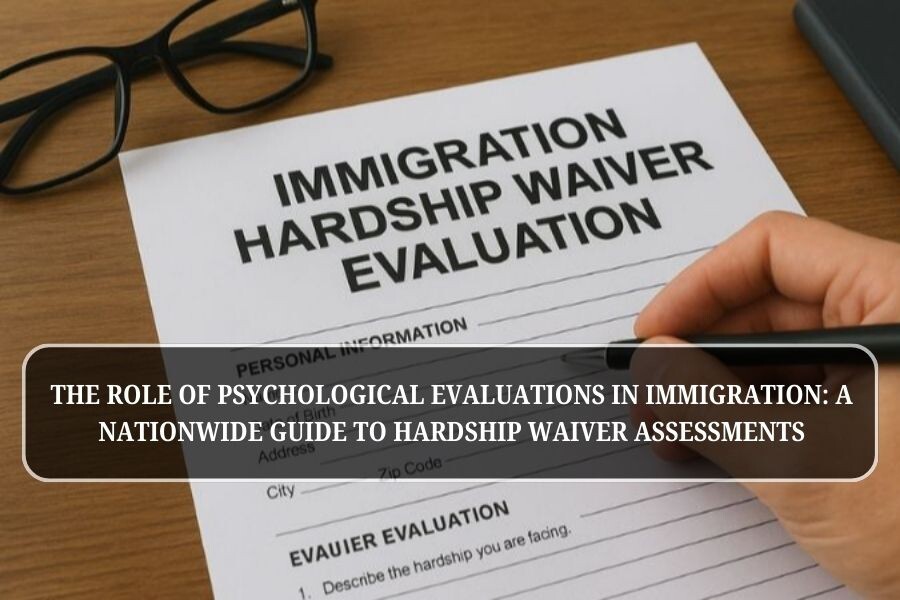
The Role of Psychological Evaluations in Immigration: A Nationwide Guide to Hardship Waiver Assessments

Navigating the United States immigration system is one of the most stressful experiences a family can face. When the success of your case depends on proving “Extreme Hardship,” a standard letter is rarely enough. In 2026, the Immigration Hardship Waiver Assessment has become a critical piece of evidence for USCIS officers deciding the fate of I-601 and I-601A waivers.

At AACS Counseling, we specialize in providing board-certified, forensic-level psychological evaluations for immigration cases in all 50 states.

What is an “Extreme Hardship” Assessment?

An Immigration Hardship Waiver Assessment is an in-depth clinical evaluation that documents the mental, emotional, and psychological impact that a deportation or separation would have on a “qualifying relative” (usually a U.S. citizen or permanent resident).

Because immigration law is Federal, our assessments are valid in any jurisdiction, from the USCIS field offices in New York to the immigration courts in Los Angeles.

Why Professionals Choose Nationwide Virtual Evaluations

In 2026, the trend in immigration law is Digital Advocacy. Secure telehealth allows you to work with specialists who specifically understand immigration law, rather than a local generalist who may not know USCIS requirements.

  • Specialized Expertise: We understand the nuances of the I-601, I-601A, VAWA, and U-Visa forms.

  • Multilingual Support: We provide culturally sensitive evaluations that respect the background of the applicant.

  • Fast Turnaround: Immigration deadlines are strict. Our virtual workflow allows us to deliver comprehensive reports in a fraction of the time of traditional clinics.

People Also Asked: 2026 Immigration FAQ

  • “Can a therapist in Georgia evaluate me if I live in Texas?” Yes. Immigration is a federal matter. Our clinical reports meet the national standards required by the Department of Homeland Security (DHS) and USCIS.

  • “How does the evaluation prove ‘Extreme Hardship’?” We look at factors such as chronic mental health conditions, the impact on children, financial dependencies, and the safety of the country of origin. We translate these human experiences into the clinical language that immigration officers look for.

  • “Is a virtual assessment as strong as an in-person one?” In 2026, the answer is a resounding yes. USCIS routinely accepts evaluations conducted via HIPAA-compliant video conferencing, recognizing it as a valid and professional medium for forensic interviews.

Specialized Evaluations We Provide

  1. I-601 and I-601A Waivers: Documenting the extreme hardship of a spouse or parent.

  2. VAWA (Violence Against Women Act) Assessments: Helping victims of domestic abuse document their trauma.

  3. U-Visa and T-Visa Applications: For victims of crimes or human trafficking who have suffered mental or physical abuse.

  4. Asylum Claims: Documenting PTSD and the psychological impact of persecution.

A Partner for Your Immigration Attorney

We don’t just work for you; we work with your legal team. Our clinicians are trained to produce reports that supplement the legal arguments made by your attorney, providing a professional medical and psychological foundation for your case.

Take the Next Step in Your Immigration Journey

Your future in the United States is too important to leave to chance. Ensure your “Extreme Hardship” is documented with the clinical precision it deserves.

Book Your Nationwide Immigration Assessment Today, Call AACS Counseling at 800-683-7745 for a confidential consultation.

What Is a Family Violence Intervention Program (FVIP)? A Complete US Guide

Family Violence Intervention Programs (FVIPs) play a crucial role in addressing domestic violence across the United States. These programs aim to hold offenders accountable while prioritizing the safety and well-being of victims. Understanding what FVIPs entail, their structure, and their effectiveness is vital for communities, legal professionals, and individuals seeking assistance.

In many cases, FVIPs are mandated by courts as an alternative to incarceration for individuals charged with domestic battery or related offenses. They are designed to educate participants about the dynamics of abuse, promote non-violent behavior, and foster positive change within relationships.

AACS Counseling is committed to providing comprehensive information and resources on such critical programs. We believe that informed communities are better equipped to tackle the complex issue of family violence effectively.

What Are FVIPs and Who Are They For?

A Family Violence Intervention Program (FVIP) is a structured educational and therapeutic program for individuals who have perpetrated family violence. These programs are often referred to as Batterer Intervention Programs (BIPPs).

The core objective of an FVIP is to stop abusive behavior, ensure victim safety, and promote offender accountability. Participants learn to recognize abusive patterns, understand the impact of their actions, and develop non-violent communication and coping strategies.

Typically, courts mandate participation in an FVIP following a domestic violence conviction or as part of a diversion agreement. However, some individuals may seek these programs voluntarily.

Adult vs. Juvenile Programs

FVIPs cater to both adult and juvenile populations, recognizing that family violence can manifest across all age groups.

Adult Programs

These are the most common FVIPs, targeting individuals charged with domestic battery, assault, or other family violence offenses. They focus on re-educating adults about power and control dynamics, challenging abusive beliefs, and teaching anger management and conflict resolution skills.

Juvenile Programs

Increasingly, states are implementing specific FVIPs for young offenders. For example, in Palm Beach County, Florida, and recognized by NACo, diversion programs target juveniles aged approximately 9-18 charged with domestic battery or assault. These youth FVIPs aim to intervene early and prevent future violence.

Juvenile programs often involve voluntary participation, mediation, case plans, and supervision. They may include services like counseling, substance abuse support, telemental health, and even home or school visits as needed.

How FVIPs Work: Structure and Requirements

FVIPs generally follow a structured curriculum designed to dismantle beliefs that perpetuate violence. Programs emphasize that abuse is a choice, not a loss of control, and hold participants responsible for their actions.

Most programs operate in a group setting, facilitating peer interaction and accountability. Participants engage in discussions, exercises, and role-playing to practice new behaviors. The curriculum covers topics such as:

  • Understanding the cycle of violence
  • Identifying power and control tactics
  • Developing healthy communication skills
  • Managing anger and stress constructively
  • Recognizing the impact of abuse on victims and children
  • Promoting gender equality and respect

Court-ordered FVIPs often require strict attendance and compliance. Failure to complete the program can result in further legal consequences, including incarceration.

State Variations (e.g., Georgia 24 Weeks)

The structure and duration of FVIPs vary significantly by state. These differences reflect local laws, available resources, and philosophical approaches to intervention.

For instance, in Georgia, certified Family Violence Intervention Programs are typically 24 weeks long. They are court-mandated under O.C.G.A. 19-13-16 and certified by the Department of Community Supervision.

Other states may have different requirements. Many batterer intervention programs follow a 52-week model. It is essential for individuals to understand the specific mandates in their state or jurisdiction. AACS Counseling can help guide you to appropriate resources for understanding your local requirements.

Effectiveness and Recidivism Data

The effectiveness of FVIPs and BIPPs in reducing domestic violence recidivism is a subject of ongoing research and evaluation. While no program guarantees a complete cessation of violence, studies indicate positive outcomes for program completers.

A study by the Texas Council on Family Violence, which analyzed 1,667 participants, found that 78% of FVIP completers avoided rearrest, compared to 69.5% of non-completers. Specifically for family violence rearrests, completers showed significantly lower rates:

GroupRearrest Rate (1-year)Rearrest Rate (3-year)
FVIP Completers1.1%2.9%
FVIP Non-CompletersHigher than completersHigher than completers

The Duluth Model, a widely recognized framework for batterer intervention, also demonstrates positive impacts. Evaluations of Duluth Model programs showed 47% lowest further assaults for court-mandated participants, compared to 59% for those receiving usual police intervention. Furthermore, 60% of victims reported feeling safer, and 69% experienced no recent physical abuse at a 1-year follow-up after the abuser’s program attendance.

These statistics highlight the potential of FVIPs as a critical tool in breaking the cycle of violence and supporting victims.

Costs, Certification, and Access

Participating in an FVIP involves various considerations, including costs, program certification, and accessibility.

Costs

Program fees vary by state and provider. In Georgia, for instance, FVIP classes typically average $25-30 per session, with a maximum of $60. Many programs offer a sliding scale fee structure for indigent participants to ensure accessibility, reflecting a commitment to helping individuals regardless of their financial situation.

Certification

FVIPs must be certified by a state-appointed authority to ensure they meet specific standards and curriculum requirements. In Georgia, the Department of Community Supervision handles this certification. Other states have similar certifying bodies. Certification ensures that programs are evidence-based and prioritize victim safety and offender accountability.

Access

Access to FVIPs can be a challenge, particularly for individuals in low-income or rural areas. Programs aim to offer services through various modalities, including in-person and increasingly, telemental health options. Common services included within a typical FVIP are:

  • Individual and group counseling
  • Case management and personalized case plans
  • Regular supervision and progress monitoring
  • Referrals for substance abuse support
  • Life skills development and education
  • Mediation services (especially in juvenile diversion programs)

AACS Counseling understands the importance of accessible and certified programs. We strive to provide information that helps individuals find appropriate FVIPs that meet their needs and legal requirements.

Victim Safety and Best Practices

At the heart of every effective Family Violence Intervention Program is a steadfast commitment to victim safety. These programs are not just about changing offender behavior; they are about protecting those who have been harmed.

Best practices for FVIPs include:

  • Victim-Centered Approach: Programs must prioritize the physical and emotional safety of victims above all else. This includes ensuring victims are not blamed for the abuse.
  • Offender Accountability: FVIPs teach participants to take full responsibility for their actions, challenging justifications and excuses for violence.
  • Coordinated Community Response: Effective programs integrate with victim advocacy services, law enforcement, courts, and child protective services. This ensures a consistent, comprehensive approach to domestic violence.
  • Regular Evaluation: Ongoing evaluation of program effectiveness, including feedback from victims, is crucial for continuous improvement. The Duluth Model, for example, heavily emphasizes this aspect.

When an abuser attends a program, victims often report feeling safer. This sense of security is a direct outcome of the program’s focus on accountability and the broader community’s coordinated efforts.

State-by-State Directory (Overview)

As discussed, the landscape of Family Violence Intervention Programs varies significantly across the United States. There is no single federal standard for FVIPs, meaning each state develops its own laws, requirements, and certification processes. This decentralized approach can make navigation challenging for individuals seeking specific information.

For example, while Georgia mandates a 24-week program, other states may require 52 weeks of participation. Costs, curriculum specifics, and certifying bodies also differ widely. For precise, state-specific details, individuals should consult their local court system or state domestic violence coalition.

State (Example)Typical Program LengthEstimated Session CostCertifying Body (Example)
Georgia24 weeks$25-60 (sliding scale)Dept. of Community Supervision
TexasVariable (often 18-36 weeks or 52 hours)VariableTexas Council on Family Violence (TCFV) provides standards and resources, programs are often certified at local level
FloridaVariable (often 26-52 weeks)VariableFlorida Certification Board (for some programs), or local court-approved

When searching for a program, use terms like “batterer intervention programs near me” or “court mandated DV classes [your state]” to find local, certified options. AACS Counseling recommends verifying the certification status of any program you consider, as this ensures compliance with state standards and a commitment to effective intervention.

FAQs and Next Steps

What is a Family Violence Intervention Program (FVIP)?

An FVIP is a structured program designed to educate individuals who have perpetrated family violence, helping them understand abusive behaviors, develop non-violent coping mechanisms, and take accountability for their actions. It aims to prevent future violence and ensure victim safety.

How long is a court-mandated FVIP in Georgia?

In Georgia, court-mandated FVIPs typically require 24 weeks of participation. These programs are certified by the Department of Community Supervision and adhere to specific state guidelines.

Are FVIPs only for adults or also for juveniles?

FVIPs exist for both adults and juveniles. While adult programs are common for convicted offenders, juvenile diversion programs target young people aged 9-18 charged with domestic battery, offering early intervention and support services.

What happens if you complete a batterer intervention program?

Successful completion of a court-mandated program often results in the fulfillment of legal obligations, potentially leading to reduced sentences, probation completion, or the dismissal of charges. More importantly, completers show significantly lower rates of recidivism and an improved understanding of healthy relationship dynamics.

How much do FVIP classes cost?

Costs for FVIP classes vary by state and provider. In Georgia, sessions may range from $25 to $60, often with a sliding scale available for those with limited financial means. It’s best to inquire directly with certified programs in your area for exact fees.

Can FVIPs reduce domestic violence recidivism?

Yes, research indicates that FVIPs can significantly reduce domestic violence recidivism. Studies, like the one from the Texas Council on Family Violence, show that program completers have lower rates of rearrest for family violence compared to those who do not complete the program.

What is the difference between FVIP and anger management classes?

While anger management may be a component of an FVIP, the programs are distinct. FVIPs address the broader dynamics of power and control in abusive relationships, recognizing that domestic violence is often a pattern of chosen behaviors, not just a result of uncontrolled anger. Anger management, by itself, is generally insufficient to address the complexities of family violence.

If you or someone you know needs to understand more about Family Violence Intervention Programs, or requires support related to domestic violence, AACS Counseling is here to help. Our resources and guidance can connect you with appropriate programs and support services in your community, fostering a path toward safety and accountability.

How Long Does a US Immigration Hardship Waiver (I-601A) Take in 2026?

Navigating the United States immigration system can feel like a complex journey, especially when facing issues like unlawful presence. The I-601A Provisional Unlawful Presence Waiver offers a path forward for many, allowing individuals to seek a waiver while still in the U.S. However, a common question for applicants is: “How long will this process actually take?”

Understanding the current processing times for the I-601A Immigration Hardship waiver in 2026 is crucial for planning your future. These timelines can fluctuate significantly due to various factors, including USCIS workload, the complexity of your case, and how thoroughly your application is prepared. At AACS Counseling, we understand the anxiety that comes with these wait times and aim to provide clear, up-to-date information to help you manage expectations.

Current I-601A Processing Times in 2026

The processing times for Form I-601A, Application for Provisional Unlawful Presence Waiver, are subject to change and can vary. As of early 2026, applicants are experiencing varied waits, with some estimates extending beyond two years.

USCIS Data & Average Wait Times

Official USCIS data, as analyzed by various immigration law firms, provides insight into the current landscape. While individual cases differ, average and median processing times give a general idea of what to expect.

  • As of January 2026, the average processing time for an I-601A waiver is approximately 28.5 months.
  • For fiscal year 2025 (FY2025), the median processing time was around 32 months.
  • Approximately 80% of I-601A cases were completed within 37 months, according to recent legal analysis. Other reports indicate that 80% of cases in early 2024 took up to 43.5 months.

It is important to remember that these are averages. Simpler cases with strong evidence might be processed more quickly, sometimes within 8-14 months, while more complex applications often take longer.

Historical Trends: A Look Back

Understanding past trends can help contextualize current wait times. The I-601A processing times have seen notable fluctuations over recent fiscal years:

Fiscal Year (FY)Median I-601A Processing Time (Months)
FY202011.2 months
FY202117.1 months
FY202231.7 months
FY202343.0 months
FY202441.2 months

These historical figures demonstrate a general increase in processing times, reflecting growing backlogs and demand. This trend underscores the importance of submitting a complete and robust application from the outset.

I-601A vs. I-601 Waiver: Key Differences

Many applicants confuse the I-601A Provisional Waiver with the traditional I-601 Waiver. While both address inadmissibility, their application processes and specific purposes differ significantly.

The I-601A Provisional Unlawful Presence Waiver is specifically for individuals in the U.S. who are inadmissible solely due to unlawful presence. It allows them to apply for the waiver before leaving the U.S. for their consular interview. This aims to minimize the time spent abroad and the risk of being denied re-entry.

The I-601 Application for Waiver of Grounds of Inadmissibility is broader. It covers various grounds of inadmissibility, including unlawful presence, but also criminal offenses, fraud, and misrepresentation. This waiver is typically filed *after* a consular interview abroad, or in some cases, with USCIS for adjustment of status. Its median processing time is generally shorter, around 20.5 months according to DHS data, but it requires the applicant to be outside the U.S. for a potentially indefinite period.

Factors Affecting Your I-601A Timeline

Several variables can influence how long your I-601A waiver takes. Understanding these factors can help you prepare a stronger application and potentially reduce delays.

  • USCIS Workload and Backlogs: The volume of applications USCIS receives directly impacts processing times. High application volumes often lead to increased backlogs and longer waits.
  • Case Complexity: Straightforward cases with clear evidence of extreme hardship tend to be processed faster. Cases involving complex legal issues, extensive criminal history, or difficult-to-prove hardship often require more scrutiny and time.
  • Completeness and Accuracy of Application: A fully completed application with all required documentation is essential. Missing information or errors will almost certainly cause delays.
  • Geographic Location: While I-601A waivers are processed centrally, the USCIS service center’s specific workload can indirectly affect overall timeliness. Regions with higher immigration populations, like California, Texas, and Florida, often experience more significant backlogs.

Common Delays to Watch For

Despite careful preparation, certain issues can still extend your processing time:

  • Requests for Evidence (RFEs): If USCIS believes your application lacks sufficient evidence or clarity, they will issue an RFE. This pauses your case until you provide the requested information.
  • Administrative Processing: Some cases may undergo additional administrative review for various reasons, adding unforeseen delays.
  • Consular Processing Delays:Even after I-601A approval, delays can occur during the subsequent consular interview process abroad, depending on the embassy’s specific workload and procedures.
  • Changes in Immigration Policy: New policies or changes to existing regulations can sometimes impact processing priorities and timelines.

Strategies for Responding to RFEs (Request for Evidence)

Receiving an RFE can be disheartening, but it’s not a denial. It’s an opportunity to strengthen your case. Prompt and thorough responses are key.

When you receive an RFE, carefully read every detail. Understand exactly what additional information or documentation USCIS requires. Do not guess or assume. Gather all requested evidence, ensuring it is well-organized, clearly labeled, and directly addresses the points raised in the RFE. Sometimes, the RFE asks for clarification or specific details about your extreme hardship claim or supporting documents. At AACS Counseling, we advise clients to respond comprehensively and within the given deadline, typically 30 to 87 days. Missing this deadline could lead to denial.

Step-by-Step I-601A Provisional Waiver Process

The I-601A provisional waiver process involves several distinct stages, each requiring careful attention

  1. File Form I-130 / I-140: The first step is to have a U.S. citizen or Legal Permanent Resident (LPR) relative file a qualifying immigrant petition on your behalf.
  2. I-130 Approval and Visa Availability: Once the I-130 (or I-140) is approved, you must wait for your visa category to become current according to the Visa Bulletin.
  3. File Form I-601A: Only after your visa is available and you’ve paid the immigrant visa processing fee to the National Visa Center (NVC) can you file Form I-601A with USCIS. This is submitted while you are still in the U.S.
  4. Biometrics Appointment: USCIS will schedule a biometrics appointment to collect fingerprints, photos, and signatures.
  5. USCIS Decision: USCIS processes the I-601A application. This is the stage where the prolonged wait times occur.

Eligibility Checklist

To be eligible for an I-601A provisional waiver, you generally must meet the following criteria:

  • Be at least 17 years old at the time of filing.
  • Be physically present in the United States.
  • Be the beneficiary of an approved immediate relative (spouse, parent, or unmarried child under 21 of a U.S. citizen) or family preference (certain relatives of U.S. citizens or LPRs) petition.
  • Have an immigrant visa case pending with the Department of State (DOS) based on the approved petition.
  • Be inadmissible only on account of unlawful presence (more than 180 days but less than 1 year, or 1 year or more).
  • Demonstrate that your U.S. citizen or LPR spouse or parent would suffer “extreme hardship” if you were denied admission to the U.S.
  • Not be subject to any other grounds of inadmissibility.

What Happens After I-601A Approval?

An I-601A approval is a significant milestone, but it’s not the final step. Here’s what typically follows:

  • Consular Interview Scheduling: After approval, the NVC will schedule your immigrant visa interview at a U.S. Embassy or Consulate abroad. The time for scheduling can vary by country, from a few weeks to several months.
  • Travel Abroad: You will then travel to your home country for the immigrant visa interview. The provisional waiver protects you from the unlawful presence bar upon your return.
  • Visa Issuance: If the consular officer approves your visa, it will be issued, and you can return to the U.S. as a Lawful Permanent Resident.
  • Green Card: Upon entry to the U.S. with your immigrant visa, your Green Card will be mailed to you.

The entire process, from I-601A approval to receiving your Green Card, can take several more months. Working with an experienced immigration attorney and a compassionate support team like AACS Counseling can make this intricate journey more manageable.

Preparing Compelling Evidence

Gathering comprehensive evidence is paramount for a successful extreme hardship claim. Here’s a list of document examples:

  1. Medical Documentation: Doctor’s letters, diagnoses, treatment plans, prescriptions, and therapist notes for the qualifying relative (or applicant, if relevant to relative’s hardship).
  2. Financial Records: Bank statements, tax returns, employment letters, mortgage/rent agreements, utility bills, and evidence of debts (e.g., student loans, credit card statements) for the qualifying relative.
  3. Psychological Evaluations: Assessments from licensed mental health professionals detailing the emotional and psychological impact of separation on the qualifying relative.
  4. Educational Records: School enrollment, transcripts, or specialized educational needs of children, if applicable, showing disruption if the qualifying relative were to relocate or separate.
  5. Community Ties: Letters from community leaders, religious figures, employers, or volunteer organizations detailing the qualifying relative’s contributions and reliance on their presence.
  6. Affidavits: Sworn statements from the qualifying relative, family members, friends, or colleagues describing the hardship.
  7. Country Conditions Information: Evidence of adverse conditions in the applicant’s home country if the qualifying relative would be forced to relocate there (e.g., lack of medical care, safety concerns, economic instability).

The more detailed and well-supported your evidence, the stronger your case for extreme hardship. This is where the expertise of an immigration professional, like those who collaborate with AACS Counseling, becomes invaluable.

Why Expert Guidance Matters

Given the complexities, ever-changing processing times, and the high standard of “extreme hardship,” seeking professional guidance for your I-601A waiver is highly recommended. An experienced immigration attorney can help you:

  • Determine your eligibility for the waiver.
  • Strategize the most effective way to demonstrate extreme hardship.
  • Compile and organize all necessary documentation.
  • Craft a persuasive legal argument.
  • Respond effectively to RFEs and other USCIS communications.
  • Navigate the post-approval consular process.

While hiring a lawyer does not guarantee a faster processing time, it significantly increases the likelihood of approval by ensuring your application is complete, accurate, and compelling. This proactive approach can help you avoid common pitfalls and delays. AACS Counseling works alongside trusted legal professionals to ensure you receive comprehensive support.

Frequently Asked Questions (FAQs)

How long does I-601 waiver take in 2026?

As of early 2026, the median processing time for an I-601 waiver is around 20.5 months. This can vary based on the specific USCIS office or consular post, case complexity, and current backlogs.

What is extreme hardship for immigration waiver?

Extreme hardship refers to suffering that goes beyond the normal difficulties of separation or relocation. USCIS considers the cumulative effects of various factors, including medical, financial, educational, and psychological impacts on a qualifying U.S. citizen or LPR spouse or parent.

Can I check my I-601A status online?

Yes, you can check your I-601A case status online using the receipt number provided by USCIS. Visit the official USCIS website and enter your 13-character receipt number to get updates on your application.

What causes delays in hardship waiver processing?

Common causes of delays include high USCIS caseloads, requests for evidence (RFEs) due to incomplete or unclear applications, administrative processing, and the overall complexity of the case. Backlogs at specific service centers can also contribute.

How to prepare evidence for I-601A approval?

Prepare comprehensive evidence including medical records, financial documents, psychological evaluations, educational records, affidavits, and proof of community ties. All evidence should directly support your claim of extreme hardship to your U.S. citizen or LPR spouse or parent.

Are there premium processing options for waivers?

No, unfortunately, premium processing is not available for I-601A or I-601 waivers. These forms are not currently eligible for expedited processing for an additional fee.

What happens if I get an RFE on my waiver?

If you receive a Request for Evidence (RFE), you must provide the requested information or documentation within the specified deadline. Your case is paused until USCIS receives your response. A timely and thorough response is crucial to avoid denial and further delays.

Conclusion

The I-601A Provisional Unlawful Presence Waiver offers a critical pathway for many individuals to resolve their immigration status. However, the journey involves significant waiting periods, with average processing times stretching to over two years in 2026. These timelines can be influenced by numerous factors, including USCIS backlogs, the thoroughness of your application, and your ability to demonstrate extreme hardship.

Given the complexities, understanding the process and preparing a robust application are essential. While no one can guarantee a specific processing time, a meticulously prepared case can help mitigate delays. For personalized guidance and support throughout this challenging process, consider consulting with experienced immigration professionals. AACS Counseling is dedicated to helping individuals and families navigate their immigration journeys with confidence and clarity.

What to Do If You Get a DUI in Another State: A Complete Guide

Getting a Driving Under the Influence (DUI) charge is a stressful experience, and the complexities multiply significantly when it happens in a state other than your home state. You face not only the laws of the arresting state but also potential repercussions in your state of residence. Understanding these dual challenges is crucial for navigating the legal process successfully.

This guide provides a comprehensive overview of what to expect and the steps you should take if you receive an out-of-state DUI. It covers everything from immediate actions to long-term consequences, helping you prepare for the road ahead. Remember, while this information is designed to be helpful, it is not a substitute for legal advice. For personalized guidance and support during this challenging time, resources like AACS Counseling can be invaluable.

Immediate Steps After an Out-of-State DUI Arrest

The moments immediately following a DUI arrest in another state are critical. Your actions during this time can significantly impact the outcome of your case. Understanding your rights and responsibilities is paramount.

Request a DMV Hearing

Upon arrest for a DUI, the arresting state’s Department of Motor Vehicles (DMV) or equivalent agency will likely initiate administrative action against your driving privileges within that state. This administrative suspension is separate from any criminal penalties.

You typically have a very limited window—often just 7 to 10 days—to request an administrative hearing to challenge this suspension. Failing to do so usually results in an automatic suspension of your right to drive in the arresting state. According to research, in Arizona, an administrative per se suspension can be 90 days, starting 30 days post-arrest unless a hearing is requested.

Contact a Lawyer

The most important step you can take after an out-of-state DUI arrest is to contact a qualified attorney. A lawyer specializing in DUI cases in the arresting state is essential. They understand local laws, court procedures, and how to best represent your interests.

An experienced attorney can advise you on your rights, represent you at court dates (sometimes without your physical presence for misdemeanor cases), and work to protect your driving privileges. This legal guidance is vital for navigating the complex legal systems of two different states. Beyond legal representation, AACS Counseling offers programs that can support you through the emotional and educational aspects of a DUI charge.

License Suspension in Two States

One of the most concerning aspects of an out-of-state DUI is the potential for dual license suspensions. This means your driving privileges could be suspended in both the state where you were arrested and your home state.

The arresting state will first suspend your driving privileges within its borders. Your home state is then typically notified of the conviction. Depending on interstate agreements, your home state may then impose its own suspension, which can sometimes be longer or include additional requirements than the arresting state’s penalties.

For example, if the arresting state suspends your license for six months, your home state might impose a one-year suspension. This dual impact underscores the severity of out-of-state DUI charges.

Interstate Driver’s License Compact Explained

The primary mechanism by which states communicate DUI convictions is the Interstate Driver’s License Compact (IDLC). Most U.S. states are members of this agreement. The Compact ensures that member states report traffic violations, including DUIs, to an offender’s home state.

How the Compact Works

When you are convicted of a DUI in a Compact member state, that state reports the conviction to your home state’s DMV. Your home state then typically treats the out-of-state conviction as if it occurred within its own jurisdiction, applying its own penalties, points, or suspension periods.

However, the Compact generally requires that the DUI laws be “substantially similar” for the home state to honor the suspension or apply equivalent penalties. An attorney can sometimes challenge the home state’s recognition of an out-of-state conviction if the laws are not considered substantially similar.

It is important to note that not all states are members of the IDLC, and some member states have varying interpretations or requirements for how they process out-of-state convictions. Checking the specifics for your home state and the arresting state is crucial.

Penalties and Fines Breakdown

The penalties for a DUI vary significantly by state and depend on factors such as your blood alcohol content (BAC), prior offenses, and whether there were any aggravating circumstances (e.g., an accident or minors in the vehicle).

Generally, DUI penalties involve a combination of jail time, substantial fines, license suspension, mandatory education programs, and the installation of an ignition interlock device (IID).

Example Penalties for a First-Time DUI

Here’s a general overview, using Arizona as a primary example, as it’s a state with high regional interest for these queries:

Penalty TypeFirst-Time DUI (Standard)First-Time Extreme DUI (BAC 0.15%+)Repeat Offender (General)
Jail TimeMinimum 10 days (9 possibly suspended)Minimum 30 daysSignificantly longer (e.g., 90 days to 6 months+)
Fines & FeesAt least $1,500Up to $2,500Thousands more, plus surcharges
License Suspension90 days (AZ administrative)90 days (AZ administrative)Typically 1 year or more
Ignition Interlock Device (IID)12 months12 monthsLonger period (e.g., 18-24 months)
DUI Education/TreatmentMandatoryMandatoryMandatory, potentially more intensive

Beyond these, you may incur court costs, probation fees, and community service requirements. The financial burden alone can be substantial.

Long-Term Consequences of an Out-of-State DUI

The impact of an out-of-state DUI extends far beyond the initial penalties. These charges can create lasting repercussions that affect various aspects of your life.

  • Increased Insurance Rates: A DUI conviction, even if out-of-state, will almost certainly increase your car insurance premiums. Many insurers will classify you as a high-risk driver, leading to significantly higher rates for several years.
  • Job Opportunities: A criminal record, including a DUI, can affect future employment prospects. Some professions, particularly those requiring driving, licensing, or security clearances, may be unattainable or jeopardized. This is a crucial area where AACS Counseling can provide support for personal development and managing consequences.
  • Travel Restrictions: Certain countries, such as Canada, have strict policies regarding individuals with DUI convictions. Even a single misdemeanor DUI can make you inadmissible to Canada without special permission.
  • Commercial Driver’s License (CDL) Impact: For those holding a CDL, an out-of-state DUI can be particularly devastating. Even a first offense can lead to disqualification from commercial driving for a year or more, depending on federal and state regulations. A second offense can result in a lifetime disqualification.
  • Immigration Consequences: For non-citizens, a DUI conviction can have serious immigration consequences, potentially affecting visa status, green card applications, or even leading to deportation in certain circumstances. It is essential for non-citizens to seek legal counsel immediately.

State-Specific Impacts: AZ, CA, and TX Examples

While the general framework of DUI laws is similar across states, specific penalties and administrative processes can vary. Here’s a brief look at how an out-of-state DUI might be handled in popular tourist/travel states:

AspectArizona (AZ)California (CA)Texas (TX)
First-Time BAC 0.08%+ Suspension (Arresting State)90 days (administrative, unless hearing requested)4 months (administrative, unless hearing requested)90 days to 1 year (administrative)
Home State ReportingVia IDLCVia IDLCVia IDLC
Ignition Interlock (First Offense)12 months6 months minimum6 months to 2 years
Hardship License AvailabilityLimited (after initial hard suspension period)Yes (after initial 30-day hard suspension)Yes (Occupational License)
DUI School/EducationMandatoryMandatory (3-9 months)Mandatory (DWI Education Program)

Hardship Licenses

A hardship license, often called a restricted or occupational license, may allow you to drive for specific purposes (like work, school, or medical appointments) during your suspension period. The availability and requirements for a hardship license vary significantly by state. Both your home state and the arresting state may have different rules, and you might need to apply in both jurisdictions or fulfill specific requirements from each. Consulting with an attorney is essential to understand your options.

DUI Action Checklist: Your First 30 Days

This checklist provides a general timeline of crucial actions to consider after an out-of-state DUI arrest:

Within 24-48 Hours: Remain silent except for basic identification. Do not discuss your case with anyone other than your attorney. Arrange for bail if necessary and secure transportation.

Within 7-10 Days (Varies by State): Contact a lawyer in the arresting state immediately. Instruct your lawyer to request an administrative hearing with the arresting state’s DMV to contest your automatic license suspension. This deadline is critical and often missed.

Within the First Week: Your attorney will begin gathering evidence, reviewing police reports, and advising you on court appearances. Discuss strategies for both the administrative hearing and the criminal case.

Throughout the Process: Communicate regularly with your attorney. Attend all required court dates and administrative hearings, or ensure your attorney appears on your behalf if permissible (usually for misdemeanors). Begin exploring DUI education or counseling resources, such as those offered by AACS Counseling, to demonstrate proactive responsibility.

Beyond 30 Days: If convicted, comply fully with all court-ordered penalties (fines, jail, DUI school, IID installation). Check with both your arresting state’s DMV and your home state’s DMV regarding license reinstatement requirements and any dual suspensions or requirements.

Frequently Asked Questions About Out-of-State DUIs

What happens to my driver’s license if I get a DUI in another state?

Your driver’s license can be suspended in the state where you received the DUI. Through the Interstate Driver’s License Compact, your home state will likely be notified and may impose its own separate suspension or additional penalties.

Does my home state suspend my license for an out-of-state DUI?

Yes, in most cases. If your home state is a member of the Interstate Driver’s License Compact, it will typically treat the out-of-state DUI conviction as if it occurred within its borders and apply its own penalties, including license suspension.

How long does an out-of-state DUI stay on my record?

The duration an out-of-state DUI stays on your record varies by state. Some states keep DUI convictions on your driving record for 5-10 years, while others, like California, can keep it for 10 years, and some even indefinitely on your criminal record. This can impact future employment, insurance, and travel.

Can I drive in my home state during an out-of-state DUI suspension?

Generally, no. Since your home state will typically suspend your license upon receiving notice of the out-of-state DUI, driving during that suspension would be illegal and could result in further penalties.

Do all states report DUI convictions to each other?

Most states (45 out of 50) are members of the Interstate Driver’s License Compact, which facilitates the reporting of DUI convictions to your home state. However, some states, like Georgia, Massachusetts, Michigan, Tennessee, and Wisconsin, are not members, which can affect the reporting process, though other interstate agreements may still apply.

Can a lawyer handle my out-of-state DUI court dates without me?

For misdemeanor DUI charges, an attorney can often appear on your behalf, especially for preliminary hearings. However, for felony DUIs or at certain critical junctures of a misdemeanor case, your personal appearance may be mandatory. Your attorney can advise you on specific requirements.

Will an out-of-state DUI increase my car insurance rates?

Yes, an out-of-state DUI conviction will almost certainly lead to a significant increase in your car insurance rates. Insurers consider a DUI a major risk factor, leading to higher premiums for several years.

Navigating Your Next Steps

Receiving an out-of-state DUI is a serious matter with complex legal and personal consequences. The dual challenges of managing administrative and criminal proceedings in a foreign jurisdiction, along with the impact on your home state, can be overwhelming.

Seeking qualified legal counsel in the arresting state is your first and most critical step. Additionally, support services, such as those provided by AACS Counseling, can offer guidance and educational programs to help you understand and address the underlying issues related to your DUI. Taking proactive measures is key to mitigating the long-term impact of an out-of-state DUI conviction.

Top 5 Tips to Navigate the DOT SAP Program Quickly and Effectively

For safety-sensitive employees, a DOT violation can feel like hitting a brick wall at full speed. Suddenly, your livelihood is on pause, your routine is disrupted, and you are facing a federally mandated process that stands between you and your paycheck. Whether you are a commercial driver, a pilot, or a pipeline operator, the goal is always the same: get back to work safely and legally.

While the Department of Transportation (DOT) has strict regulations that cannot be bypassed, there are ways to move through the process more efficiently. Navigating the DOT SAP Program effectively isn’t about cutting corners—it’s about avoiding the potholes that slow people down. In 2026, compliance is stricter than ever, and mistakes can lead to months of unnecessary delays.

If you are ready to reclaim your career, here are the top five tips to navigate the DOT SAP Program quickly and effectively.

1. Choose a Qualified SAP Immediately

The clock starts ticking the moment you are removed from safety-sensitive duties. Your employer is required to give you a list of Substance Abuse Professionals (SAPs), but you are not obligated to use the first name on that list. You have the right to choose your own provider, and making the right choice is the single most important factor in how quickly you progress.

Why Qualifications Matter

Not just any counselor can perform a SAP evaluation. They must have specific credentials and specialized training on DOT regulations. If you mistakenly see a counselor who isn’t DOT-qualified, their evaluation will not count. You will have wasted time and money, and you will have to start over from scratch with a qualified provider.

Speed Tip

Don’t wait for your employer to “assign” someone if they haven’t already. Verify the SAP’s credentials immediately. Ask specifically: “Are you currently qualified under DOT Part 40 regulations?” A proactive start prevents administrative lag.

2. Understand the “Return to Duty” Roadmap

One of the biggest sources of frustration is the unknown. Many employees enter the program thinking they can simply take a class over the weekend and return to work on Monday. When they realize the process involves multiple steps, they get discouraged or combative, which only slows things down.

The Non-Negotiable Steps

To move effectively, you need to accept the roadmap:

  1. Initial Evaluation: Face-to-face assessment (or DOT-compliant video assessment).
  2. Recommendation Phase: Completing the education or treatment prescribed.
  3. Follow-Up Evaluation: Proving compliance to the SAP.
  4. Return to Duty Test: A directly observed drug/alcohol test.

By understanding that this is a linear process—Step 2 cannot happen before Step 1—you can mentally prepare for the journey. Fighting the process or arguing with the SAP about federal regulations will not change the rules; it will only delay your “Notice of Compliance.”

3. Be Honest During Your SAP Evaluation

It is natural to want to minimize your drug or alcohol use when talking to a professional, especially if you fear losing your job. However, the SAP evaluation is not a criminal interrogation; it is a clinical assessment designed to help you.

The Cost of Dishonesty

SAPs are trained to identify inconsistencies. If you are dishonest about your usage history, and it conflicts with your test results or other data, the SAP may determine that you are not taking the process seriously. This often leads to:

  • More intensive treatment recommendations.
  • Longer education programs.
  • Delays in signing off on your paperwork.

Being upfront allows the SAP to accurately assess your situation and prescribe an appropriate education or treatment plan. A plan that fits your actual needs is one you are more likely to complete successfully and quickly.

4. Stay hyper-organized with Documentation

In the world of DOT compliance, if it isn’t written down, it didn’t happen. While the FMCSA Clearinghouse has digitized much of the process, paperwork errors still cause significant delays.

What to Track

Create a physical or digital folder specifically for your return-to-duty process. Keep copies of:

  • Referral documents from your employer.
  • receipts for your evaluation and treatment programs.
  • Completion certificates for any education classes.
  • All correspondence with your SAP.

Why This Helps

Imagine you finish your education course, but the treatment center delays sending the proof to your SAP. If you have your completion certificate ready to email, you can bridge that gap instantly. Being the master of your own file ensures that administrative hiccups don’t leave you sitting at home when you could be driving.

5. Prepare Financially for Costs and Timelines

Financial stress is a major reason people drop out of the SAP program or delay their treatment. Knowing what to expect allows you to budget accordingly so you don’t hit a financial roadblock halfway through.

The Reality of Costs

You should expect to pay for the SAP evaluations out of pocket, as many insurance plans do not cover this specific DOT requirement.

  • Evaluations: Generally range from $400 to $600.
  • Treatment/Education: Varies widely based on the SAP’s recommendation.

The Reality of Timelines

There is no standard timeline because every case is unique. A simple education recommendation might take a few weeks, while intensive treatment could take months. However, the biggest delay often comes after the SAP process: the Return to Duty test.

Once your SAP issues the follow-up report, you must find an employer willing to send you for the return-to-duty test. If your previous employer fired you, you need to be actively looking for a new job that hires drivers with a completed SAP program. Don’t wait until the paperwork is done to start job hunting.

Staying Compliant for the Long Haul

Completing the SAP program is a huge achievement, but your commitment to safety doesn’t end there. Once you are back on the job, you will be subject to unannounced follow-up testing for at least 12 months, and potentially up to five years.

These tests are strictly observed, and a failure here means starting the entire process over. The most effective way to navigate the DOT SAP Program is to do it once and do it right.

Take the First Step Today

The road back to safety-sensitive duties is clearly marked, but you have to take the wheel. By choosing the right SAP, staying organized, and facing the process with honesty, you can minimize downtime and get back to earning a living.

Don’t let a violation define your career. Take action today, schedule your evaluation, and start your journey back to the driver’s seat.

Modern Child Custody Assessments and Parenting Plan Evaluations

Divorce and separation are rarely simple, but when children are involved, the complexity multiplies exponentially. In high-conflict cases, parents often find themselves at an impasse that a simple mediation cannot resolve. This is where a Child Custody Assessment becomes the pivotal instrument for determining the future of a family.

By 2026, the landscape of family law has shifted significantly. We have moved away from the “winner-takes-all” mentality of traditional custody battles toward a more nuanced, child-centered approach focused on sustainable parenting plans. Simultaneously, technology has revolutionized how these assessments are conducted, with virtual evaluations becoming a standard practice across the United States.

This guide provides a comprehensive overview of modern custody evaluations, the critical role of the “Best Interests of the Child” standard, and how virtual forensic assessments operate legally under the UCCJEA in all 50 states.

From “Custody” to “Parenting Plans”: A Language Shift

Language matters. For decades, the legal system used terms like “custody” and “visitation,” language borrowed from property law and penal systems. You “visit” a prisoner; you “parent” a child.

In 2026, courts and mental health professionals increasingly favor the term Parenting Plan Evaluation over “custody evaluation.” This shift is not merely semantic; it reflects a fundamental change in philosophy. The goal is no longer to award a “prize” (the child) to the “better” parent. Instead, the objective is to craft a detailed roadmap that maximizes the child’s access to both parents while shielding them from conflict.

A modern assessment focuses on:

  • Developmental Needs: Does the plan account for the child’s age, temperament, and special needs?
  • Co-Parenting Capacity: Can the parents communicate effectively, or do they need a parallel parenting structure to minimize contact?
  • Conflict Resolution: How will future disputes be handled without returning to court?

While the legal term Child Custody Assessment is still widely used in statutes and search engines, the resulting document is almost always a blueprint for co-parenting rather than a verdict on parental fitness alone.

The “Best Interests of the Child” (BIC) Standard in 2026

The “Best Interests of the Child” (BIC) remains the lodestar of family law. However, how we define “best interests” has evolved. In the past, the primary caregiver doctrine often favored mothers, or financial stability favored fathers. Today, BIC standards are gender-neutral and evidence-based.

In 2026, a high-quality assessment evaluates BIC through several sophisticated lenses:

1. Psychological Attachment

Evaluators look closely at attachment styles. Is the child securely attached to both parents? Disrupting a secure attachment can cause long-term developmental harm. Modern assessments prioritize maintaining these bonds over logistical convenience.

2. The “Friendly Parent” Provision

Many states now weigh which parent is more likely to facilitate a relationship with the other parent. If one parent engages in gatekeeping or alienation—subtly turning the child against the other parent—it weighs heavily against them in the assessment.

3. Safety and Stability

While shared parenting is the default preference, safety trumps all. Assessments rigorously screen for domestic violence, substance abuse, and untreated mental illness. In 2026, the presence of these factors often triggers a recommendation for a “step-up” plan, where a parent earns more time through demonstrated sobriety or treatment compliance.

Virtual Forensic Assessment: The New Standard

The most significant operational change in recent years is the widespread acceptance of the virtual forensic assessment. What began as a necessity has evolved into a preferred method for many courts due to its efficiency and reach.

But is it legal? Can a psychologist in Colorado evaluate a family in Florida? The answer lies in the UCCJEA compliance framework and interstate licensure compacts.

The Role of the UCCJEA

The Uniform Child Custody Jurisdiction and Enforcement Act (UCCJEA) is a uniform state law enacted by almost all states (except Massachusetts, which has similar laws). Its primary purpose is to determine which state has jurisdiction to make a child custody determination.

Once jurisdiction is established (usually the child’s “home state”), the court can appoint an evaluator. In 2026, thanks to the PSYPACT licensure compact, a psychologist licensed in one compact state can practice telepsychology into any other compact state.

This means a family involved in a complex move-away case—where one parent lives in Texas and the other in Washington—can utilize a single 50-state custody evaluation expert who conducts the entire process virtually. This eliminates the need for dueling experts in different states and ensures a unified, coherent recommendation.

Advantages of the Virtual Model

  • Access to Specialists: Families in rural jurisdictions often lack access to specialized forensic evaluators (e.g., those expert in alienation or special needs). Virtual access bridges this gap.
  • Reduced Child Stress: Children are often more comfortable speaking to an evaluator from their own bedroom via tablet than visiting a sterile clinical office.
  • Observing Natural Environments: Virtual home visits allow evaluators to see the child in their natural habitat without the intrusion of a stranger physically entering the home.

The Assessment Process: What to Expect

A Child Custody Assessment is a rigorous forensic investigation. Unlike therapy, there is no doctor-patient privilege; everything you say can be included in the report to the court.

1. The Intake and Court Order

The process begins with a court order or a stipulation between attorneys. This document defines the scope. Is the evaluator deciding on a schedule? Investigating allegations of abuse? Or determining if a parent can relocate?

2. Clinical Interviews

Parents undergo extensive interviewing regarding their history, parenting philosophy, and the history of the conflict. The evaluator screens for personality disorders or high-conflict behaviors that drive litigation.

3. Collateral Contacts

In 2026, data collection is exhaustive. Evaluators don’t just take your word for it; they interview “collaterals”—teachers, pediatricians, therapists, and sometimes neighbors—to build a 360-degree view of the family dynamic.

4. Psychological Testing

Standardized testing (like the MMPI-3 or PAI) provides objective data on parental mental health. These tests are hard to “fake” and help the evaluator distinguish between a parent who is truly dangerous versus one who is simply stressed by the litigation.

People Also Asked: Virtual Observations and Jurisdiction

As virtual evaluations become the norm, common questions arise regarding the logistics and legality of remote observations.

How are home observations conducted via video?

The “virtual home visit” is now a standard component of a Parenting Plan Evaluation. The parent uses a smartphone or tablet to give the evaluator a tour of the home, verifying that the child has a safe sleeping space, food, and appropriate toys.

Following the tour, the evaluator observes parent-child interaction. They may ask the parent to play a game or cook a meal with the child while the camera records. Research suggests that because the evaluator is not physically present in the room, families often act more naturally, providing a more accurate picture of the dynamic.

Does a judge in my state have to accept an out-of-state report?

Generally, yes, provided the evaluator is properly licensed and the assessment adheres to the standards of the jurisdiction where the case is heard. Because of UCCJEA compliance, the “home state” court retains authority. If that court appoints an expert via PSYPACT, the resulting report is valid legal evidence. However, your attorney should always file a motion to appoint the specific expert to ensure the court’s blessing upfront.

Can I record the evaluation?

Typically, no. Most forensic evaluators have strict protocols against recording sessions to protect the integrity of the testing process and the privacy of the child. Surreptitious recording can damage your credibility with the court.

The Future of Child Custody: Collaboration Over Conflict

The ultimate goal of a Modern Child Custody Assessment is to transition the family out of the legal system. High-conflict litigation is toxic to children. The toxic stress of watching parents fight damages developing brains just as surely as physical trauma.

In 2026, the best evaluators act not just as investigators, but as architects. They design parenting plans with “guardrails”—specific rules for communication and exchange—that reduce friction.

If you are facing a custody dispute, pushing for a comprehensive, neutral evaluation can be the most protective step you take for your children. It moves the argument away from “he said, she said” and anchors it in objective data and the true best interests of the child. By embracing modern tools like virtual assessments, you ensure that the focus remains where it belongs: on the health, safety, and happiness of the children involved.

Next Steps

  1. Review the Court Order: ensure the scope of the evaluation is clear.
  2. Choose a Qualified Expert: Look for evaluators with specific forensic training, not just general therapists.
  3. Prepare for Transparency: Be honest about your flaws; evaluators respect insight more than perfection.
  4. Focus on the Child: In every interview, focus on your child’s needs, not your ex’s faults.

Mastering the DOT SAP Program: Your Ultimate Guide to Compliance in 2026

A failed drug or alcohol test can feel like a career-ending event for anyone working in a safety-sensitive position. Whether you drive a commercial truck, operate heavy machinery, or work in aviation, the Department of Transportation (DOT) has strict regulations in place to ensure public safety. However, a violation doesn’t have to mean the end of the road.

The DOT SAP (Substance Abuse Professional) Program is the federally mandated path designed to get you back to work safely and legally. In 2026, understanding how to navigate this process is more critical than ever for maintaining your career and your livelihood.

This guide will walk you through exactly what the DOT SAP Program entails, how the return-to-duty process works, and what you need to do to achieve full DOT compliance. Let’s get your career back on track.

Why the DOT SAP Program Exists

The primary goal of the DOT SAP Program is not punishment, but safety and rehabilitation. The DOT regulates over 12 million individuals who perform safety-sensitive functions in the transportation industry. When an employee violates drug and alcohol regulations—typically through a failed test or refusal to test—they represent a potential risk to the public.

To manage this risk, the DOT requires that any violator must immediately be removed from safety-sensitive duties. You cannot return to these duties until you have successfully completed the Return-to-Duty (RTD) process, which is overseen by a qualified Substance Abuse Professional (SAP).

This program protects the traveling public while providing employees with a structured opportunity to address potential substance abuse issues and return to their profession.

Step-by-Step: The Return to Duty Process in 2026

Navigating the SAP process can seem overwhelming, but it follows a specific, federally regulated timeline. Here is the step-by-step breakdown of what you can expect.

Step 1: Immediate Removal and SAP Selection

Once a violation occurs, your employer is required to remove you from safety-sensitive functions immediately. They must also provide you with a list of qualified SAPs. You are free to choose your own SAP, provided they are DOT-qualified.

Choosing the right professional is crucial. A qualified SAP acts as a “gatekeeper” for the DOT. They do not advocate for you or the employer; their responsibility is to public safety.

Step 2: The Initial SAP Evaluation

Your first meeting with your SAP is the initial face-to-face evaluation. In 2026, while some aspects of counseling have moved online, the DOT has specific requirements for how these evaluations are conducted.

During this session, the SAP will:

  • Review your violation history.
  • Conduct a clinical interview to assess your substance use.
  • Determine the necessary course of education and/or treatment.

After this meeting, the SAP will send an initial report to your designated employer representative (DER), outlining their recommendations.

Step 3: Education and Treatment

Based on the initial evaluation, the SAP will prescribe a plan. This isn’t optional; to move forward, you must comply with their recommendations. This might include:

  • Education courses: Classes on drug and alcohol abuse.
  • Treatment programs: In-patient or out-patient rehabilitation.
  • Self-help groups: Attendance at support meetings.

The duration and cost of this step vary depending on the severity of the assessment. You must complete this plan to the satisfaction of your SAP before moving to the next step.

Step 4: The Follow-Up SAP Evaluation

Once you have finished the prescribed education or treatment, you will return for a follow-up evaluation. The SAP will determine if you have successfully complied with the initial recommendations and if you have demonstrated a commitment to safety.

If the SAP is satisfied, they will issue a “Notice of Compliance” and a follow-up report to your employer. This report authorizes you to take a Return-to-Duty test.

Step 5: The Return-to-Duty Test

You cannot simply go back to work yet. Your current (or future) employer must send you for a Return-to-Duty drug and/or alcohol test. This test must be conducted under direct observation.

A negative result is mandatory. Once the negative result is confirmed, you are eligible to resume safety-sensitive duties.

Step 6: Follow-Up Testing

DOT compliance doesn’t end the day you return to work. The SAP will prescribe a schedule of follow-up tests.

  • You will face a minimum of 6 unannounced tests in the first 12 months.
  • Testing can continue for up to 60 months (5 years).
  • Like the RTD test, all follow-up tests are directly observed.

Addressing Common Pain Points: Cost and Timelines

When facing this process, most employees have two urgent questions: “How long will this take?” and “How much will it cost?”

Understanding the Timeline

There is no “fast track” for the DOT SAP Program. The timeline depends entirely on the SAP’s clinical assessment of your needs.

  • Best Case: If only education is required, the process might take a few weeks.
  • Complex Cases: If extensive treatment is needed, it could take months.

Warning: Be wary of anyone promising a specific timeline (e.g., “Back to work in 3 days!”) before evaluating you. No ethical SAP can guarantee a timeline before the initial assessment.

Breaking Down the Costs

Most employees are responsible for paying for their SAP evaluations and the recommended treatment. Insurance may cover treatment portions, but SAP evaluations are often out-of-pocket expenses.

  • Evaluation Costs: Typically range from $400 to $600 for the combined initial and follow-up evaluations.
  • Treatment/Education Costs: vary wildly. A simple education course might be a few hundred dollars, while inpatient treatment can run into the thousands.

Frequently Asked Questions (FAQ)

Q: Can I just switch jobs to avoid the SAP program?
A: No. Since January 2020, violations are recorded in the FMCSA Clearinghouse. Any new DOT-regulated employer must check this database before hiring you. If they see an open violation without a completed SAP program, they cannot hire you for safety-sensitive work.

Q: What happens if I fail a follow-up test?
A: Failing a follow-up test is considered a new violation. You will be removed from duty immediately, and you must start the entire SAP process over from the beginning with a new evaluation.

Q: Can I do my SAP evaluation via Zoom or Skype?
A: The DOT has specific rules regarding remote evaluations. While allowances were made in the past, strict adherence to current DOT guidance is required. Always verify that your SAP’s method of evaluation is fully compliant with current 2026 regulations to avoid having your return-to-duty process rejected.

Q: Who pays for the Return-to-Duty test?
A: This depends on company policy. Some employers cover it, while others require the employee to pay. Check your company handbook or ask your HR representative.

Actionable Tips for Success

Successfully navigating the DOT SAP Program requires patience and honesty. Here is how to ensure you get back to work as smoothly as possible:

  1. Choose a Qualified SAP: Ensure your SAP has current credentials and exams passed. An unqualified SAP’s report will be rejected by the DOT, forcing you to restart and pay again.
  2. Be Honest: Minimizing your usage during the evaluation rarely helps. SAPs are trained to spot inconsistencies. Honesty helps them assign the correct treatment plan so you don’t relapse and face a second violation.
  3. Stay Organized: Keep copies of every document, report, and receipt. The Clearinghouse is efficient, but administrative errors can happen. Having your own paper trail is your best insurance.
  4. Commit to the Lifestyle Change: The follow-up testing schedule is rigorous. The only way to survive 5 years of unannounced testing is to genuinely commit to a substance-free lifestyle while on duty.

The road to DOT compliance might seem long, but it is navigable. By understanding the regulations and following the steps outlined above, you can regain your eligibility and return to your career with confidence.

How Do They Do a Mental Health Assessment in the US? A Step-by-Step Guide

Embarking on a mental health journey often begins with an assessment. This crucial step helps professionals understand your unique situation. In the United States, a thorough mental health assessment is not just a conversation; it’s a structured process designed to gather comprehensive information.

Whether you’re exploring options for yourself or a loved one, understanding this process can ease concerns. At AACS Counseling, we believe in empowering individuals with knowledge about their mental well-being journey.

This guide will walk you through what to expect during a mental health assessment in the US. We’ll cover everything from who conducts it to what happens after.

What Is a Mental Health Assessment?

A mental health assessment is a detailed evaluation of an individual’s psychological, emotional, and behavioral well-being. It’s a foundational step for understanding symptoms, identifying potential mental health conditions, and developing an effective treatment plan.

This comprehensive process uses various methods. It includes interviews, questionnaires, and sometimes specific tests. The goal is to paint a complete picture of your mental health, considering all relevant life factors.

It’s important to note that an assessment is different from ongoing therapy. An assessment focuses on diagnosis and initial planning. Therapy, however, involves regular sessions to address specific issues and foster long-term growth.

Who Performs Mental Health Assessments and Where?

Mental health assessments are conducted by licensed professionals. These experts have specialized training in understanding and diagnosing mental health conditions.

You can find these services in various settings across the US. They are available in private practices, community mental health centers, hospitals, and specialized clinics.

Psychiatrists vs. Psychologists

Different professionals may lead your mental health assessment, each with distinct qualifications.

  • Psychiatrists: These are medical doctors (MDs). They specialize in mental health. They can diagnose conditions, prescribe medication, and offer therapy. Their evaluations often include a deeper look at physical health and medication interactions.
  • Psychologists: They typically hold a doctoral degree (Ph.D. or Psy.D.). They specialize in psychological testing and therapy. Psychologists diagnose mental health conditions and provide various forms of psychotherapy. They cannot prescribe medication in most states.

Other qualified professionals, like Licensed Clinical Social Workers (LCSWs) and Licensed Professional Counselors (LPCs), also conduct assessments. They focus on therapy and psychosocial support. The specific professional you see depends on your needs and the type of assessment required.

A Step-by-Step Guide to the Assessment Process

A typical mental health assessment in the US is a thorough, multi-faceted process. It aims to gather all necessary information for an accurate diagnosis and a personalized care plan. Psychiatric evaluations often take several hours to ensure comprehensive diagnosis.

Here’s what you can generally expect:

  1. Step 1: Initial Intake and History Taking

Your assessment begins with a comprehensive discussion. The clinician will gather extensive background information.

  • Current Symptoms: You’ll describe the symptoms you’re experiencing. You will also discuss how long they’ve lasted and their impact on your daily life, work, or school.
  • Personal History: This covers your education, employment, relationships, and significant life events. It provides context for your current struggles.
  • Past Mental Health History: Any prior diagnoses, treatments, or hospitalizations are important to discuss. This includes past therapy or medication use.
  • Family History: Mental health conditions can sometimes run in families. The clinician will ask about your family’s mental health history.
  • Medical History: Physical health can significantly affect mental health. They will inquire about your general health, existing medical conditions, and current medications. Sometimes, lab tests may be ordered to rule out physical causes for symptoms, such as thyroid issues or vitamin deficiencies.
  • Social Determinants: Factors like living situation, financial stability, and legal issues are also considered. These can greatly influence mental well-being.
  1. Step 2: The Mental Status Exam (MSE)

The Mental Status Exam is a structured observation of your mental state during the assessment. It’s like a snapshot of how you are functioning at that moment.

The clinician observes various aspects, including:

  • Appearance and Behavior: This includes grooming, posture, eye contact, and overall demeanor.
  • Speech: The rate, volume, and clarity of your speech are noted.
  • Mood and Affect: Your reported emotional state (mood) and how you outwardly express it (affect) are assessed.
  • Thought Process and Content: The organization and coherence of your thoughts are evaluated. Any unusual or troubling thoughts are also explored.
  • Cognition: This involves assessing attention, memory, and executive function. Neuropsychological testing, which can take several hours, may be part of this for a more in-depth look.
  • Insight and Judgment: Your understanding of your situation and your ability to make sound decisions are evaluated.
  1. Step 3: Risk Screening and Safety Planning

A critical part of any assessment is evaluating potential risks. The clinician will screen for any immediate safety concerns.
This includes assessing for thoughts of self-harm, harm to others, or suicidal ideation. If risks are identified, the clinician will work with you to develop a safety plan. This plan outlines steps to take to ensure your well-being.


  1. Step 4: Diagnostic Tools and Potential Lab Work

Clinicians often use standardized screening questionnaires to gather more data. These tools help quantify symptoms and provide objective measures.
For example, the PHQ-9 is commonly used for depression. The GAD-7 assesses anxiety symptoms. In some cases, blood tests are necessary to rule out underlying medical conditions. These conditions could be contributing to mental health symptoms.

Step 5: Diagnosis and Treatment Planning

After gathering all the information, the clinician formulates a diagnosis. They use established diagnostic criteria from manuals like the DSM-5 (Diagnostic and Statistical Manual of Mental Disorders) or ICD-10 (International Classification of Diseases). Documentation, using these codes, must be current within six months.
They will then discuss the findings with you. Together, you will develop a personalized treatment plan. This plan might include therapy, medication, lifestyle adjustments, or a combination of approaches. At AACS Counseling, we prioritize collaborative treatment planning.

Common Tools and Tests Used in Mental Health Assessments

Mental health professionals utilize a range of tools. These help ensure a thorough and accurate assessment. Here are some commonly encountered instruments:

Tool/Test TypePurposeExamples


Clinical InterviewGather detailed personal, medical, and psychiatric history.Structured Clinical Interview for DSM Disorders (SCID)
Symptom Rating ScalesMeasure severity of specific symptoms and track progress.PHQ-9 (Patient Health Questionnaire-9 for depression), GAD-7 (Generalized Anxiety Disorder 7-item scale)
Neuropsychological TestsAssess cognitive functions like memory, attention, and executive function.Wechsler Adult Intelligence Scale (WAIS), Rey-Osterrieth Complex Figure Test
Personality InventoriesEvaluate personality traits and potential disorders.Minnesota Multiphasic Personality Inventory (MMPI), Millon Clinical Multiaxial Inventory (MCMI)
Projective TestsExplore unconscious thoughts and feelings (less common in routine assessments).Rorschach Inkblot Test, Thematic Apperception Test (TAT)
Lab TestsRule out physical conditions mimicking mental health symptoms.Thyroid function tests, Vitamin D levels, complete blood count

What to Expect and How to Prepare

Preparing for your mental health assessment can help reduce anxiety and ensure a productive session. Many people feel nervous about their first psychiatric evaluation, and that’s perfectly normal.

Here are some tips and what you can expect:

  • Gather Relevant Information: Compile a list of your current symptoms, their onset, and how they affect your life. Also, prepare your medical history, including all medications, dosages, and any prior mental health treatments. Having family history details can also be helpful.
  • Be Open and Honest: The more truthful you are, the better the clinician can understand your situation. Remember, mental health professionals are there to help you, not to judge.
  • Consider Bringing Support: In some cases, a trusted family member or close friend might join part of the evaluation. Their input can offer additional perspective. Discuss this with your clinician beforehand to understand their policy.
  • Write Down Questions: Jot down any questions you have about the process, potential diagnoses, or treatment options. This ensures you get all your concerns addressed.
  • Allow Ample Time: As noted, comprehensive assessments often take several hours. Plan accordingly to avoid feeling rushed.

Your clinician will observe you from the moment you enter, noting your grooming, posture, and eye contact. This is part of the professional assessment process.

In-Person vs. Telehealth Mental Health Assessments

The landscape of mental health care is evolving. Both in-person and telehealth assessments are now common options in the US. Each offers distinct advantages and considerations.

Telehealth mental health evaluations have seen a significant rise in popularity. This growth is especially notable in regions like California, New York, and Florida.

Here’s a comparison to help you understand the differences:

FeatureIn-Person AssessmentTelehealth Assessment


EnvironmentControlled clinical setting, private office.Patient’s home or private space, requires stable internet.
ObservationFull observation of body language, subtle cues.Limited to what is visible on screen; visual cues may be less clear.
Comfort/ConvenienceMay feel more formal; requires travel.Highly convenient, eliminates travel, can be more comfortable for some.
AccessibilityLimited by geographic location and transportation.Wider access, especially for rural areas or those with mobility issues.
Technical NeedsNone, relies on direct interaction.Requires a reliable device (computer/smartphone) and internet connection.
PrivacyEnsured within the clinical setting.Dependent on patient’s home environment; encryption used for platforms.

Both methods, when conducted by licensed professionals, adhere to the same diagnostic standards. At AACS Counseling, we offer both in-person and online mental health assessment options to best meet your needs and preferences.

Understanding Costs and Insurance Coverage

The cost of a mental health diagnostic assessment can vary significantly in the US. Several factors influence the price, including the clinician’s specialty, location, and the length/complexity of the evaluation.

Many individuals search for “psychiatric evaluation cost” and “free mental health screening US.” While full diagnostic assessments typically incur a fee, initial screenings may be available for free or at a low cost through community health centers or online platforms.

With Insurance:

  • Most health insurance plans, including Medicaid in many states, cover mental health services. This coverage is often due to parity laws. You may be responsible for a co-pay, co-insurance, or deductible.
  • It’s crucial to contact your insurance provider directly. Ask about specific coverage for “psychiatric evaluation” or “diagnostic assessment.” Inquire about in-network vs. out-of-network benefits.

Without Insurance (Self-Pay):

  • Without insurance, costs can range from a few hundred to over a thousand dollars for a comprehensive evaluation. For example, a full neuropsychological assessment, which takes several hours, will be on the higher end.
  • Some providers offer sliding scale fees based on income. This can make services more affordable. You can also ask about payment plans.

Always discuss fees and payment options upfront with your chosen provider. This ensures there are no surprises.

After Your Assessment: Diagnosis and Next Steps

Once your mental health assessment is complete, the work doesn’t end there. The clinician will synthesize all the gathered information to form a comprehensive understanding of your mental health.

Here’s what typically happens next:

  • Discussion of Results: The clinician will explain their findings and diagnosis. They will discuss it with you in clear, understandable terms. This is your opportunity to ask questions and gain clarity.
  • Treatment Plan Development: Based on the diagnosis, you will collaboratively develop a personalized treatment plan. This plan might involve specific types of therapy (e.g., CBT, DBT), medication management, or lifestyle recommendations. It could also include referrals to other specialists.
  • Follow-Up and Monitoring: Mental health conditions often require ongoing care. The plan will outline follow-up appointments. These allow for monitoring progress and making necessary adjustments to treatment.
  • Documentation: Your assessment results and treatment plan are documented thoroughly. This documentation uses ICD-10 or DSM-5 codes and must be kept current. Typically, updates are required within six months.

Remember, a mental health diagnosis is a guide, not a label that defines you. It helps direct the most effective care. At AACS Counseling, we are committed to supporting you every step of the way, from assessment to recovery.

Frequently Asked Questions About Mental Health Assessments in the US

What questions are asked during a mental health assessment?

Common questions cover symptoms, their duration and impact, personal history (education, employment, relationships), past mental health issues, family history, medical conditions, and safety concerns (e.g., thoughts of self-harm, substance use).

How long does a psychiatric evaluation take?

A comprehensive psychiatric evaluation typically takes several hours. This allows the clinician to gather extensive information for an accurate diagnosis and treatment plan.

Do I need a referral for a mental health assessment in the US?

It depends on your insurance plan and the provider. Some plans require a referral from a primary care physician, while others allow you to schedule directly. Many telehealth platforms do not require a referral.

What is a mental status exam?

A Mental Status Exam (MSE) is a structured observation of your current mental state. It assesses appearance, behavior, speech, mood, thought processes, cognition, and insight during the evaluation. It provides a snapshot of your psychological functioning.

Can family members join a psychiatric evaluation?

Yes, often with your consent. Family input can provide valuable context and history. However, some parts of the assessment will be private, just between you and the clinician. Discuss this with your provider beforehand.

Are lab tests part of a mental health assessment?

Sometimes. Clinicians may order lab tests, like blood work for thyroid function or vitamin deficiencies. This helps rule out physical conditions that might cause or worsen mental health symptoms.

Can I get a mental health assessment online in the US?

Absolutely. Telehealth mental health evaluations are widely available in the US. They follow similar protocols to in-person assessments, providing convenience and accessibility for many individuals.

Does a mental health assessment diagnose ADHD or autism?

Yes, a comprehensive mental health assessment can diagnose conditions like ADHD and autism spectrum disorder. It involves specific questions, observations, and often specialized cognitive or developmental testing to confirm these diagnoses.